Beach
Free
Saugatuck
A hand-cranked ferry across the Kalamazoo River, 302 steps up a dune to a Cold War radar dome, and a beach on the far side.
5–10 hoursThe town is free to walk; the ferry, beach parking and the state park each charge separately.
Attraction directory
Last updated
The main Grand Rapids attractions ranked honestly: Meijer Gardens, the Ford Presidential Museum, GRAM, the Public Museum carousel and John Ball Zoo.
 Unsplash
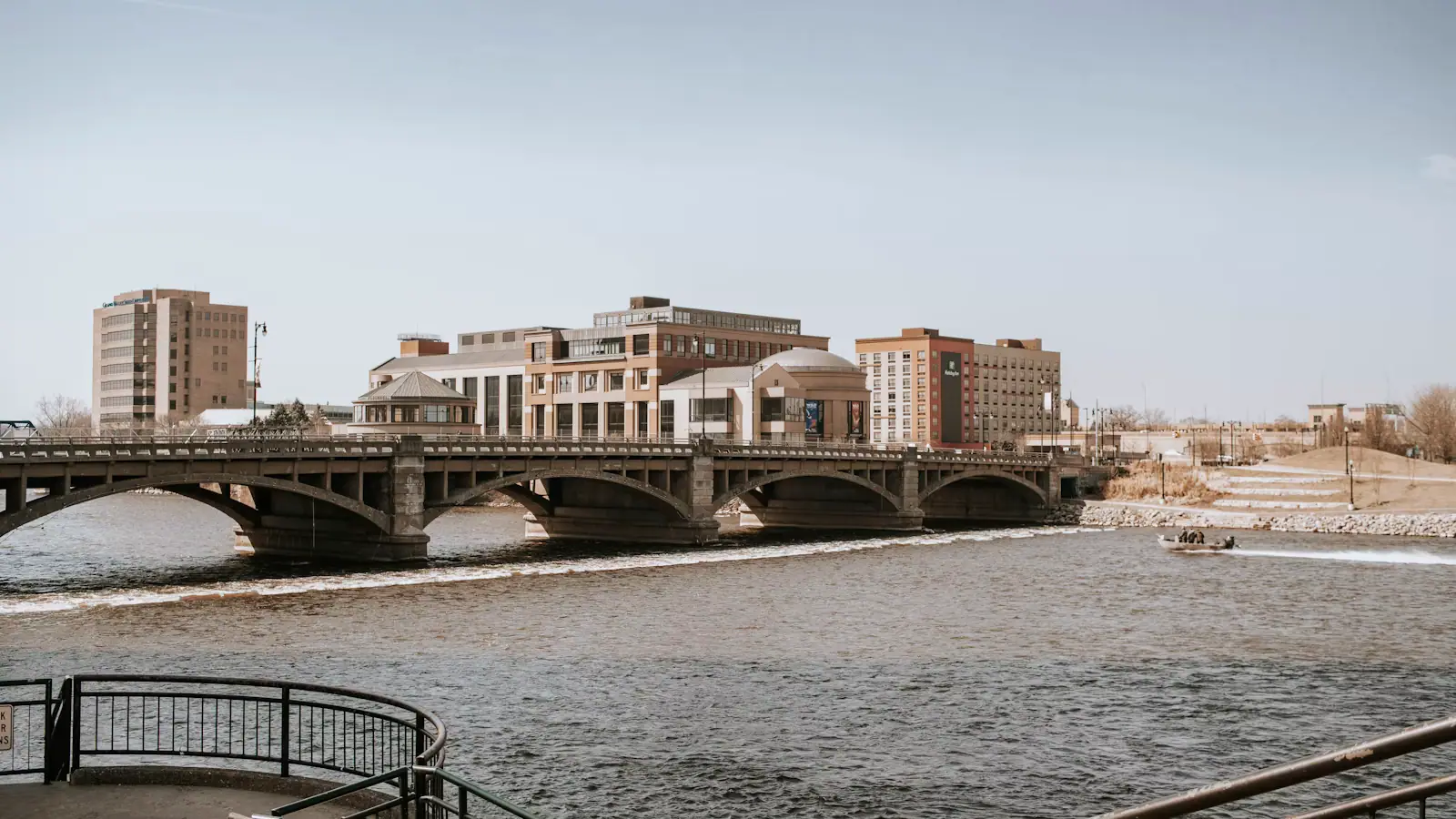
A city of two hundred thousand people should not have this list. Grand Rapids does, and the reason is a hundred and fifty years of manufacturing money that mostly stayed put. The nineteenth-century furniture trade made fortunes here, the twentieth-century office-furniture and retail businesses made more, and the families behind them — the names now attached to a sculpture park, an arena, a concert hall and half the hospital wings on Michigan Street — endowed institutions at home rather than somewhere more fashionable. You are looking at the results.
That inheritance produces a particular shape of visit. The headline attraction is a botanical garden and sculpture park seven miles outside the centre. The most architecturally significant building in the city is a small house on a residential street that you can tour for nothing. The art museum was the first of its kind in the world to be certified LEED Gold and sits opposite a public square that is itself a Maya Lin artwork. One block north is a forty-two-ton Alexander Calder that the National Endowment for the Arts paid for as the very first commission of its public art programme, and which the city then put into its own logo.
So this page is not an alphabetical list. It is a ranking with reasons, and an argument about sequence. Three of these places are worth crossing the country for and the rest are worth an afternoon each, and if you treat them as equals you will spend your Saturday driving between them instead of looking at anything.
Two structural facts worth knowing before you book. The first is geography: the Grand River splits the attractions into an east-bank cluster you can walk between and a west-bank group you need to cross a bridge for, with Meijer Gardens an outlier to the east and the nature centres and Millennium Park scattered further out. The second is that the riverfront itself is currently a construction site while the rapids are rebuilt, so two of the riverside institutions are best reached on foot from downtown rather than along the water.
The third thing is time, and it is the one people get wrong. Almost nothing here takes a full day. The art museum is a comfortable ninety minutes, the Ford Museum about two hours, the Public Museum two to three with children and rather less without. Only Meijer Gardens and John Ball Zoo genuinely absorb half a day each. That means a two-day visit can be generous rather than rushed if you pair a big site with two small ones and leave the afternoon loose, and it means the commonest planning error in Grand Rapids is booking four ticketed attractions into a Saturday and seeing none of them properly. Pair one large thing with one neighbourhood walk and one meal, and repeat.
A note on money and honesty. This page quotes bands rather than prices and does not print opening hours, because both change and both are the things visitors most often find wrong on a travel site. Several of the best things here cost nothing at all, which is unusual enough to be worth saying twice.
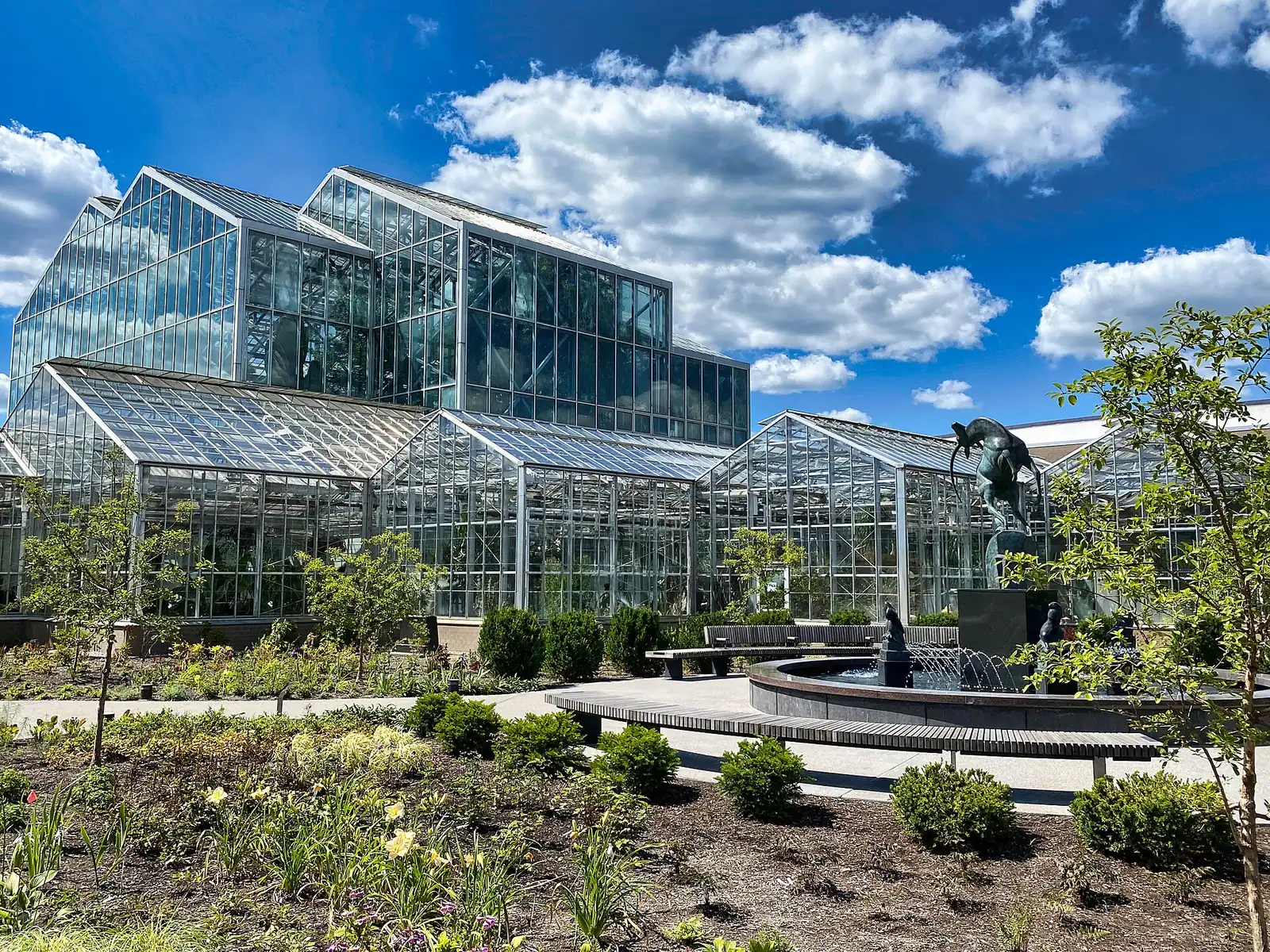
Frederik Meijer Gardens & Sculpture Park. One hundred and fifty-eight acres opened in 1995, combining a major outdoor sculpture collection with a five-storey tropical conservatory. It is the region's largest visitor attraction and the only one here that routinely draws people from other states on its own. Allow three hours, four with children. Adult admission has been running in the low twenties; confirm before you go.
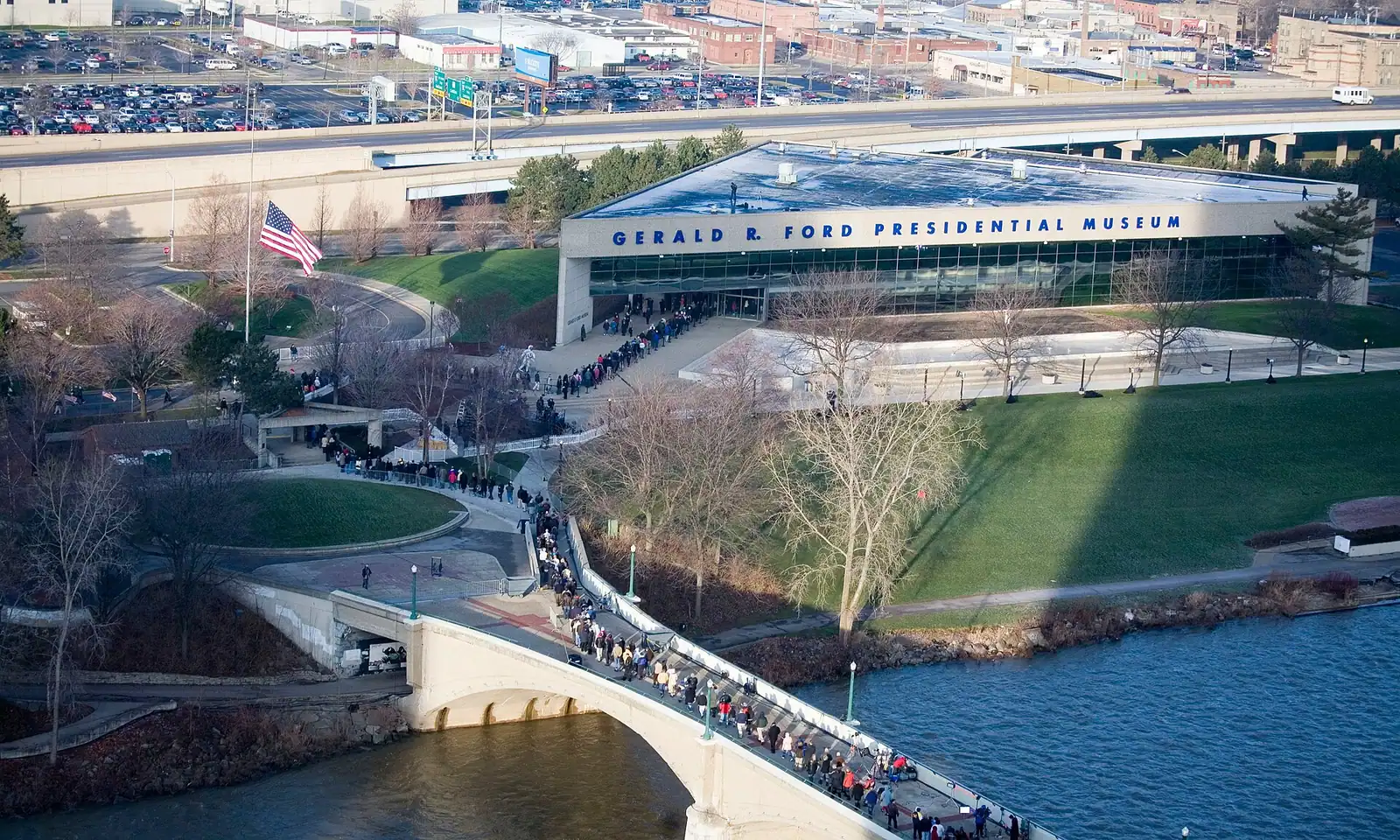
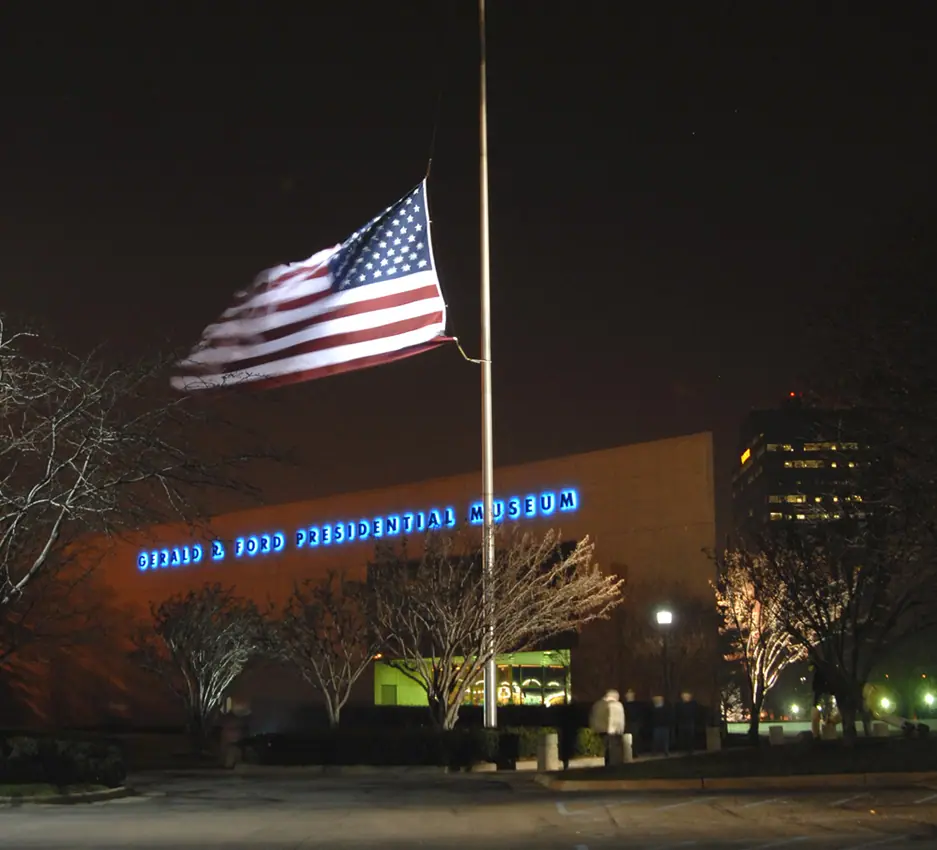
Gerald R. Ford Presidential Museum. On the west bank, opened 1981, and the only presidential museum in the National Archives system that does not sit with its own library — the archive is 130 miles east in Ann Arbor, which makes this the rare presidential museum built for visitors rather than researchers. Ford grew up in this city and he and Betty Ford are buried on the lawn. It reopened after a substantial renovation. Two hours.
Grand Rapids Art Museum. Opened in October 2007 and certified LEED Gold the following year, the first art museum anywhere to hold it. The building is the point as much as the collection: daylight handled seriously, a clear plan, and a front door that opens onto Rosa Parks Circle. Local reporting in recent years has covered significant repairs the building needs, so admire it without assuming perfection. Ninety minutes to two hours.
Do these three and you have seen Grand Rapids. Everything below is what makes a second and third day good.
The single best use of a morning in this city is the stretch of riverbank either side of the Grand between Pearl Street and the pedestrian bridges, because four things sit within about fifteen minutes' walk of each other.
On the east bank, the Grand Rapids Public Museum holds the 1928 Spillman carousel — one of only three known in that style, bought by the museum in 1981 after half a century in a Pennsylvania park and now running again beside the water to a Wurlitzer organ — plus the Roger B. Chaffee Planetarium, named for the Grand Rapids boy who died in the Apollo 1 fire, and Streets of Old Grand Rapids, a three-quarter-scale reconstruction of an 1890s city street that gained a second floor in 2026.
On the west bank, the Ford Museum and its grounds.
Between them, the bridges. Ah-Nab-Awen Park wraps the Ford Museum side and is where the city holds its summer events.
Two practical notes. The riverwalk has intermittent closures while the rapids restoration proceeds, so treat the bridges rather than the banks as your reliable connection. And the carousel ride has historically been included in museum admission rather than charged separately, which is worth knowing if you are deciding whether a five-year-old will last an hour inside.
Three of the most interesting things in Grand Rapids cost nothing, and two of them are better than plenty of ticketed attractions elsewhere.
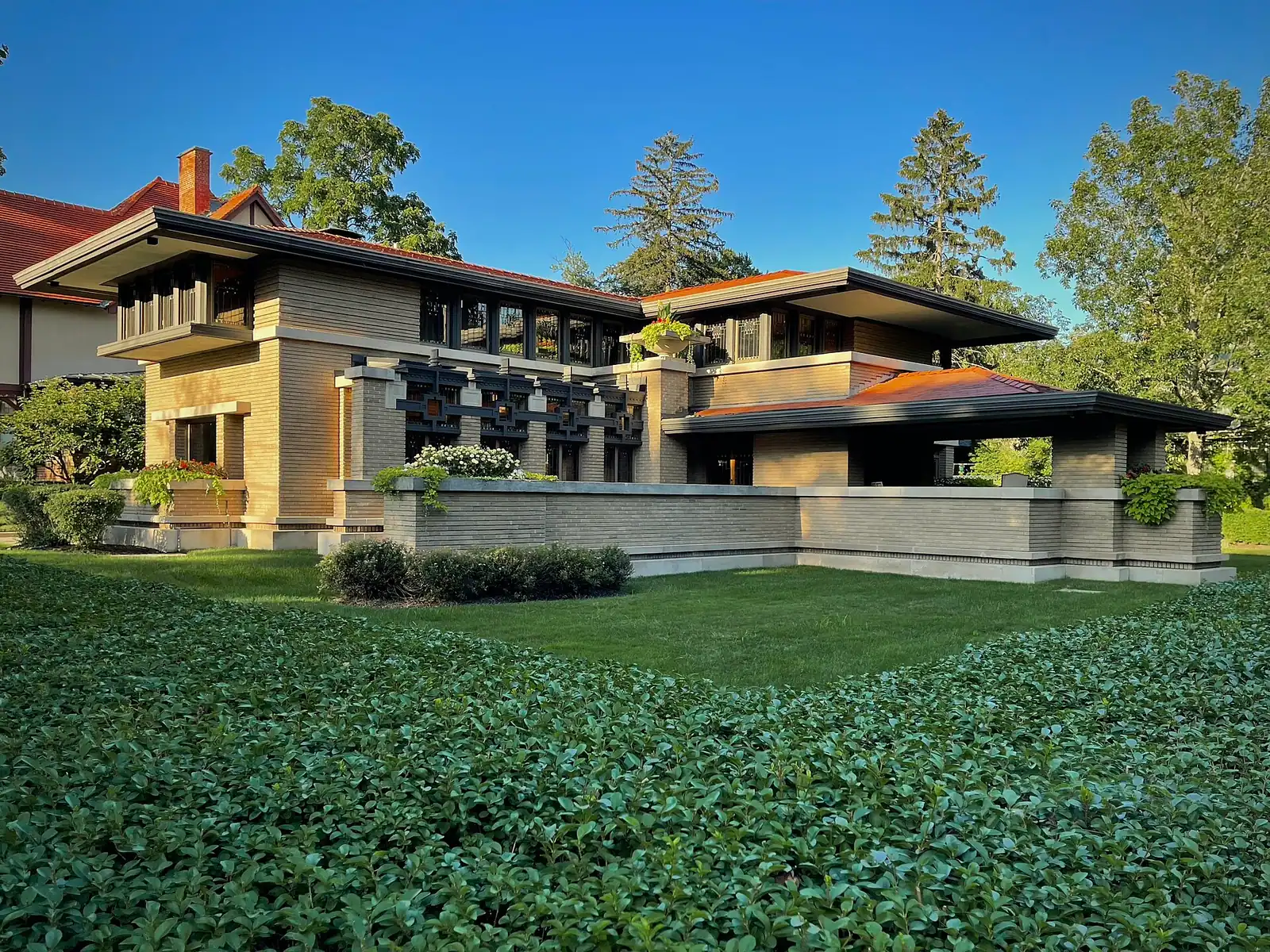
Meyer May House. A Frank Lloyd Wright Prairie house of 1908 to 1909, standing on a corner in Heritage Hill. Steelcase — the office-furniture company founded in this city in 1912, which in the 1930s manufactured Wright's steel furniture for the Johnson Wax headquarters — bought the house in the 1980s and returned it to the original drawings, down to reproducing the textiles and the leaded glass. There is no charge to tour it. Days are limited and reservations are encouraged, so check the current arrangement rather than turning up.
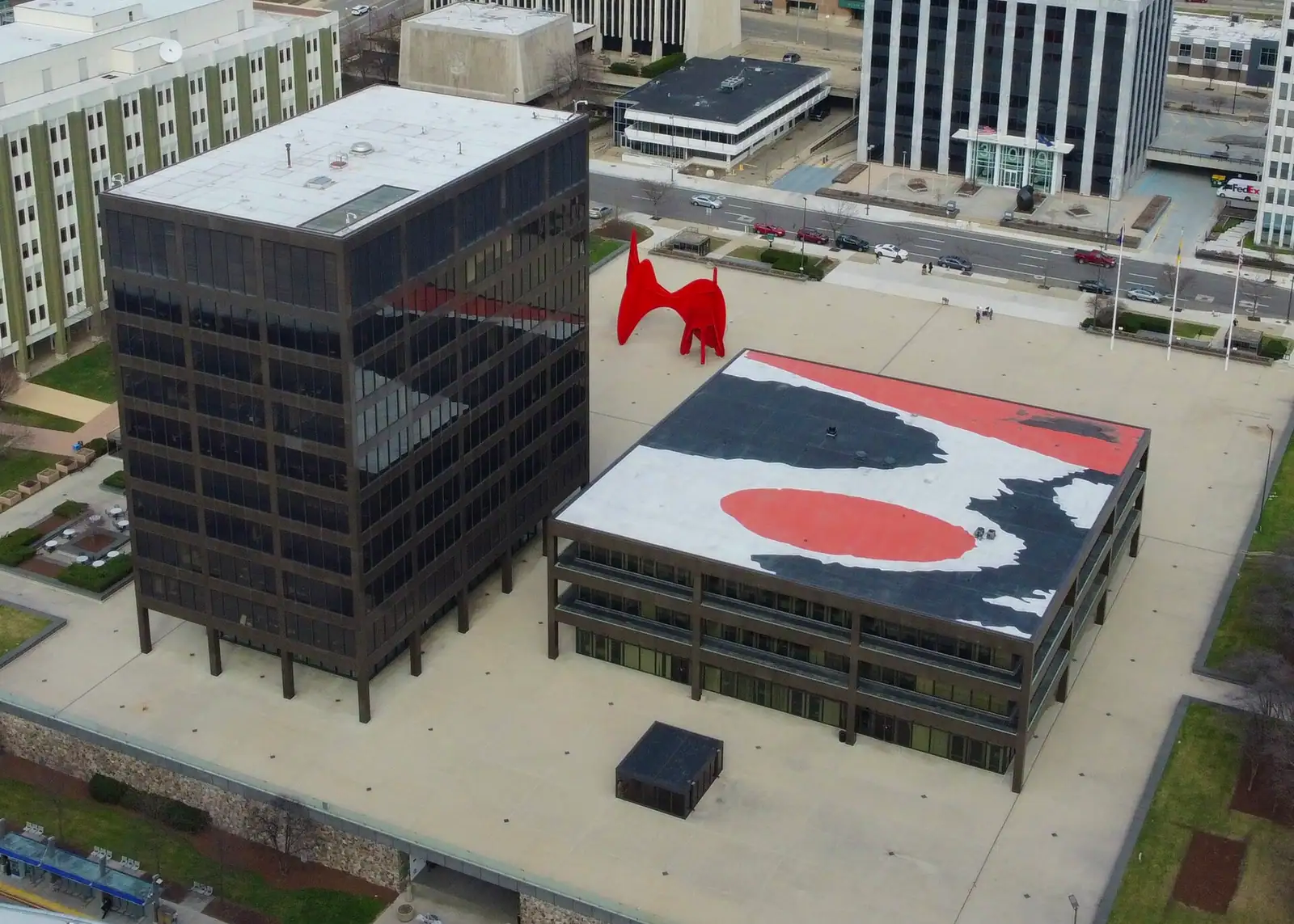
Calder Plaza. La Grande Vitesse, installed in 1969, forty-two tons of steel in twenty-seven sections, around fifty-four feet long and forty-three high. The title translates roughly as "the great swiftness", which is what "Grand Rapids" means in French. The plaza was named after the sculpture, not the other way round.
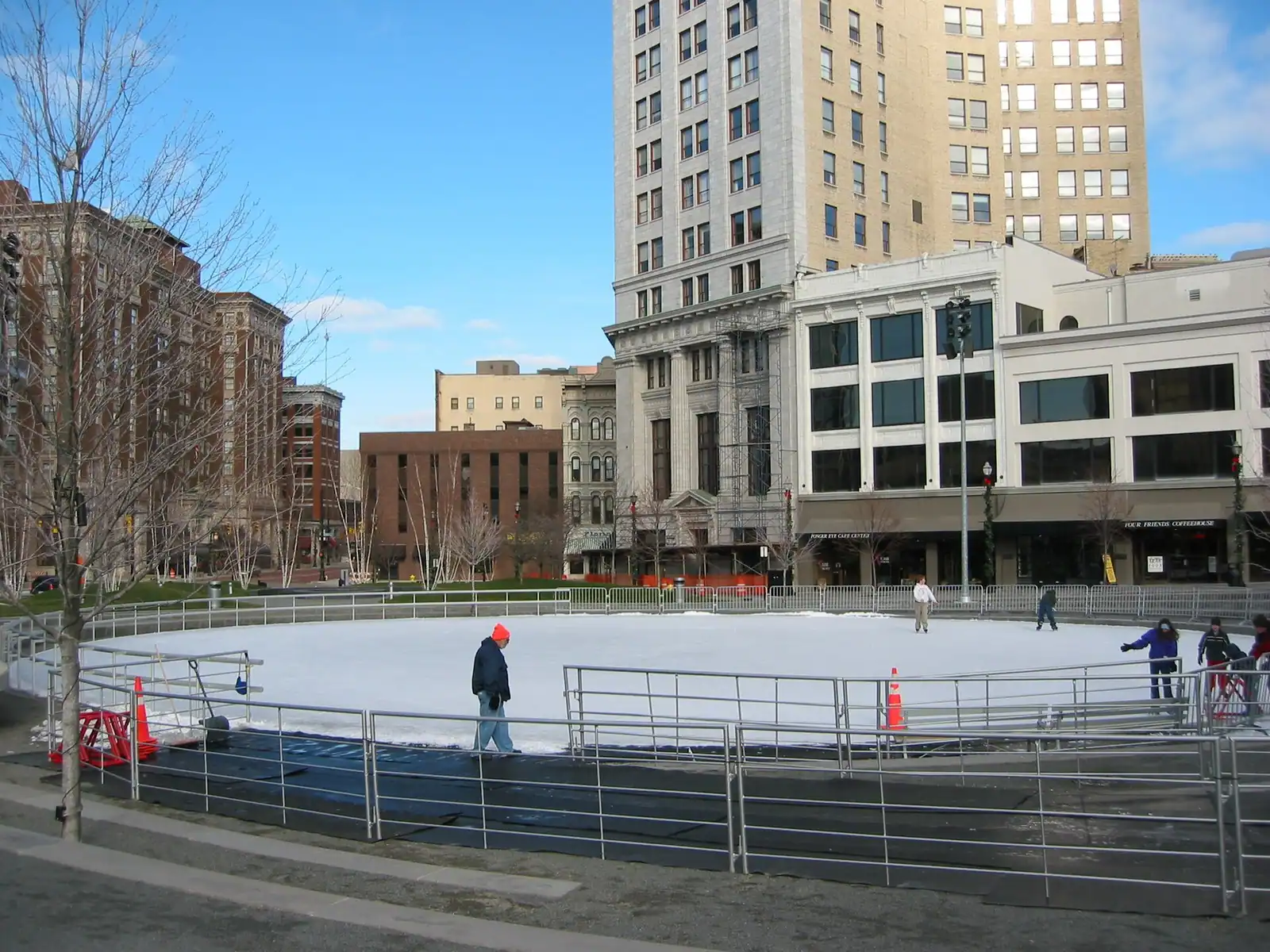
Rosa Parks Circle. Maya Lin's Ecliptic: an amphitheatre in summer, an ice rink in winter, and set into the surface a map of the stars over this city on 1 January 2000.
You can walk all three in an afternoon and spend nothing but the parking.
The west bank and the land beyond it hold the attractions that get you outside, which matters more here than in a city with better weather.
John Ball Zoo opened in 1891 on forty acres left to the city by John Ball, a lawyer and land agent who had crossed the continent in the 1830s. It now runs to around a hundred and forty acres up a wooded hillside, which is unusual and makes the visit a genuine climb; a funicular carries you to the treehouse at the top. Half a day with children.
Blandford Nature Center sits about six miles north-west of downtown on 264 acres of woods, meadow and a working farm, with trails that are quiet on a weekday and genuinely good in autumn. Free parking, modest admission for the buildings, and the best place in the city to put a restless afternoon.
Millennium Park, out toward Grandville, is a reclamation project of roughly fourteen hundred acres with about six miles of Grand River frontage — old gravel pits and industrial ground turned into lakes, beach and trail. It is the largest urban park in the region and almost nobody from out of town knows it exists.
Provin Trails Park and Riverside Park fill the same role closer in: short, unfussy walks for an hour you did not plan.
In a city built on domestic manufacturing, the housing stock is part of the collection.
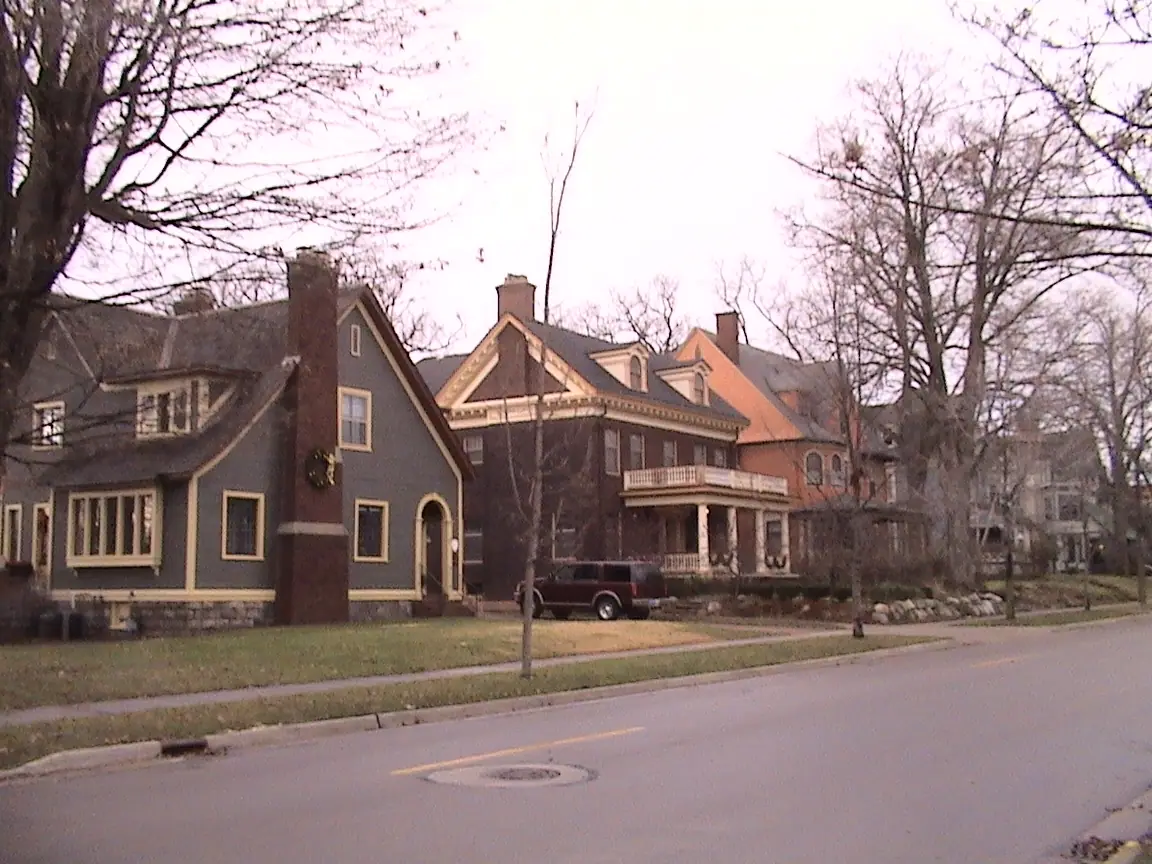
Heritage Hill begins three blocks uphill from the office towers and holds around thirteen hundred historic properties across roughly a square mile, the earliest from the 1840s. It is one of the largest urban historic districts in the United States, and it exists because residents fought off an urban renewal plan in the 1960s that would have cleared much of it. More than sixty architectural styles are represented, which sounds like a tourist-board number until you walk four blocks and count Italianate, Queen Anne, Chateauesque and one Frank Lloyd Wright in the space of a few minutes.
Wealthy Street and Eastown, further east and south, are the commercial streets that came back: independent restaurants, a repertory cinema, record shops, and taprooms in buildings that were something else first.
Monroe North, north of the arena on the east bank, is old warehouse ground now holding breweries and offices.
None of these charge admission and none of them take a whole day. Put one on the end of an afternoon rather than treating it as a destination, and eat there afterwards.
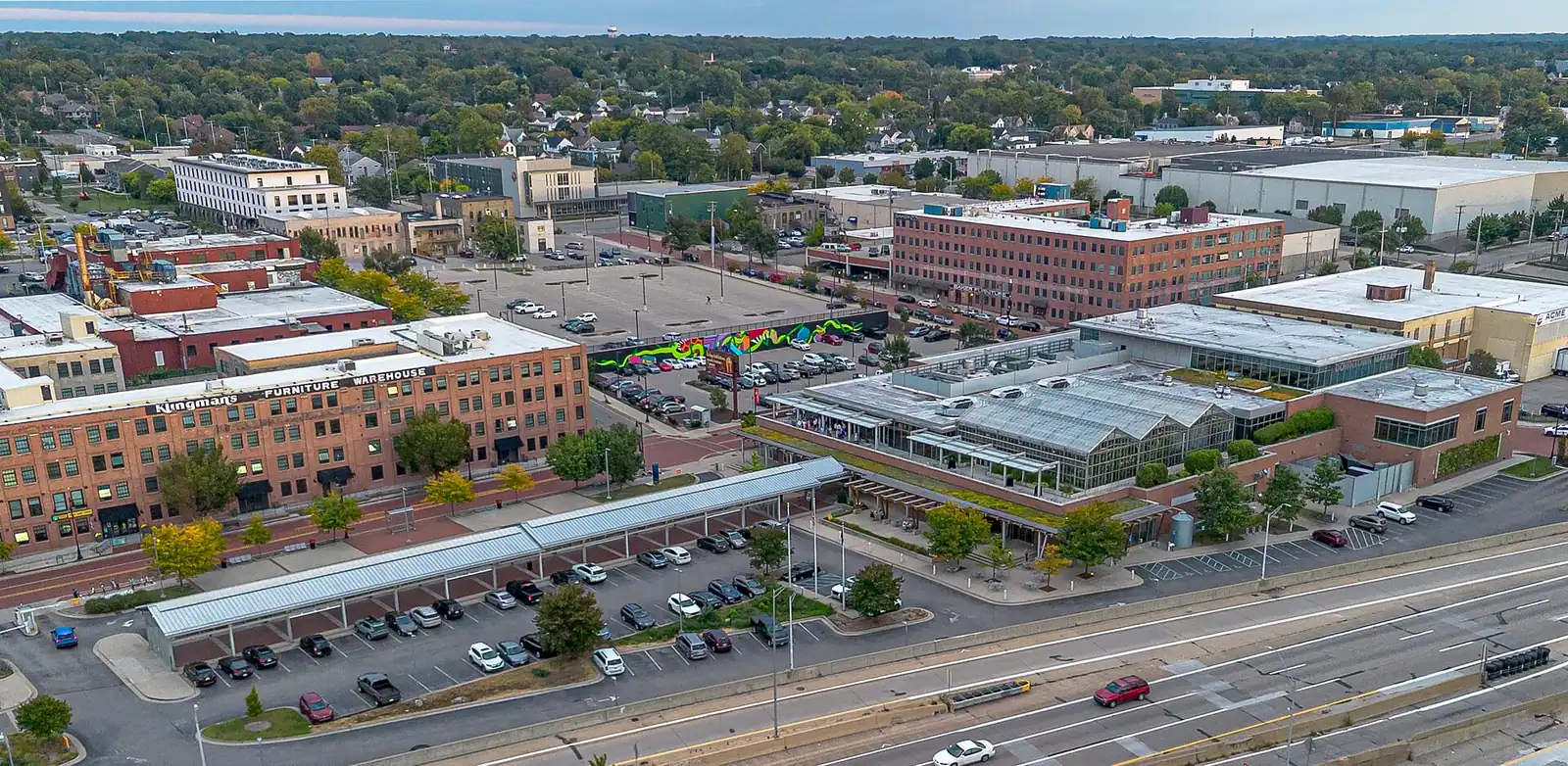
Downtown Market opened in 2013 at the south end of downtown and was the first public market in the United States certified LEED Gold — a sentence that tells you a good deal about how this city likes to build. Inside are around twenty food merchants and restaurants under one roof; outside, in season, a farmers' market shed that takes fifty-odd vendors. It works best as lunch rather than as a sight, and it is a short walk from the Amtrak station.
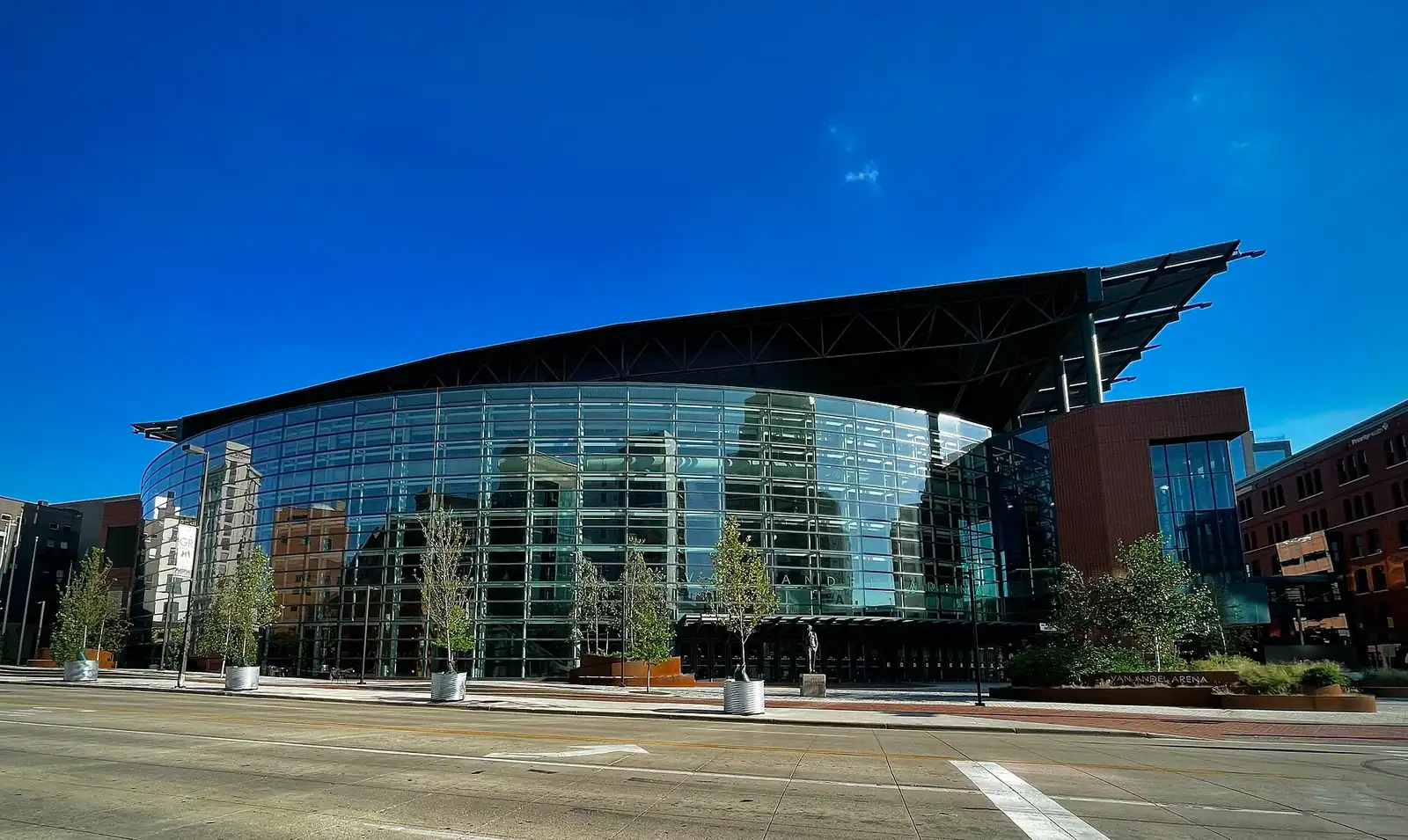
Van Andel Arena opened in October 1996 and is the reason downtown has the evening economy it does. It seats somewhere around eleven thousand for hockey and up to roughly thirteen thousand for a concert, which puts it in the band of venues that get touring acts too big for a theatre and too small for a stadium. The Grand Rapids Griffins play here, and an American Hockey League game is a genuinely good and cheap winter evening — the sort of thing visitors overlook because they assume it is for locals. It is for locals. That is the appeal.
Check what is on before you travel. A big arena night changes the availability of every restaurant table and parking space within three blocks, in both directions.
Travel pages age badly, and Grand Rapids has changed enough in the last few years that some of what you will find online is no longer standing up.
The Urban Institute for Contemporary Arts ceased operations in March 2023. For two decades it was the city's contemporary art venue and its cinema, and plenty of guides still list it. The building on Pearl Street has since been sold and repurposed. It belongs in the city's history rather than in your itinerary, and the contemporary work you came for now turns up at ArtPrize, at commercial galleries and in the college spaces around Kendall.
Individual taprooms and restaurants turn over fast here, faster than the beer city reputation implies. A specific bar recommended in an article from three years ago is a coin flip. Trust the districts, not the names.
The rapids are not restored. Construction began in the summer of 2026 and will take about two years on the first stretch alone, so anything describing whitewater in downtown Grand Rapids in the present tense is describing a plan.
And the riverwalk is intermittent while that work proceeds. If a walk along the water is the thing you have travelled for, check current closures first and have the Heritage Hill streets as your fallback.
All 28 places we cover, grouped by what kind of place they are. Filter, sort, or read straight down.
28 places
Beach
A hand-cranked ferry across the Kalamazoo River, 302 steps up a dune to a Cold War radar dome, and a beach on the far side.
5–10 hoursThe town is free to walk; the ferry, beach parking and the state park each charge separately.
Beach
Forty minutes west of the city: two red lights on a pier, a boardwalk along the channel and a fountain that plays to music after dark.
4–10 hoursThe town, boardwalk, pier and fountain are free. The state park charges vehicle entry.
Park
A grocery fortune turned into 158 acres of Rodin, Oldenburg and orchids, plus the one glasshouse in Michigan that fills up in February.
2.5–5 hoursAround $20–25 per adult, with lower rates for seniors, children and members
Park
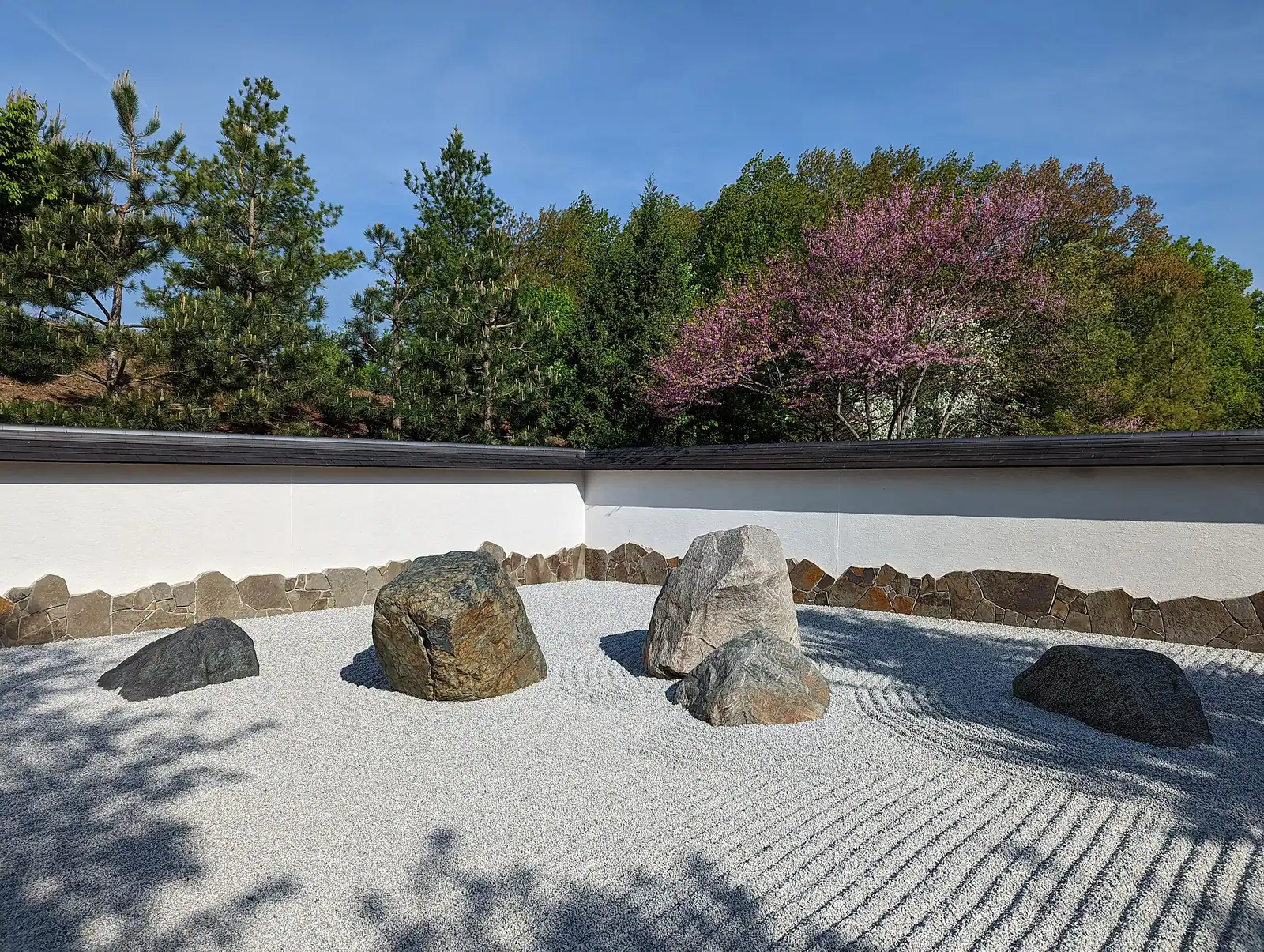
Eight acres by Hoichi Kurisu, with four waterfalls, a teahouse built in Japan and a Zhang Huan head sitting in the moss.
1–1.5 hoursIncluded in general admission to Meijer Gardens; there is no separate Japanese Garden ticket
Park
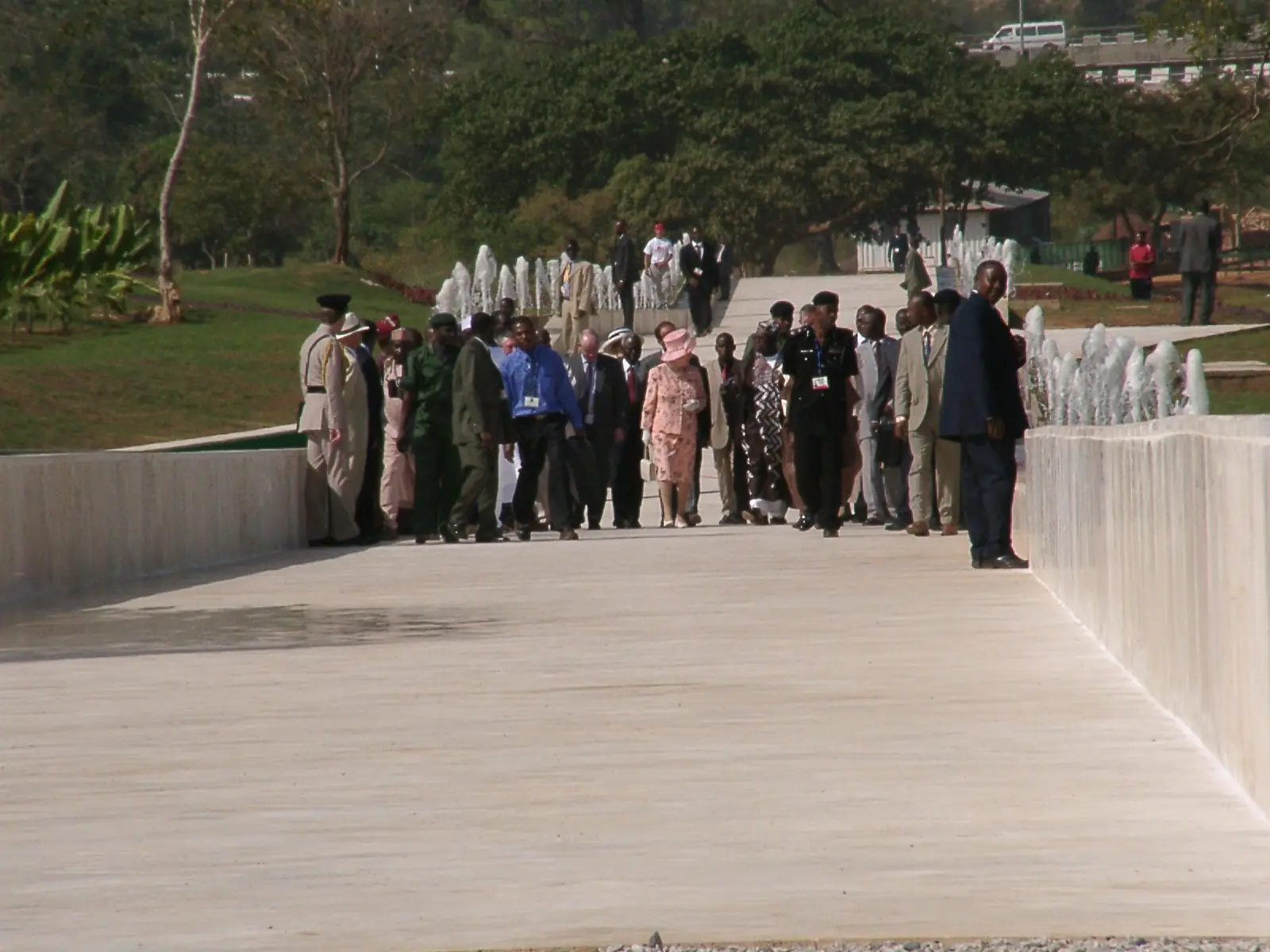
Fifteen hundred acres of former gypsum mine and gravel pit, now West Michigan's largest urban park, with a swimming beach in the middle.
1.5–5 hoursPark free; the beach and splash pad area carries a daily charge
Park
Six and a half acres on the west bank whose name means resting place, with grass mounds that stand for the burial mounds once here.
0.5–1 hoursFree. Some festivals held in the park are separately ticketed
Park
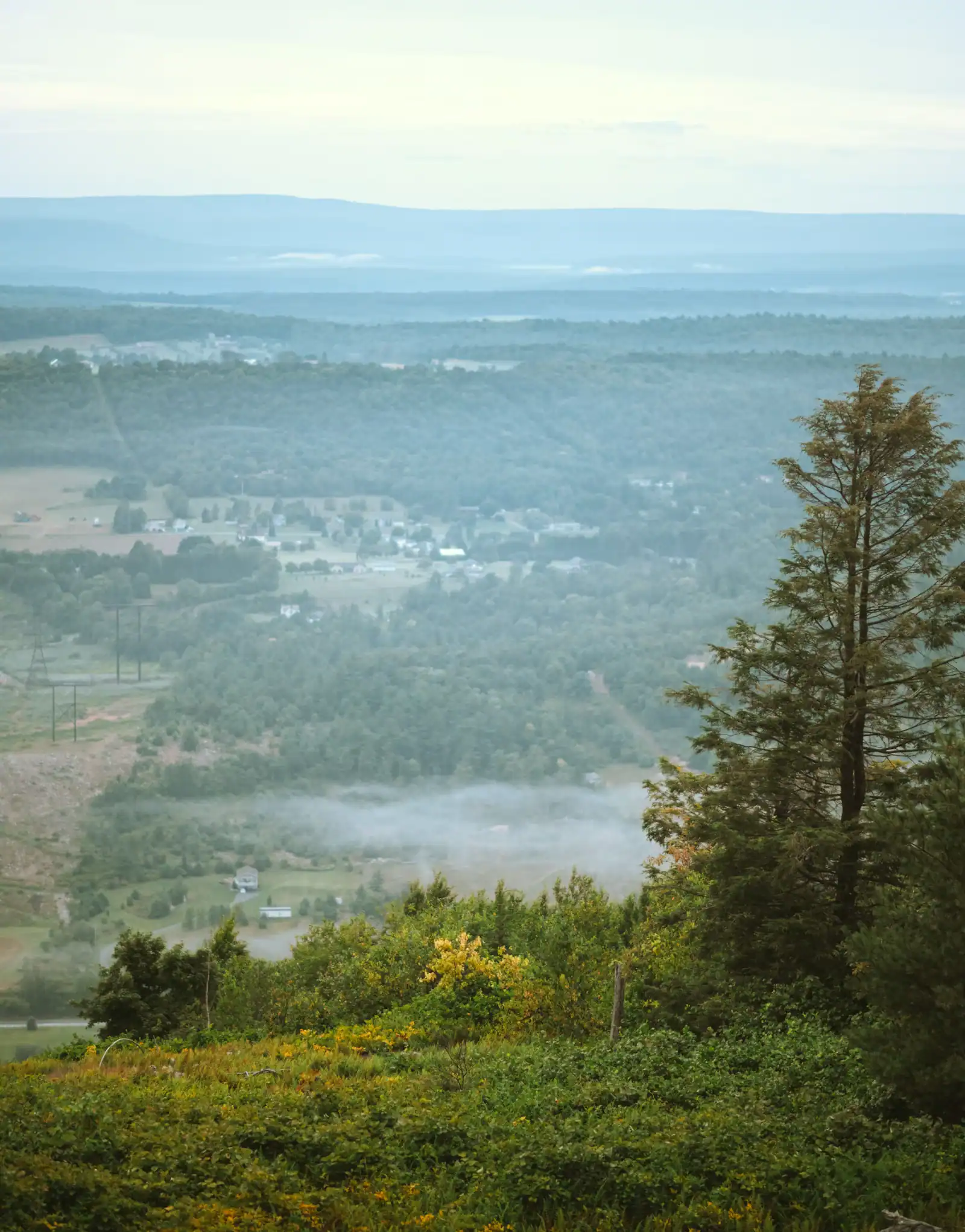
A hundred acres of riverbank ten minutes north of downtown: free disc golf, a kayak launch and a paved route to the White Pine Trail.
1–3 hoursFree, including the eighteen-hole disc golf course and the boat launch.
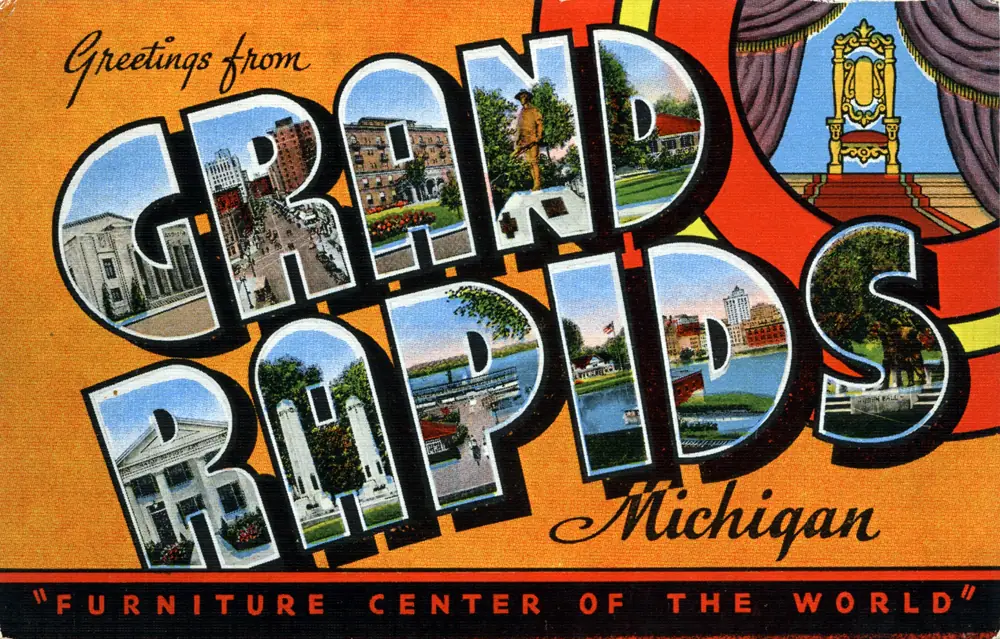
Nature preserve
Two hundred and sixty-four acres of woodland inside the city limits, with a sugarhouse that boils sap from late February.
1.5–3 hoursAround $5 per person; members and the youngest children free
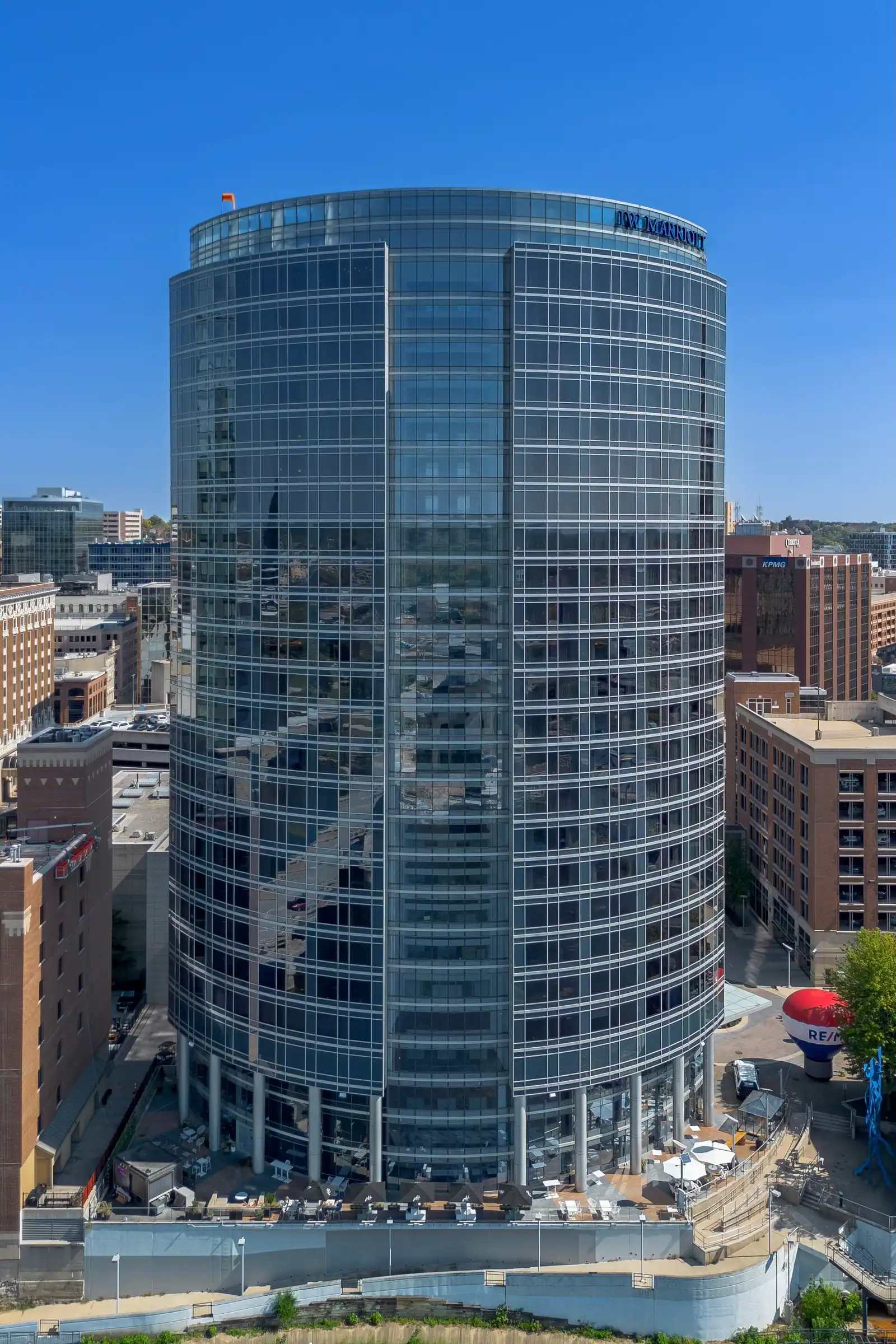
Trail
A downtown loop on both banks of a river that is currently being torn up so it can have its rapids back.
1–1.5 hoursFree. Parking is the only cost and that is a downtown ramp
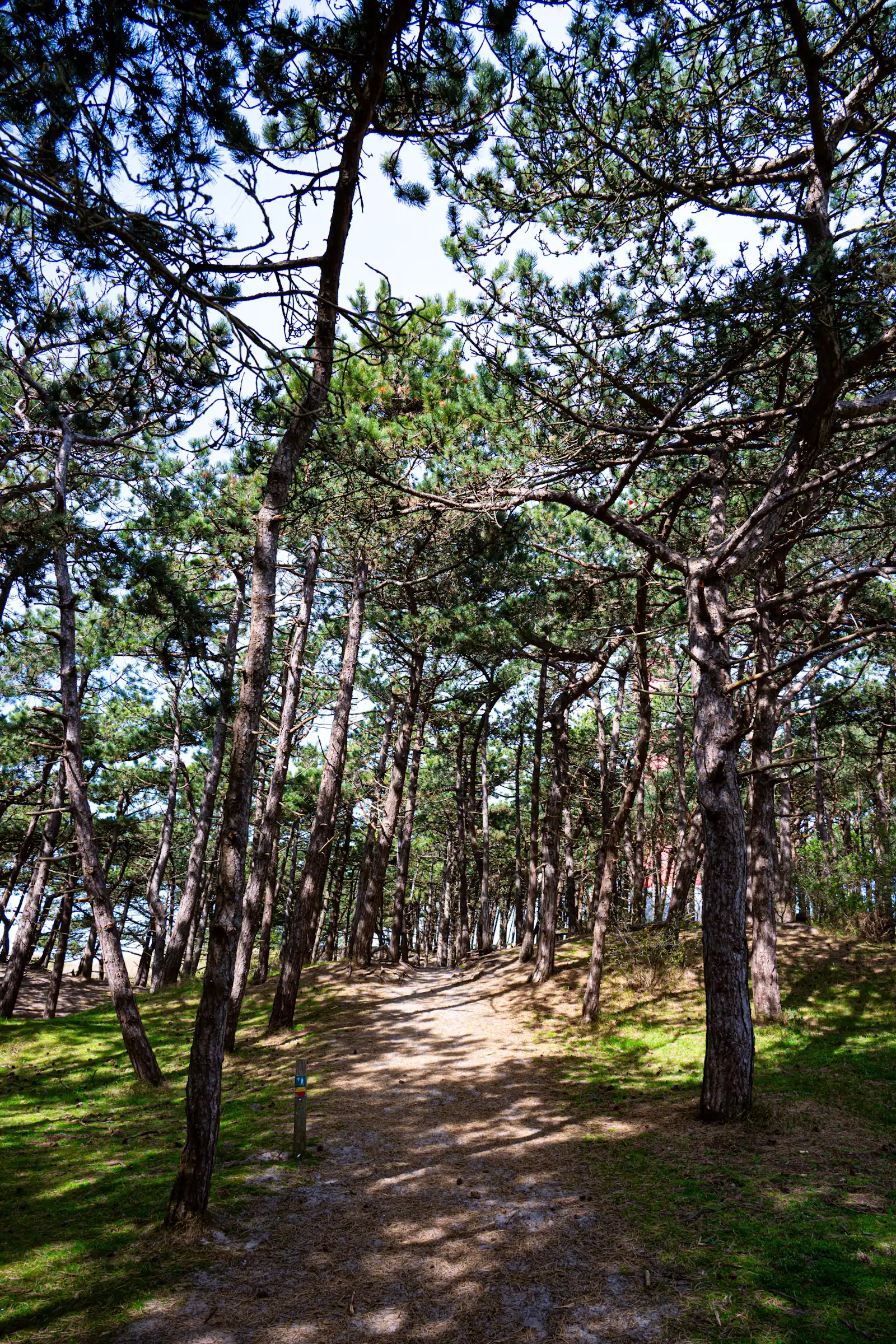
Trail
Forty-six acres of pine and glacial sand where the city goes to ski when the lake-effect snow arrives, ten minutes from the East Beltline.
1–2 hoursNo admission charge for the park or the trails.
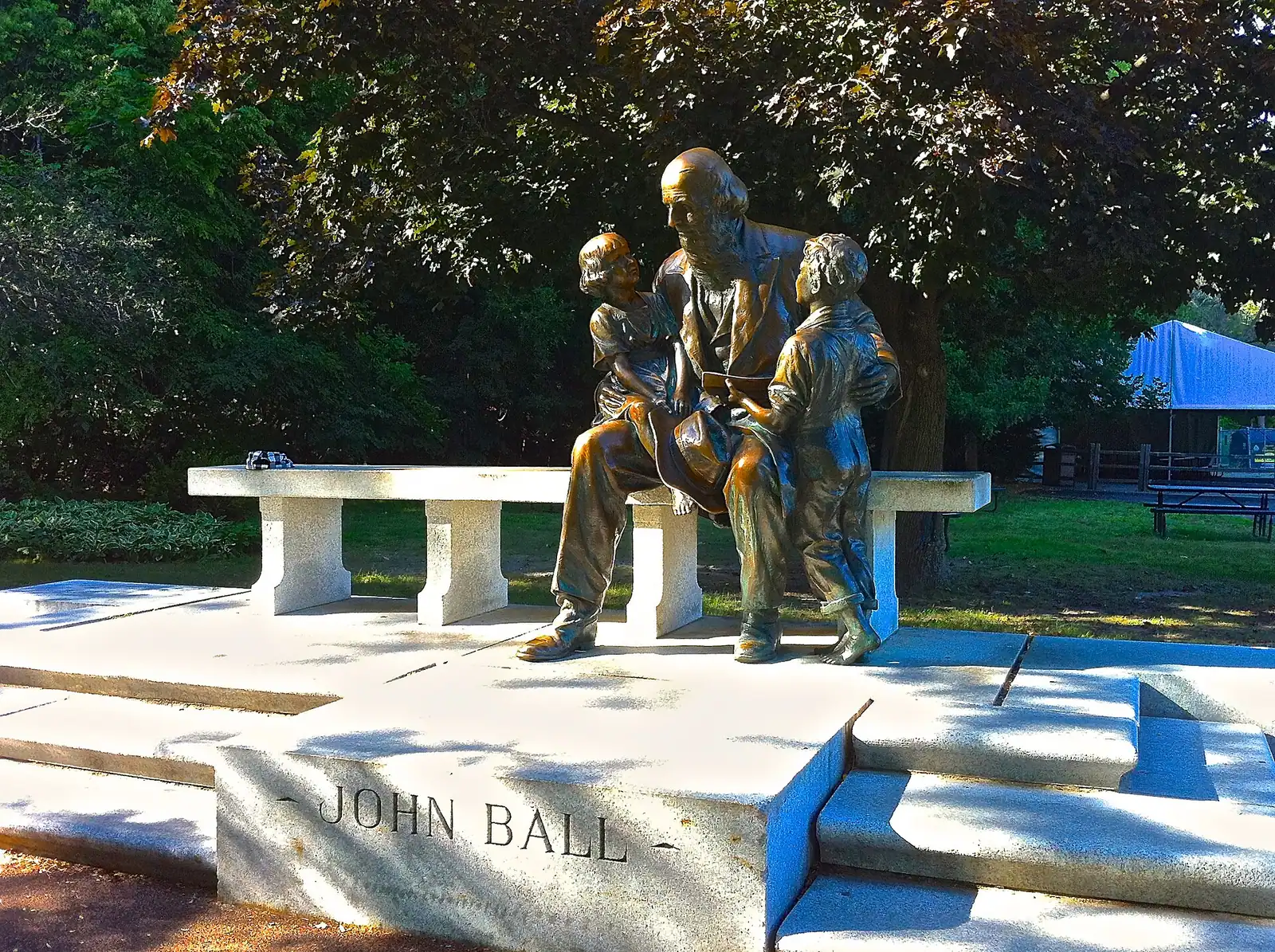
Wildlife
A zoo built into a hillside, where a funicular carries you to the top so the rest of the day is downhill.
2.5–4 hoursAround $22–27 per adult in season; lower for seniors and children, under-threes free
Historic site
A 1909 Frank Lloyd Wright Prairie house, restored to the last carpet thread, and free to tour if you book in time.
1.5 hoursFree, funded by Steelcase, but by appointment only in groups of about eight
Museum
A presidential museum on the riverbank where the 38th president and his wife are buried a short walk from the front door.
1.5–2.5 hoursAround $15–20 per adult; the gravesite on the grounds is free to visit
Museum
The first LEED Gold certified art museum anywhere, built by a city whose fortune came from making furniture well.
1.5–2.5 hoursRoughly $10–15 per adult; general admission free on Thursday evenings
Museum
A 76-foot whale hangs over the Galleria, an 1890s street runs through the basement, and the 1928 carousel turns beside the river.
2–3.5 hoursAround $12–16 per adult; carousel rides and planetarium shows cost extra
Museum
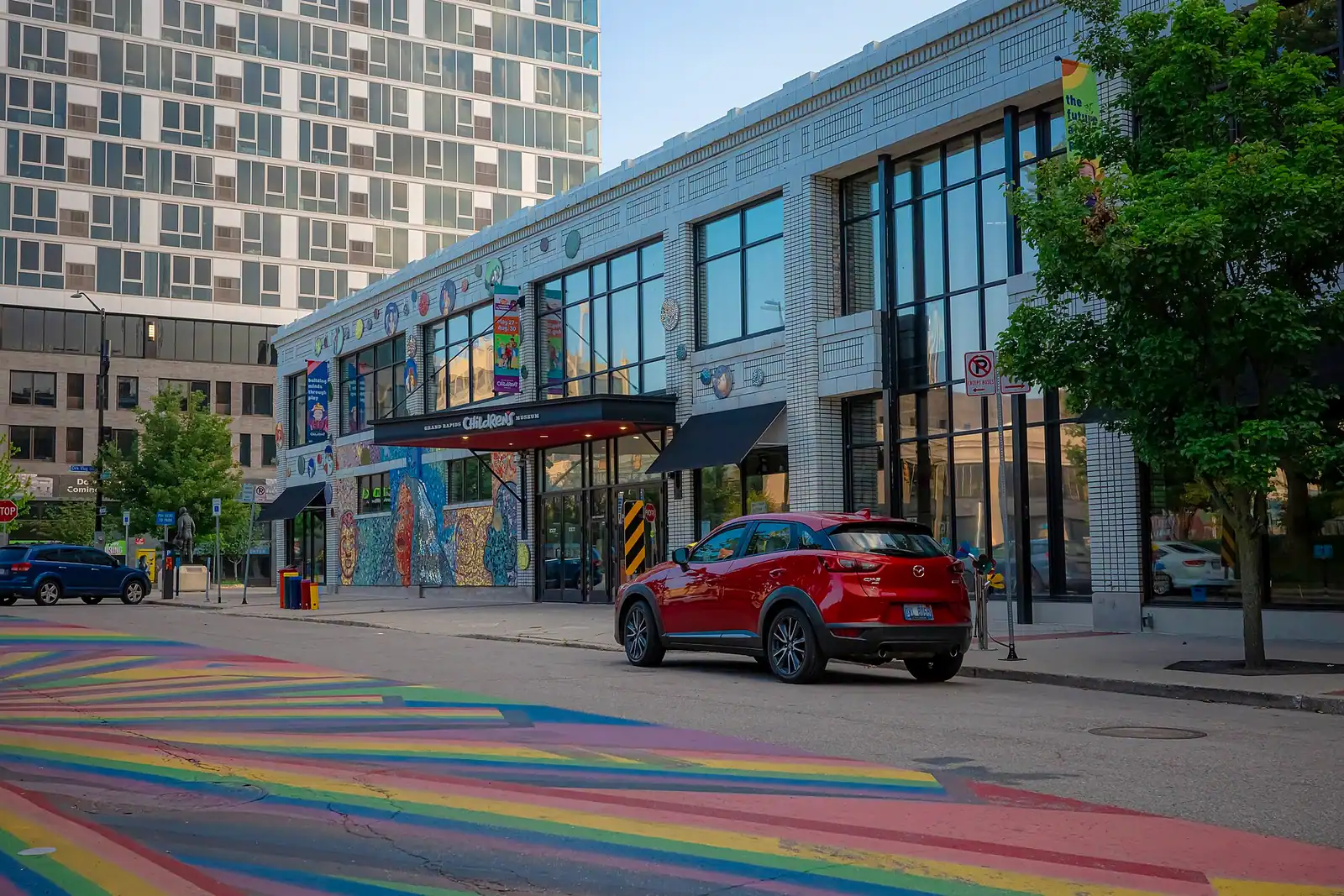
Three floors of hands-on play for under-12s, and the first place downtown parents go when the lake-effect snow starts.
1.5–2.5 hoursAround $12 per person aged 1–64; under 1 free; reduced rates for seniors and service workers
Museum
Grand Rapids lost its contemporary art centre in 2023. Here is what happened to UICA and where the work moved to.
0.5–1 hoursNot applicable — the institution is closed. Its successor galleries at Kendall are free.
Landmark
Forty-two tons of vermilion steel that changed how a furniture town saw itself, and the Calder painting on the roof behind it.
15–45 minutesFree. An open civic plaza with no ticketing at any time of year.
Landmark
Thirty miles south-west: a 250-year-old Dutch windmill that still grinds flour, and a downtown whose pavements are heated from below.
4–10 hoursThe town and beaches are free; Windmill Island Gardens and the state park charge separately
Landmark
A Maya Lin artwork you are allowed to walk on, and from December a public ice rink with the night sky under the ice.
0.5–2 hoursThe plaza is free at all times. Winter skating sessions carry a small charge.
Shopping
Twenty-odd food merchants under one roof, a 52-stall farmers shed outside, and a greenhouse growing on the second floor.
1–2 hoursFree to enter; you pay the individual merchants
Dining district
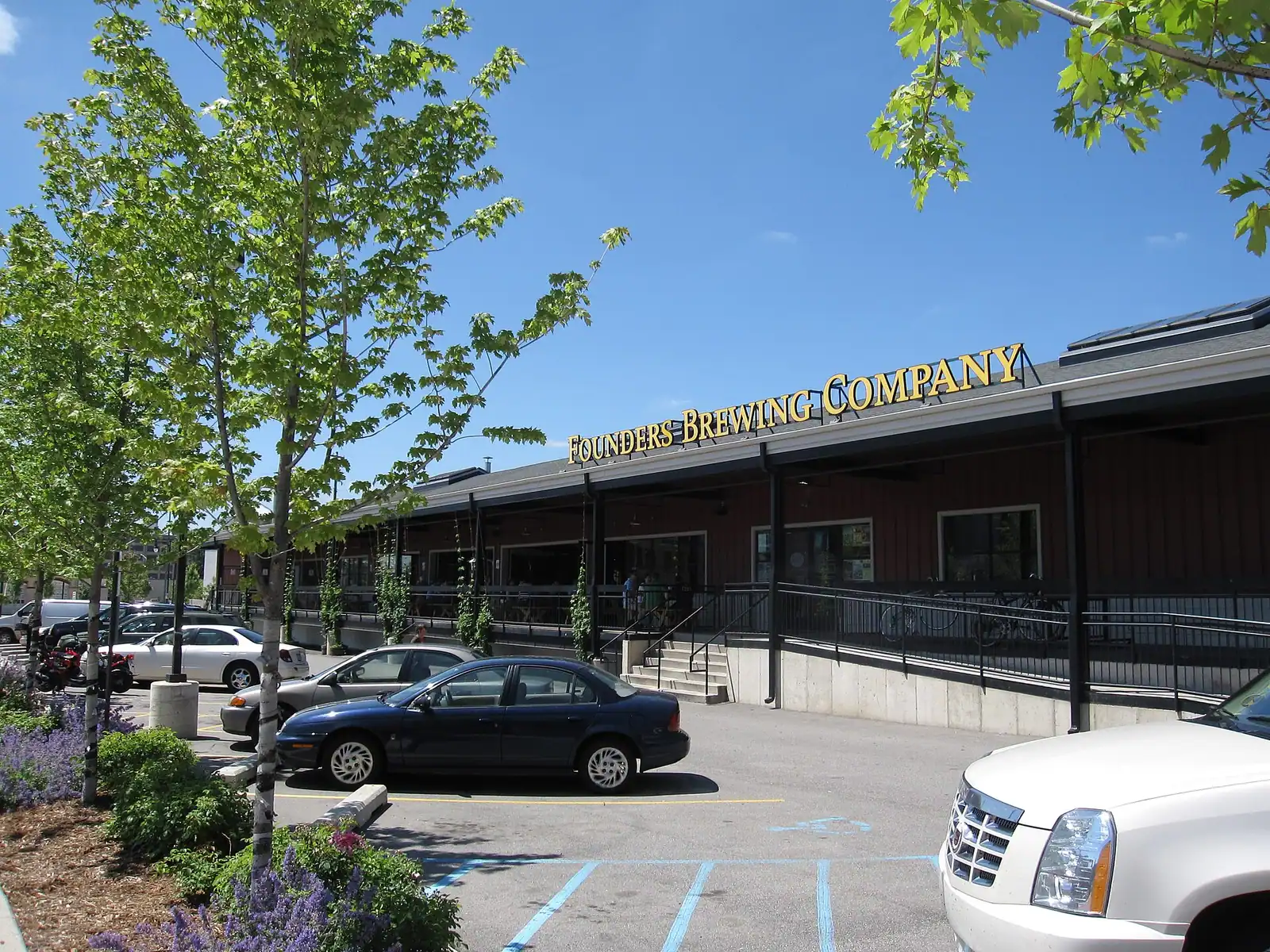
A converted trucking depot laid out like a German beer hall, and the address that turned Grand Rapids into Beer City.
1–2.5 hoursFree to enter; you pay for what you drink
Dining district
The furniture district that built the city, now lofts, offices and the brewery that moved back in a decade after Founders moved out.
1–3 hoursFree to walk. You pay for what you drink and eat.
Entertainment
A 1928 Spillman carousel in a glass pavilion over the Grand River, back in service since February 2026 after a two-year rebuild.
15–45 minutesRides are ticketed separately from museum admission, at a few dollars a turn
Entertainment
The 1996 arena that pulled downtown Grand Rapids back to life, and still empties four thousand people onto Fulton Street at once.
2.5–4 hoursTicketed by event; Griffins hockey is the cheapest way in
Neighbourhood
Thirteen hundred buildings on a hill above downtown, saved in 1968 by 125 neighbours who refused to let the bulldozers in.
0.5–1.5 hoursFree to walk; the annual Tour of Homes in May is ticketed
Neighbourhood
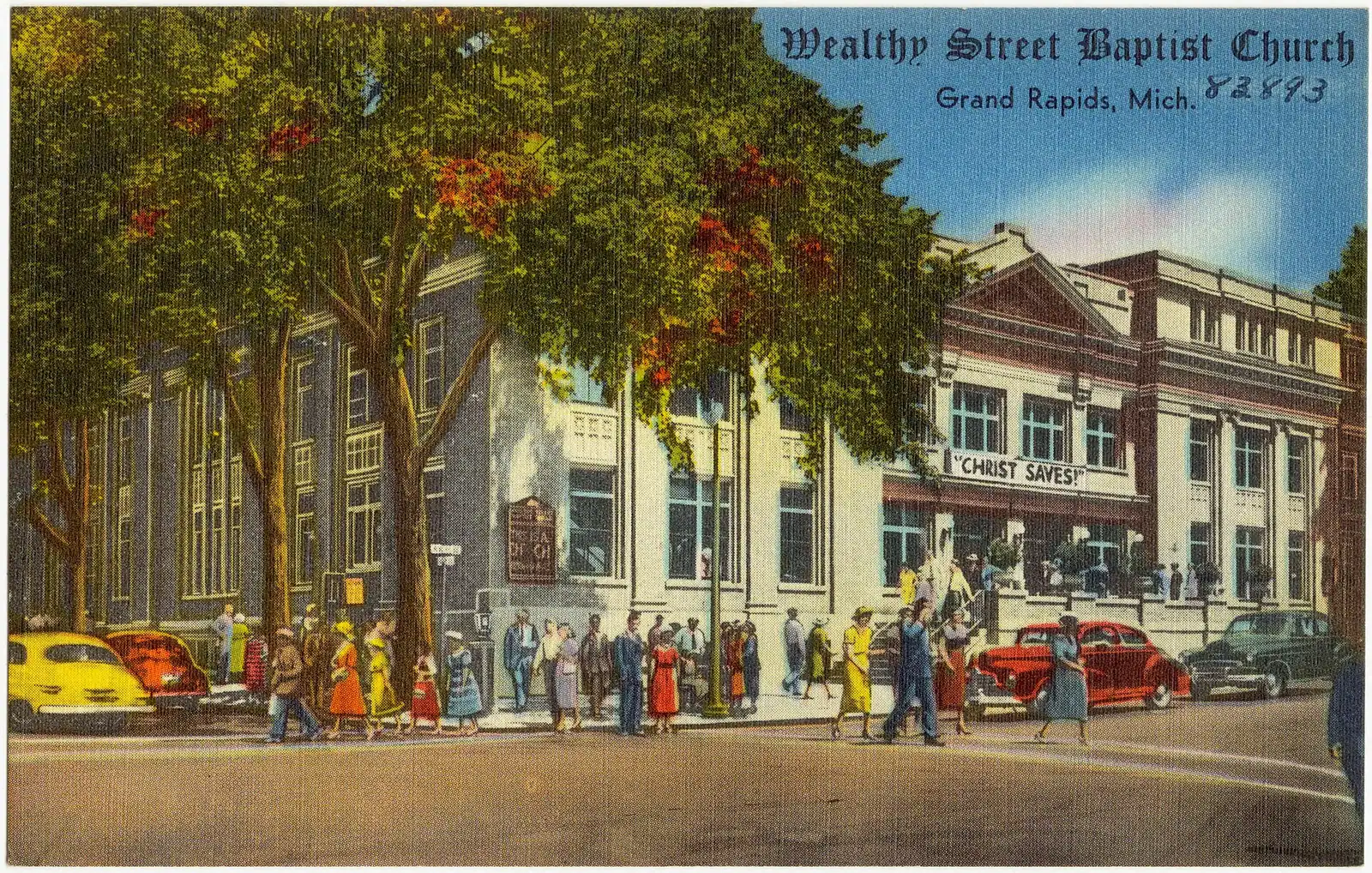
A mile of restored storefronts in East Hills, restarted by a 1911 theatre that spent twenty-five years boarded up.
1–3 hoursFree to walk. Everything on it costs whatever it costs.
Neighbourhood
Two blocks around a five-way junction, a hot dog counter that turned fifty, and the street fair that shuts the road every September.
1–3 hoursFree to walk around, and the September Streetfair is free to enter.
Every pin is also a link in the index beside it, so the list works before the map loads.
Every place shown on this map is also listed below as a link, grouped by area.
© OpenStreetMap contributors
The directory lists places. These pages plan days.
Guide hub
Furniture paid for this city, and then it paid for everything worth coming to see in it. That is the single idea a visitor needs. Grand Rapids made…
Things to do
The largest attraction in West Michigan is not downtown and not on the river. Frederik Meijer Gardens & Sculpture Park stands about six miles…
Things to do
Grand Rapids is overcast about two hundred and five days a year, and through the winter the sky is grey or mostly grey roughly two thirds of the…
Things to do
Every good thing in this city was paid for by chairs. That is barely an exaggeration. William Haldane opened a cabinet shop on the Grand River in…
Budget
The free list in Grand Rapids is not the list you fall back on when the museum tickets are too expensive. In this particular city it contains three…
Things to do
Almost nothing green in Grand Rapids is original. The largest park in the city is fifteen hundred acres of former gypsum workings and gravel pits…
Guide
A grocery fortune bought 158 acres, a five-storey glasshouse and a 24-foot bronze horse built from Leonardo's unfinished commission. The calendar decides whether you enjoy it.
5 min readIlse Hoekstra
Guide
Two nights, one car, and one hard constraint that decides the whole schedule: the free Frank Lloyd Wright house only opens to the public on Sunday afternoon.
5 min readMarguerite Vanderhoff
Guide
Michigan's second city is a furniture town that spent its furniture money on art. Here is how the address grid works, what is walkable, and what needs a car.
6 min readMarguerite Vanderhoff
Frederik Meijer Gardens & Sculpture Park, by a wide margin. It opened in 1995 on 158 acres about seven miles east of downtown and pairs a major outdoor sculpture collection with a five-storey tropical conservatory. It is the one attraction here that regularly draws visitors from other states on its own account, and the two annual peaks — free-flying butterflies in March and April, and the international Christmas display from late November — are what fill the car park.
Yes, and it is unusual among presidential museums. Because the archive sits separately in Ann Arbor, this building was designed around visitors rather than researchers, and the exhibits carry a narrative most people only half remember — the only president never elected to the presidency or vice presidency, a pardon that cost him an election, and a city that raised him. Gerald and Betty Ford are buried on the grounds. Allow about two hours.
Yes, and there is no charge. The Meyer May House is a Frank Lloyd Wright Prairie house of 1908 to 1909 in the Heritage Hill district, bought and comprehensively restored by the office-furniture company Steelcase, which is headquartered in the city. Tours run on limited days and reservations are strongly encouraged, so check the current schedule before travelling rather than arriving on spec. Allow around ninety minutes for the house and the accompanying film.
Less than an equivalent list in a bigger city. Meijer Gardens adult admission has been running in the low twenties, the two downtown museums in the mid-teens, and John Ball Zoo in a similar band with cheaper children's rates. The Meyer May House, Calder Plaza, Rosa Parks Circle and Blandford's trails cost nothing. Prices move, so treat these as bands and confirm before you go. Several institutions also run reduced-price or free evenings.
La Grande Vitesse, an Alexander Calder stabile installed in 1969 on the plaza that was subsequently named after it. It weighs forty-two tons, is assembled from twenty-seven sections, and runs to roughly fifty-four feet long and forty-three feet high. It was the first work funded under the National Endowment for the Arts' public art programme, and an abstraction of its outline appears in the City of Grand Rapids logo, on vehicles and stationery throughout the city.
Plan on three to four hours with children, less if you are moving briskly. The zoo climbs a wooded hillside on the west side of the river, which makes it a more physical visit than a flat site of similar size — there is a funicular to the treehouse at the top, and pushing a stroller uphill is real work. It opened in 1891 on land left to the city and now covers around 140 acres with more than two thousand animals.
Several are. The art museum, Rosa Parks Circle, Calder Plaza, the Public Museum, Van Andel Arena and the Downtown Market sit within a dozen blocks of the main hotel cluster, and the Ford Museum is a short walk over a pedestrian bridge. The free DASH shuttle covers the rest of the core. Meijer Gardens, John Ball Zoo, Blandford Nature Center and Millennium Park all need a car or a rideshare.
No. The UICA ceased operations in March 2023 after roughly forty years as the city's contemporary art centre and art-house cinema, and its Pearl Street building has since been sold and converted to other use. Older guides still list it, which is why it is worth saying plainly. Contemporary work in Grand Rapids now surfaces through ArtPrize each autumn, commercial galleries and the exhibition spaces attached to the art and design college downtown.