Skip to content
Search
Menu

These bookings earn us a commission through Viator. You pay the same, and the money played no part in the selection.

Things to Do

Meijer Gardens: 158 Acres of Sculpture and Glass

Last updated

Grand Rapids' biggest attraction: 158 acres, a five-storey conservatory and 300 sculptures. When the butterflies fly, when the trees go up, what it costs.

The largest attraction in West Michigan is not downtown and not on the river. Frederik Meijer Gardens & Sculpture Park stands about six miles northeast of the city centre, off the East Beltline in Grand Rapids Township, and in 2025 it counted 881,625 visitors and its sixteen millionth since opening in 1995. For a metropolitan area this size those numbers are out of proportion, and they are the reason a fair number of people who have never otherwise thought about Michigan end up here on a Tuesday in March.

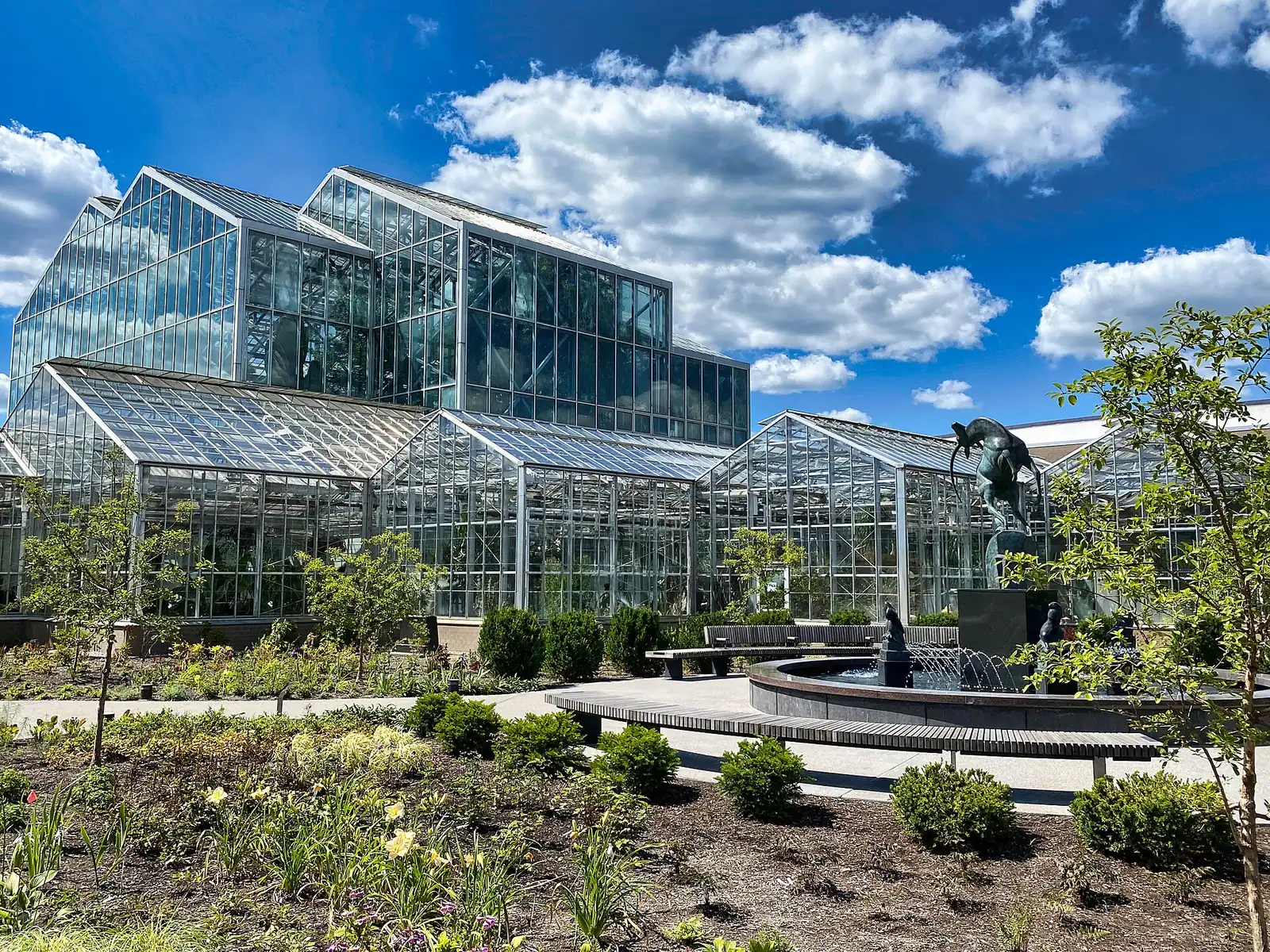
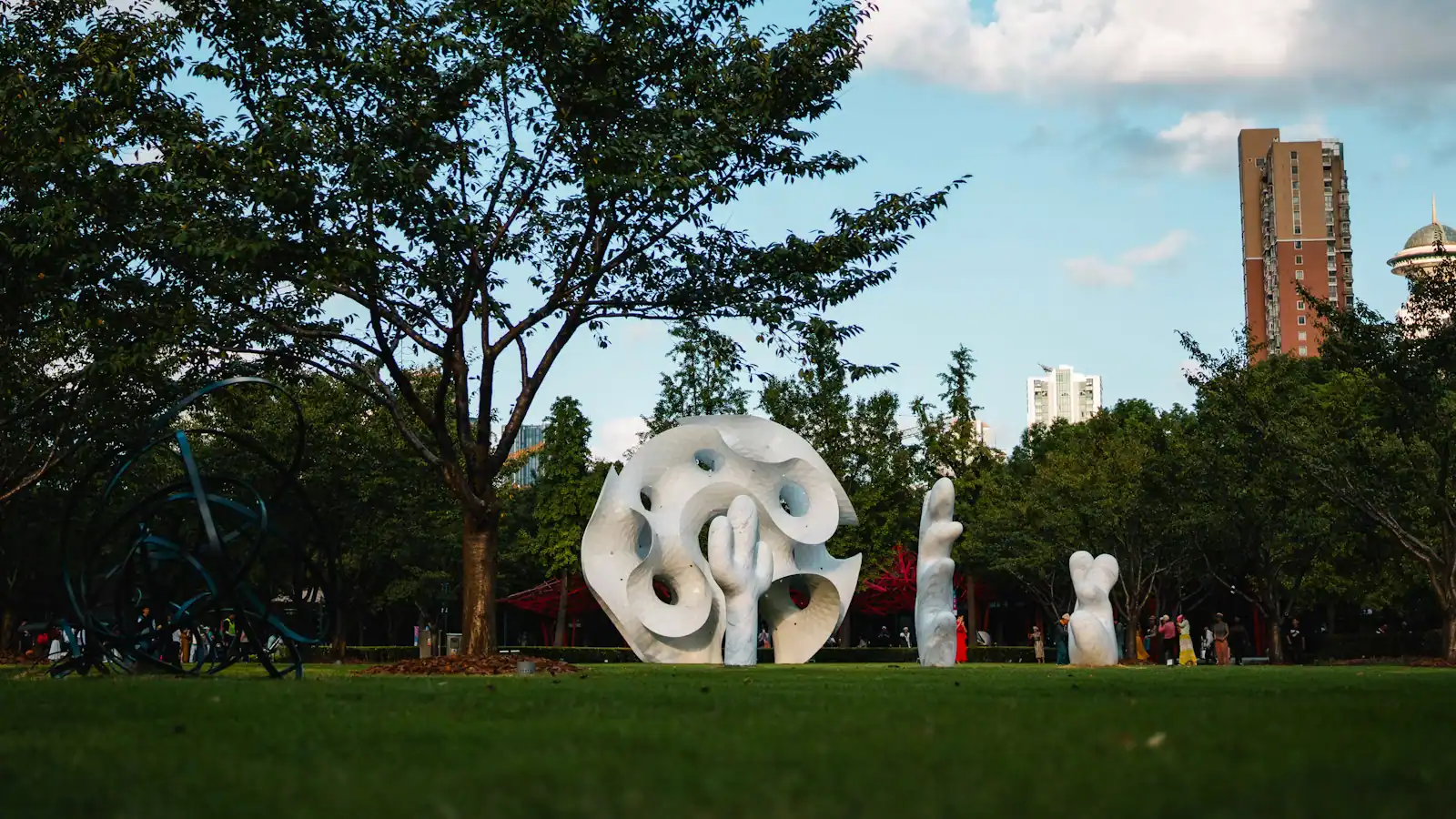
It is really two institutions sharing one ticket. One is a botanical garden organised around the Lena Meijer Tropical Conservatory, five storeys and 15,000 square feet of glass holding tropical plants from around the world, which is the only reason a January visit works at all in a city that averages seventy-odd inches of snow. The other is a sculpture park: more than three hundred works in the permanent collection, with Rodin, Henry Moore, Mark di Suvero, Jaume Plensa, Ai Weiwei and Dale Chihuly among the names, set across 158 acres of lawn, woodland, boardwalk and wetland. Readers of USA Today's 10Best poll voted it the best sculpture park in the country in 2023, 2024 and again in 2025.

Two dates dominate the calendar and both are worth knowing before you book anything. From 1 March to 30 April the conservatory fills with more than seven thousand tropical butterflies and moths for Fred & Dorothy Fichter Butterflies Are Blooming, which reached its thirty-first year in 2026 and is described as the largest temporary tropical exhibition in the country. From late November into early January the indoor galleries carry Christmas & Holiday Traditions, more than forty decorated trees standing for traditions from around the world, alongside ENLIGHTEN, a separately ticketed outdoor light event that runs on winter evenings.

Those two peaks are the best thing here and also the worst parking. A wet Saturday in the middle of the butterfly run puts a queue on the East Beltline and a crowd shoulder to shoulder in a warm, humid glasshouse, which is not what anyone pictured. The fix is simple and nobody tells you: come on a weekday, come at opening or after three, and buy online before you leave the hotel.

The last thing to understand is scale. People budget ninety minutes and end up staying four hours, or budget a whole day and give up at the second mile because they wore the wrong shoes. A hundred and fifty-eight acres is a genuine walk, much of it outdoors, in a climate that does what it likes. Read the section below on how the ground is laid out before you decide what kind of visit you are having.
What 158 acres means once you are standing on it

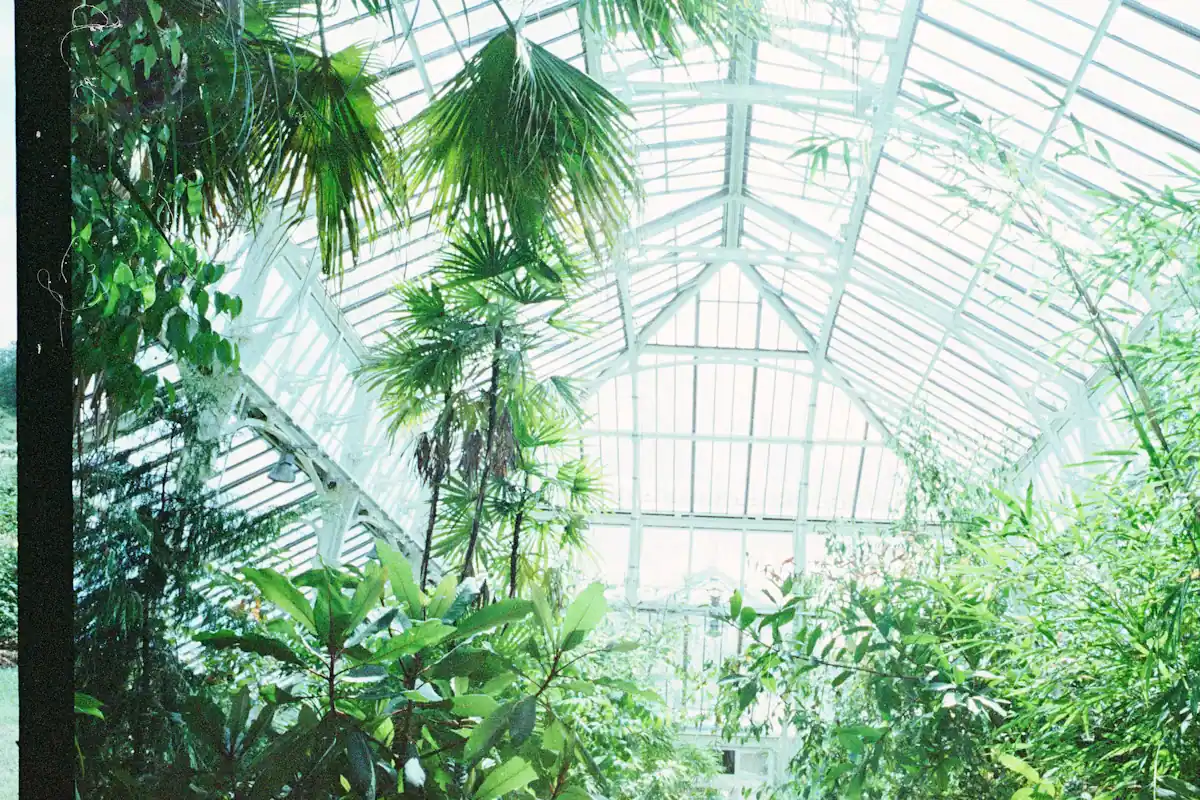
Dense green tropical foliage growing inside a tall glass-roofed conservatory

The site breaks into three zones and they take very different amounts of time.

Nearest the entrance sit the indoor spaces: the ticketing centre, the galleries that hold the seasonal displays, the carnivorous and arid houses, and the tropical conservatory, which is the tall one with the waterfall. You could do this half alone in an hour and it is the entire visit on a bad-weather day.

Behind it lies the formal outdoor garden ring — the children's garden, the sculpture gallery courtyards, the perennial and English-style beds — where most of the paving is flat and most people spend their second hour.

Then the ground opens out. The main sculpture park runs away across mown grass and rough meadow into the woodland and wetland trail with its long boardwalk, and this is where the acreage stops being a number. Allow ninety minutes to walk the outer collection properly. A tram runs a loop of the park in the warmer months, which is the difference between a comfortable visit and a miserable one for anyone who does not want three miles on their feet, though it does not run all year.

Practical consequence: three hours is the honest minimum for a first visit that includes the outdoor sculpture, and four is better. If you have ninety minutes, do the conservatory and the seasonal gallery and accept that you have seen a third of it.

The collection, and the three works people come back for

Three hundred-plus works is too many to see with any attention, so here is where to spend it.

The American Horse. Nina Akamu's bronze, standing around twenty-four feet, is the piece on the postcards. Its origin is genuinely strange: Leonardo da Vinci spent years on a colossal horse for the Duke of Milan that was never cast, and the clay model was destroyed by French troops in the 1490s. Akamu's sculpture is a late-twentieth-century answer to that unbuilt commission, and a twin was given to Milan. A Renaissance loose end, resolved in a Michigan meadow.

The di Suvero. Mark di Suvero's steel works read as engineering until you stand under one and feel the counterweight. They suit this park better than they suit a plaza, because you can walk a full circle at fifty yards and watch the thing rearrange itself.

Ai Weiwei's zodiac heads. Twelve bronze animal heads, a reconstruction-slash-provocation aimed at the looted fountain clock of the Old Summer Palace in Beijing. Children like them because they are animals. Read the label and they are about who owns what.

Beyond those, look for Rodin, Henry Moore, Jaume Plensa's quiet seated figures and Chihuly's glass indoors. The collection is stronger in modern and contemporary work than most visitors expect from a garden, which is the point: this was always meant to be an art museum that happens to have weather.

Butterflies, 1 March to 30 April

A butterfly resting with wings open on a cluster of bright orange flowers

When to go

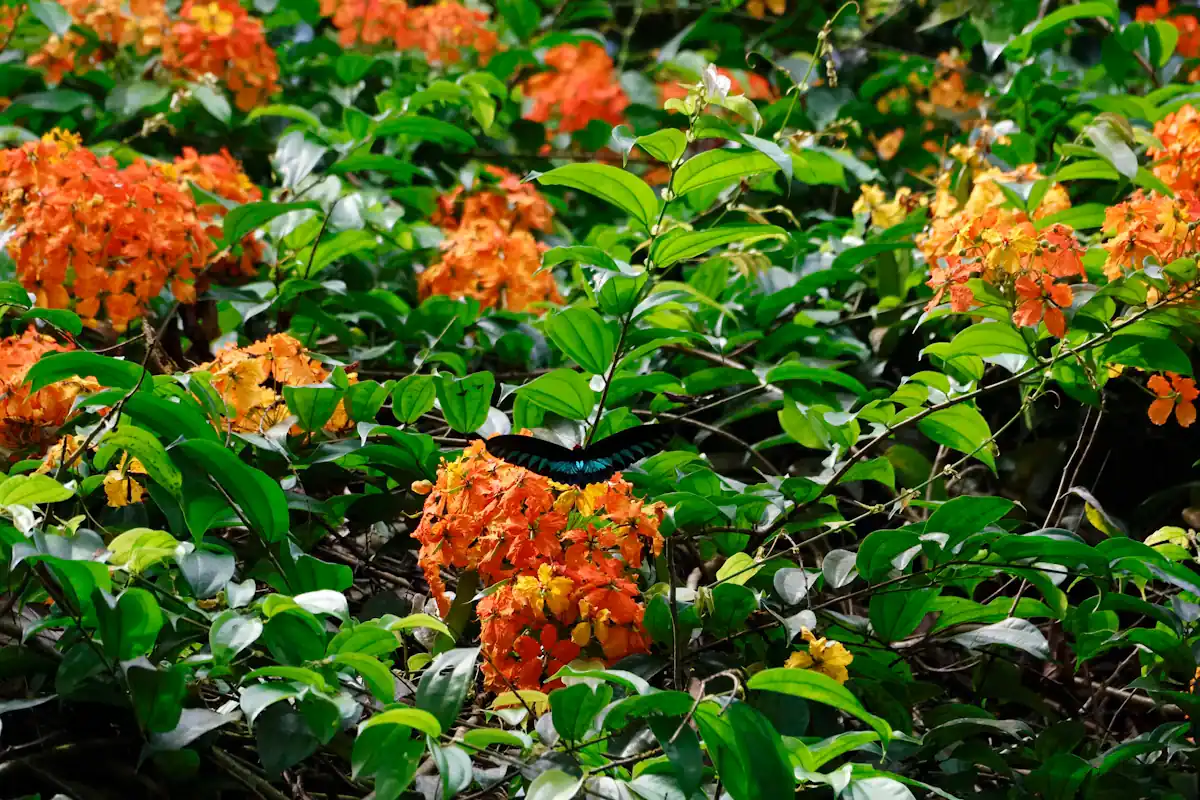
For two months the tropical conservatory is given over to more than seven thousand butterflies and moths flying free, emerged from chrysalides shipped in from tropical farms and hung in a glass case the crowd gathers round. It is the institution's oldest annual event, it reached its thirty-first year in 2026, and it is billed as the largest temporary tropical exhibition in the country.

What nobody warns you about is the heat. The conservatory is kept warm and humid because that is what the insects need, and in March you will have arrived in a coat over a jumper. Wear layers you can strip to a t-shirt and leave the coat in the car, because there is nowhere sensible to put it once you are inside and sweating.

Wear something light-coloured if you actually want one to land on you, move slowly, and do not reach. Staff check shoes and bags on the way out, which is not theatre — a butterfly on your sleeve leaving the building is a dead butterfly.

Timing inside the timing: the first fortnight of March is quieter and the insects are fewer but fresher. The back half of April is the fullest flight and the biggest crowd. Michigan school holidays fall in between and turn a Wednesday into a Saturday. Early morning is warmer-lit and calmer; by noon on a weekend the path round the pool is a shuffle.

Trees from forty countries, and the lights after dark

Decorated Christmas trees with warm lights arranged indoors in a display hall

When to go

The winter display is the other half of the attendance figure. From late November into the first days of January the indoor galleries carry more than forty decorated trees, each dressed for a different country's holiday traditions, plus a railway garden that small children will not leave. It is unapologetically sentimental and it is very well done.

Running alongside it on winter evenings, and ticketed separately, is ENLIGHTEN: the outdoor gardens lit after dark, which in a city where the sun is gone before five in December is a genuinely different experience of the same ground. Evening tickets for these dates sell out, and they sell out earliest for the fortnight before Christmas and for the days between Christmas and New Year.

Two honest notes. First, the outdoor sculpture park in late December is beautiful and it is also cold, dark and sometimes closed underfoot; treat the winter visit as an indoor visit with an optional walk rather than the other way round. Second, this is the period when a members' early hour or a weekday morning is worth more than any other trick on this page.

Dates shift by a few days each year and the evening event has its own calendar. Confirm both before you build a trip around them.

The Japanese garden, which deserves its own hour

A timber bridge crossing a still pond in a Japanese garden surrounded by green trees

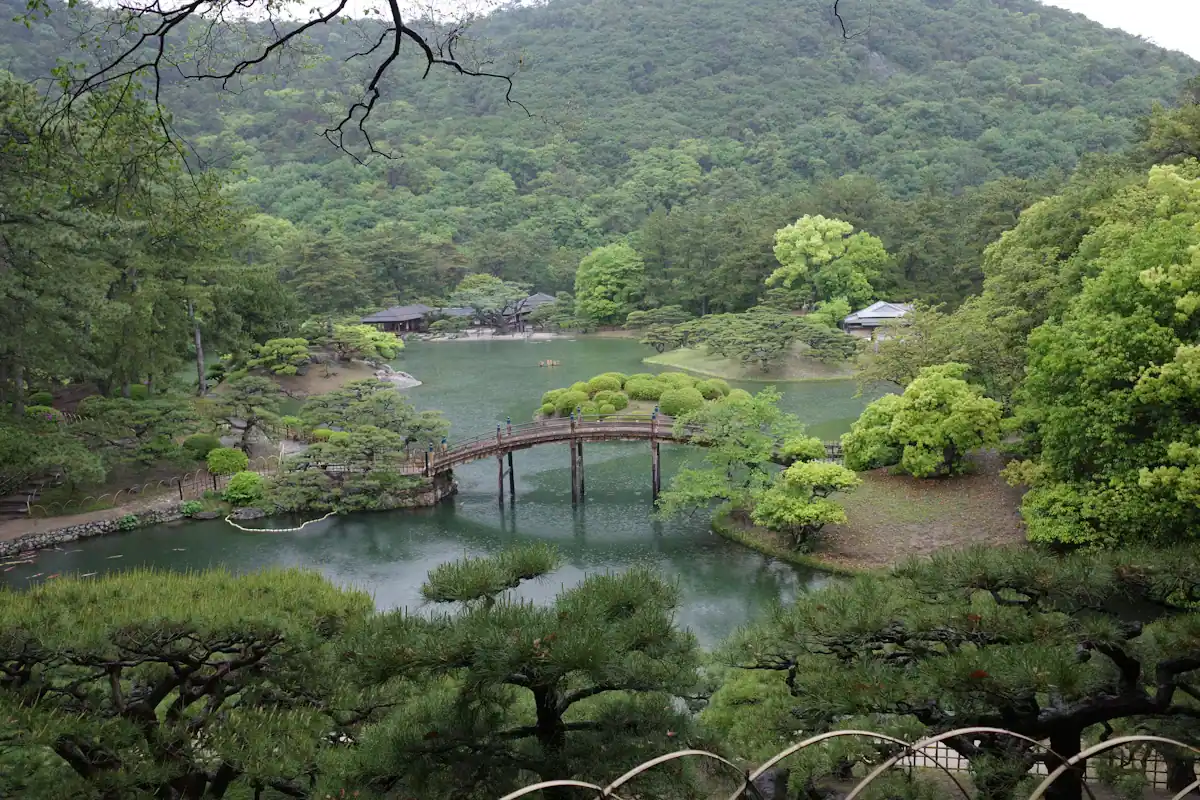
The Richard and Helen DeVos Japanese Garden opened on 10 June 2015, covers eight acres, and was designed by Hoichi Kurisu, who had a hand in the Portland Japanese Garden before this. It sits down a slope on the far side of the sculpture park, which means a good number of visitors run out of legs before they reach it. Do not be one of them.

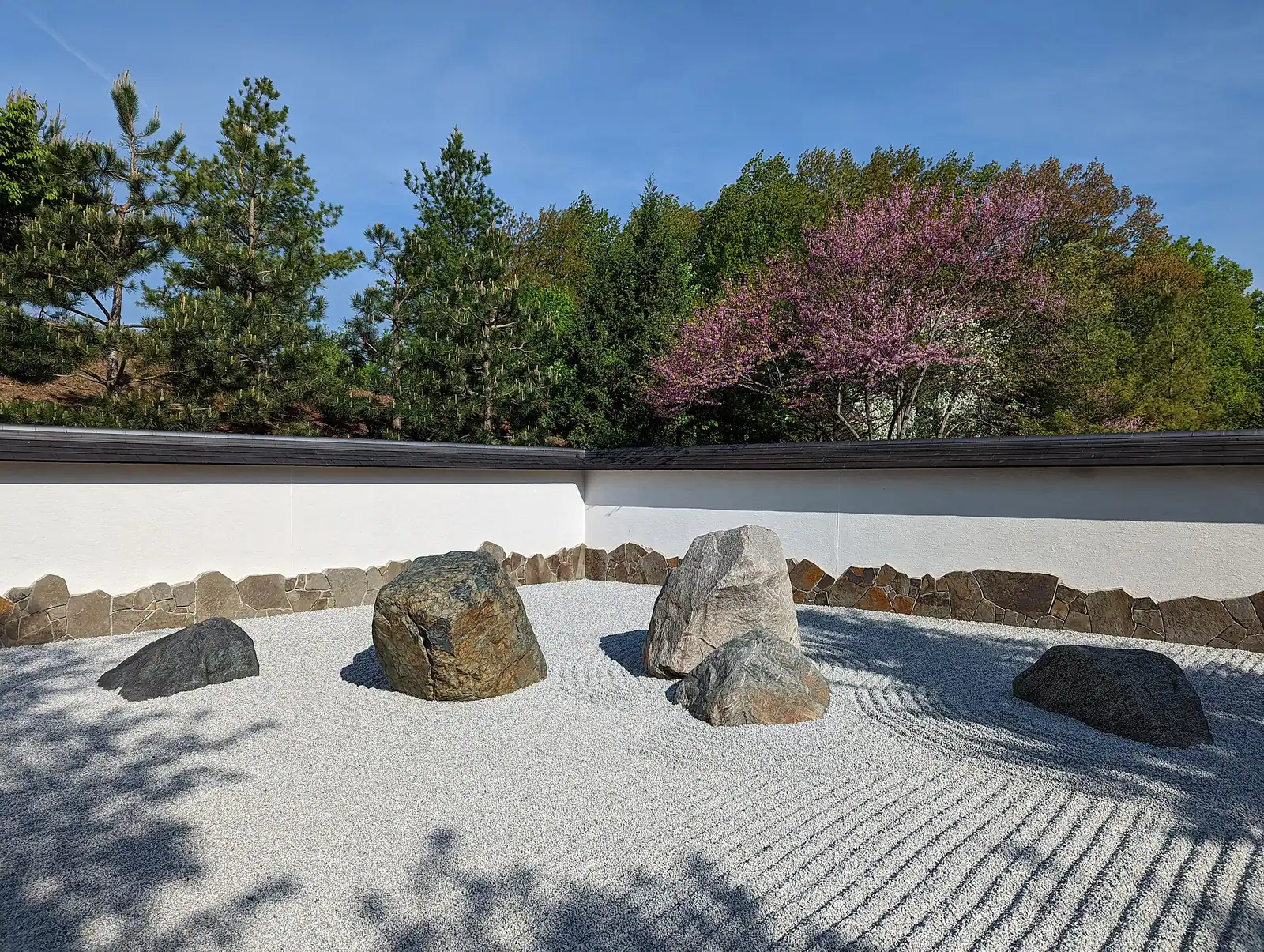
What makes it work is that it was built as a garden rather than as a garden feature. There is a waterfall, a pond you walk around rather than across, a stroll route that keeps hiding and revealing the same view, a zen garden of raked gravel, and contemporary sculpture placed sparingly enough that it reads as punctuation instead of decoration. Kurisu's water is the good bit: you hear it before the path gives it to you.

Seasonally it is the most variable ground on the site. Spring gives you the blossom and the first green. Autumn is the peak, and in a normal Michigan October the maples here are the best colour inside the city limits. Winter strips it back to structure, stone and snow, which is arguably how this kind of garden reads best and which almost nobody comes to see.

Allow forty minutes if you are walking it and an hour if you intend to sit, which you should.

Tickets, parking and whether membership pays

What it costs

Treat every figure here as a band and check the current rate before you travel.

Adult admission has been in the mid-twenties, with children roughly half that and under-threes free. Parking is on site and has not been charged separately. Tickets can be bought at the DeVos Ticketing Center, but buying online before you arrive is faster on any busy day and is the difference between walking in and standing in the lobby.

Membership is the arithmetic worth doing. A household pass costs roughly what two or three adult visits cost, which already pays if you are local, and it carries two extras that matter to visitors as well: early entry on certain member mornings, and reciprocal admission at a long list of gardens elsewhere in the country. If you are visiting from a city with its own botanical garden, check whether your home membership already gets you in here before you buy anything.

The separately ticketed events — the winter light evenings above all — are not covered by general admission, and members get a discount rather than free entry. Concert tickets for the 1,900-seat outdoor amphitheatre are sold separately again, and a concert ticket is not a day ticket.

Food on site is a café rather than a restaurant, and it is fine rather than a reason to stay. On a butterfly Saturday the queue for it is long enough to cost you the best hour of light.

When to skip it, and what to do instead

How they compare

This page would be useless if it only sold the place.

Skip it on a January weekday if your whole interest is the outdoor sculpture. The conservatory carries a winter visit, but the meadow and the boardwalk in a grey freeze are for people who already love the collection, not for a first look.

Skip a Saturday afternoon in the second half of April, and a Saturday in the fortnight before Christmas, unless you have a timed ticket and a tolerance for crowds. Those are the two busiest windows of the year and they are busy in an indoor space.

Skip it altogether if you have three hours in Grand Rapids and no car. It is six miles out, there is no quick transit connection, and the rideshare fare each way plus admission buys you a very good afternoon downtown instead: the Ford Museum on the riverfront, the Public Museum across the street from it, and a walk over the river to Calder Plaza.

If what you want is green space rather than sculpture, the city has cheaper answers. Blandford Nature Center has 264 acres and eight miles of trail six miles from downtown. Millennium Park is a former gravel operation turned into one of the largest municipal parks in the country. Provin Trails is quiet pine woodland with nobody in it. None of them is Meijer Gardens, and on a warm Tuesday in October none of them charges you either.

On the ground

Where to go

Every place below has its own page — hours, parking, what it costs and what to expect when you get there.

  • Tall tropical plants and palms growing under the glass roof of a large conservatory

    Park

    Frederik Meijer Gardens & Sculpture Park

    A grocery fortune turned into 158 acres of Rodin, Oldenburg and orchids, plus the one glasshouse in Michigan that fills up in February.

    2.5–5 hoursAround $20–25 per adult, with lower rates for seniors, children and members

  • Orange and white koi swimming in a shallow garden pond

    Park

    Richard & Helen DeVos Japanese Garden

    Eight acres by Hoichi Kurisu, with four waterfalls, a teahouse built in Japan and a Zhang Huan head sitting in the moss.

    1–1.5 hoursIncluded in general admission to Meijer Gardens; there is no separate Japanese Garden ticket

  • A child watching a tiger through the glass of a zoo enclosure

    Wildlife

    John Ball Zoo

    A zoo built into a hillside, where a funicular carries you to the top so the rest of the day is downhill.

    2.5–4 hoursAround $22–27 per adult in season; lower for seniors and children, under-threes free

  • A woodland path covered in fallen autumn leaves between bare trees

    Nature preserve

    Blandford Nature Center

    Two hundred and sixty-four acres of woodland inside the city limits, with a sugarhouse that boils sap from late February.

    1.5–3 hoursAround $5 per person; members and the youngest children free

  • A sandy beach on calm inland water with trees along the far shore

    Park

    Millennium Park

    Fifteen hundred acres of former gypsum mine and gravel pit, now West Michigan's largest urban park, with a swimming beach in the middle.

    1.5–5 hoursPark free; the beach and splash pad area carries a daily charge

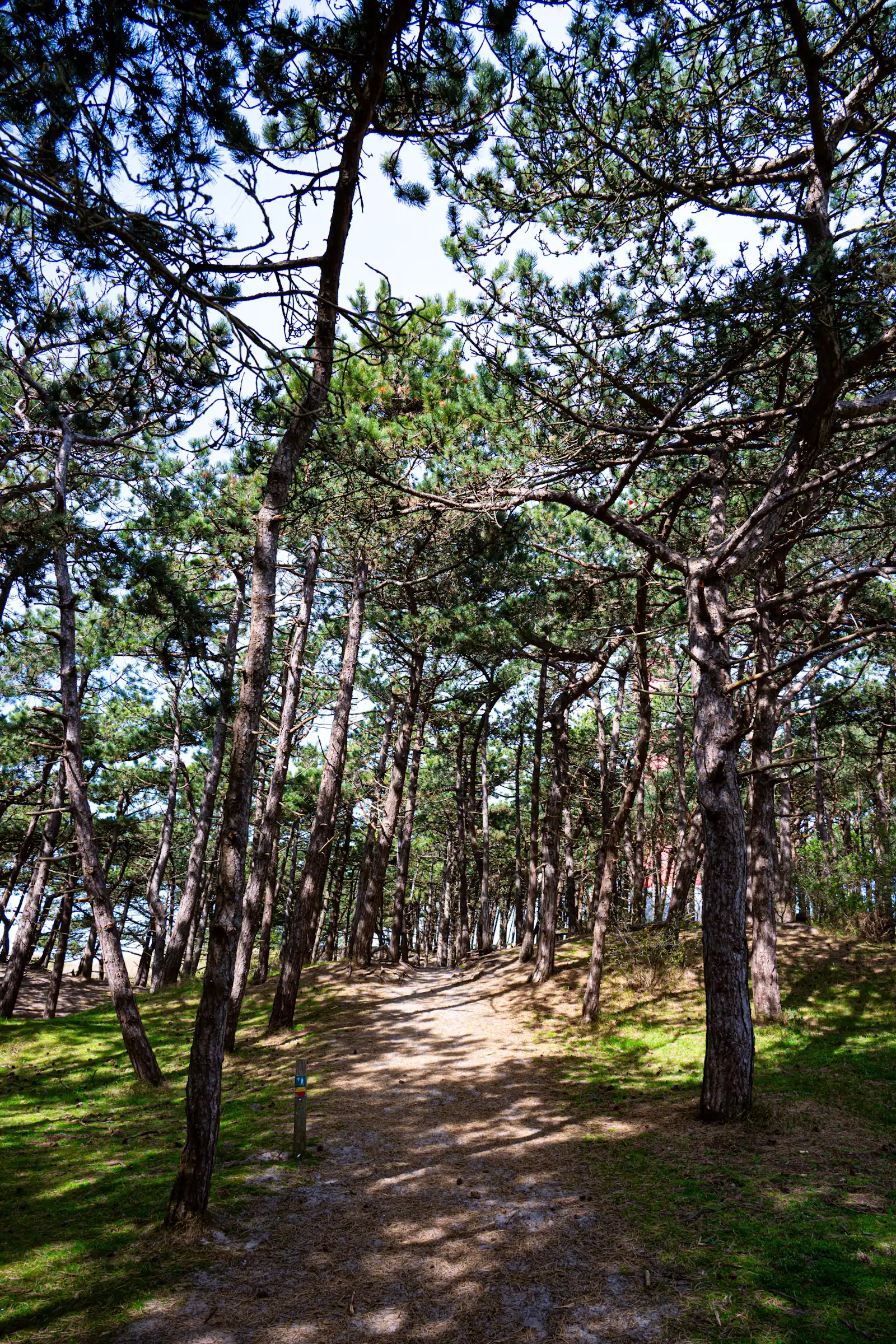
  • Tall pine trunks and open understorey in a sunlit stretch of sandhill forest

    Trail

    Free

    Provin Trails Park

    Forty-six acres of pine and glacial sand where the city goes to ski when the lake-effect snow arrives, ten minutes from the East Beltline.

    1–2 hoursNo admission charge for the park or the trails.

Straight answers

Questions people actually ask

How long do you need at Frederik Meijer Gardens?

Three hours is the honest minimum for a first visit that includes the outdoor sculpture park, and four is more comfortable. The indoor half — conservatory, seasonal gallery, arid and carnivorous houses — takes about an hour on its own, and the outer sculpture collection plus the woodland boardwalk is another ninety minutes of walking. If you only have ninety minutes, do the glasshouses and accept that you have seen roughly a third of the site.

When are the butterflies at Meijer Gardens?

Fred & Dorothy Fichter Butterflies Are Blooming runs from 1 March to 30 April each year in the Lena Meijer Tropical Conservatory, with more than seven thousand tropical butterflies and moths flying free. Early March is quieter with fewer insects on the wing; late April is the fullest flight and the biggest crowds. Dress in layers you can strip down to a t-shirt, because the glasshouse is kept hot and humid for the butterflies rather than for you.

How much does Meijer Gardens cost?

Adult admission has been in the mid-twenties of dollars, with children roughly half that and the youngest free, and parking has not been charged on top. Rates change, so check before you travel. A household membership costs about what two or three adult visits cost and adds member early hours plus reciprocal entry at a long list of gardens elsewhere, which is worth checking if you already belong to one at home.

Is Meijer Gardens worth visiting in winter?

Yes, but as an indoor visit with an optional walk rather than the other way round. The five-storey tropical conservatory is the reason the place works in a city that averages around seventy-five inches of snow, and from late November into early January the galleries carry more than forty decorated trees for Christmas & Holiday Traditions. The outdoor sculpture park in a grey freeze is for people who already love the collection.

How far is Meijer Gardens from downtown Grand Rapids?

About six miles northeast, off the East Beltline in Grand Rapids Township, which is fifteen to twenty minutes by car outside rush hour. There is no quick transit connection, so most visitors drive or take a rideshare. If you are in Grand Rapids without a car for a short stay, the riverfront museums downtown are a more sensible use of an afternoon than two rideshare fares plus admission.

What sculptures are at Meijer Gardens?

The permanent collection runs to more than three hundred works and includes Rodin, Henry Moore, Mark di Suvero, Jaume Plensa, Ai Weiwei and Dale Chihuly. The signature piece is Nina Akamu's bronze The American Horse, standing around twenty-four feet, which answers a colossal horse Leonardo da Vinci designed for Milan and never cast. Ai Weiwei's twelve zodiac animal heads are the other set most visitors stop at.

Do you need to book Meijer Gardens tickets in advance?

Not always, but you should. Tickets are sold at the ticketing centre on arrival, and on a quiet weekday morning walking up is fine. During the March and April butterfly exhibition, the winter tree display and the separately ticketed evening light event, buying online before you leave your hotel is the difference between walking in and waiting in the lobby. Evening tickets around Christmas sell out furthest ahead.

Is there a Japanese garden at Meijer Gardens?

Yes. The Richard and Helen DeVos Japanese Garden opened on 10 June 2015, covers eight acres, and was designed by Hoichi Kurisu. It sits down a slope beyond the main sculpture park, far enough out that plenty of visitors run out of legs before reaching it. Allow forty minutes to walk it and an hour if you plan to sit. Autumn colour here is the best inside the city limits.