Historic site
Free
Meyer May House
A 1909 Frank Lloyd Wright Prairie house, restored to the last carpet thread, and free to tour if you book in time.
1.5 hoursFree, funded by Steelcase, but by appointment only in groups of about eight
Things to Do
Grand Rapids was the Furniture City, and that money built everything else. A free Frank Lloyd Wright house, 1,300 historic homes and a river being put back.
Every good thing in this city was paid for by chairs.
That is barely an exaggeration. William Haldane opened a cabinet shop on the Grand River in 1836, fourteen years before Grand Rapids incorporated as a city, and within two generations the place was making furniture for the entire country. Hardwood came down the river, water drove the mills, and an immigrant workforce arrived to do the joinery. Berkey & Gay, Widdicomb, Sligh, Hekman, Phoenix and Nelson, Matter & Co. were national names before most American cities had a name for anything.
The money that came out of that is still visible on every block of the walk below. It restored a Frank Lloyd Wright house and gives the tours away free. It underwrote an art museum that became the first in the world certified LEED Gold. It put a hundred and fifty-eight acres of sculpture garden on the northeast edge of town, a research institute up the hillside on Michigan Street, and a twelve-thousand-capacity amphitheatre on the riverbank that opened in May 2026. Take the furniture out of the story and there is no story.
The industry did not vanish, it changed shape. Grand Rapids stopped making the nation's bedroom suites and started making its offices. Steelcase is still headquartered here, and Herman Miller and Haworth are within about thirty miles of it on the lakeshore side, which puts three of the largest names in office furniture inside one small stretch of west Michigan. That is why the design conversation here is about workplaces and materials rather than about boutiques.
What this gives a visitor is an unusually dense walking city. Heritage Hill, with roughly thirteen hundred historic houses, starts about fifteen minutes uphill from the downtown core. Wright's Meyer May House is inside it and costs nothing to tour. The Calder, the art museum and the riverfront are all within the same mile. You can do the whole thing on foot in a morning and an afternoon, which is not true of any comparable collection of American architecture outside a handful of much larger cities.
One current caveat. The riverfront is a building site and will be for a while: the long-delayed project to put rapids back into the Grand River began construction in the summer of 2026 and is expected to run about two years. Expect fencing, plant and closed paths along the water. Details below.
The turning point was an exhibition in another state. In 1876 the Philadelphia Centennial Exposition gathered the best manufacturers in America, and the East Coast trade assumed fine furniture came from Europe or from New England. Grand Rapids sent its best bedroom suites. Berkey & Gay, Phoenix Furniture and Nelson, Matter & Co. all came home with awards, and the phrase "Furniture City" stopped being a local boast.
What the makers did next is the genuinely clever part. In December 1878 they opened their showrooms directly to buyers from out of town, cutting out the eastern middlemen. That became the Grand Rapids Furniture Market, held in January and again in summer, and for roughly half a century the buyers for America's department stores came here twice a year to decide what the country would be sitting on. A mid-sized Michigan city set the national taste in furniture from a series of trade showrooms.
You can see the physical residue of that on the west side and in Monroe North, where the surviving factory buildings have been converted into offices, apartments and brewery taprooms. The brick, the timber posts, the freight-door openings and the sawtooth roof lights are all still legible if you know to look for them.
The Grand Rapids Public Museum tells this story properly on its second floor, with more than two thousand pieces of furniture held as industrial history rather than as decorative art: the machines, the wages and the workforce alongside the finished sideboards.
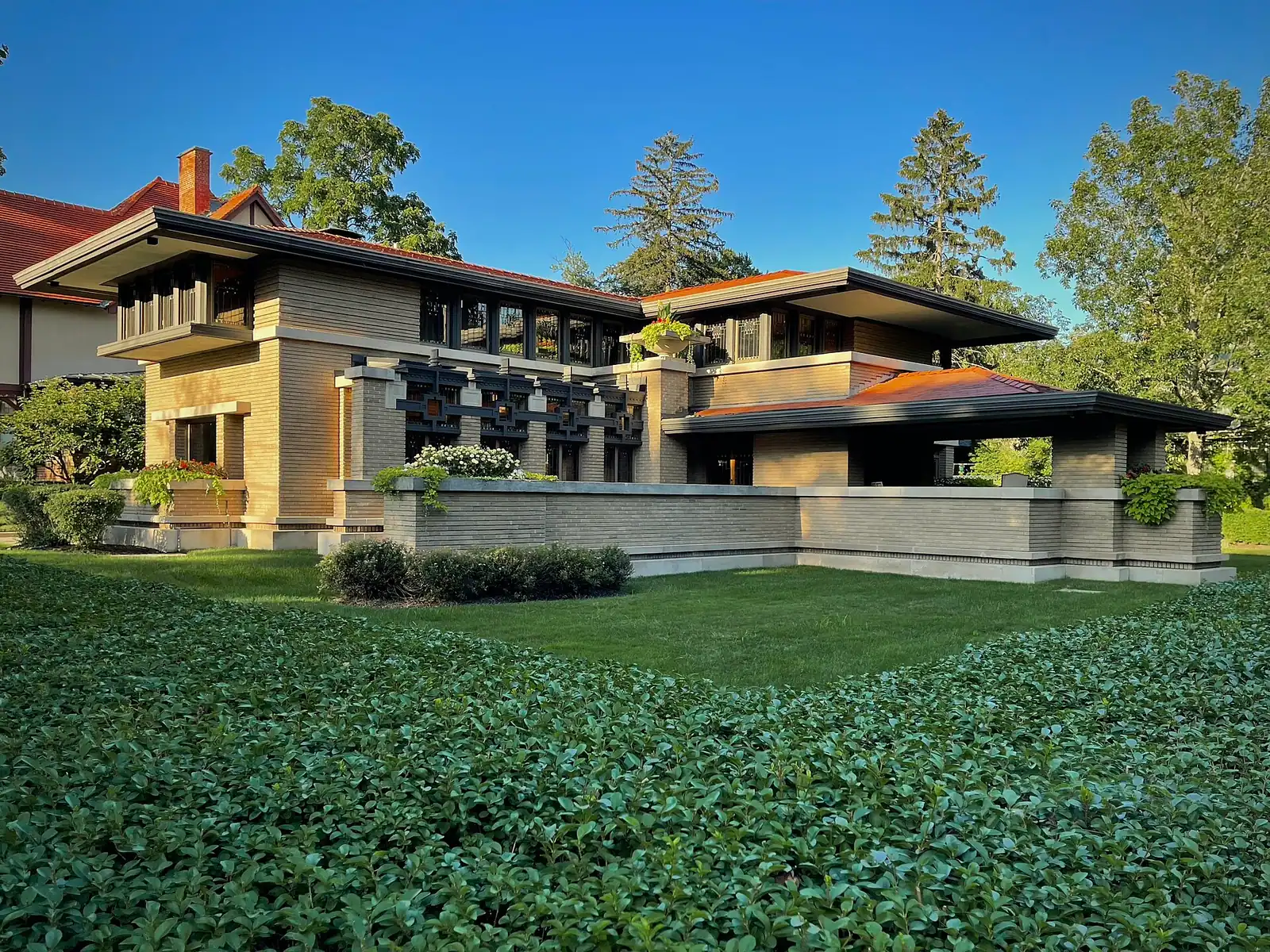
Frank Lloyd Wright built this house in 1908 and 1909 for Meyer S. May, a Grand Rapids clothier, and his wife Sophie Amberg. It is a Prairie house of the good period, low and horizontal, with art glass, built-in furniture and a plan that pulls you sideways through the rooms rather than straight down a hall.
What makes it exceptional is not the design, it is the restoration. Steelcase bought the house in 1985 after decades of alterations and put it back, with a thoroughness that included recreating textiles and light fittings from photographs and drawings. The furniture company that restored a house designed to have every piece of furniture built into it is the most Grand Rapids sentence in this guide.
And it is free. There is no charge to tour it, which is a decision Steelcase made and has kept. At the time of writing, tours ran on Tuesdays and Thursdays through the late morning and on Sunday afternoons, with a short film about the restoration followed by a docent-led walk through the house. Allow about ninety minutes for the whole thing.
Book. Reservations are taken online for parties of up to eight and by contact form for larger groups, and the house is small enough that turning up unannounced on a Sunday is a gamble. Practical notes: wheelchair access covers the visitor centre and the main floor, the upper floors are reached by stairs only, strollers are not allowed inside, and the house closes in winter when local schools close for weather. Confirm the current schedule before you plan a day around it, because these details do change.
Heritage Hill rises immediately east of downtown and holds roughly thirteen hundred houses dating from 1844 onwards, which makes it one of the largest urban historic districts in the United States. Nearly every style American architecture has produced is represented somewhere on these streets: Greek Revival, Italianate, Queen Anne, Romanesque, Colonial Revival, Arts and Crafts, Prairie.
This was where the furniture families lived, and the houses are the direct physical evidence of what that industry earned. The scale of them on Madison, College and Cherry is genuinely startling for a city this size.
Two hundred yards up College Avenue from the Meyer May House stands the Amberg House of 1910, commissioned by Sophie May's parents. Its authorship is a good puzzle: the design began with Wright, but he left for Europe during the project and it was carried through by Marion Mahony and Walter Burley Griffin, two of the most interesting architects of the period in their own right. It is a private residence. Look from the pavement and do not knock.
The neighbourhood association runs a house tour, traditionally on a weekend in spring, which is the only way most visitors get inside anything here other than the May house. Dates and format change year to year, so check rather than assume.
The walk from the top of Heritage Hill down Cherry Street into the East Hills and Wealthy Street business districts takes about ten minutes and is the best single stretch of pavement in the city.
Local tips
How they compare
Grand Rapids has more certified sustainable architecture per head than almost anywhere its size, and it is not an accident: local money, local manufacturers with a stake in materials, and a civic habit of commissioning properly.
| Building | Year | Why it matters |
|---|---|---|
| Grand Rapids Art Museum | 2007 | The first art museum anywhere certified LEED Gold. wHY Architecture, about $75m, a whole downtown block redeveloped, galleries daylit from above |
| Van Andel Institute | 2000 and 2009 | Rafael Viñoly stepped it into the Michigan Street hillside; the cascading skylit roof is meant to read as rapids. The second phase was certified LEED Platinum |
| Downtown Market | 2013 | LEED Gold, by Hugh A. Boyd Architects, around $32m. A working food market rather than a showpiece |
| Acrisure Amphitheater | 2026 | 12,000 capacity on the west bank at 201 Market Avenue SW, roughly $184m. Opened 15 May 2026 |
The Van Andel Institute is the one to walk to if you only do one. It sits above the downtown on what locals call the Medical Mile, a corridor of hospital and research building that went up over roughly twenty years and is the city's second great construction story after furniture. From the plaza in front of it you get the best free view of the river and the downtown grid, which is worth the uphill.
The art museum you can go inside for the price of admission. The institute is a working research facility, so admire the outside.
Before you book
The city is named for a set of rapids that have not existed for well over a century. Nineteenth-century industry dammed and flattened that stretch of the Grand River, and the result is the wide, slow, slightly dull water you see from the bridges now.
Putting them back has been discussed since 2009 and stuck in permits, funding and environmental review for most of that time, which is why so much writing about Grand Rapids describes the project as either finished or imaginary. Neither is true. The federal Natural Resources Conservation Service approved roughly eleven million dollars towards it in 2026, the city awarded a construction contract of about fourteen and a half million in April of that year with total expenditure capped near twenty-six million, and construction on the Lower Reach — from Bridge Street down to Fulton Street — began in the summer of 2026.
That phase removes four dams and builds rock features designed to make actual whitewater, and it is expected to take about two years. The Upper Reach, from Ann Street to Bridge Street, is still being designed; it may include taking out the Sixth Street Dam and building a sea lamprey barrier, and no timetable for it should be treated as firm.
What this means for a visit now: the riverfront through the middle of downtown is an active construction site. Expect hoarding, plant, closed sections of the riverwalk and rerouted paths, and do not plan a walk along the water as the centrepiece of a day. The Blue Bridge and the other pedestrian crossings are the reliable way to see the river while the work runs.
It also means that in a few years the view from those bridges will be genuinely different, which is a decent reason to come back.
On the ground
Every place below has its own page — hours, parking, what it costs and what to expect when you get there.
Historic site
A 1909 Frank Lloyd Wright Prairie house, restored to the last carpet thread, and free to tour if you book in time.
1.5 hoursFree, funded by Steelcase, but by appointment only in groups of about eight
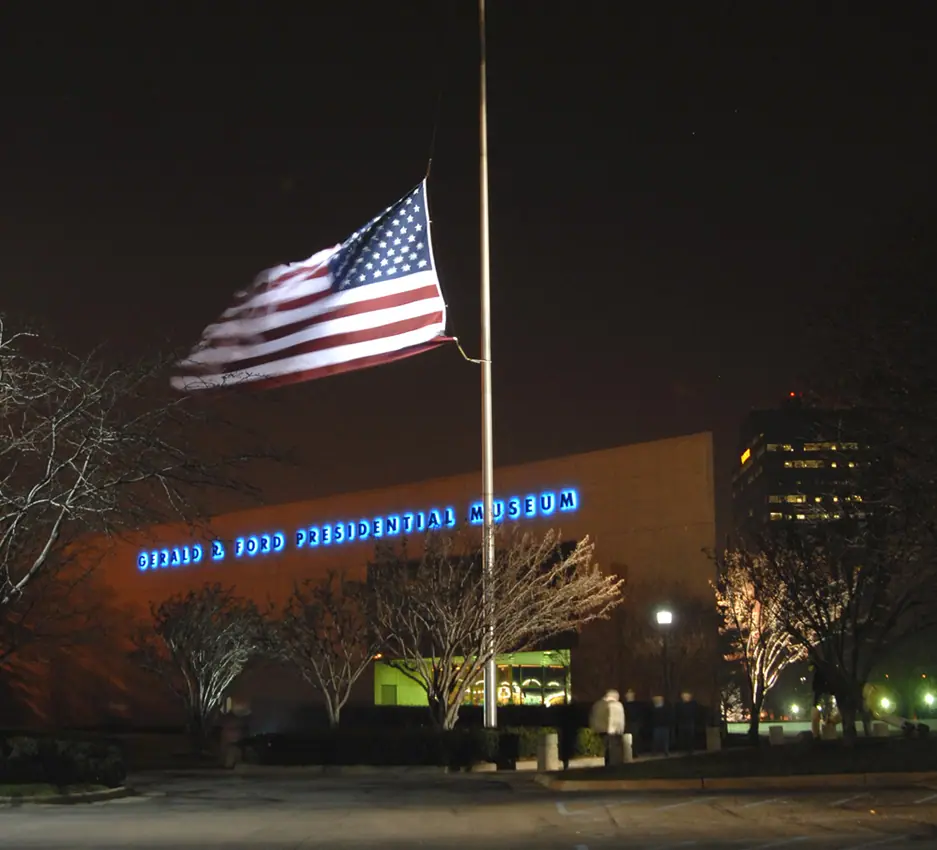
Museum
A presidential museum on the riverbank where the 38th president and his wife are buried a short walk from the front door.
1.5–2.5 hoursAround $15–20 per adult; the gravesite on the grounds is free to visit
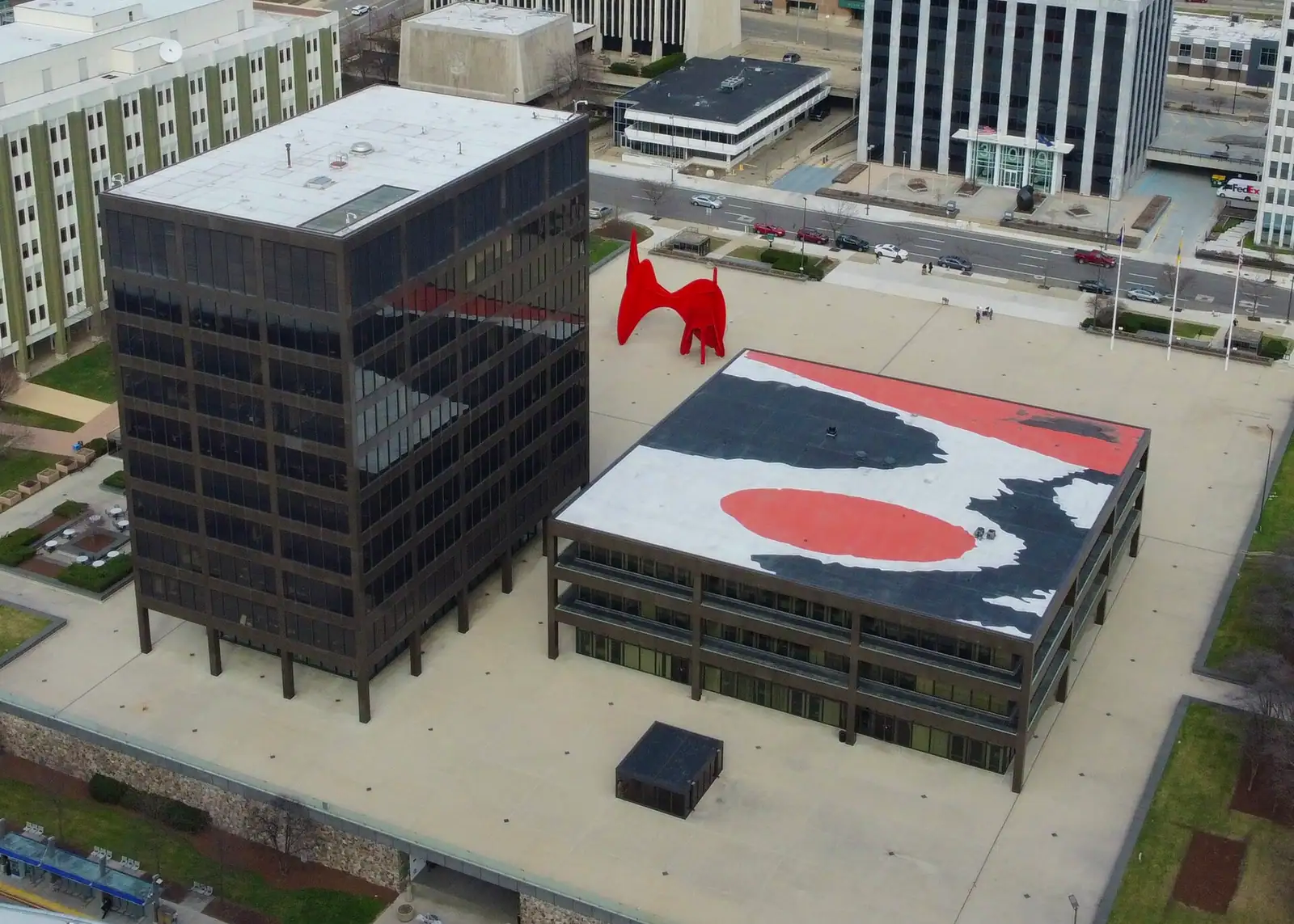
Landmark
Forty-two tons of vermilion steel that changed how a furniture town saw itself, and the Calder painting on the roof behind it.
15–45 minutesFree. An open civic plaza with no ticketing at any time of year.
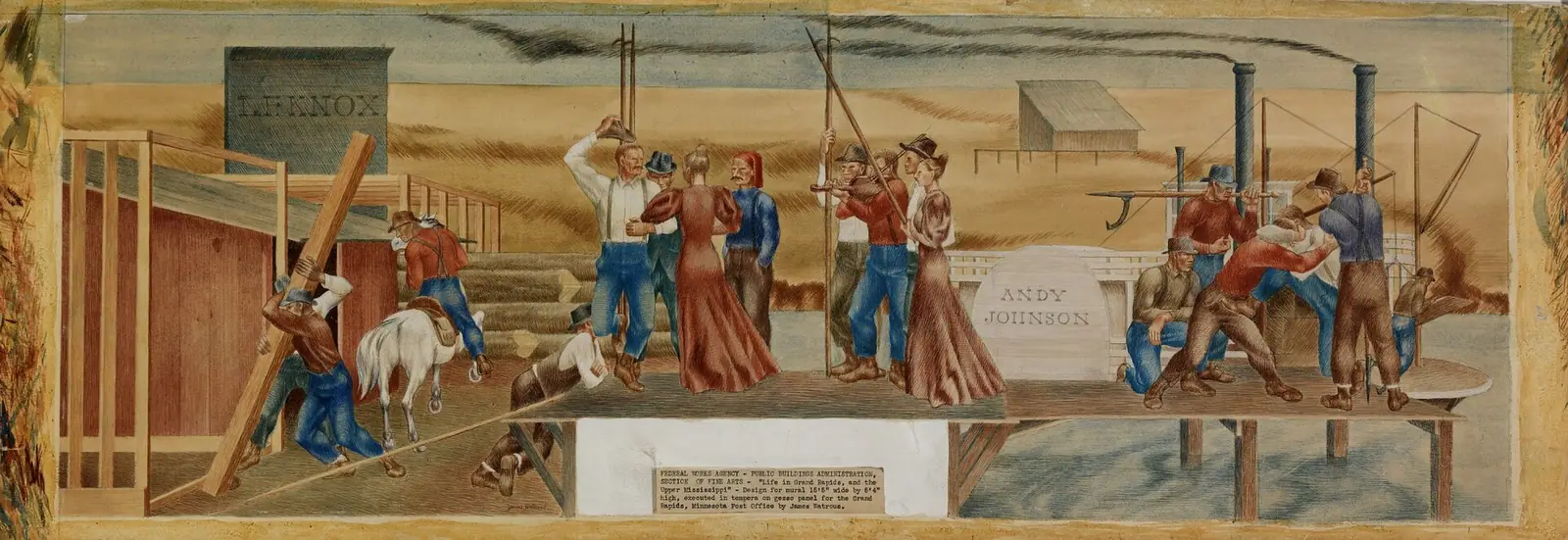
Museum
The first LEED Gold certified art museum anywhere, built by a city whose fortune came from making furniture well.
1.5–2.5 hoursRoughly $10–15 per adult; general admission free on Thursday evenings
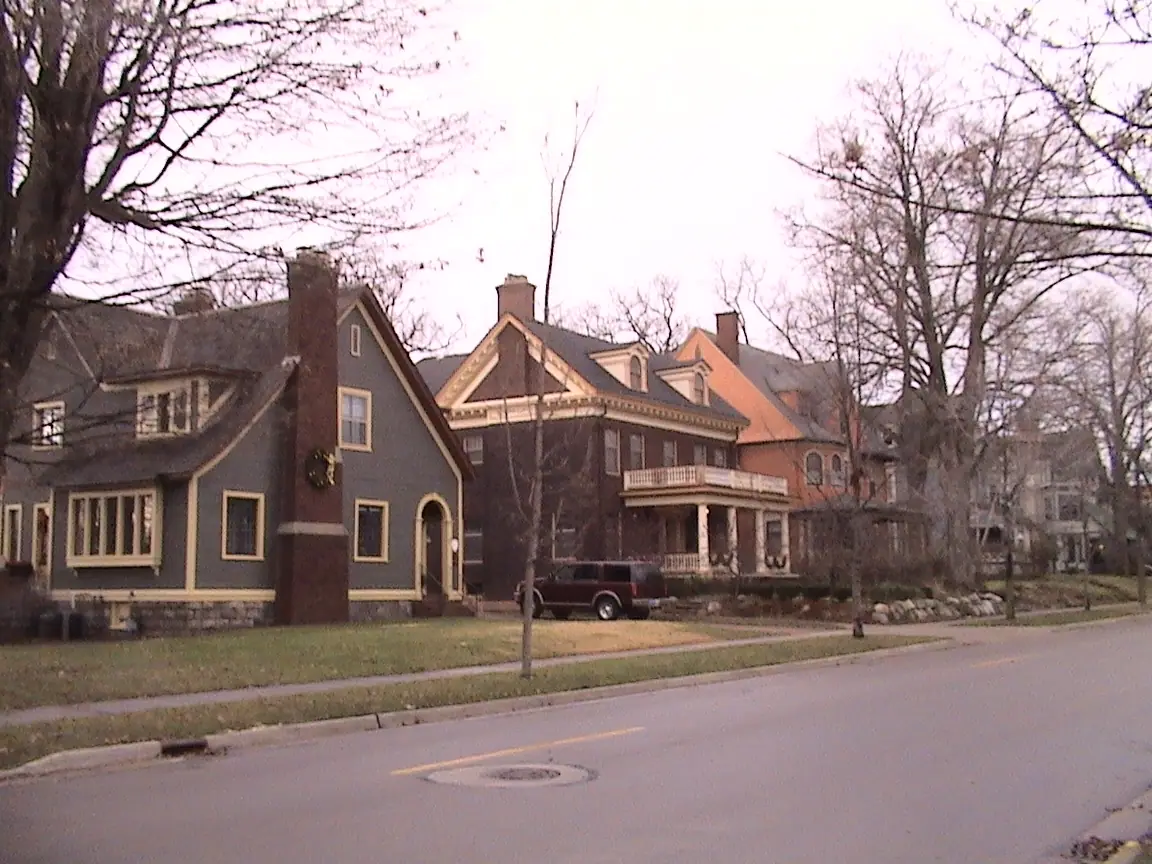
Neighbourhood
Thirteen hundred buildings on a hill above downtown, saved in 1968 by 125 neighbours who refused to let the bulldozers in.
0.5–1.5 hoursFree to walk; the annual Tour of Homes in May is ticketed
Shopping
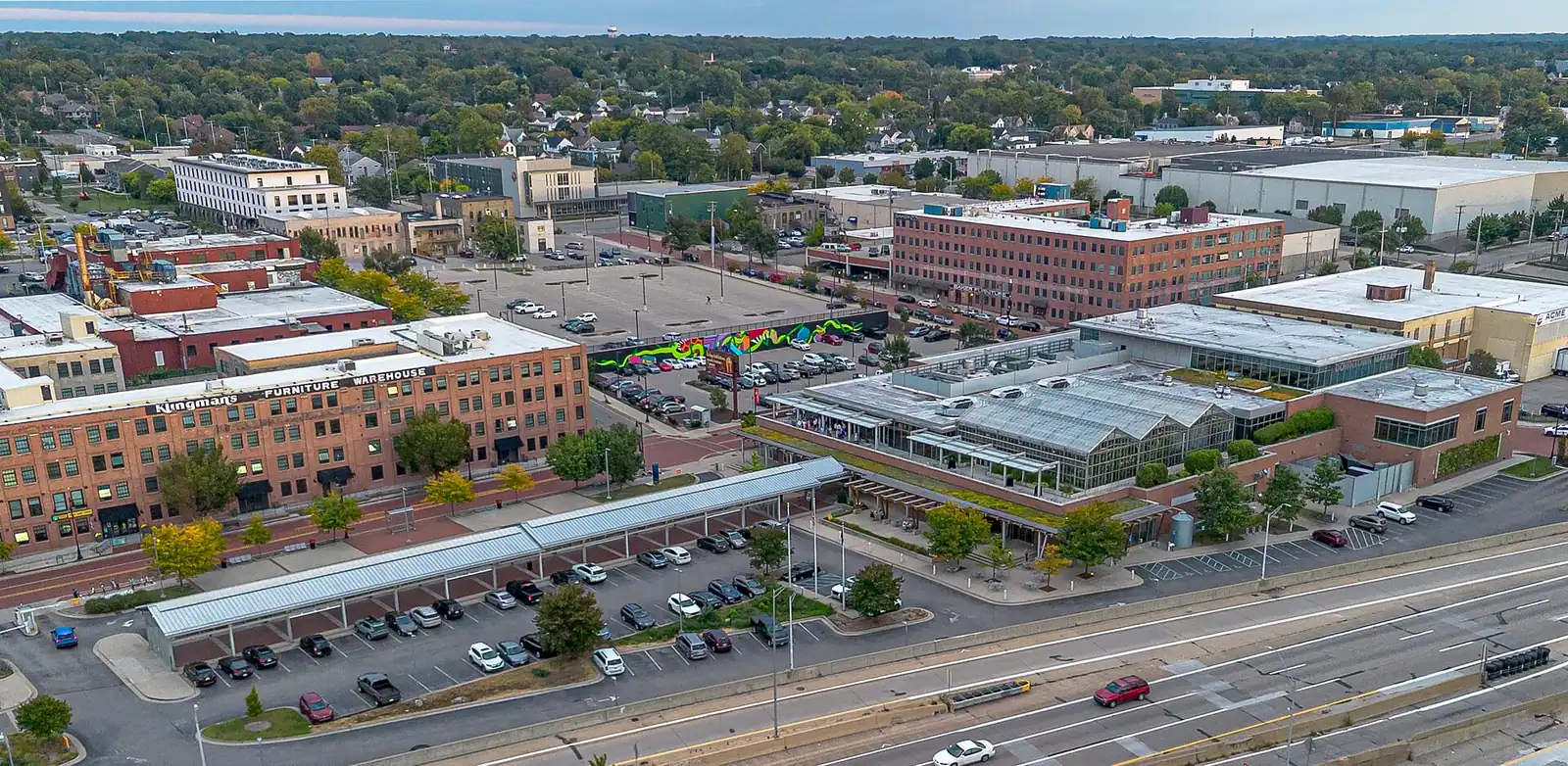
Twenty-odd food merchants under one roof, a 52-stall farmers shed outside, and a greenhouse growing on the second floor.
1–2 hoursFree to enter; you pay the individual merchants
Trail
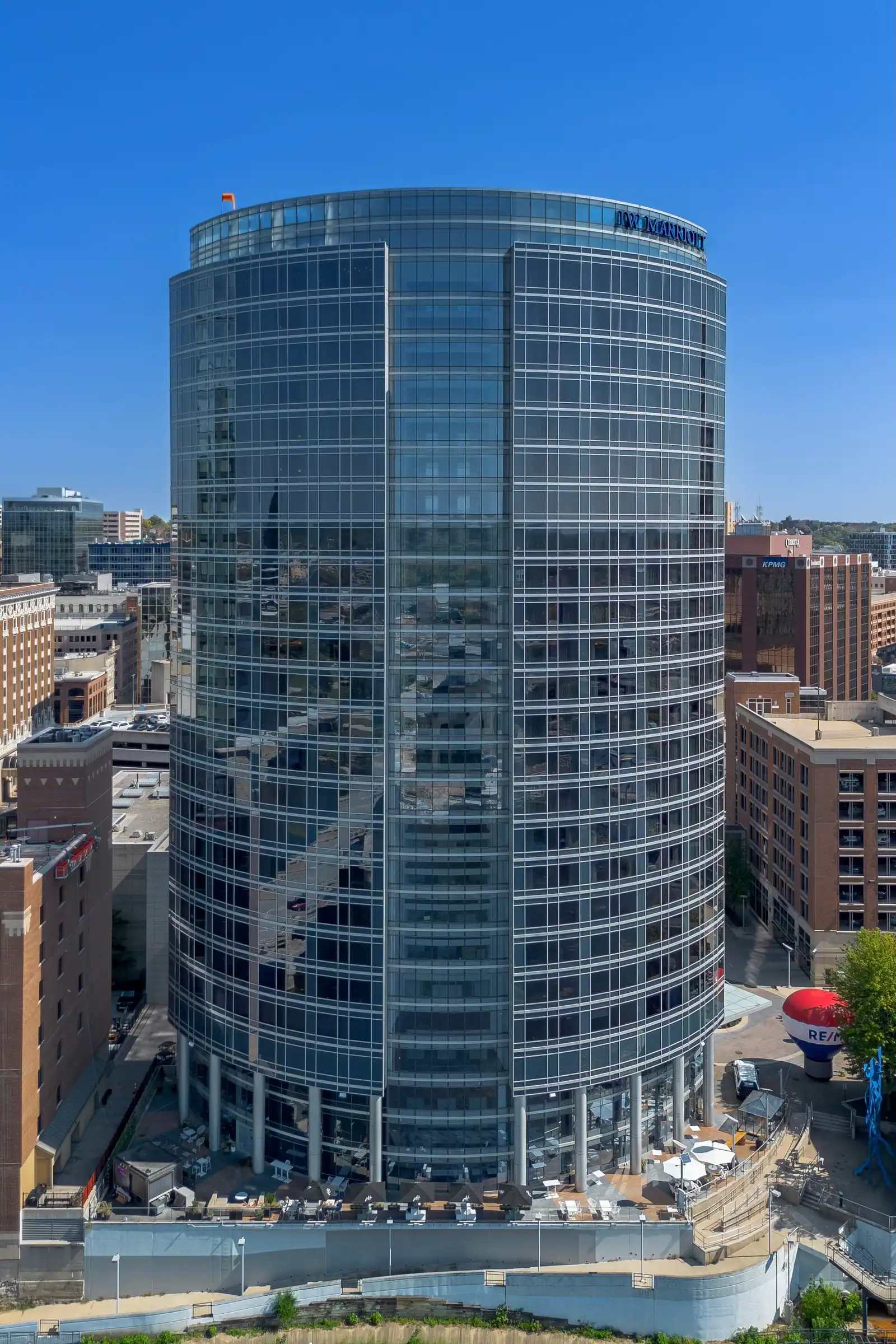
A downtown loop on both banks of a river that is currently being torn up so it can have its rapids back.
1–1.5 hoursFree. Parking is the only cost and that is a downtown ramp
Dining district
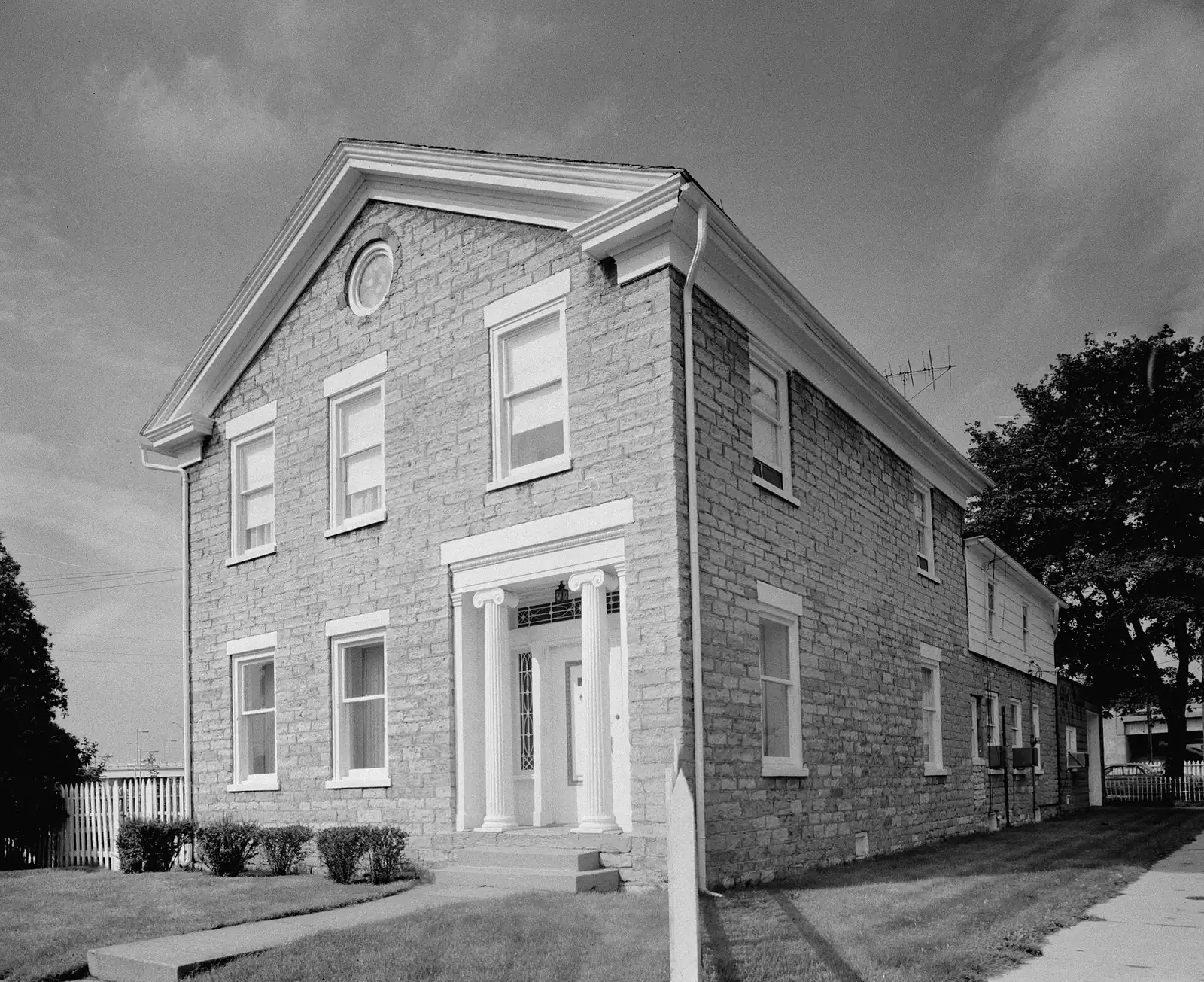
The furniture district that built the city, now lofts, offices and the brewery that moved back in a decade after Founders moved out.
1–3 hoursFree to walk. You pay for what you drink and eat.
Straight answers
Yes, two, and one of them you can go inside. The Meyer May House at 450 Madison Avenue SE was built in 1908–09 for a local clothier and restored by Steelcase from 1985; tours are free and run a few days a week with a short film beforehand. The Amberg House of 1910 on College Avenue was begun to a Wright design and finished by Marion Mahony and Walter Burley Griffin while he was in Europe. It is a private home.
Yes. Steelcase, which bought and restored the house in 1985, covers the cost and charges visitors nothing. At the time of writing tours ran on Tuesdays and Thursdays in the late morning and on Sunday afternoons, with a film about the restoration followed by a docent-led walk. Allow about ninety minutes. Reserve online for parties up to eight, contact them directly for nine or more, and check the schedule before travelling.
Because it furnished the country for the better part of a century. William Haldane opened a cabinet shop here in 1836, and by the 1876 Philadelphia Centennial Exposition local firms including Berkey & Gay, Phoenix Furniture and Nelson, Matter & Co. were taking national awards. From December 1878 the makers opened their showrooms directly to out-of-town buyers, and the twice-yearly Grand Rapids Furniture Market set American taste in furniture for roughly fifty years.
A residential district immediately east of downtown holding around 1,300 houses dating from 1844 onwards, and one of the largest urban historic districts in the United States. Nearly every style American architecture has produced is represented, from Greek Revival through Queen Anne to Prairie. It is where the furniture families lived, so the scale of the houses is startling for a city this size. Walking it is free; the houses are private.
Yes, and construction is now under way rather than proposed. After roughly seventeen years of permits, funding and review, federal money was approved and a construction contract awarded in 2026, and work on the Lower Reach between Bridge Street and Fulton Street began that summer. It removes four dams and adds rock features to create whitewater, and is expected to take about two years. The upper section above Bridge Street is still being designed.
Partly, and less than usual at the moment. The riverwalk runs along both banks through the centre, but the rapids restoration project turned much of the downtown waterfront into an active construction site from summer 2026, with fencing, plant and rerouted sections. The pedestrian bridges, including the Blue Bridge, remain the dependable way to see the water. Do not build a day around a continuous riverside walk until the work finishes.
The Grand Rapids Art Museum of 2007, which was the first art museum in the world certified LEED Gold and is daylit from above. The Van Andel Institute on the Michigan Street hillside, by Rafael Viñoly, whose cascading skylit roof is meant to evoke the river's lost rapids and whose second phase was certified LEED Platinum. The Downtown Market of 2013, LEED Gold and a working food hall. And the Acrisure Amphitheater on the west bank, opened in May 2026.
Keep exploring
Things to do
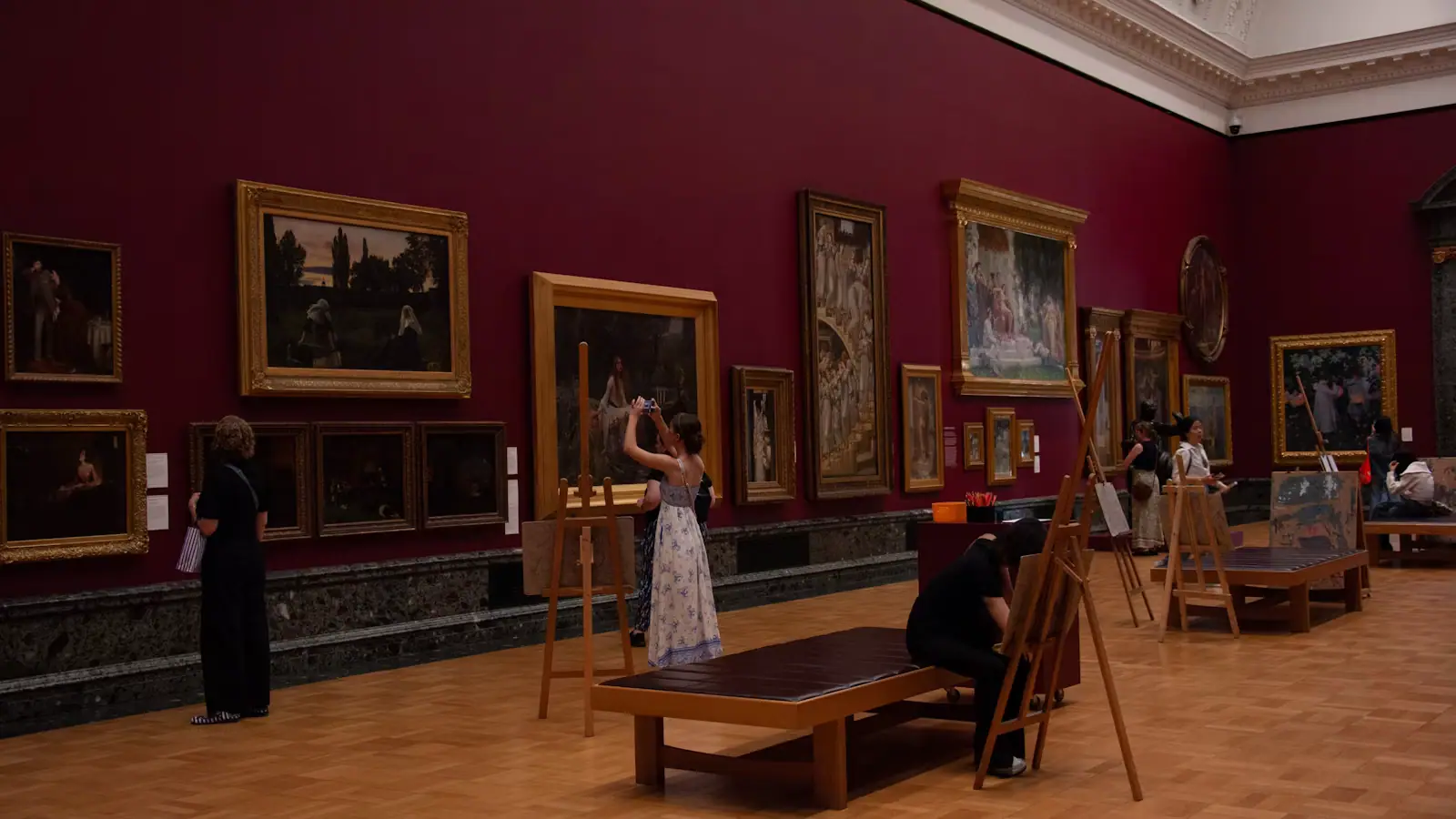
Grand Rapids is overcast about two hundred and five days a year, and through the winter the sky is grey or mostly grey roughly two thirds of the…
Things to do
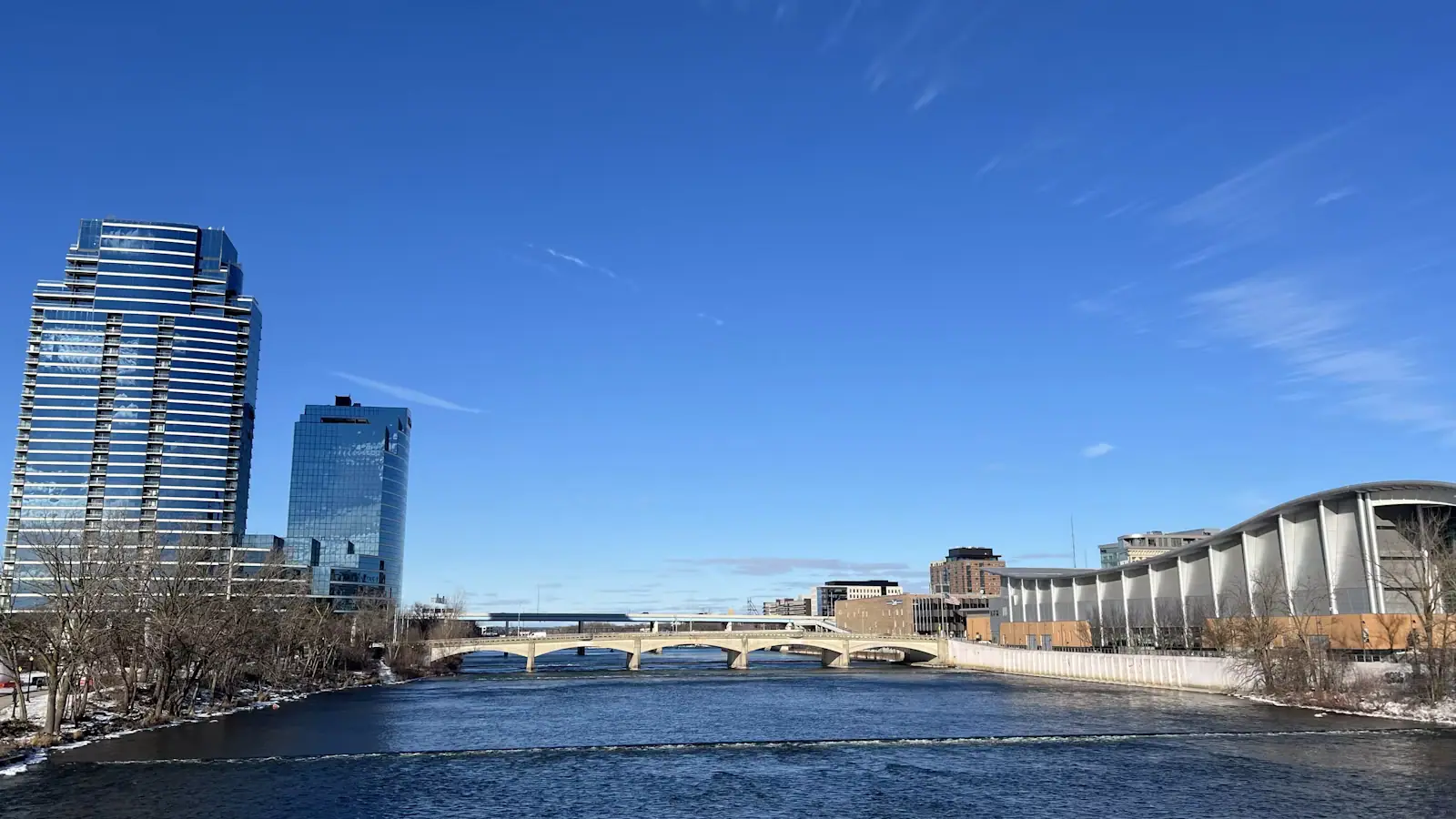
Most cities put art in their museums and then decide whether anyone cares. Grand Rapids did it the other way round. In 1969 a committee of local…
Guide hub
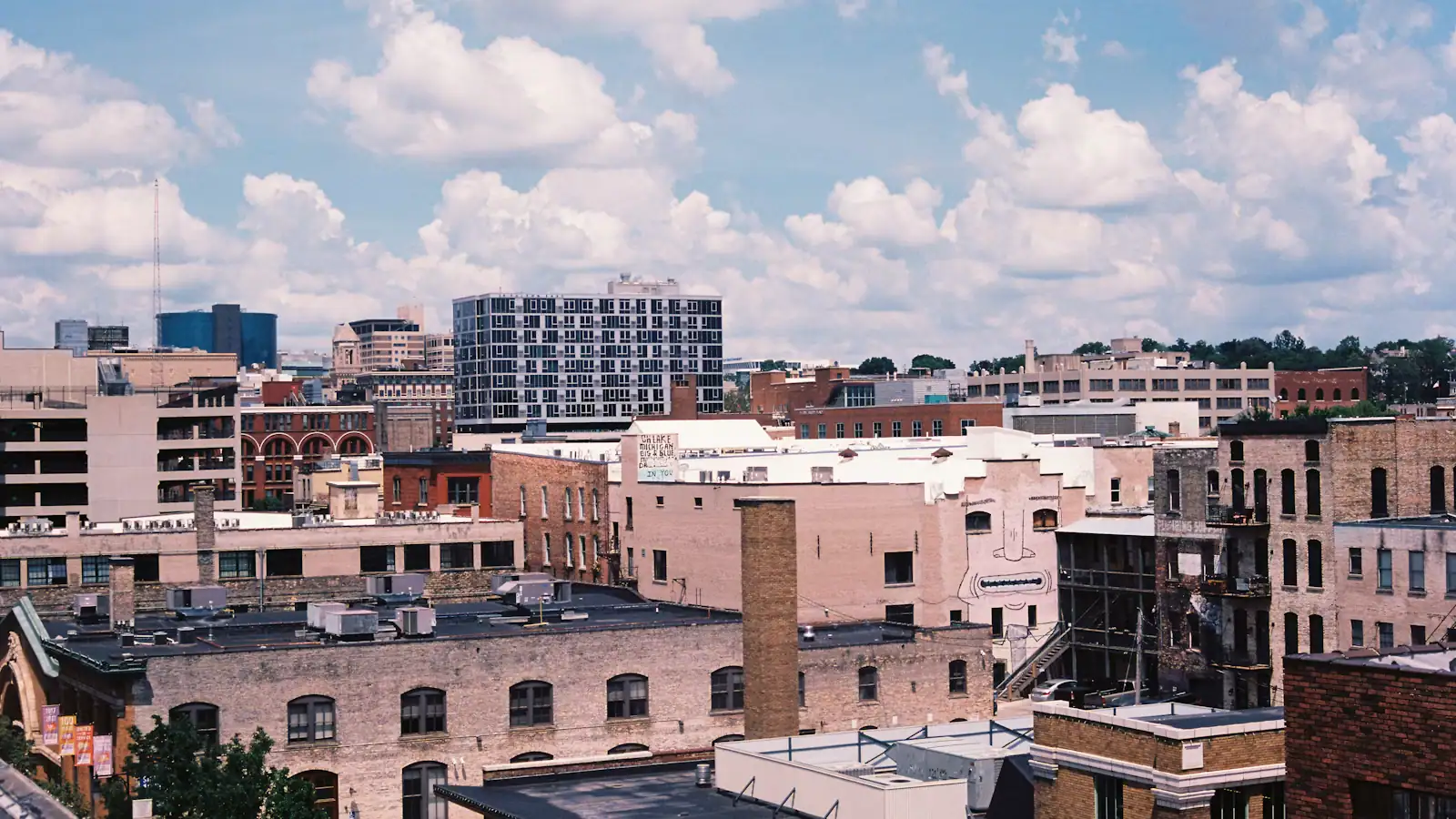
Furniture paid for this city, and then it paid for everything worth coming to see in it. That is the single idea a visitor needs. Grand Rapids made…
Budget
The free list in Grand Rapids is not the list you fall back on when the museum tickets are too expensive. In this particular city it contains three…
Things to do
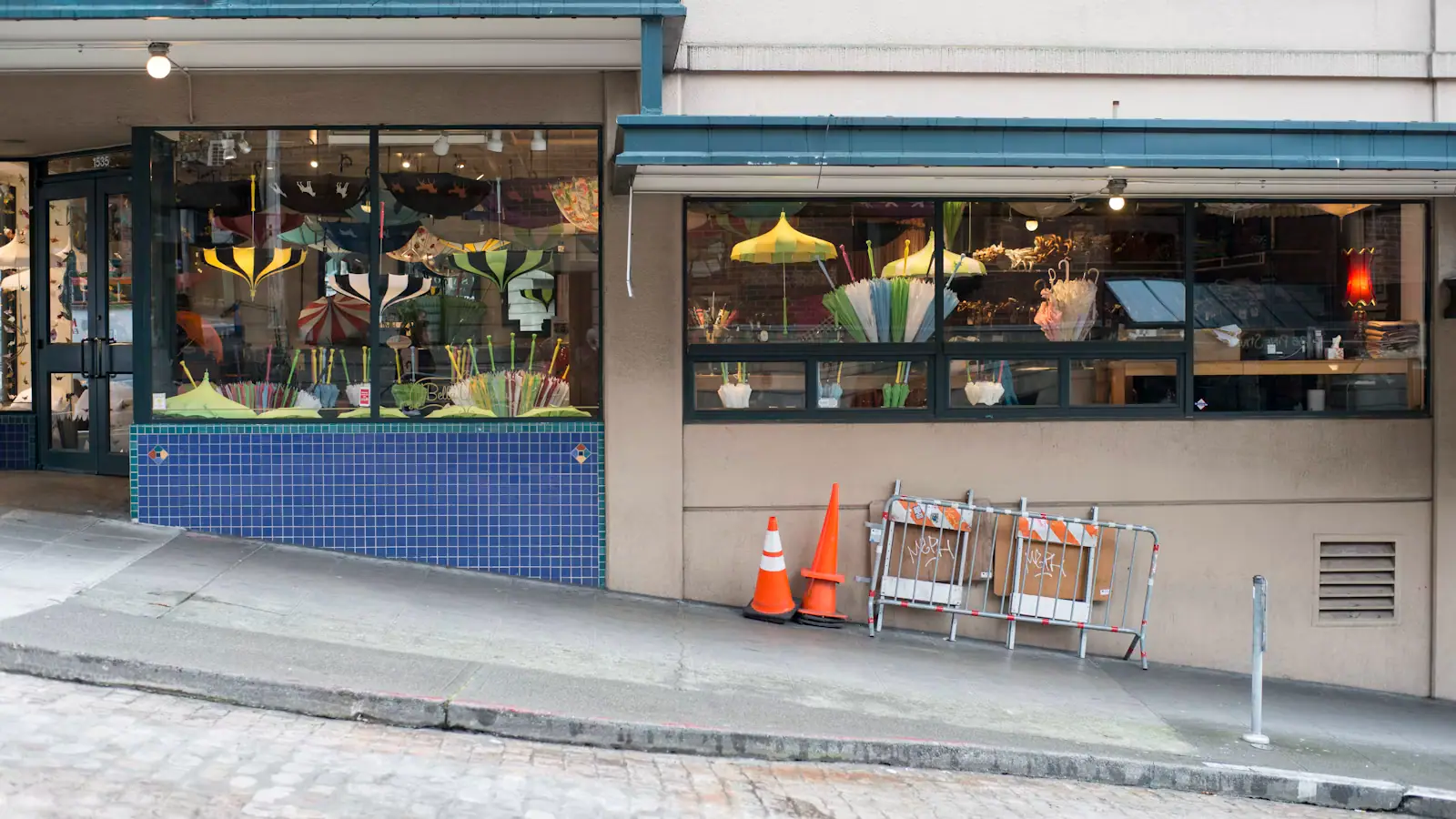
The mistake visitors make here is assuming the shopping is downtown. It mostly is not. Downtown Grand Rapids has spent twenty-five years becoming a…
Things to do
Almost nothing green in Grand Rapids is original. The largest park in the city is fifteen hundred acres of former gypsum workings and gravel pits…
Read next
Guide
Michigan's second city is a furniture town that spent its furniture money on art. Here is how the address grid works, what is walkable, and what needs a car.
6 min readMarguerite Vanderhoff
Guide
Two nights, one car, and one hard constraint that decides the whole schedule: the free Frank Lloyd Wright house only opens to the public on Sunday afternoon.
5 min readMarguerite Vanderhoff
Guide
A restored Frank Lloyd Wright house, an art museum one day a week, the first artwork the NEA ever helped pay for, and a Maya Lin park you can skate on. None of it costs anything.
5 min readIlse Hoekstra
Guide
A grocery fortune bought 158 acres, a five-storey glasshouse and a 24-foot bronze horse built from Leonardo's unfinished commission. The calendar decides whether you enjoy it.
5 min readIlse Hoekstra