Skip to content
Search
Menu

These bookings earn us a commission through Viator. You pay the same, and the money played no part in the selection.

Things to Do

Art in Grand Rapids: A Calder, a Maya Lin and What Came After

Last updated

Where to see art in Grand Rapids outside ArtPrize: the first NEA public sculpture, a Maya Lin ice rink, GRAM, and the small gallery scene that survived.

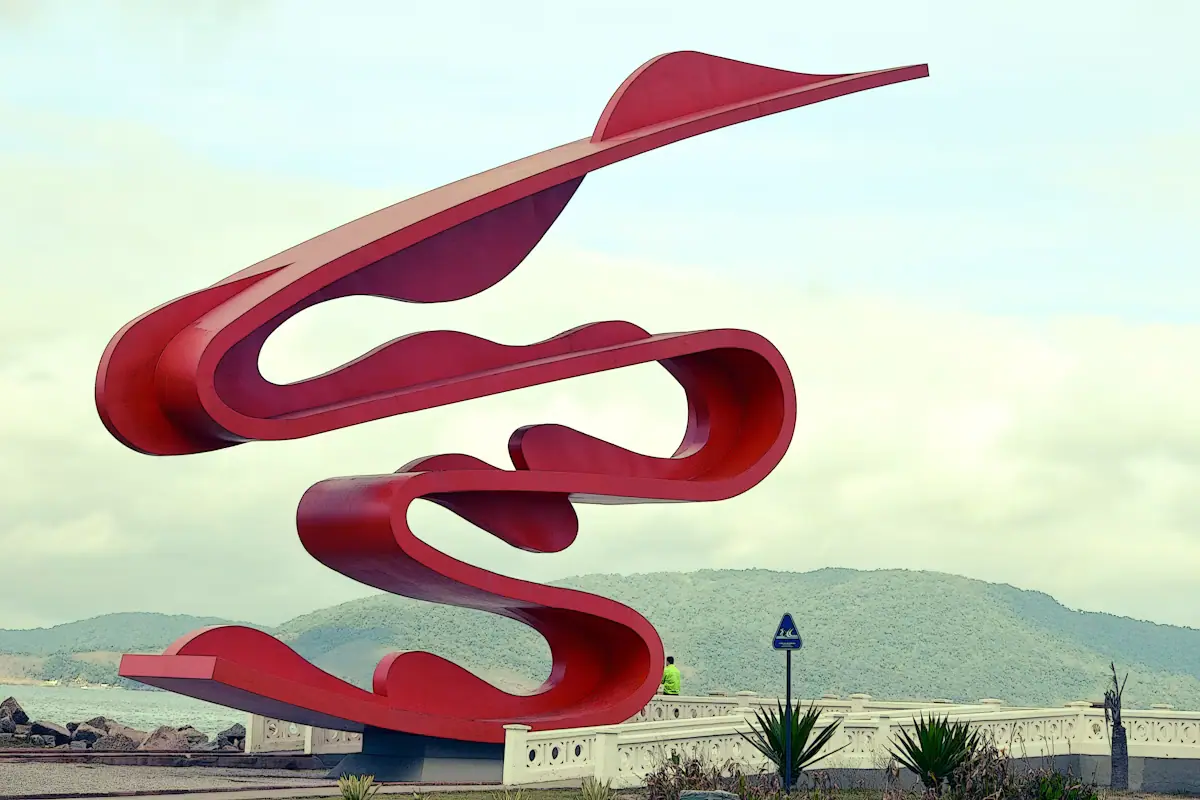
Most cities put art in their museums and then decide whether anyone cares. Grand Rapids did it the other way round. In 1969 a committee of local people talked the newly founded National Endowment for the Arts into a forty-five thousand dollar grant, and Alexander Calder built them a forty-two ton steel arc for the plaza in front of the new city and county buildings. It was the first work commissioned under the NEA's Art in Public Places programme, anywhere in the country. Grand Rapids then put its silhouette on the letterhead, the signage and the municipal bin lorries, where it still is.

That sequence explains the shape of art here. This is a city that is exceptionally good at art you cannot buy a ticket for and unreliable at the kind you can. The public collection is remarkable for a metropolitan area of this size: the Calder on its plaza, a second Calder painted across a county rooftop in 1974 that only makes sense from an aeroplane, Maya Lin's "Ecliptic" holding down the middle of downtown, and three hundred-odd sculptures out at Meijer Gardens including Rodin, Moore, Plensa and Ai Weiwei.

The institutional side is thinner and got thinner still. The Urban Institute for Contemporary Arts ran the city's contemporary programme for more than four decades and closed in March 2023 after funding problems it never came back from. Its purpose-built gallery downtown has been sold and turned into something else. Nothing has replaced it. Anyone writing about this city's art scene who does not mention that is selling you a version from 2015.

What is left is genuinely worth a day, but you have to know where to look, because it is scattered: a free college gallery in the old federal building, a handful of commercial rooms in the neighbourhoods, a monthly first-Friday crawl on South Division, and two major collections that happen to sit at opposite ends of the city. Then for seventeen days from mid-September the whole thing is buried under ArtPrize, which is covered on its own page.

Practical warning before you plan. The commercial galleries here keep small-city hours, often afternoons Tuesday to Saturday and sometimes by appointment. A Monday morning gallery crawl in Grand Rapids will find locked doors and a coffee shop. Build your day around the public work, which is outdoors, free and always open, and treat the galleries as the bonus.

The Calder, and the roof nobody sees

A large red-painted steel abstract sculpture standing on open grass in a city space

La Grande Vitesse stands forty-three feet tall, fifty-four feet long and thirty feet wide, weighs forty-two tons, and arrived in 1969 in crates from a workshop in Tours, France. A crane put twenty-seven bolted sections together on the plaza over about five days. The name translates roughly as "the great swiftness", which is a pun on the city's own — the rapids the river was named for and which had been dammed out of existence long before the sculpture turned up.

Its real significance is bureaucratic and much more interesting than that sounds. The NEA had just started an Art in Public Places programme and had no precedent for how it should work. Grand Rapids went first. Every plaza sculpture in every American downtown that came after is standing in the footprint of this argument, and it was not a popular one locally at the time.

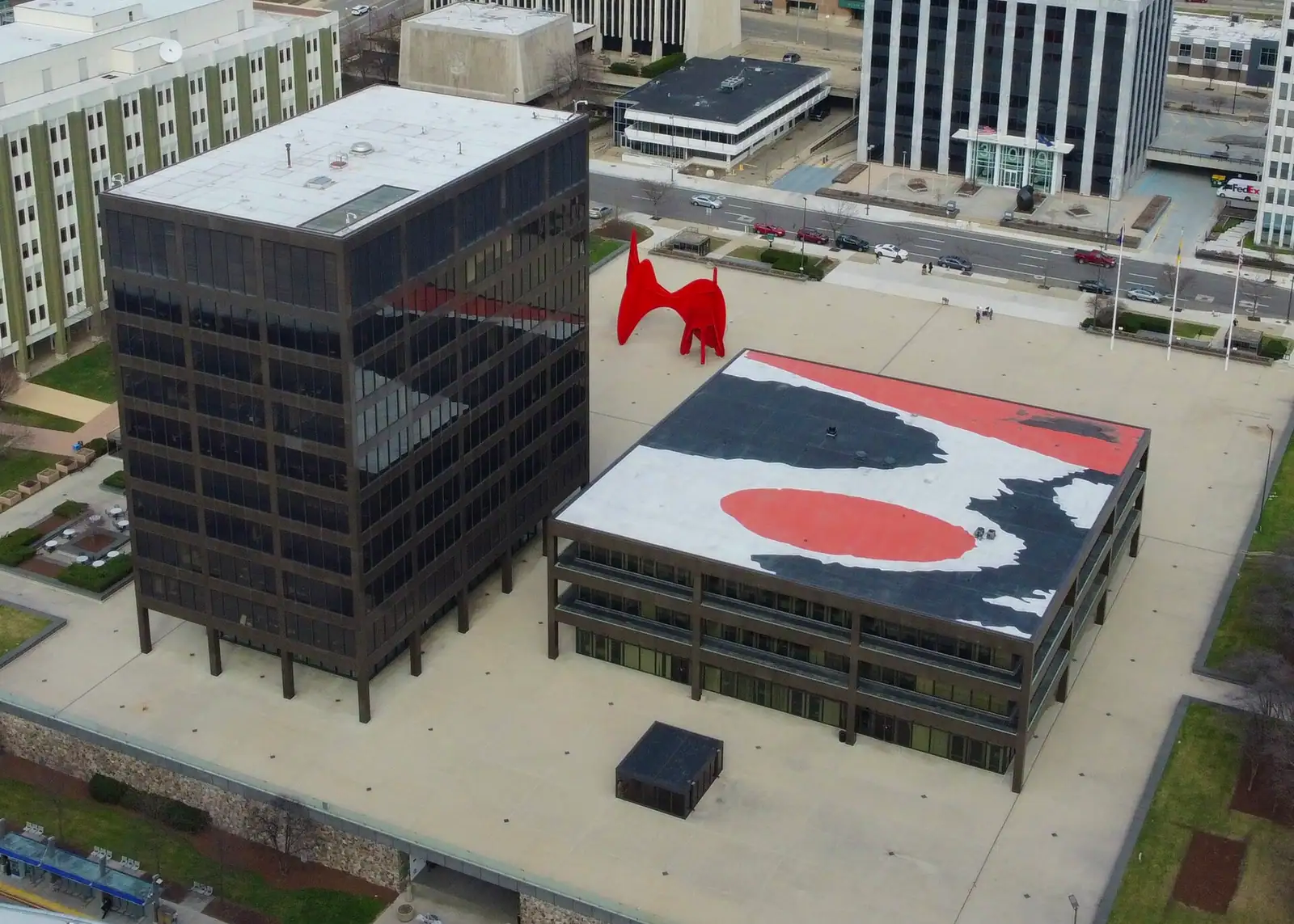
Five years later Calder gave the city a second work almost nobody has seen. Told that county employees hated looking down on an ugly flat roof, he offered a red, black and white design for it free of charge, and in 1974 it was painted across the Kent County Administration Building. It was reported then as the largest Calder painting in the world. You cannot see it from the plaza. You can see it from a window seat on the approach into the airport, which is the single best reason to sit on the correct side of a regional jet.

Go at dusk. The plaza lighting turns the arc into a silhouette and the office blocks around it stop competing.

Ecliptic: the Maya Lin you can skate on

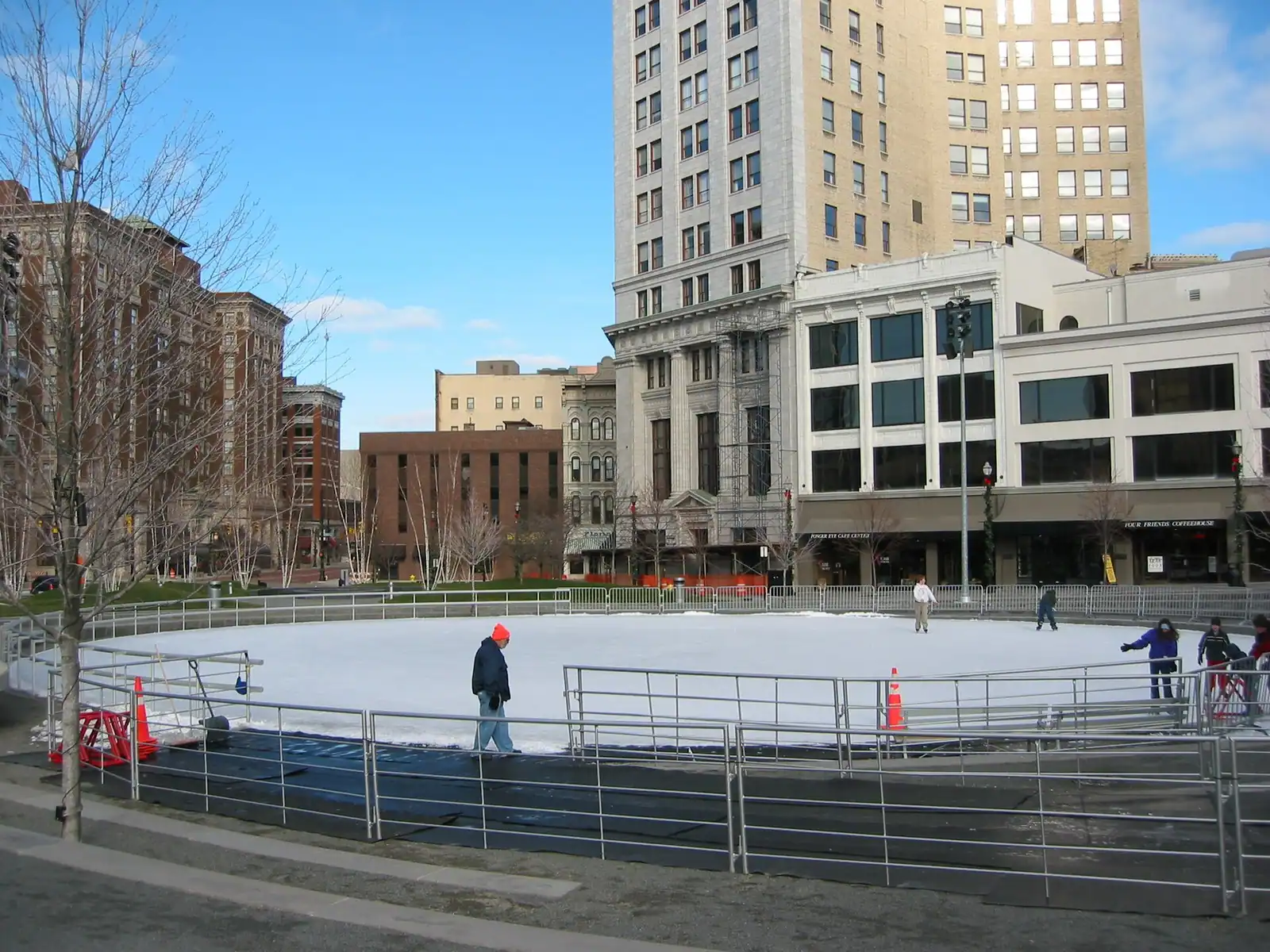
Two blocks from the Calder, Rosa Parks Circle is the most-used public space in the city and most people who cross it do not realise they are standing in a work by the architect of the Vietnam Veterans Memorial.

Maya Lin designed it in 1999 as a piece called "Ecliptic", built around the one thing Grand Rapids is named for and had lost: water. She put it there in three states. Water that flows. Water as mist, from a fountain that hangs in the air on a summer evening. And water as solid, in the form of the ice rink that occupies the bowl of the plaza through the winter. Set into the rink surface are fibre-optic points laid out as the stars stood over Grand Rapids on the first of January 2000.

Which means the correct time to see this is January, at night, with skates on, looking down. It is a genuinely strange experience and it costs the price of a skate hire.

The plaza had a dull name before — Monroe Mall Amphitheater — and was renamed for Rosa Parks in 2001. In summer it takes concerts, a film series and, for seventeen days each autumn, some of the largest ArtPrize installations, because it is the one downtown space with room for something enormous.

Where living artists actually show

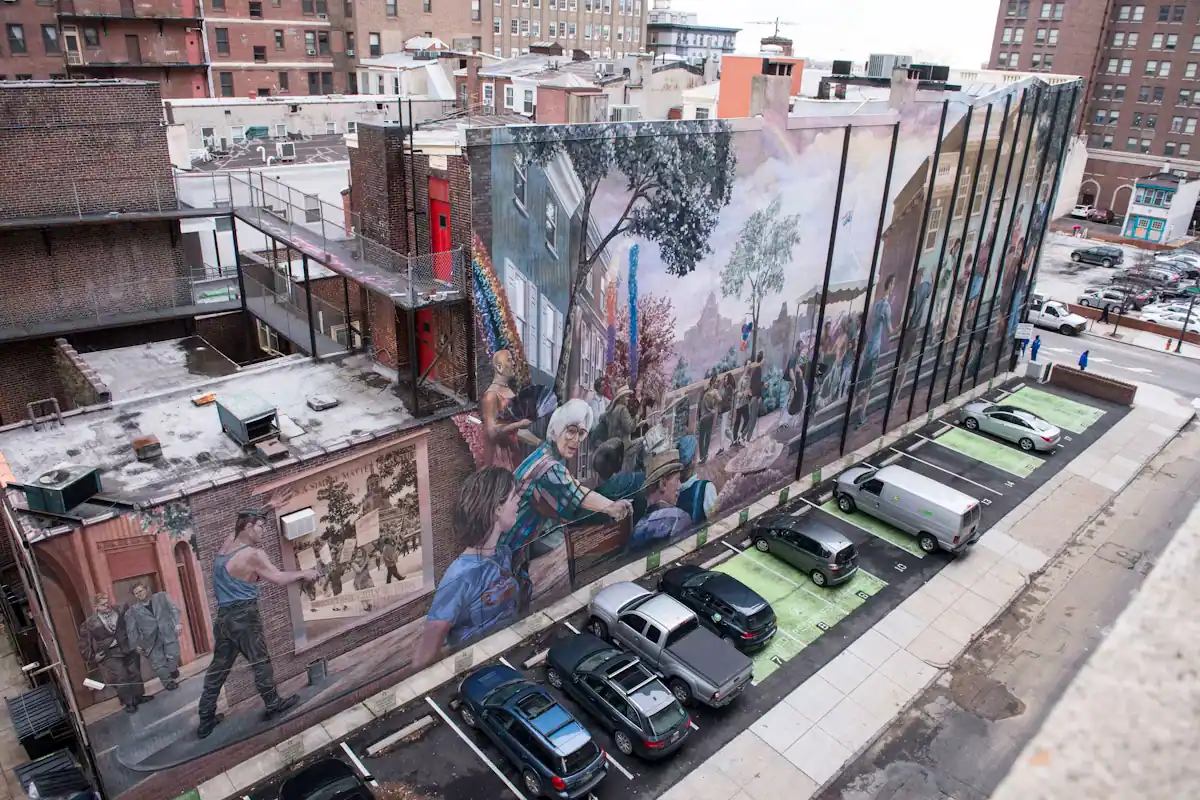
A large painted mural covering the side wall of a city building above a parking lot

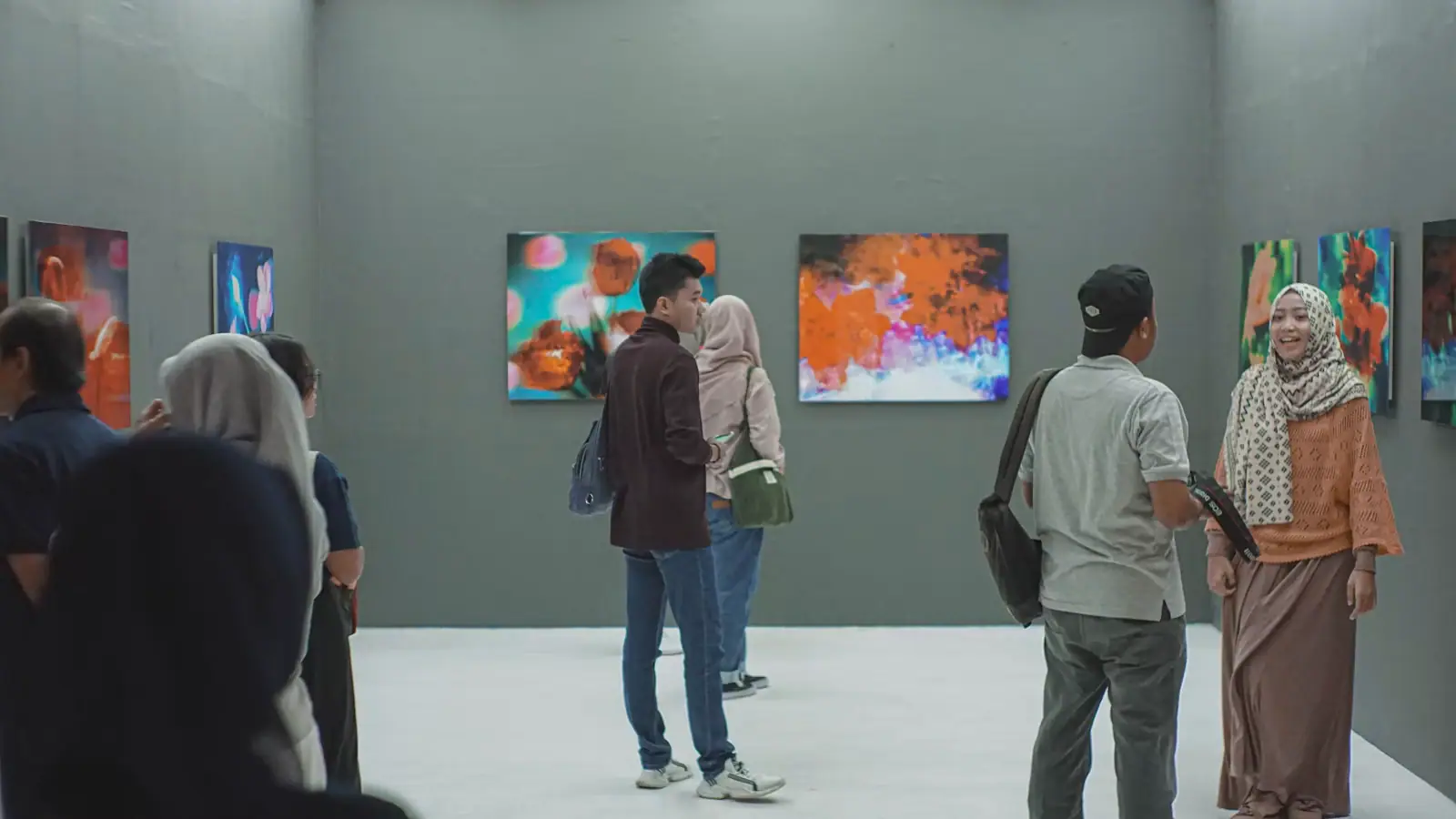
The Fed Galleries at KCAD are the closest thing the city now has to a kunsthalle, and they are free. About three and a half thousand square feet of exhibition space inside the Woodbridge N. Ferris Building at 17 Pearl Street NW — which is the 1910 federal building that housed the art museum from 1981 until it moved out in 2007. Kendall College of Art and Design runs the programme, so the shows swing between student work and genuinely ambitious curated exhibitions, and both are worth ten minutes of your walk.

Avenue for the Arts is the artist-run spine of South Division, the corridor locals call SoDiv, and it manages 106 Gallery at 106 South Division in a building owned by the housing non-profit Dwelling Place. Openings land on the first Friday of the month, generally in the evening, and that first Friday is the one reliable night in the calendar when several spaces along the street are open at the same time and full of people. If you can shape a trip around any single date, make it that one.

LaFontsee Galleries is the established commercial room, contemporary painting, sculpture and photography by regional and national artists, and it has moved out of its old address to 1504 Plainfield Avenue NE in the Creston neighbourhood. Worth the drive north if you are actually buying.

Beyond those, the corridors do the work: studios, framers and small rooms along Wealthy Street, through East Hills and out into Eastown. It is a scene you find by walking a commercial street rather than by searching a listings page.

The three dates worth planning around

When to go

First Friday, monthly, evening. Openings cluster on South Division and in the neighbourhood corridors. It is the only night of an ordinary month when a gallery crawl here works, because on any other evening you are looking at locked doors. Costs nothing.

Festival of the Arts, early June, downtown, free. The city's long-running free arts festival, which has run since the early 1970s and took Calder's own "Festival Sun" design as its emblem — a direct descendant of the enthusiasm around the 1969 dedication. Stages, food stalls run by community groups, and a lot of children covered in paint. It is a festival first and an exhibition second, and it is the friendliest weekend of the year downtown.

ArtPrize, mid-September into early October. More than a thousand entries across the whole downtown, free to walk, and the single busiest art fortnight in the Midwest. It has its own page on this site because the practicalities — where to stay, where to park, how to walk it without seeing four hundred bad paintings — need the room.

Outside those, the answer is the public work, which never closes, and the two collections, which run year-round. February is the quietest month in every gallery in the city and the best month to have the Maya Lin rink at night more or less to yourself.
The two collections that are actually world class

How they compare

Everything else on this page is small. These two are not.

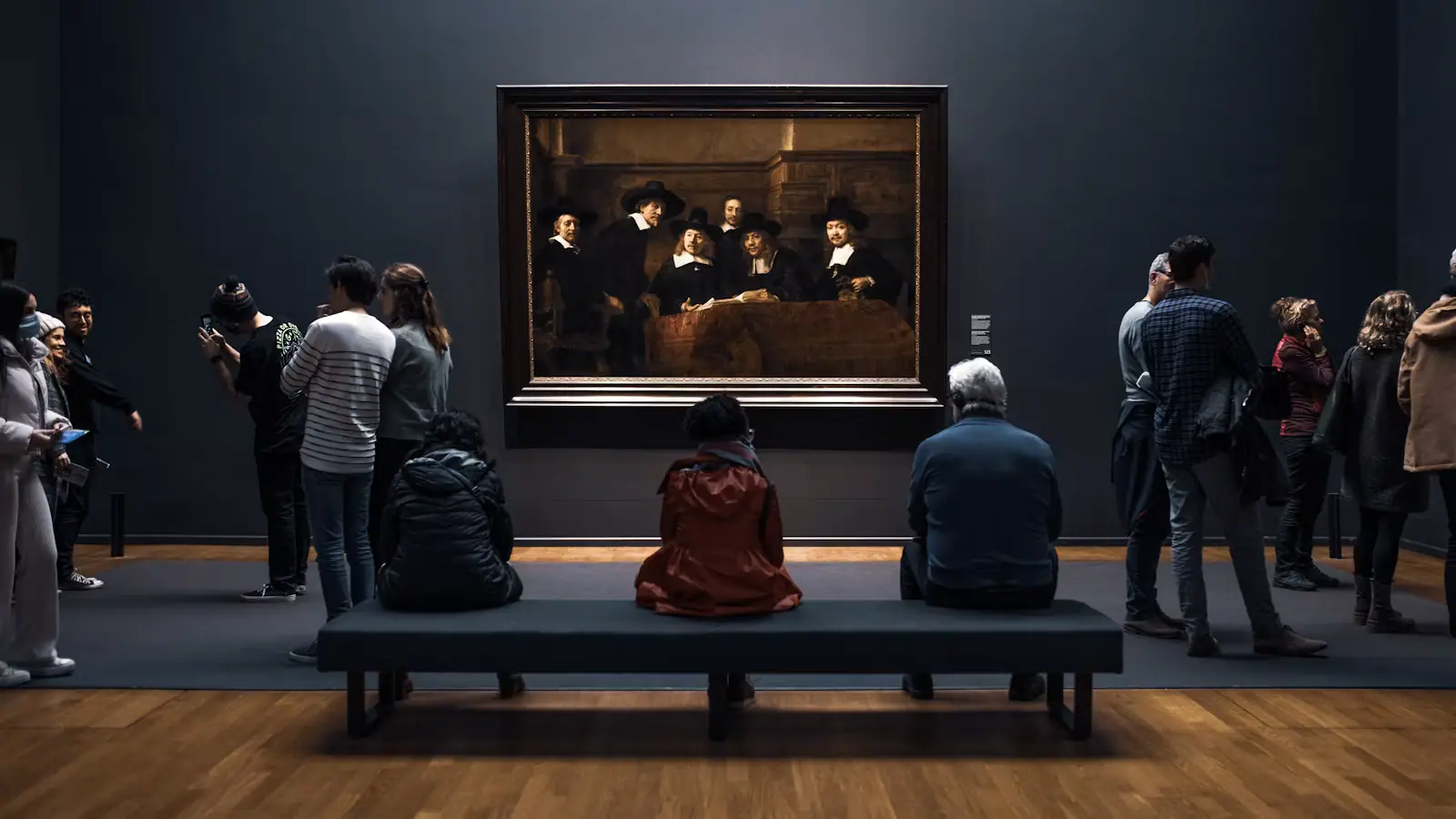
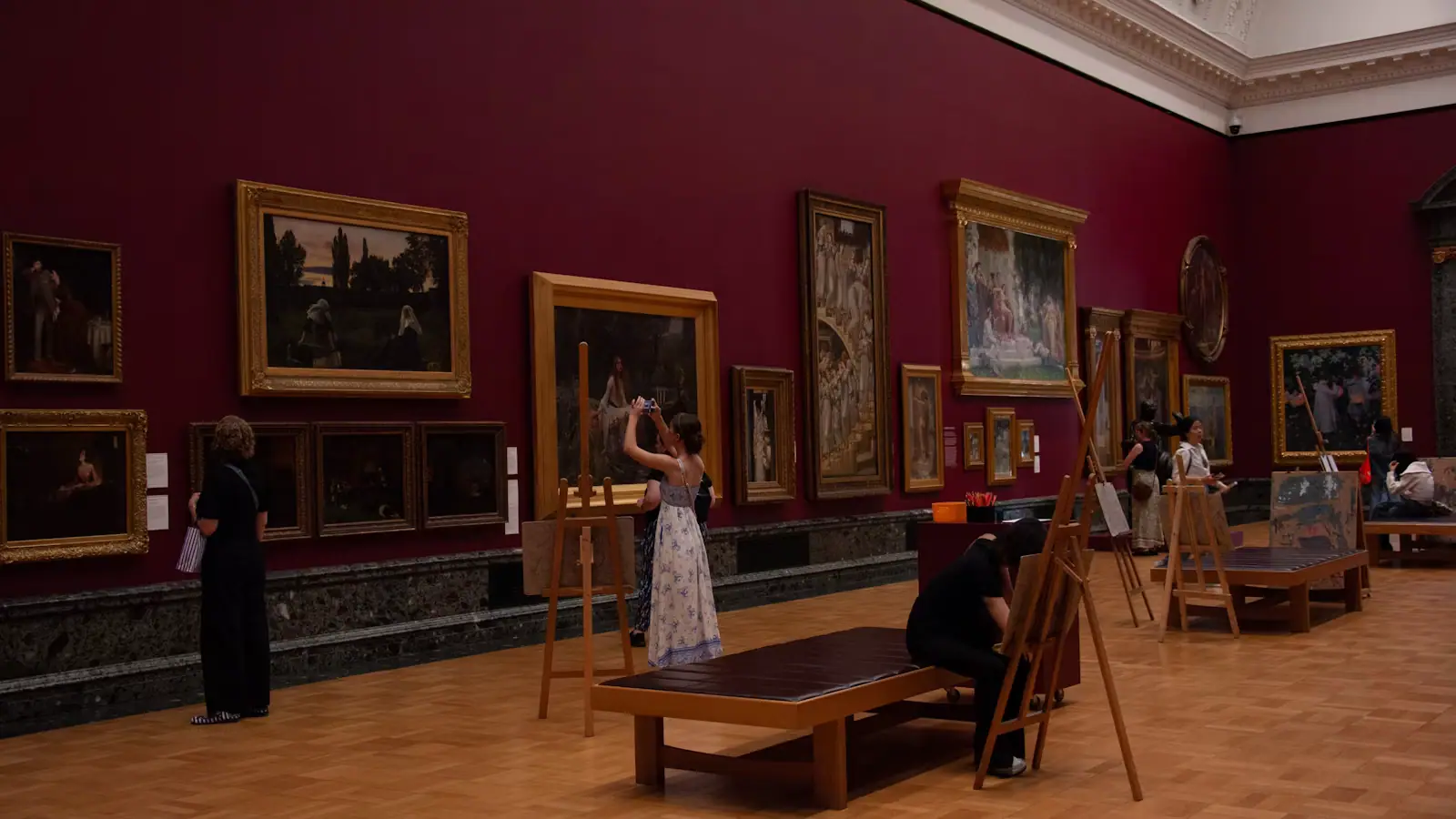
Grand Rapids Art Museum, downtown, holds roughly five thousand works with real depth in nineteenth and twentieth-century European and American art and, unusually, more than three and a half thousand prints, drawings and photographs. That last number is the tell: the works-on-paper rotations are often the best thing hanging, and they change more than the permanent galleries do. The building is itself a landmark, the first art museum in the world certified LEED Gold, and the galleries are daylit from above, which in this climate is a design decision with consequences you can watch happen over an afternoon.

Frederik Meijer Gardens & Sculpture Park, six miles northeast, holds more than three hundred sculptures across 158 acres — Rodin, Henry Moore, Mark di Suvero, Jaume Plensa, Ai Weiwei's twelve zodiac heads, Chihuly glass indoors, and Nina Akamu's bronze horse answering a commission Leonardo never cast. On pure collection strength this is the more important of the two and it is the one visitors miss, because it files under "gardens" in their heads.

Doing both in a day is possible and slightly mad: downtown in the morning on foot, drive out after lunch, and give the sculpture park until it shuts. Doing one properly is better.

The hole the UICA left

Before you book

For more than forty years the Urban Institute for Contemporary Arts was where this city put work that the art museum would not show: experimental exhibitions, an independent cinema, artist studios, a programme that took risks. It merged with Kendall College of Art and Design in 2013, moved out of its Fulton and Division building during the pandemic years, and ceased operations on 3 March 2023 after funding shortfalls it could not close.

The purpose-built gallery it left behind on Pearl Street sat unsold for years and has since been bought and converted into something that is not a gallery.

This matters to a visitor for two practical reasons. First, a lot of the "things to do in Grand Rapids" writing still online was produced while UICA was operating, and it will send you to a building that is no longer that. Second, the city currently has no year-round, medium-sized contemporary art venue, which is why the calendar on this page leans so hard on a monthly opening night, a college gallery and a seventeen-day competition in September.

There is an argument, made locally and worth taking seriously, that ArtPrize's scale made it harder rather than easier for a small institution to hold onto funders' attention. Whether or not that is fair, the shape of the result is not in dispute: enormous public art, two strong collections, a good deal of energy at street level, and a gap in the middle where an institution used to be.

On the ground

Where to go

Every place below has its own page — hours, parking, what it costs and what to expect when you get there.

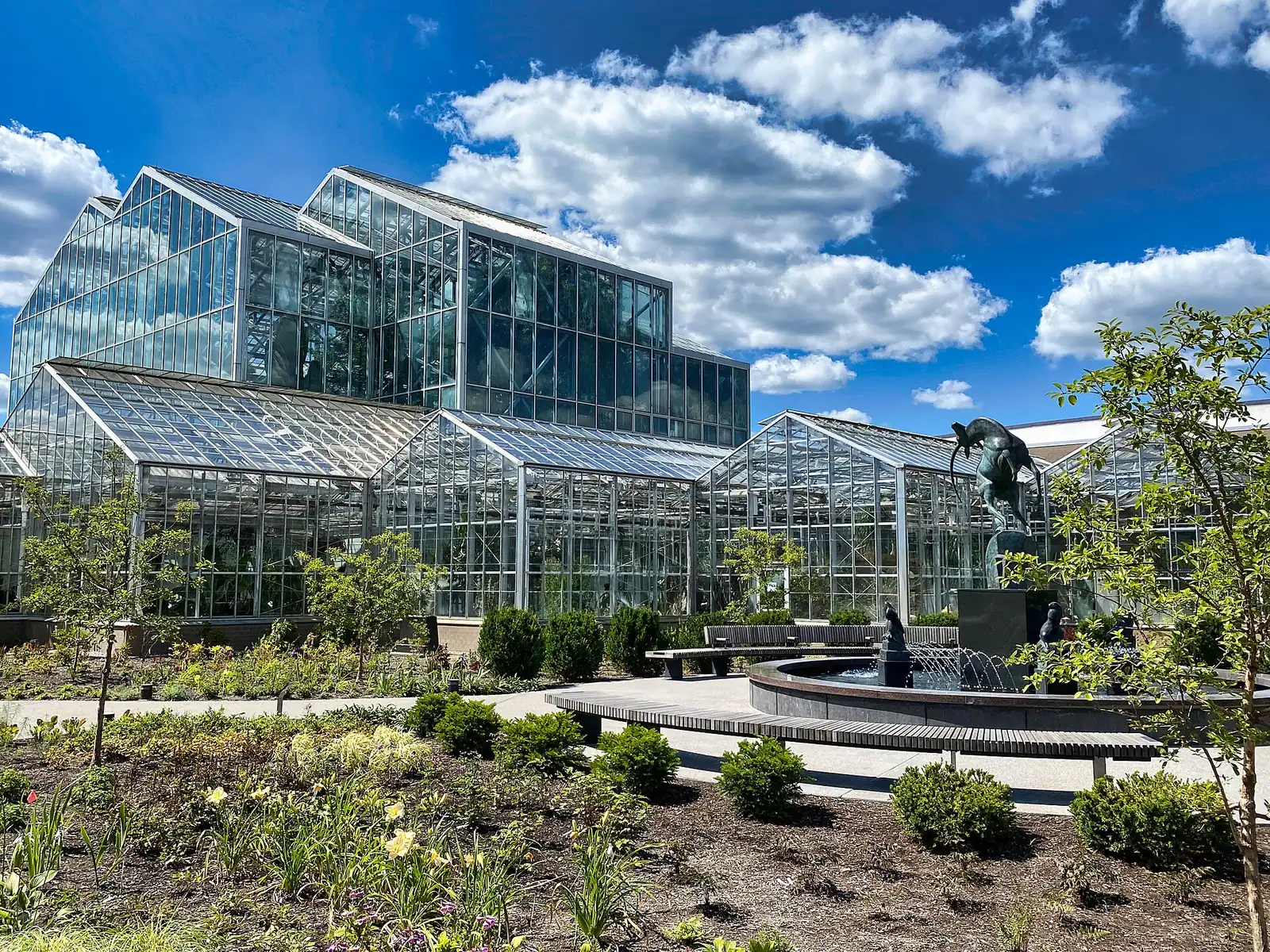
  • Tall tropical plants and palms growing under the glass roof of a large conservatory

    Park

    Frederik Meijer Gardens & Sculpture Park

    A grocery fortune turned into 158 acres of Rodin, Oldenburg and orchids, plus the one glasshouse in Michigan that fills up in February.

    2.5–5 hoursAround $20–25 per adult, with lower rates for seniors, children and members

  • Orange and white koi swimming in a shallow garden pond

    Park

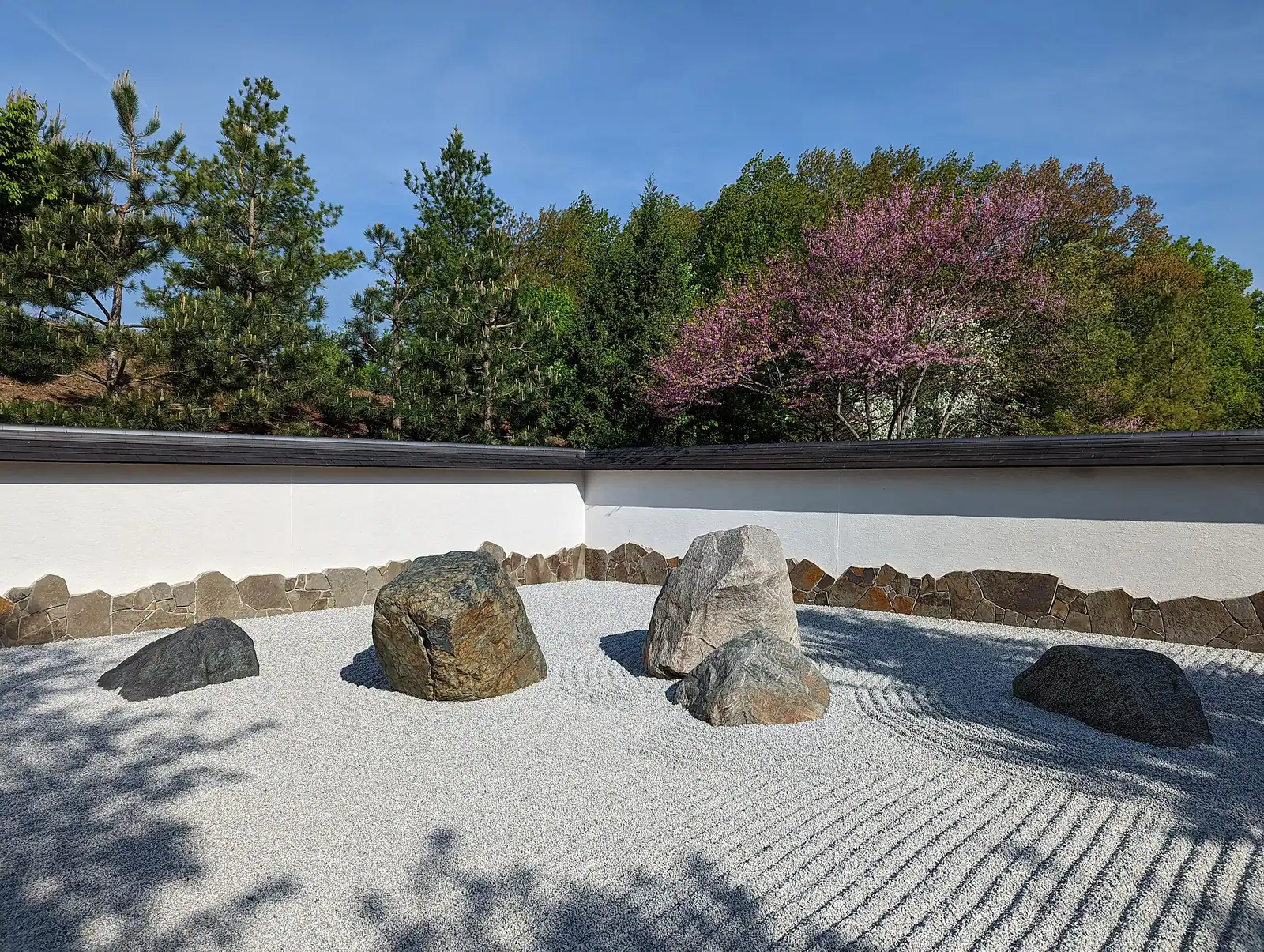
    Richard & Helen DeVos Japanese Garden

    Eight acres by Hoichi Kurisu, with four waterfalls, a teahouse built in Japan and a Zhang Huan head sitting in the moss.

    1–1.5 hoursIncluded in general admission to Meijer Gardens; there is no separate Japanese Garden ticket

  • People standing in front of a warehouse wall covered in large multicoloured murals

    Landmark

    Free

    Calder Plaza

    Forty-two tons of vermilion steel that changed how a furniture town saw itself, and the Calder painting on the roof behind it.

    15–45 minutesFree. An open civic plaza with no ticketing at any time of year.

  • Visitors standing in a daylit gallery looking at a large painting on a white wall

    Museum

    Grand Rapids Art Museum

    The first LEED Gold certified art museum anywhere, built by a city whose fortune came from making furniture well.

    1.5–2.5 hoursRoughly $10–15 per adult; general admission free on Thursday evenings

  • A small town of pale rooftops and a church spire seen from above, wrapped by wooded hills and river water

    Beach

    Free

    Saugatuck

    A hand-cranked ferry across the Kalamazoo River, 302 steps up a dune to a Cold War radar dome, and a beach on the far side.

    5–10 hoursThe town is free to walk; the ferry, beach parking and the state park each charge separately.

  • Brick storefronts and a wide pavement on a city street in early evening light

    Landmark

    Free

    Rosa Parks Circle

    A Maya Lin artwork you are allowed to walk on, and from December a public ice rink with the night sky under the ice.

    0.5–2 hoursThe plaza is free at all times. Winter skating sessions carry a small charge.

  • Brick storefronts and a wide pavement on a city street in early evening light

    Neighbourhood

    Free

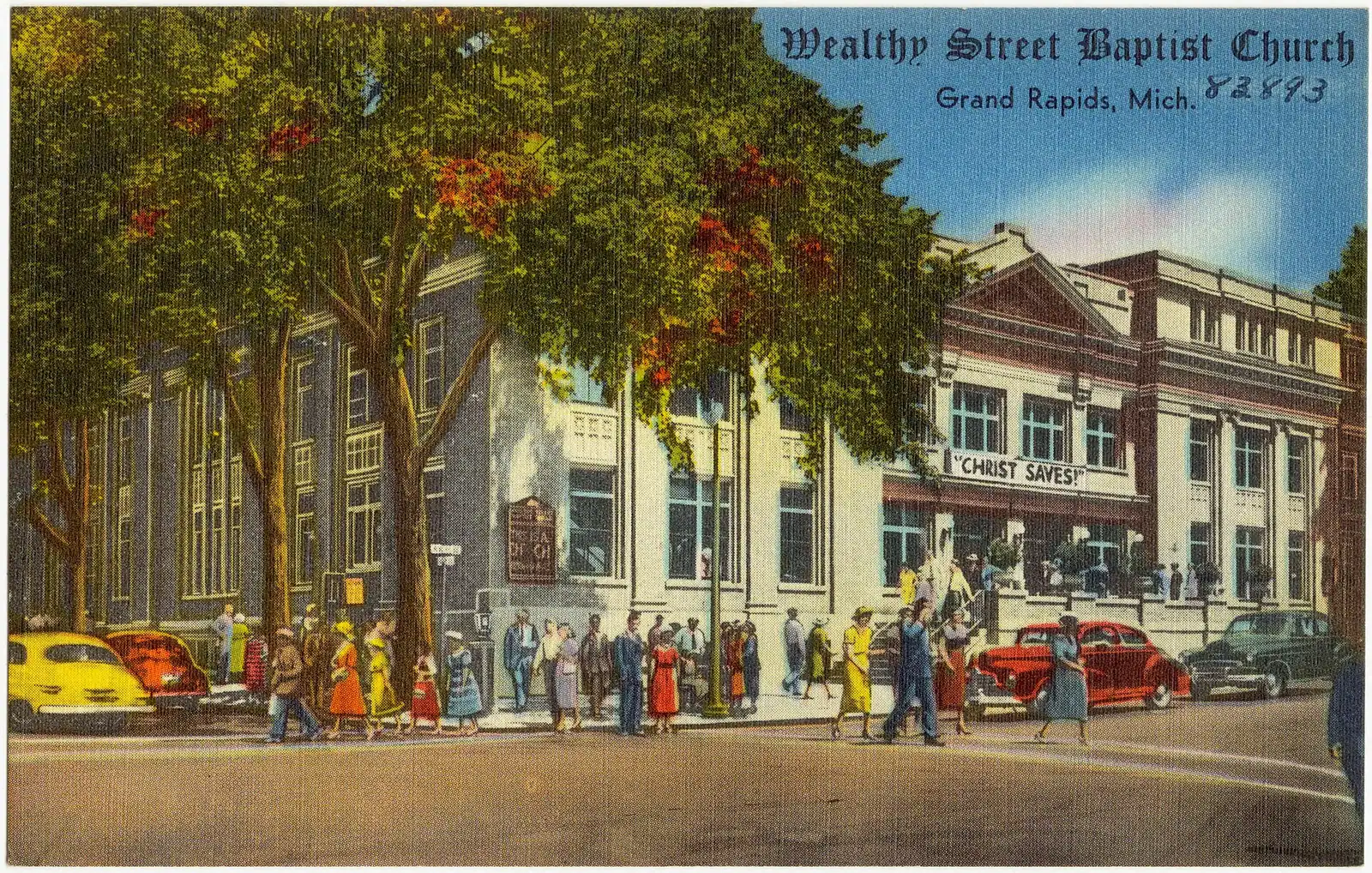
    Wealthy Street

    A mile of restored storefronts in East Hills, restarted by a 1911 theatre that spent twenty-five years boarded up.

    1–3 hoursFree to walk. Everything on it costs whatever it costs.

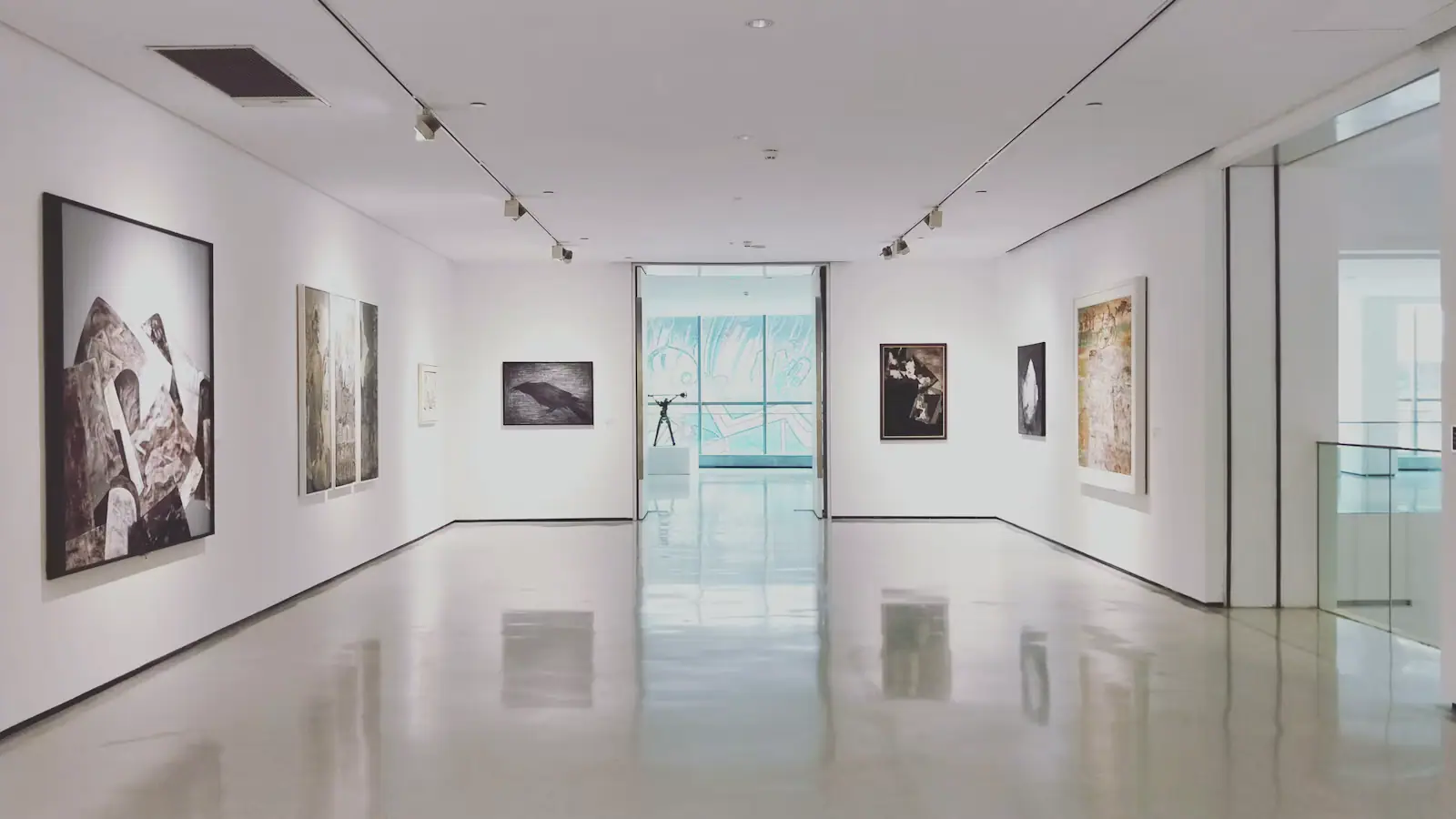
  • A bright, white-walled gallery with framed works hung along both sides and daylight at the far end

    Museum

    Free

    Urban Institute for Contemporary Arts (UICA)

    Grand Rapids lost its contemporary art centre in 2023. Here is what happened to UICA and where the work moved to.

    0.5–1 hoursNot applicable — the institution is closed. Its successor galleries at Kendall are free.

Straight answers

Questions people actually ask

What is the Calder sculpture in Grand Rapids?

La Grande Vitesse, a forty-two ton red steel arc by Alexander Calder installed on the downtown plaza in 1969. It stands forty-three feet tall, was fabricated in Tours in France and bolted together on site from twenty-seven sections, and it was the first work commissioned under the National Endowment for the Arts' Art in Public Places programme. The city adopted its outline as a municipal emblem, and you will see it on everything from letterhead to refuse trucks.

Is there a second Calder in Grand Rapids?

Yes, and almost nobody sees it. In 1974 Calder offered a red, black and white design free of charge for the roof of the Kent County Administration Building, after hearing that county staff hated the view down onto it. It was painted that year and reported as the largest Calder painting in the world. It is not visible from street level at all. The reliable way to see it is from the window of an aircraft on approach into Grand Rapids.

Who designed Rosa Parks Circle in Grand Rapids?

Maya Lin, who designed the Vietnam Veterans Memorial in Washington. Her 1999 design is called "Ecliptic" and is built around water in three states: flowing water, a mist fountain, and the winter ice rink that fills the bowl of the plaza. Fibre-optic lights set beneath the rink surface reproduce the pattern of stars over Grand Rapids on 1 January 2000. The plaza was renamed for Rosa Parks in 2001 and is the city's busiest park.

Where can you see art in Grand Rapids outside ArtPrize?

The Grand Rapids Art Museum downtown and the sculpture collection at Meijer Gardens are the two serious collections, and they run all year. For contemporary work by living artists, the Fed Galleries at KCAD in the old federal building on Pearl Street are free and often the most interesting show in the city. Avenue for the Arts runs 106 Gallery on South Division with first-Friday openings, and LaFontsee Galleries sells contemporary work from Plainfield Avenue in Creston.

Is the Urban Institute for Contemporary Arts still open?

No. UICA ceased operations on 3 March 2023 after more than forty years, following funding difficulties that accumulated through the pandemic period, and its purpose-built downtown building has since been sold and converted to other use. A lot of older guidance to the Grand Rapids art scene still lists it. The city has not replaced it with an equivalent year-round contemporary venue, which is the honest state of things at the time of writing.

When is First Friday in Grand Rapids?

The first Friday of each month, generally in the evening, with openings clustered along the South Division corridor that locals call SoDiv and spreading into the neighbourhood business districts. It is the one night in an ordinary month when several galleries in this city are open at the same time, which matters because the commercial rooms here mostly keep afternoon hours from Tuesday to Saturday and a Monday crawl finds nothing but locked doors.

Does Grand Rapids have street murals?

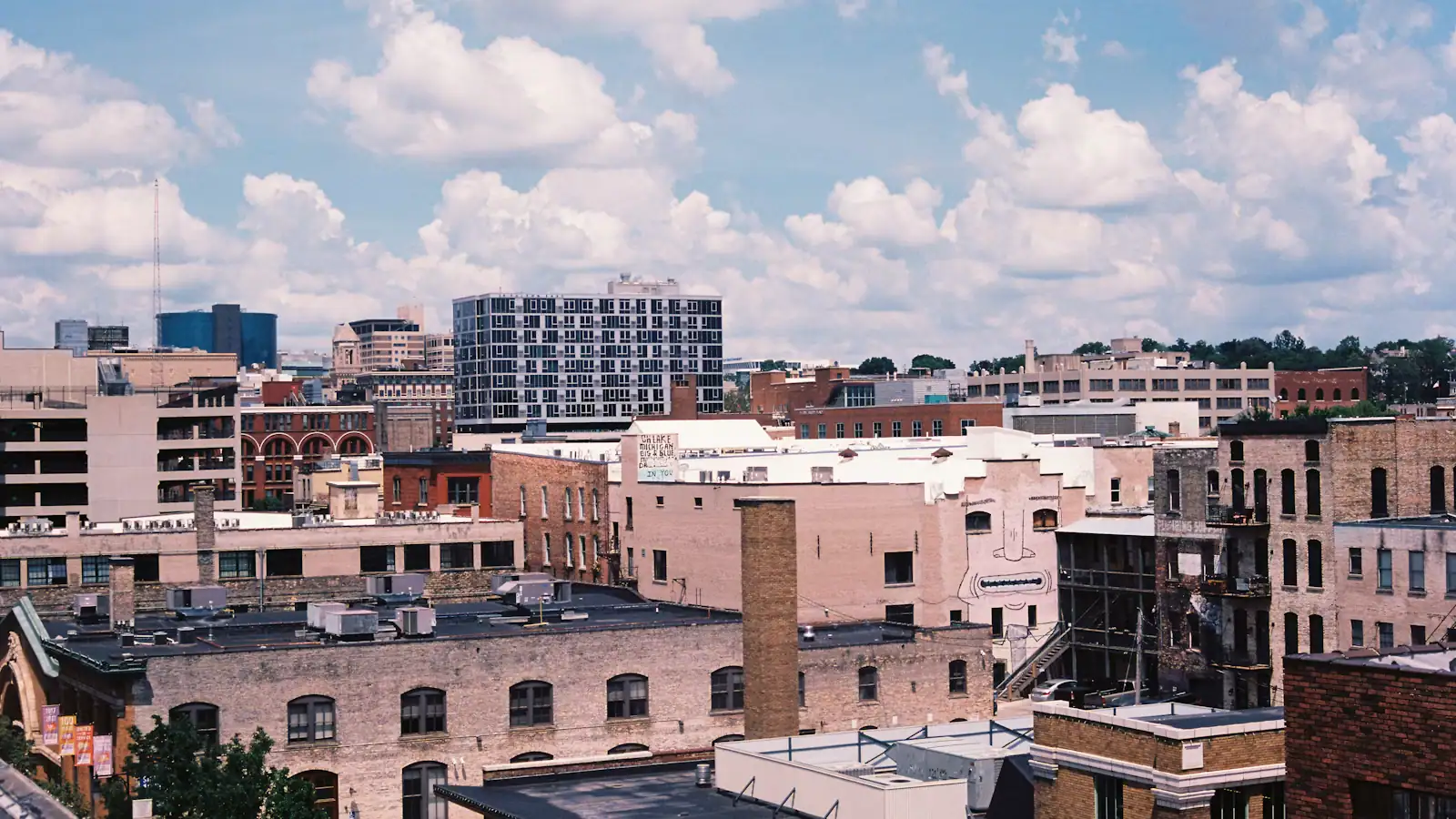
A considerable number, most of them concentrated in the downtown core, along the South Division corridor and through the Wealthy Street and East Hills business districts, and a good proportion of them produced during ArtPrize years when the competition pulled muralists into the city. There is no single official route, which means the honest advice is to walk one commercial corridor rather than chase a map, and to look up at side walls and loading bays.