Skip to content
Search
Menu

These bookings earn us a commission through Viator. You pay the same, and the money played no part in the selection.

Beach

Saugatuck

Last updated

A hand-cranked ferry across the Kalamazoo River, 302 steps up a dune to a Cold War radar dome, and a beach on the far side.

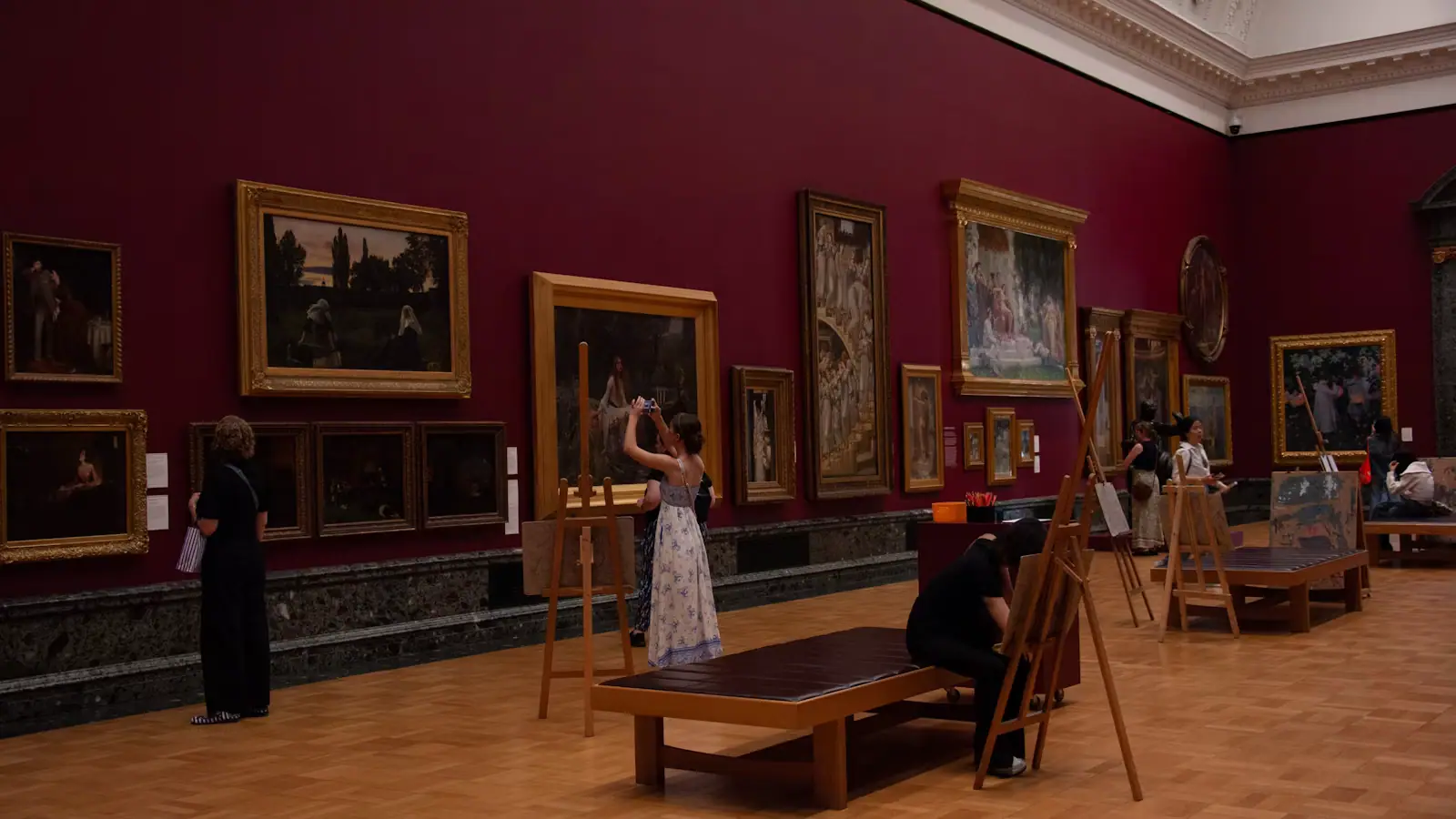
Of the three Lake Michigan towns within easy reach of Grand Rapids, Saugatuck is the one that feels least like a suburb of anywhere. It sits about forty miles south-west, roughly forty-five minutes on I-196, on the Kalamazoo River a mile or so before it reaches the lake, and it has been an artists' town since 1910, when the Ox-Bow school set up in the dunes. The Saugatuck and Douglas pair still trade on that, marketing themselves as the Art Coast of Michigan, and the gallery count downtown — well over a dozen in a town this size — backs the claim up.

The town's signature is a piece of transport. The Saugatuck Chain Ferry has crossed the river here since 1857 and is described as the last hand-cranked chain ferry left in the United States. An operator turns a wheel, the boat pulls itself across a submerged chain, the crossing takes about five minutes and costs a few dollars in cash. On the far bank you are at the foot of Mount Baldhead.

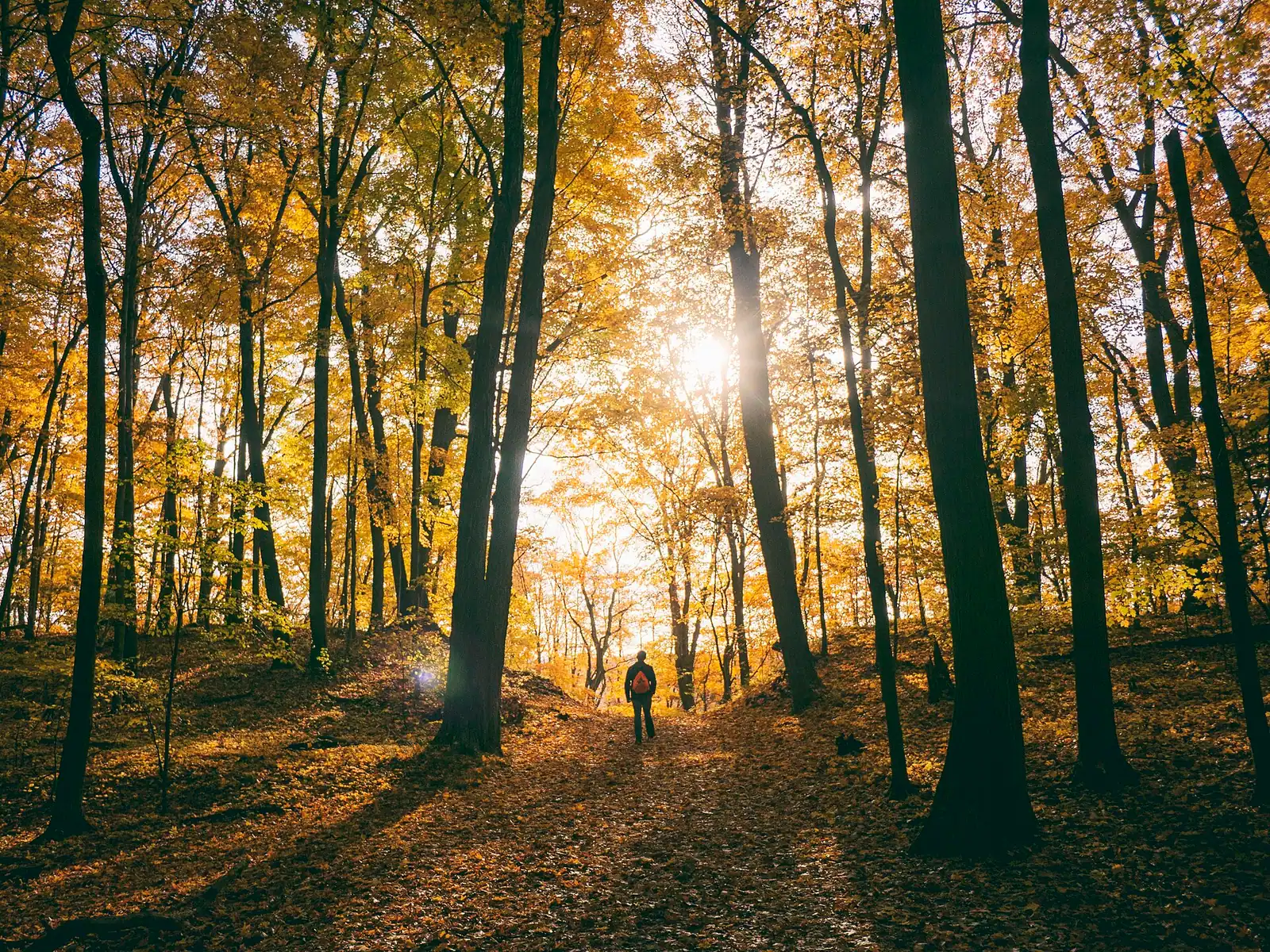
That is the second signature. Three hundred and two steps take you up a wooded dune to a summit with a view over the town, the river, Douglas and Lake Michigan beyond, and to a white radar dome left over from a 1950s Cold War installation that locals just call the Ball. From the top a trail of about a mile carries on to Oval Beach, which turns up on national best-beach lists with some regularity and deserves to.

So the day assembles itself: park in town, browse the galleries, take the ferry, climb the steps, walk to the beach, come back the same way, eat before you drive home. It is the most satisfying structure of the three lakeshore trips, and the reason is that almost none of it involves your car.

The honest warning is summer weekends. This is a small town with a big reputation and July is not a relaxing time to arrive at noon without a plan.
Getting there and parking

About forty miles south-west of Grand Rapids and roughly forty-five minutes on I-196, coming off at the Saugatuck and Douglas exits and following the signs down towards the river.

Park once. The point of this trip is that the good part is done on foot and by ferry: leave the car in a downtown lot or on a side street, walk the galleries, take the chain ferry across the Kalamazoo River, climb Mount Baldhead and walk on to Oval Beach. Driving round to the Oval Beach car park instead costs about ten minutes each way and a parking fee, and is the fallback when the ferry is not running.

Saugatuck Dunes State Park is a few miles north with its own car park and requires a Michigan Recreation Passport on the vehicle.

There is no useful public transport from Grand Rapids. This is a car trip, or a shared ride. In high summer, arriving before ten in the morning solves most of the day's problems at once.

The chain ferry

A chain ferry does not have an engine driving a propeller. It hauls itself along a chain lying on the riverbed, and in Saugatuck's case the hauling is done by a person turning a wheel by hand. There has been a ferry on this crossing since 1857 and this one is generally described as the last hand-cranked example operating in the United States.

The practicalities. The crossing takes about five minutes, costs a few dollars each way, and is cash. It runs seasonally — summer, broadly, with the shoulders depending on staffing and weather — so if you are travelling outside high summer, check whether it is operating before you build a day around it. When it is not running, reaching Mount Baldhead means driving round, which takes about ten minutes and removes most of the charm.

It carries foot passengers and bicycles, not cars.

It is worth doing for its own sake even if you have no intention of climbing the dune. Five minutes on the water with somebody physically cranking you across is the kind of thing that fixes a town in memory, and children are usually allowed to help.

The Saugatuck landing is on the downtown side near the main waterfront; the far landing puts you directly at the foot of the Mount Baldhead steps.

Three hundred and two steps, and the Ball

From the west landing the steps go straight up. There are 302 of them, in flights with landings, through trees, on a gradient that will find anyone who has been sitting in a car for forty-five minutes.

Allow ten to fifteen minutes up if you are fit, twice that if you are not, and take water in July. There is no shade problem — the climb is wooded almost the whole way — but there is no water at the top either.

The reward is the view: the river bending below, the town roofs and the church spire on the far bank, Douglas beyond that, and Lake Michigan sitting flat and pale to the west. It is the best single photograph of this stretch of coast.

The white dome at the summit is the Mt Baldhead radar tower, a Cold War air-defence installation from the 1950s. It is not open and there is no visitor centre; it just stands there, faintly absurd, on top of a sand dune above an art colony.

From the summit area a trail runs roughly a mile through the dunes to Oval Beach. Do that rather than retracing the steps if you have the time — it turns the climb into a loop and it is the pleasanter half of the walk. The return is the same path, or a short taxi if the day has gone long.

Oval Beach and the quieter alternative

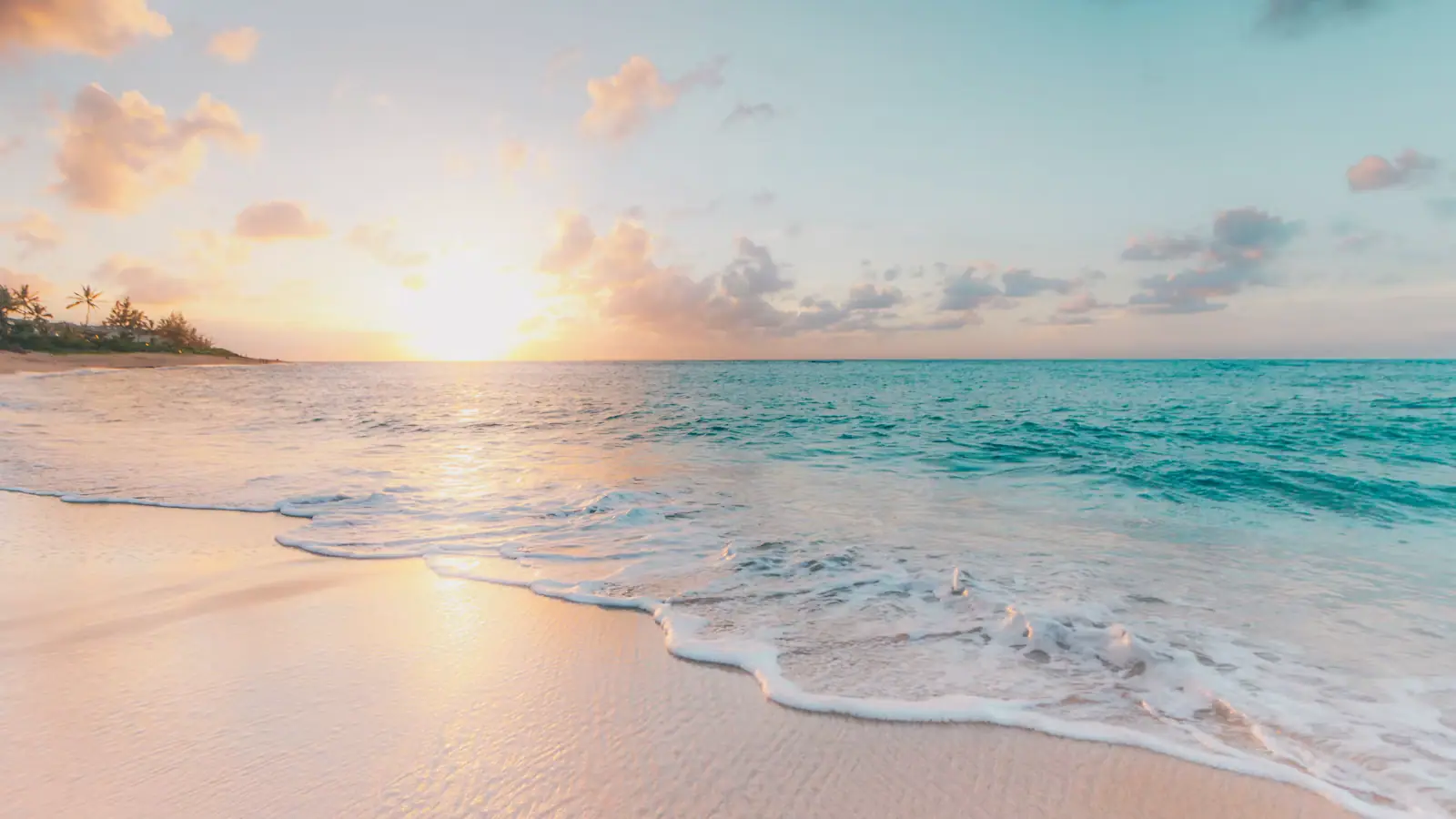
Oval Beach is the one with the reputation: fine pale sand, a broad strand, dune grass behind it, and enough space that even a busy Saturday does not feel like a city beach. It has restrooms, a concession in season and a paid car park, and the car park is the crux. On a hot weekend it fills, and cars circle. Arriving on foot over the dune from Mount Baldhead sidesteps that entirely, which is the argument for the ferry-and-steps route.

Saugatuck Dunes State Park, a few miles north, is the alternative for anyone who wants the shoreline without the crowd. The trade-off is a walk: the beach is reached by a trail of roughly a mile through wooded dunes from the car park, which filters out most casual visitors and rewards anyone willing to carry their own chair. A Michigan Recreation Passport is required on the vehicle.

Lake Michigan water notes that matter here specifically. This is freshwater, so there is no salt and no tide, and by late July and August the shallows off this stretch are genuinely warm. In June the lake is still cold enough to shorten a swim considerably. Onshore winds build a short steep chop that closes swimming on some days, and the flags posted at the beach are the thing to read rather than the forecast.

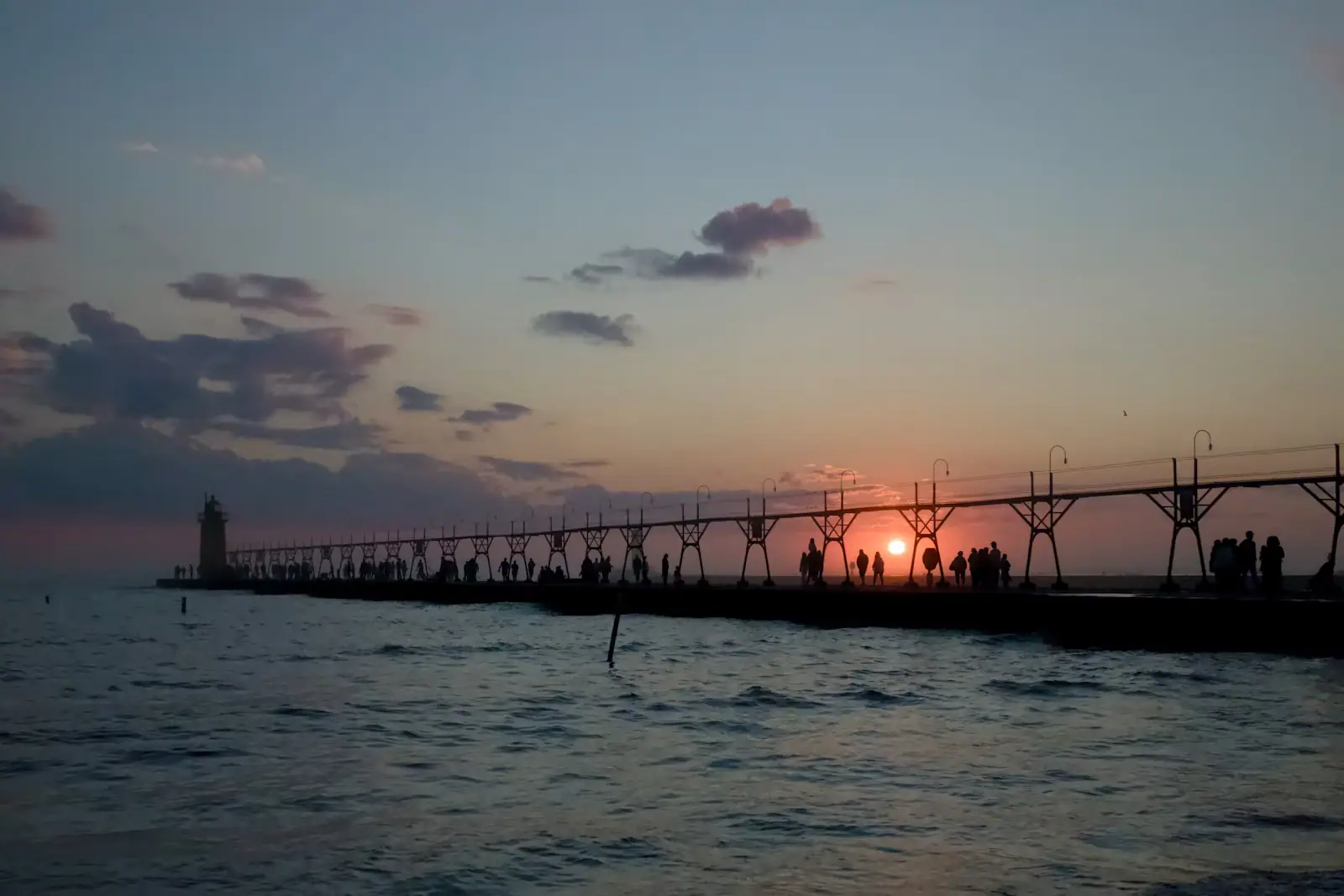
Sunsets here face straight out over open water with nothing in the way, which is why the beach stays busy long after the swimming stops.

The art town, and when to avoid it

Ox-Bow, the summer school and artists' residency founded in 1910, is the origin of everything Saugatuck claims about art, and it still runs in the dunes outside town. Downtown you will find well over a dozen commercial galleries in a few blocks, mixed with independent shops, restaurants and bars. The town has also been a long-established welcoming destination for LGBTQ visitors, which shapes the place more than any gallery does.

Timing determines whether you enjoy any of it.

  • July and August weekends: full. Parking is hard, restaurants have waits, and the ferry queues. Come on a weekday or arrive before ten.
  • Late September and October: the best time by a distance. The water is still warm from summer, the dunes turn, the galleries are open and the town belongs to itself again.
  • May and June: quiet, pretty, and the lake is cold.
  • Winter: a good number of businesses close, the ferry does not run and the town is genuinely sleepy. Go to Holland instead, where the pavements are heated.

For a Grand Rapids visitor deciding between the three lakeshore towns: Grand Haven for the classic pier-and-boardwalk day, Holland for windmill, tulips and a winter-proof downtown, Saugatuck for galleries, the dune and the best walk. If you only make one trip and the weather is good, make it this one.

Near Saugatuck

Straight-line distances, so allow more on the road — the island is long and has one main parkway.

  • Purple flower heads standing above green foliage in a planted border

    Landmark

    Holland, Michigan

    Thirty miles south-west: a 250-year-old Dutch windmill that still grinds flour, and a downtown whose pavements are heated from below.

    4–10 hoursThe town and beaches are free; Windmill Island Gardens and the state park charge separately10.4 mi away

  • A lighthouse rising above a harbour-side building at the water's edge

    Beach

    Free

    Grand Haven

    Forty minutes west of the city: two red lights on a pier, a boardwalk along the channel and a fountain that plays to music after dark.

    4–10 hoursThe town, boardwalk, pier and fountain are free. The state park charges vehicle entry.28.2 mi away

  • A sandy beach on calm inland water with trees along the far shore

    Park

    Millennium Park

    Fifteen hundred acres of former gypsum mine and gravel pit, now West Michigan's largest urban park, with a swimming beach in the middle.

    1.5–5 hoursPark free; the beach and splash pad area carries a daily charge30.6 mi away

  • Tall tropical plants and palms growing under the glass roof of a large conservatory

    Park

    Frederik Meijer Gardens & Sculpture Park

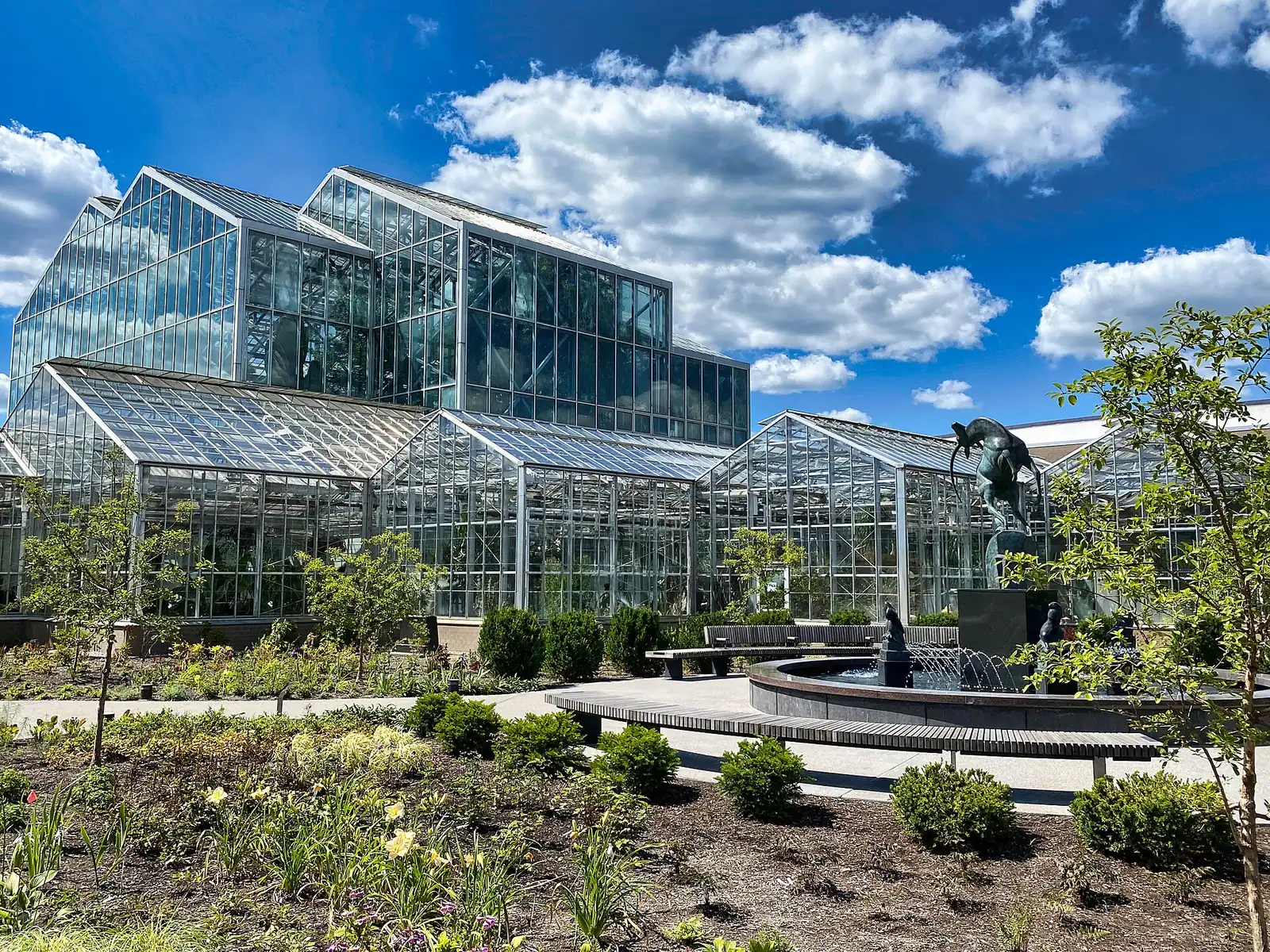
    A grocery fortune turned into 158 acres of Rodin, Oldenburg and orchids, plus the one glasshouse in Michigan that fills up in February.

    2.5–5 hoursAround $20–25 per adult, with lower rates for seniors, children and members38.4 mi away

Saugatuck: common questions

How far is Saugatuck from Grand Rapids?

About forty miles south-west, roughly forty-five minutes on I-196. It is the furthest of the three easy lakeshore day trips from the city but also the one that rewards a full day, because once you have parked downtown almost everything worth doing — galleries, the chain ferry, Mount Baldhead, Oval Beach — happens on foot and on the water rather than in the car.

How many steps is Mount Baldhead in Saugatuck?

302, in flights with landings, climbing a wooded dune from the west bank of the Kalamazoo River. Allow ten to fifteen minutes up if you are fit. At the top there is a view over the town, the river and Lake Michigan, and the white Cold War radar dome locals call the Ball, a 1950s installation that is not open to visitors. A trail of about a mile continues from there to Oval Beach.

Is the Saugatuck chain ferry still running?

It operates seasonally, broadly through the summer, with shoulder-season dates depending on weather and staffing — so check before building a day around it. It has crossed the Kalamazoo River here since 1857 and is described as the last hand-cranked chain ferry in the United States. The crossing takes about five minutes, costs a few dollars in cash, and carries foot passengers and bicycles but not cars.

Which is better for a day trip, Saugatuck or Holland?

Saugatuck in good weather, Holland in bad. Saugatuck gives you galleries, the ferry, a dune climb and one of the best beaches on the lake, all walkable from one car park, but a lot of it closes in winter and the ferry stops. Holland has the working Dutch windmill, the May tulips and a downtown with heated pavements that stays open and walkable through a Michigan January.