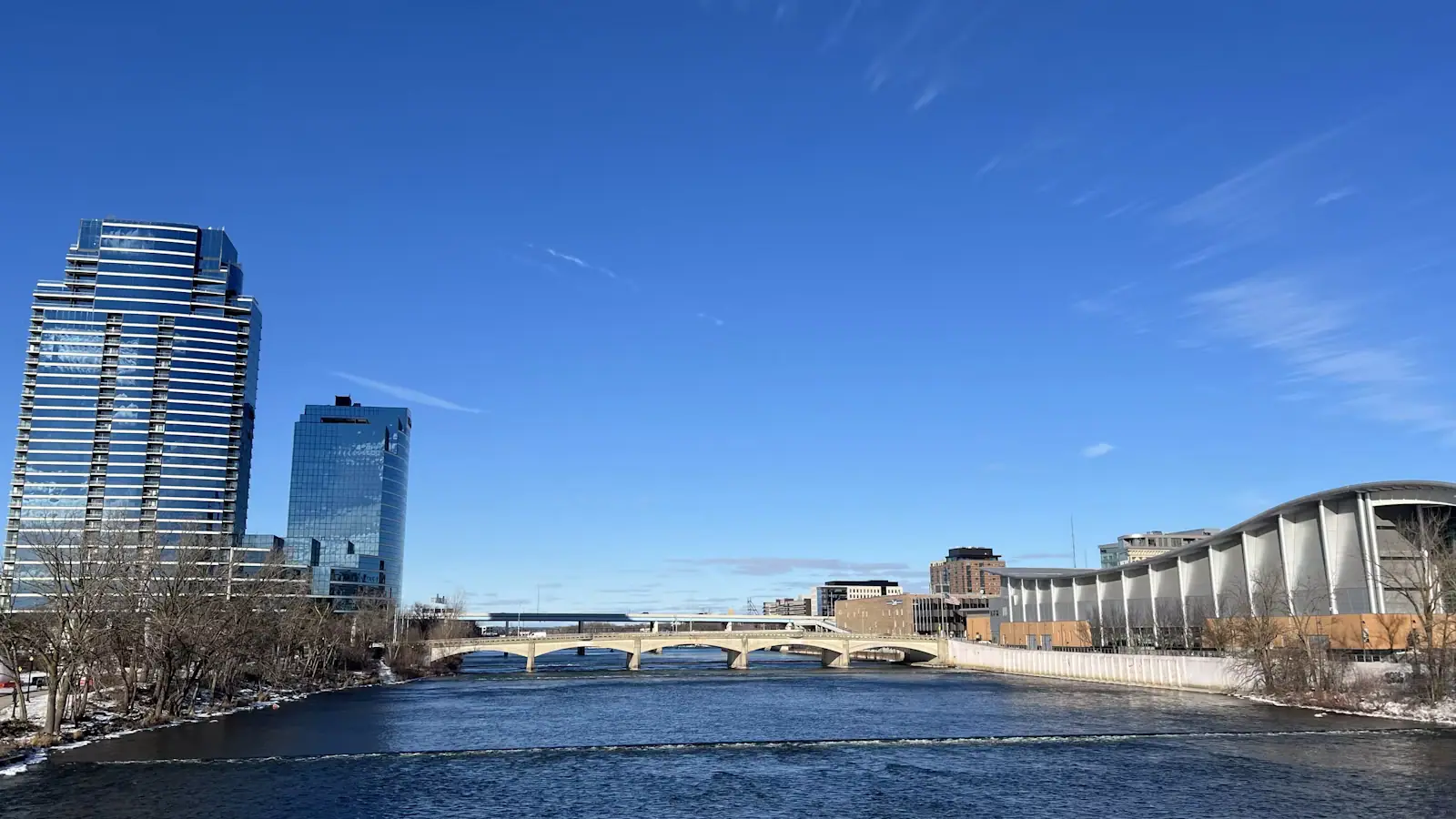
Grand Rapids is not on Lake Michigan. It is thirty miles inland on a different river, and the lake is a day trip rather than a view from the hotel. Grand Haven is the closest place to make that trip to, about thirty-five miles and forty minutes west on I-96, and it is the one most people from the city default to.
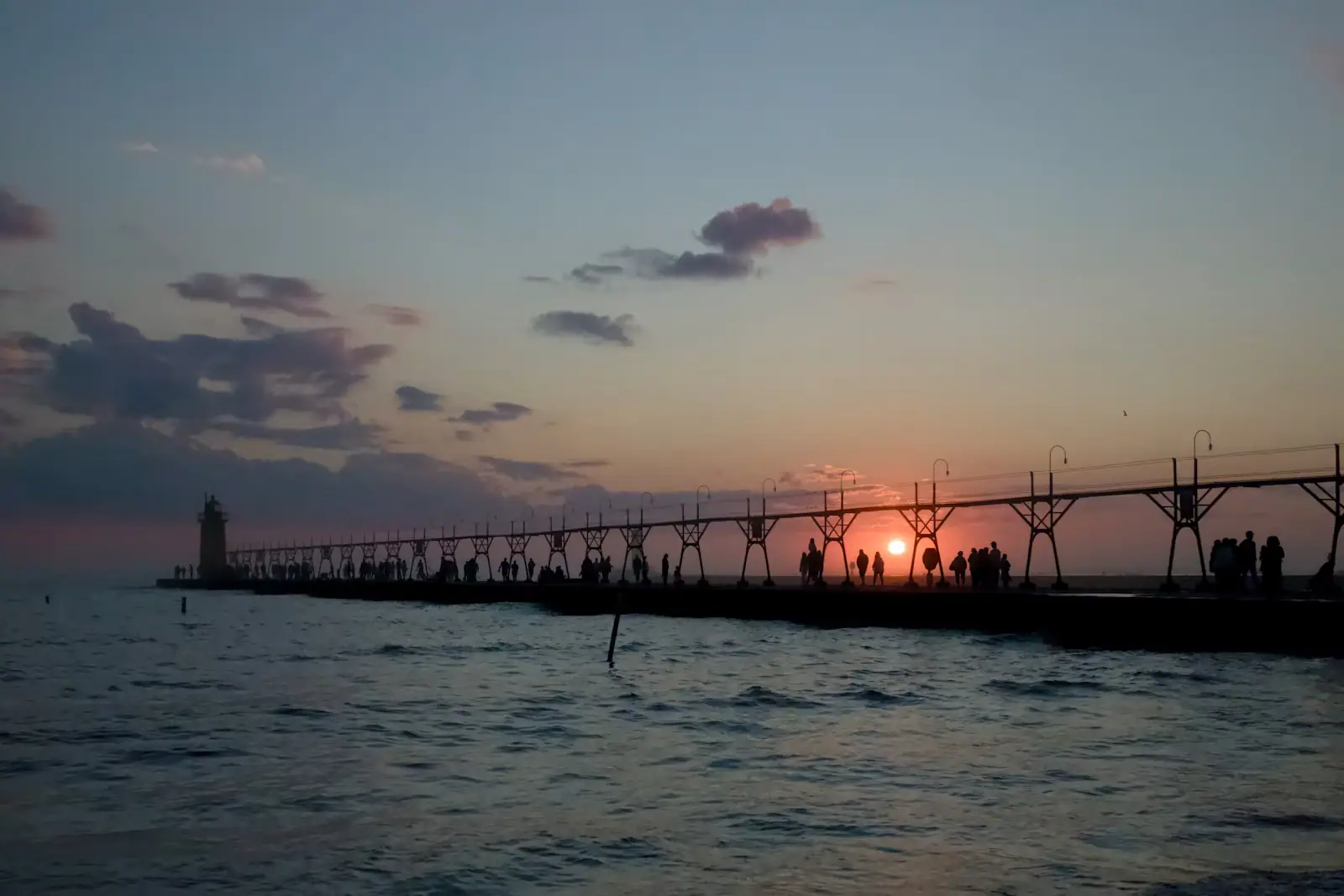
What you are going for is the channel. The Grand River — the same river that runs through downtown Grand Rapids — reaches Lake Michigan here, and the town is arranged around that meeting. A boardwalk runs along the south bank from the marina and the shops down to the pier, a distance of a couple of miles that people walk in both directions all summer. At the end of it two lights sit on the south pier, both painted red, linked to each other and to the shore by an elevated catwalk that was built so keepers could reach the lights when waves were breaking over the pier. They are, by common agreement, the most photographed lighthouses in Michigan.
After dark in season the other thing happens. On Dewey Hill, the dune on the opposite bank, sits the Grand Haven Musical Fountain, a water and light installation that plays a programmed show to music every night at dark from Memorial Day to Labor Day, and on Friday and Saturday evenings in May and September. Shows run twenty-five to thirty minutes. You watch from a bank of seating on the town side of the channel and it costs nothing.
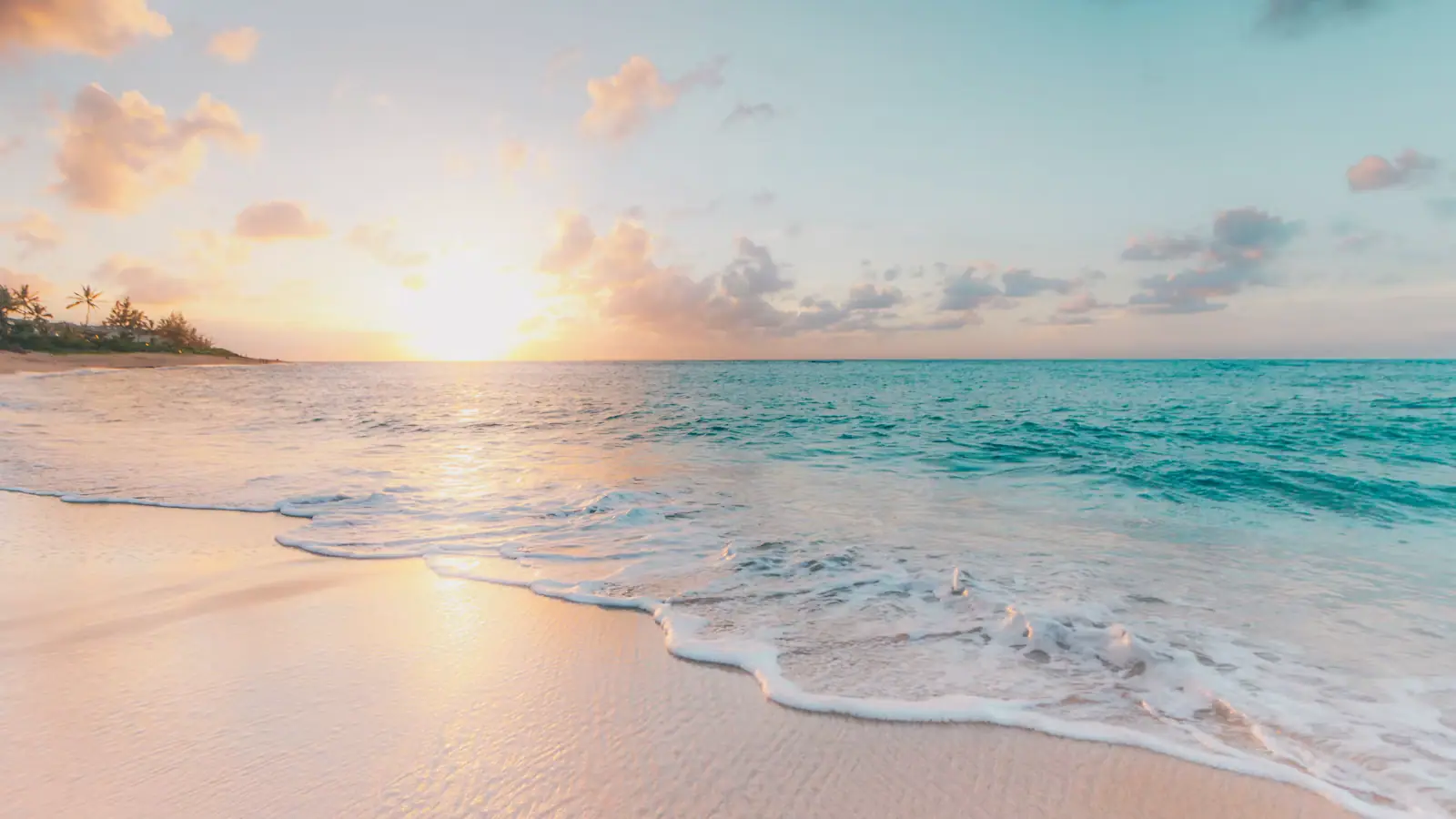
South of the channel, Grand Haven State Park puts forty-eight acres and half a mile of Lake Michigan shoreline immediately at the end of the road, with a campground sitting directly on the sand. That proximity is the town's blessing and its parking problem.
A day here is straightforward: arrive late morning, walk the boardwalk, swim or sit, eat in town, stay for the fountain, drive home in forty minutes. It is the trip that makes Grand Rapids feel closer to the lake than it actually is.