Neighbourhood
Free
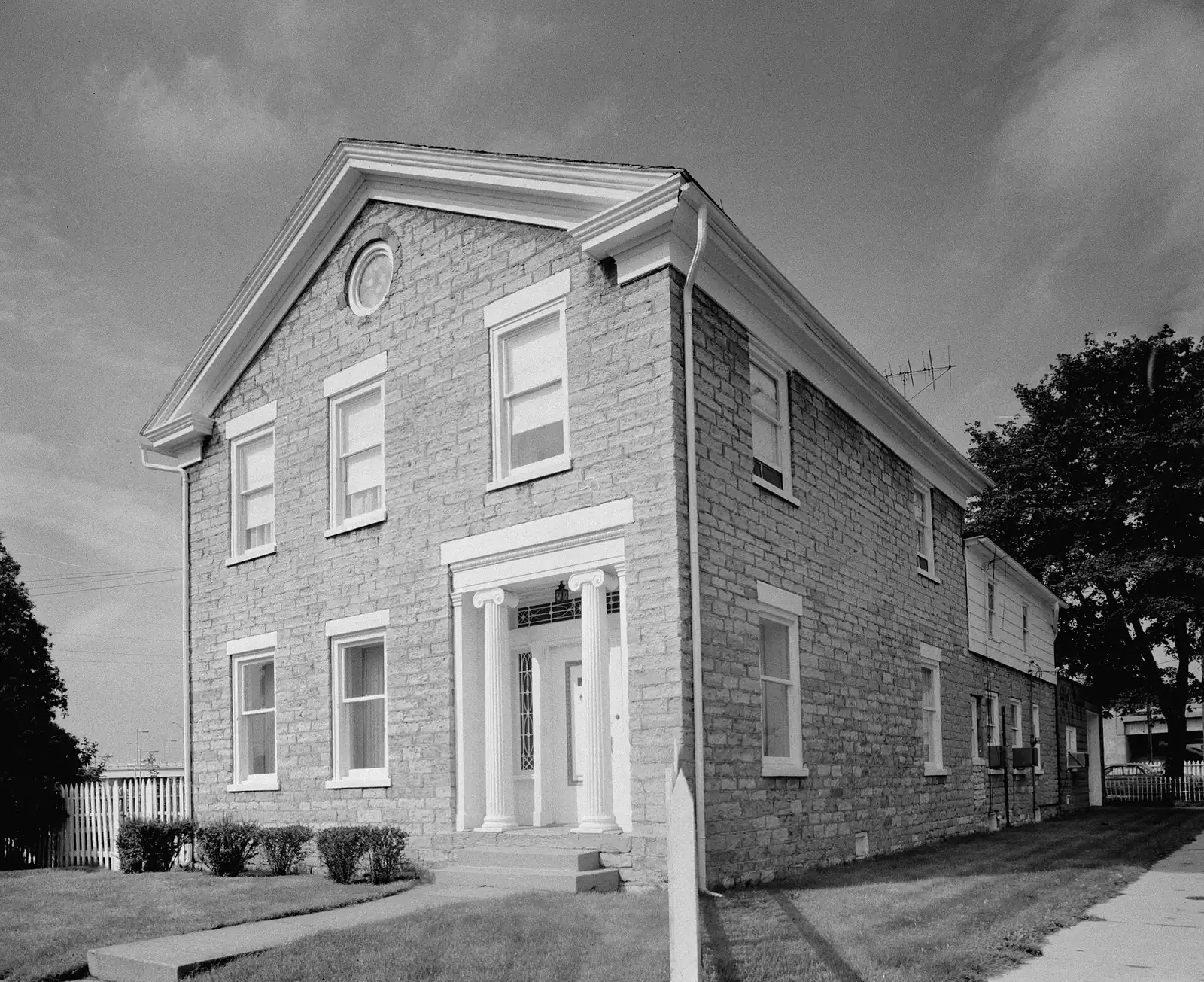
Heritage Hill Historic District
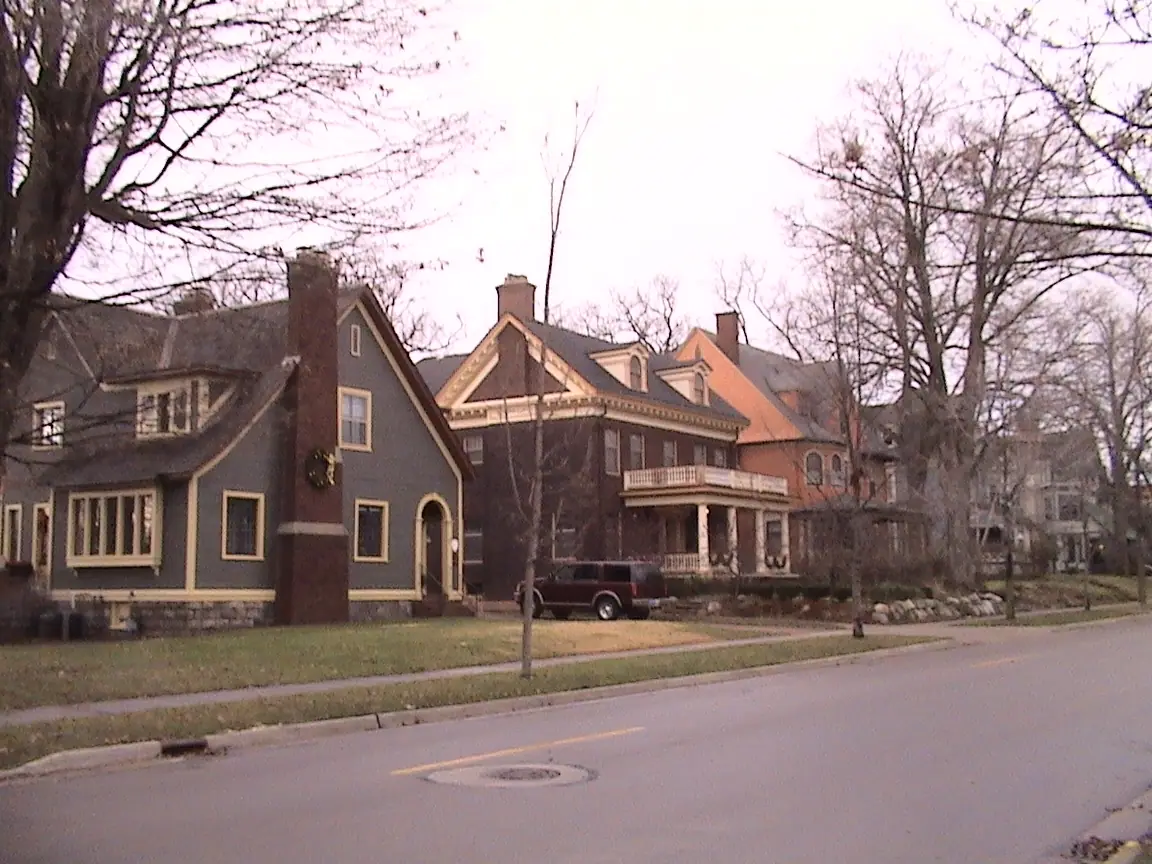
Thirteen hundred buildings on a hill above downtown, saved in 1968 by 125 neighbours who refused to let the bulldozers in.
0.5–1.5 hoursFree to walk; the annual Tour of Homes in May is ticketed
Things to Do
Where to shop in Grand Rapids: independent corridors east of downtown, two working markets, the 28th Street malls, and why the Furniture City sells none.
The mistake visitors make here is assuming the shopping is downtown. It mostly is not. Downtown Grand Rapids has spent twenty-five years becoming a very good restaurant, bar and events district, and retail was not what came back with it. Monroe Center and the streets around Rosa Parks Circle carry a handful of genuinely good independents, several galleries and a great many places to eat, and if you walk it expecting a shopping street you will be finished in forty minutes and disappointed.
The independent retail is about a mile east, in the neighbourhood business corridors, and it is worth the walk. Four adjoining districts — East Hills, East Fulton, Eastown and Wealthy Street — trade under the shared name Uptown, and between them they hold the bookshops, record shops, vintage dealers, home goods, plant shops and small design studios that people mean when they say Grand Rapids has good shopping. These are nineteenth and early twentieth-century commercial streets still doing the job they were built for, which is rarer in the American Midwest than it should be.
The volume retail is somewhere else again: four to six miles southeast, along 28th Street and out past the East Beltline, where the mall, the big boxes and the outlets sit. That is where you go for a chain you actually need rather than for an afternoon.
And then there are the two markets, which are the most Grand Rapids thing on this page. The Downtown Market opened in 2013 in a purpose-built LEED Gold hall. The Fulton Street Farmers Market has been selling produce on the same ground since 1922, after the city banned farmers from selling in the streets and a women's club spent years lobbying for somewhere to put them. One is a food destination, the other is where people actually buy vegetables, and a good Saturday takes in both.
Two practical notes before you plan. Michigan charges six per cent sales tax with nothing added locally, which is lower than a lot of visitors expect and is worth knowing if you are comparing a purchase against home. And the three shopping cities described above do not connect on foot. Between November and March, when the lake sends snow inland and the pavements are slush, that stops being an inconvenience and starts deciding your day.
Wealthy Street runs east from downtown and is the single best commercial street in the city. The stretch through East Hills, around the junction with Diamond and Cherry, took a long decline through the second half of the twentieth century and was rebuilt storefront by storefront from the 1990s onwards, largely by independent operators rather than by a development scheme. That history is why it looks the way it does: low brick buildings, deep narrow shops, original window openings, almost nothing purpose-built for retail chains.
What you will find: independent books, records, plants, ceramics, stationery, secondhand and vintage clothing, a couple of small design and print studios, bakeries and coffee. What you will not find: national chains, which is the point.
The turnover is real and it is why this page names no individual shop. Small independent retail in a mid-sized American city changes hands, moves and closes, and any guide that lists a dozen by name is wrong within a year. Walk the six or seven blocks between Diamond Avenue and the Eastown end and look in windows. That takes about an hour with stops and is a better use of the time than a list.
Heritage Hill sits immediately uphill from here, so the natural pairing is architecture in the morning and this street after lunch. The walk down Cherry Street from the historic district takes ten minutes.
Carry on east and Wealthy Street runs into Eastown, whose centre is an unusual five-way intersection where Wealthy, Lake Drive and Norwood Avenue all meet. That junction is the neighbourhood: a tight cluster of shops and bars occupying the corners, with the rest of the district residential around it.
Eastown is scruffier than East Hills and better for certain things. This is where the vintage and secondhand clothing concentrates, where the record shops are, and where the bars keep student hours because the neighbourhood sits between two universities' orbits. It has held onto a slightly countercultural reputation since the 1970s, which it plays up, and the murals and painted shopfronts are part of that.
Practical shape of a visit: it is small. An hour covers it properly, and it works best appended to Wealthy Street rather than as a destination in itself. Parking is on-street and residential, which means reading signs carefully, and it is genuinely easier to park once in East Hills and walk the twelve minutes east.
Two honest notes. Sunday and Monday are thin here, with a fair number of shops closed. And the bar side of the district gets loud on a Friday and Saturday night in term time, which is a feature or a problem depending entirely on what you came for.
If what you need is a department store, a phone repair or a coat because the weather turned, this is where you go and there is no shame in it.
Woodland Mall sits where 28th Street meets the East Beltline, about fifteen minutes from downtown by car. It carries a hundred and twenty-five-plus shops with Macy's, JCPenney and Von Maur as anchors, and it holds the only Grand Rapids locations of a good number of national names, which is why locals drive out here rather than shopping downtown for those brands.
Tanger Outlets opened in August 2015 in Byron Center, roughly fifteen minutes south, and is an open-air outlet centre in the usual format. Open-air is worth noting: in February it is an outlet centre you walk between buildings in.
RiverTown Crossings in Grandville, southwest of the city, is the other enclosed mall, and it serves the western suburbs.
The honest guidance is that none of this is a reason to visit Grand Rapids and all of it is a reasonable use of two hours on a bad-weather afternoon. Twenty-eighth Street itself is a long commercial strip with everything a strip has, and its Saturday traffic is the worst in the metropolitan area by some distance. Go on a weekday if you can, and go in the morning.
Local tips
How they compare
| Where | What it is for | Getting there | Best on |
|---|---|---|---|
| Downtown core, Monroe Center | A few good independents, galleries, and a lot of food. Not a shopping trip on its own | Walkable if you are staying downtown | Any weekday lunchtime |
| Uptown: Wealthy Street, East Hills, Eastown, East Fulton | Books, records, vintage, home goods, plants, small design. The reason to shop in this city | A mile or so east; walkable from downtown in twenty-five minutes, or a short drive | Saturday late morning |
| 28th Street and south | Chains, department stores, outlets, everything you forgot to pack | Four to six miles southeast; a car or a bus | Weekday, because Saturday traffic on 28th is grim |
| The two markets | Produce, cheese, bread, prepared food, makers' stalls | Downtown Market is a ten-minute walk south of the core; Fulton Street is on the way to Eastown | Saturday morning, both |
The useful way to combine them, if you have one day: markets first thing, Uptown for the late morning and lunch, downtown in the afternoon for the galleries and a drink. Leave 28th Street out entirely unless you need something specific.
If you are here for a conference with an evening free, the answer is Wealthy Street. It is fifteen minutes from any downtown hotel, the shops keep later hours than the downtown core, and there is somewhere to eat at the end of it.
How they compare
Downtown Market opened on 2 September 2013 in a purpose-built hall about ten minutes' walk south of the downtown core, cost around thirty-two million dollars, and is LEED Gold — one of several green buildings this city has collected. Inside are twenty-odd permanent tenants: butcher, fishmonger, baker, cheese, coffee, chocolate, prepared food, a couple of proper restaurants. Outside there is room for fifty or more farm vendors in season. Thirty thousand people turned up on the opening day, which tells you how much the city wanted it.
It is a food destination and it is priced like one. You go for lunch, for a gift, for something specific and good.
Fulton Street Farmers Market, out at 1145 Fulton Street East on the way to Eastown, is the other thing entirely. Farmers have sold on that ground since 1922, and the history behind it is better than the market's modesty suggests: the city banned selling in the streets around the turn of the century and pushed growers onto an island in the river, and from 1914 the Grand Rapids Federation of Women's Clubs campaigned for a permanent site until they got one. It runs roughly two hundred vendors across a year, under an open-sided roof with a small indoor hall alongside.
This is where the city buys vegetables. It is cheaper, plainer and more seasonal, it is at its best from July through October, and it runs reduced in winter. If you only do one, do this one in summer and the Downtown Market in January.
Before you book
This needs saying because people arrive expecting it.
Grand Rapids furnished America for the better part of a century and the industry never left, it changed customer. The surviving giants make office furniture and sell it to companies: Steelcase is headquartered here, with Herman Miller and Haworth within about thirty miles on the lakeshore side. That is a business-to-business industry. There is no furniture quarter, no strip of factory showrooms, and no equivalent of High Point's market open to the public.
What that leaves for a visitor is three honest options. The antiques and secondhand trade, scattered through the neighbourhood corridors and out into the surrounding towns, which is where genuine Grand Rapids-made pieces actually turn up and where you should look if you want one. The occasional manufacturer outlet or clearance event, which tends to be in the lakeshore towns rather than in the city and which you should confirm exists before driving to it. And the museums, which is where the story is properly told: the Grand Rapids Public Museum holds more than two thousand pieces on its furniture floor.
If you want to buy something designed here rather than made here, the design studios and makers along Wealthy Street and in the converted factory buildings on the west side are a better bet than any showroom, and they are small enough that you will meet whoever made it.
On the ground
Every place below has its own page — hours, parking, what it costs and what to expect when you get there.
Neighbourhood
Thirteen hundred buildings on a hill above downtown, saved in 1968 by 125 neighbours who refused to let the bulldozers in.
0.5–1.5 hoursFree to walk; the annual Tour of Homes in May is ticketed
Shopping
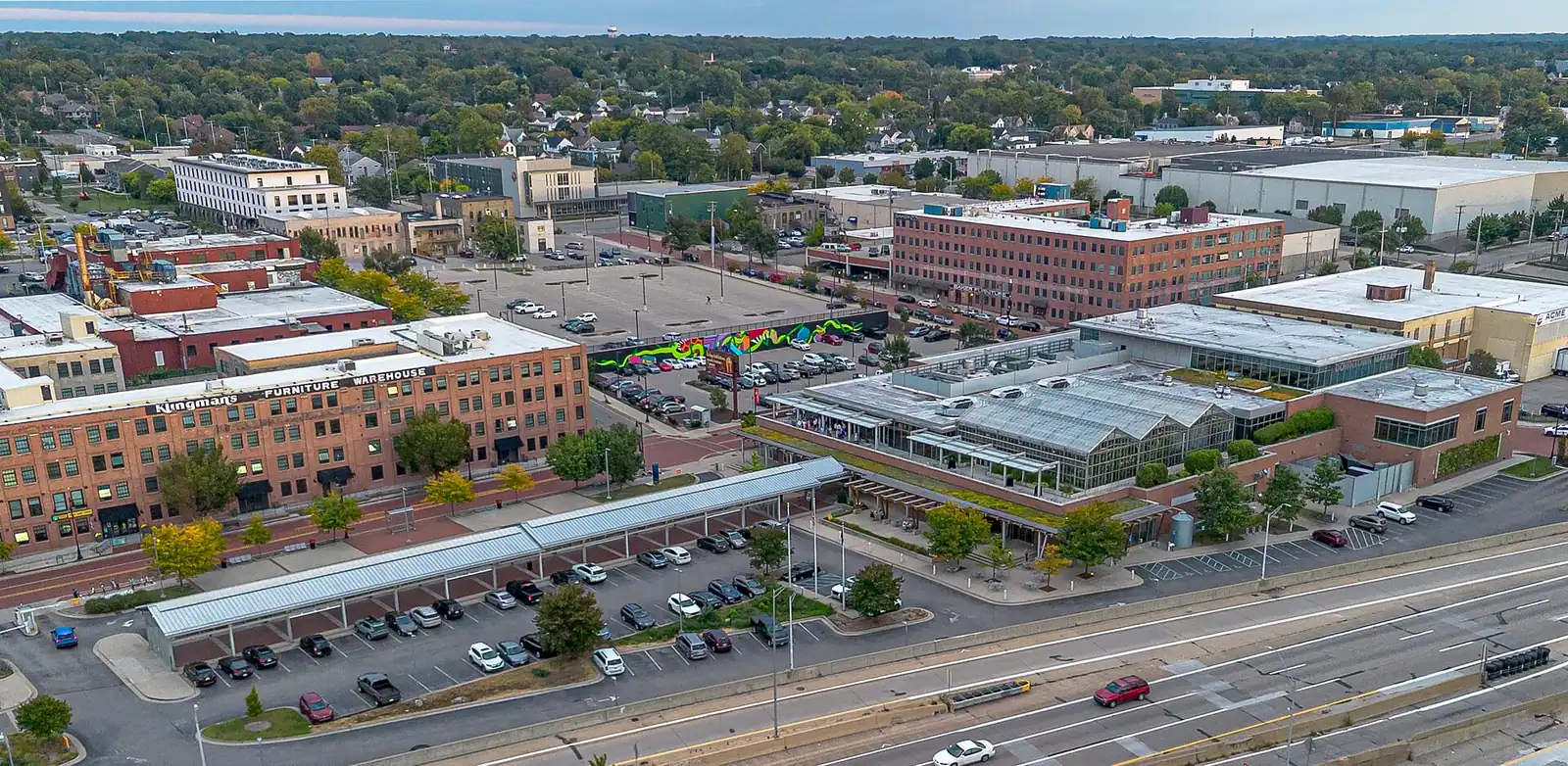
Twenty-odd food merchants under one roof, a 52-stall farmers shed outside, and a greenhouse growing on the second floor.
1–2 hoursFree to enter; you pay the individual merchants
Landmark
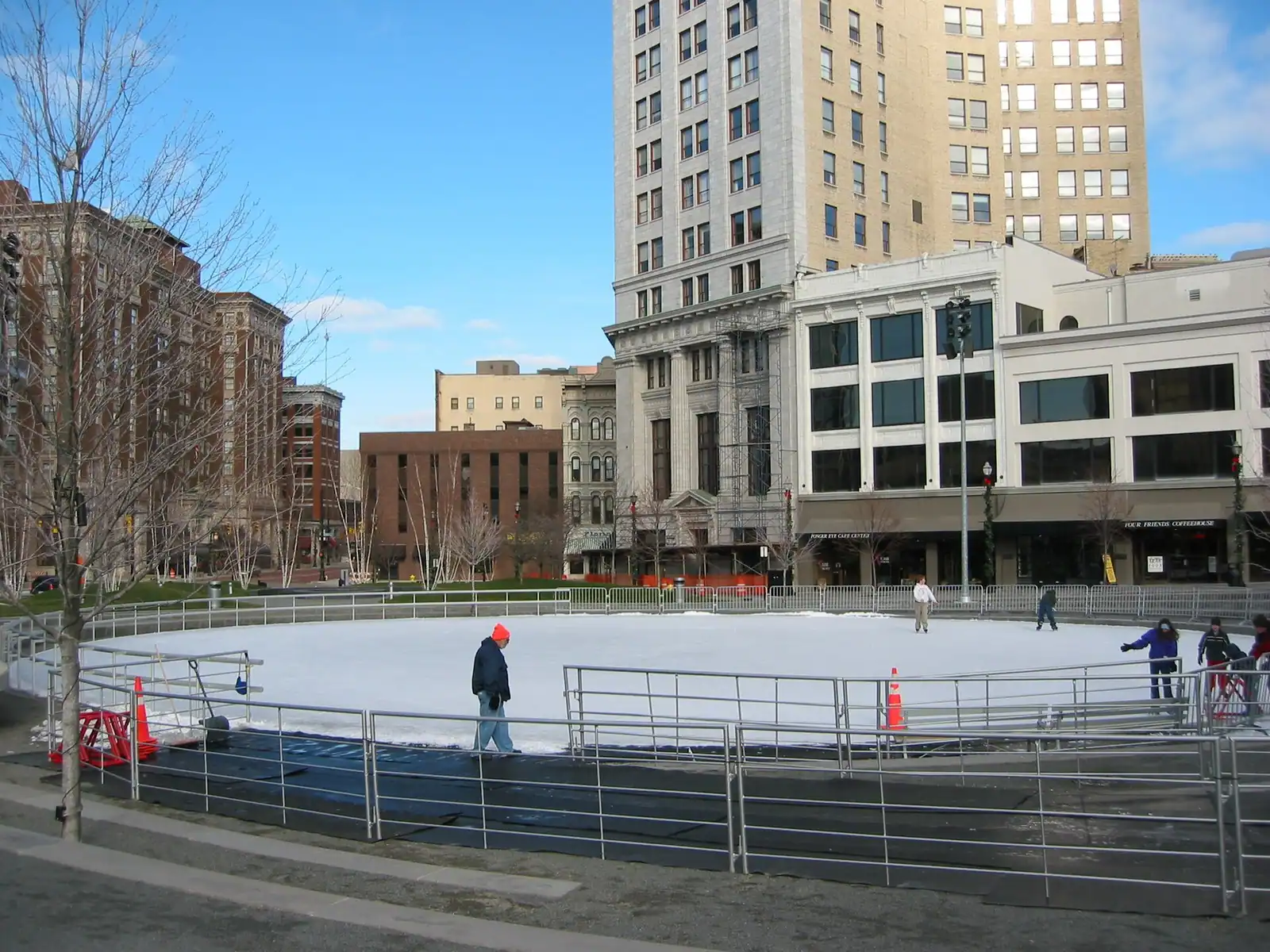
A Maya Lin artwork you are allowed to walk on, and from December a public ice rink with the night sky under the ice.
0.5–2 hoursThe plaza is free at all times. Winter skating sessions carry a small charge.
Neighbourhood
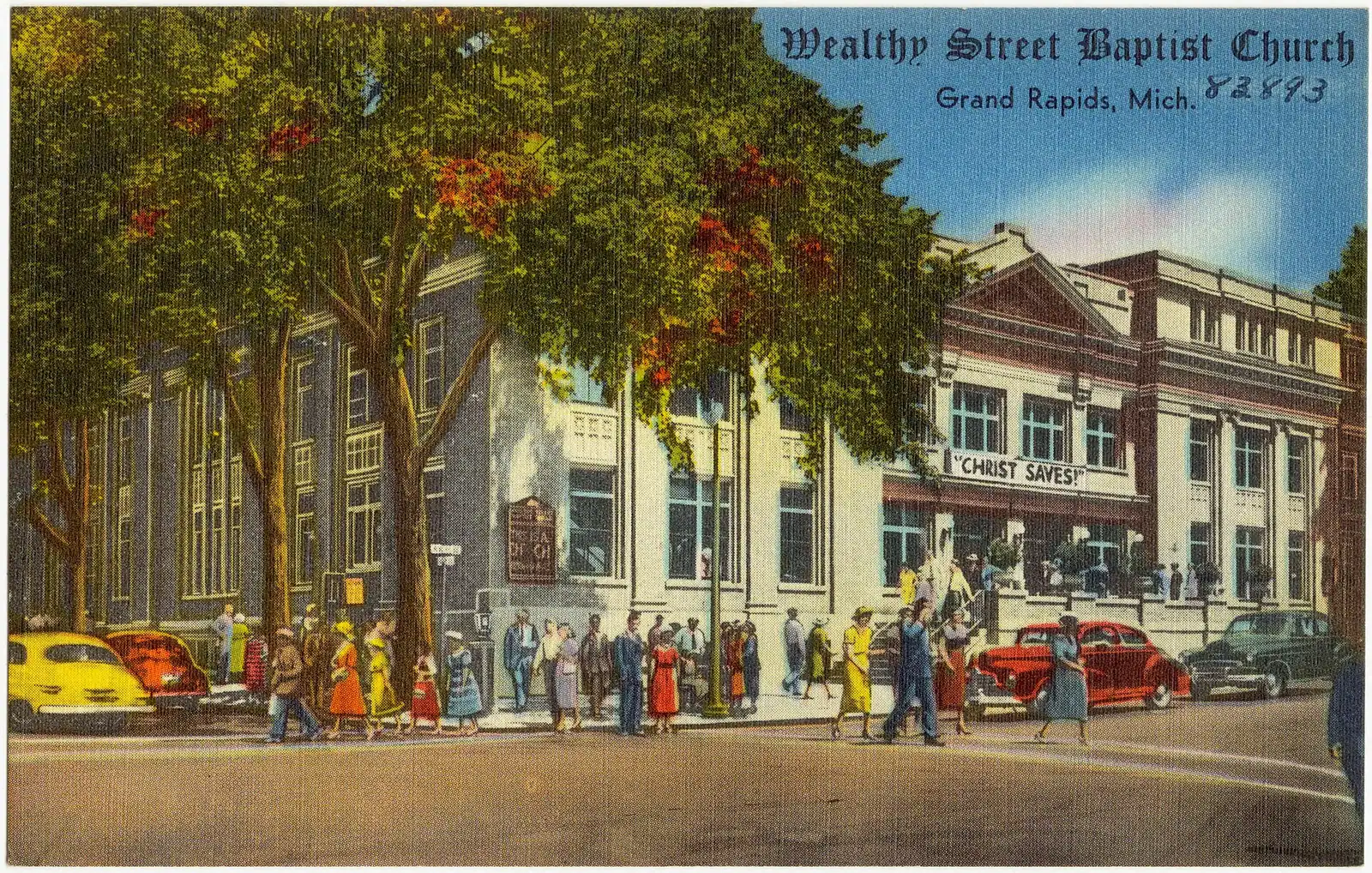
A mile of restored storefronts in East Hills, restarted by a 1911 theatre that spent twenty-five years boarded up.
1–3 hoursFree to walk. Everything on it costs whatever it costs.

Neighbourhood
Two blocks around a five-way junction, a hot dog counter that turned fifty, and the street fair that shuts the road every September.
1–3 hoursFree to walk around, and the September Streetfair is free to enter.
Dining district
The furniture district that built the city, now lofts, offices and the brewery that moved back in a decade after Founders moved out.
1–3 hoursFree to walk. You pay for what you drink and eat.
Straight answers
The neighbourhood corridors east of downtown, not downtown itself. Four adjoining districts — East Hills, East Fulton, Eastown and Wealthy Street, marketed together as Uptown — hold the independent books, records, vintage, home goods and design shops. Wealthy Street through East Hills is the single best stretch. Downtown Grand Rapids is a restaurant and bar district with a handful of good independents rather than a shopping street.
A purpose-built food hall that opened on 2 September 2013 about ten minutes' walk south of the downtown core. It cost around thirty-two million dollars, is certified LEED Gold, and holds roughly twenty permanent tenants — butcher, fishmonger, bakery, cheese, coffee, prepared food and restaurants — with space outside for fifty or more farm vendors in season. Thirty thousand people came on the opening day. It is a food destination and priced accordingly.
Produce has been sold on the Fulton Street site since 1922. The background is better than the market's plain appearance suggests: the city banned farmers from selling in the streets around the turn of the century and directed them to a market on an island in the river, and from 1914 the Grand Rapids Federation of Women's Clubs campaigned for a permanent location. It now runs roughly two hundred vendors across a year and peaks from July to October.
Yes. Tanger Outlets opened in Byron Center in August 2015, about fifteen minutes south of downtown, in the usual open-air format. Open-air matters here: in a Michigan February you are walking between buildings in the snow. The enclosed alternatives are Woodland Mall at 28th Street and the East Beltline, roughly fifteen minutes east, and RiverTown Crossings in Grandville to the southwest.
Not in the way visitors expect from the Furniture City name. The industry survived by switching to office furniture sold business to business: Steelcase is headquartered here, with Herman Miller and Haworth within about thirty miles. There is no public showroom district. Your realistic options are the antiques and secondhand trade in the neighbourhood corridors and surrounding towns, occasional manufacturer clearance events out on the lakeshore, and the Public Museum's furniture floor.
Michigan charges six per cent state sales tax, and no local sales tax is added on top of it, so the rate is the same across the state and lower than a good many visitors expect from a US city. That simplifies comparing a purchase against home. Groceries for home consumption are generally exempt, prepared food is not, which is the distinction that shows up on a market receipt.
Some, but expect gaps. Sunday and Monday are the thin days across the independent corridors in Wealthy Street, East Hills and Eastown, with a meaningful number of shops closed or on shortened hours. Saturday late morning into the afternoon is when everything is open and the streets have people on them. The malls and the 28th Street chains keep standard retail hours seven days a week.
Keep exploring

Guide hub
Furniture paid for this city, and then it paid for everything worth coming to see in it. That is the single idea a visitor needs. Grand Rapids made…
Things to do
The honest framing first. Grand Rapids is not a city you fly to for dinner, and a guide that pretends it competes with Chicago three hours west is…

Things to do
Grand Rapids gets called Beer City so routinely that the phrase has stopped carrying information, so here is what sits underneath it. The title…
Things to do
Every good thing in this city was paid for by chairs. That is barely an exaggeration. William Haldane opened a cabinet shop on the Grand River in…
Who it suits
Assume you will need this page. Grand Rapids takes something like thirty-eight inches of rain a year on top of around seventy-six inches of snow…

By season
Start with the numbers, because everything else on this page depends on them. Grand Rapids collects somewhere around seventy to seventy-eight inches…
Read next
Guide
Two nights, one car, and one hard constraint that decides the whole schedule: the free Frank Lloyd Wright house only opens to the public on Sunday afternoon.
5 min readMarguerite Vanderhoff
Guide
Michigan's second city is a furniture town that spent its furniture money on art. Here is how the address grid works, what is walkable, and what needs a car.
6 min readMarguerite Vanderhoff

Guide
Seventy-odd inches of snow, the cloudiest January of any month, and a city that responds by putting a hundred art installations outdoors and flooding a Maya Lin park into an ice rink.
6 min readMarguerite Vanderhoff

Guide
Eight breweries inside one downtown walk, a district of converted warehouses north of Michigan Street, and a list of closures that most beer articles have not caught up with.
7 min readTheo Brandsma