Neighbourhood
Free
Eastown
Two blocks around a five-way junction, a hot dog counter that turned fifty, and the street fair that shuts the road every September.
1–3 hoursFree to walk around, and the September Streetfair is free to enter.0.6 mi away
Neighbourhood
Last updated
A mile of restored storefronts in East Hills, restarted by a 1911 theatre that spent twenty-five years boarded up.
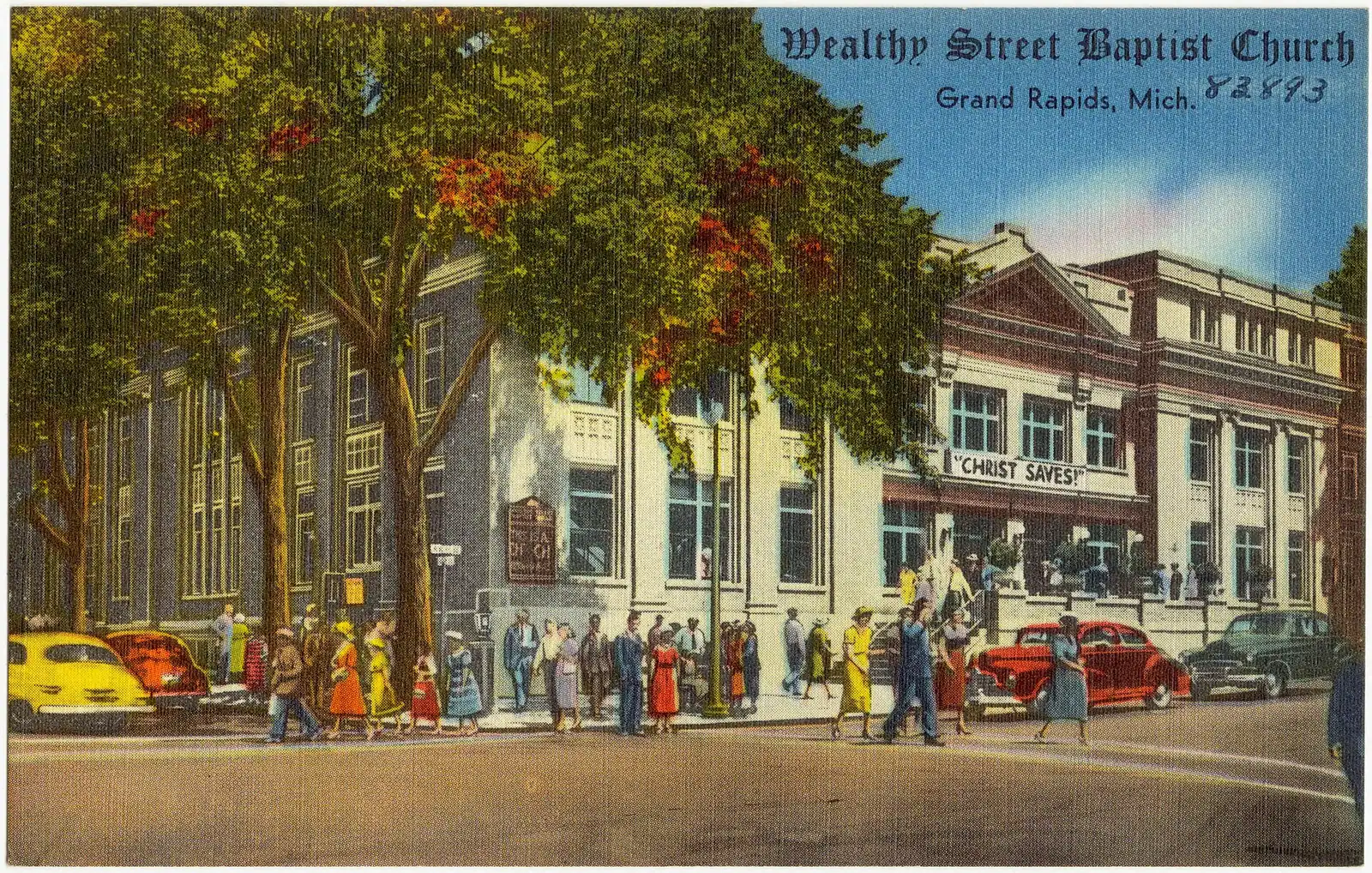
Photo: Tichnor Brothers, PublisherPublic domain
Every city has a street that its residents send visitors to instead of downtown. In Grand Rapids it is Wealthy Street, and specifically the East Hills stretch running east from Eastern Avenue towards Fuller. Something over seventy businesses sit along it: bakeries, a creamery, a distillery tasting room, half a dozen restaurants people book a week ahead for, coffee roasters, a macaron shop, and a good density of the kind of small independent retail that downtown lost.
The name is older than the money. Wealthy Street was laid out in the nineteenth century and the corridor was a streetcar commercial strip long before it was a destination. It then did what a lot of American inner-ring commercial streets did: it emptied. By the 1980s this was a street of boarded frontages, and the building most people now photograph — the Wealthy Theatre at number 1130 — had been shut since the late 1970s and stood derelict for more than twenty-five years.
The theatre is the reason to understand this street rather than just eat on it. A neighbourhood association ran a capital campaign, restored the 1911 building and reopened it in 1998 as a community arts venue. Wealthy Street Bakery followed in 2002 and Art of the Table in 2003, and the corridor's recovery dates from that decade. It is one of the better-documented cases in the Midwest of a neighbourhood organisation, not a developer, turning a street around.
A practical note before you plan an evening. Wealthy Street is long and it does not have a uniform character. The East Hills section is the dense, walkable, eat-and-drink part. West of Eastern it thins out and changes; further west again, around Division, it merges into a different downtown edge. If someone tells you to go to Wealthy Street, they almost certainly mean the half-mile between Eastern and Fuller, plus the block of Cherry Street that runs parallel one street north.
The part of Wealthy Street worth walking runs east from Eastern Avenue SE to Fuller Avenue SE, with Cherry Street one block north carrying the overflow. From downtown it is about a fifteen-minute walk east and uphill through Heritage Hill, or five minutes by car.
Driving, come east on Wealthy from Division Avenue or drop south from Fulton Street on Eastern or Diamond. Parking is free on the residential side streets and is tight after six on a Friday or Saturday; some blocks are permit-restricted and signage is enforced, so read before you leave the car.
Local bus routes serve the corridor from downtown. If you are combining this with Eastown, walk: the two districts sit fifteen minutes apart along the same street, and the walk between them is the best way to feel where one neighbourhood stops and the next begins.
1130 Wealthy Street SE is a small building with a long biography. It went up in 1911 as part of the Giles Block, built by Laura and Thomas Giles, and opened as the Wealthy Vaudette — a vaudeville house. It was renamed the Pastime Vaudette almost immediately, then simply the Pastime, and when vaudeville collapsed it stopped being a theatre altogether and spent the First World War as a warehouse for the Michigan Aircraft Company.
It came back as a cinema in the 1920s under new owners, Oscar and Lillian Varneau, who gave it the name it still carries. It ran as a neighbourhood movie house for half a century and closed in the late 1970s.
Then nothing, for more than twenty-five years. The building decayed in plain sight on a street that was itself emptying out. What saved it was a neighbourhood economic development association running a capital campaign — a slow, unglamorous, locally-funded restoration rather than a single benefactor writing a cheque. It reopened in 1998.
Today it operates as a community arts and media venue under the Grand Rapids Community Media Center, with a programme that runs from film screenings and live music to public access media training. Check what is on before you visit; it is a working venue rather than a monument, and there is nothing to tour on an ordinary afternoon.
The East Hills district, roughly Eastern Avenue to Fuller Avenue, carries something over seventy businesses, and the mix is unusually balanced for an American commercial strip: food, drink, retail and services rather than bars alone.
What you will find walking it:
Because the tenancy turns over like any commercial street, this page names categories rather than promising specific doors. Look up what is trading before you make a special trip for one restaurant, and book dinner if it matters to you. Friday and Saturday evenings genuinely sell out here.
The East Hills stretch is about half a mile and takes fifteen minutes end to end without stopping, which is not how anyone walks it.
The best sequence for a first visit: park on a residential side street off Wealthy, walk east from Eastern Avenue, cut one block north to Cherry Street around the midpoint for the brewery, then rejoin Wealthy and continue east. At Lake Drive the character changes again and you are effectively in Eastown, which is its own page and its own crowd. The two districts are a fifteen-minute walk apart along the same street, and doing both in an evening is entirely reasonable.
Parking is free on the residential streets and tight on a Friday night. Read the signs: some blocks are permit-restricted and the city does enforce. Arriving before 6pm makes the whole thing easier.
Timing. Saturday late morning is the best single window — everything is open, the bakeries are still full, and it is not yet an evening crowd. Sunday is quieter and several places close. In winter this is still a functional street, unlike a lot of Grand Rapids: the businesses are close together and you are never more than thirty seconds from a door.
Getting here. It is a fifteen-minute walk uphill from downtown through Heritage Hill, or five minutes by car. Bus routes run the corridor. The hill matters if you are walking back at the end of an evening — it is genuinely steep in places.
A restored commercial street in an American city is never only a restoration, and Wealthy Street's neighbourhood has been having that conversation in public for twenty years.
The corridor's decline was not an accident of taste. It followed the same pattern as inner-ring neighbourhoods across the Midwest: disinvestment, highway construction that cut through established communities, and lending practices that starved particular blocks of capital. The stretch of Wealthy west of the East Hills district runs through neighbourhoods that carried the heaviest cost of that, and they did not get the bakeries.
The recovery has brought rising rents and property values with it, and long-standing residents and businesses have been priced out. Community organisations here have been explicit about this rather than quiet about it, and there are local efforts specifically aimed at keeping ownership in the neighbourhood.
None of that is a reason to skip the street. It is a reason to notice, as you walk west past the last restored frontage, that the transformation is a half-mile long and that the line is visible from the pavement. A visitor who understands that will read Grand Rapids far more accurately than one who treats Wealthy Street as a food destination and stops there.
Straight-line distances, so allow more on the road — the island is long and has one main parkway.
Neighbourhood
Two blocks around a five-way junction, a hot dog counter that turned fifty, and the street fair that shuts the road every September.
1–3 hoursFree to walk around, and the September Streetfair is free to enter.0.6 mi away
Neighbourhood
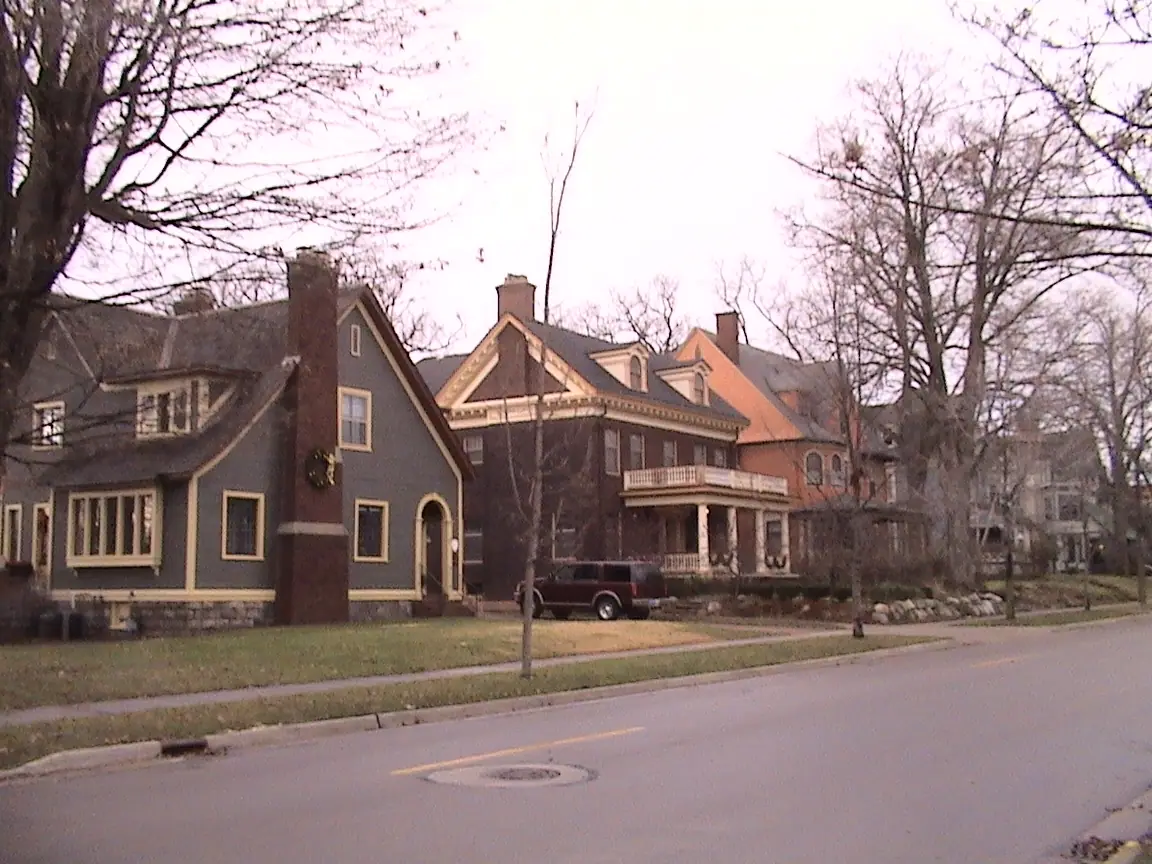
Thirteen hundred buildings on a hill above downtown, saved in 1968 by 125 neighbours who refused to let the bulldozers in.
0.5–1.5 hoursFree to walk; the annual Tour of Homes in May is ticketed0.9 mi away
Shopping
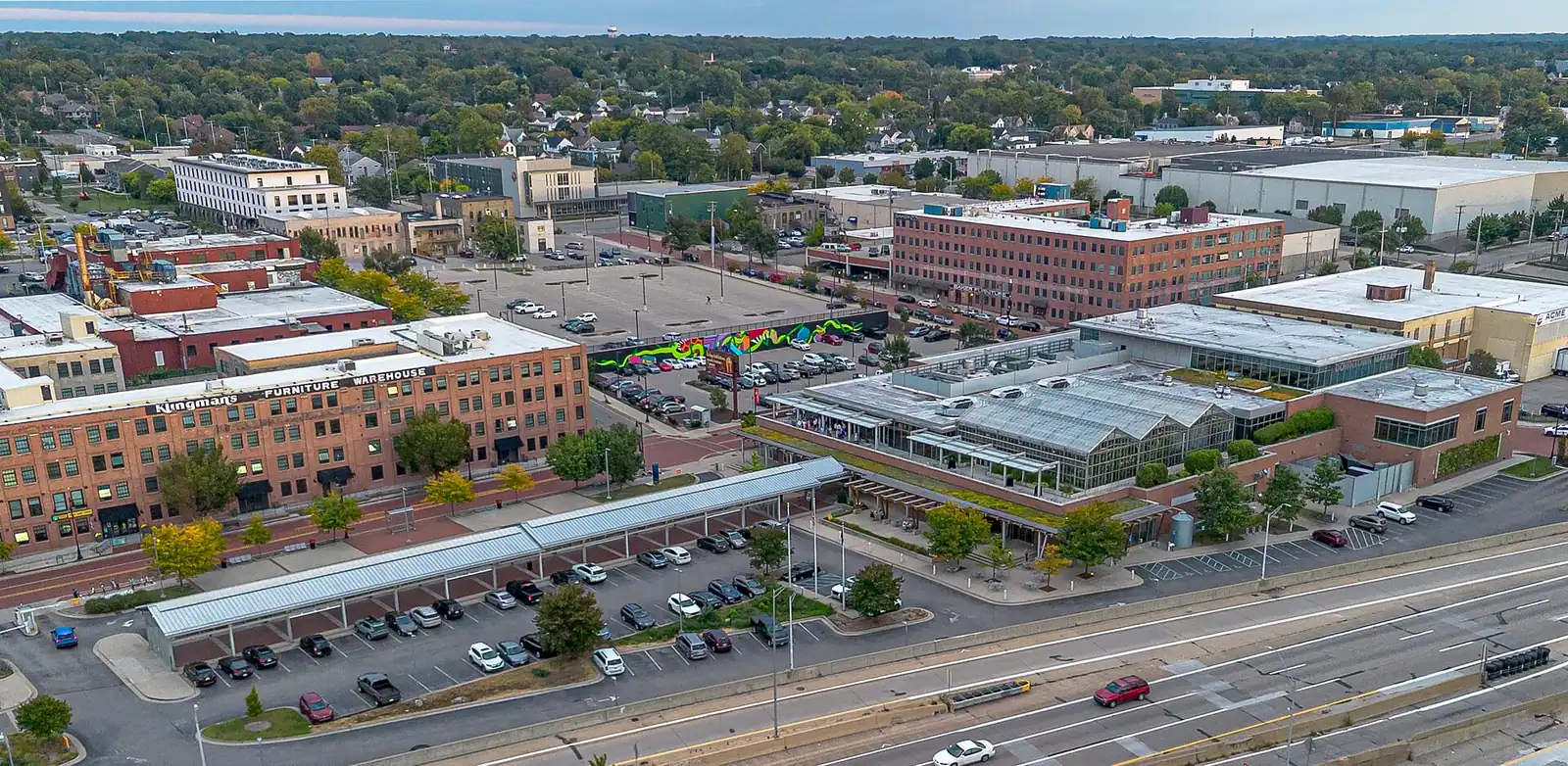
Twenty-odd food merchants under one roof, a 52-stall farmers shed outside, and a greenhouse growing on the second floor.
1–2 hoursFree to enter; you pay the individual merchants1.5 mi away
Museum
The first LEED Gold certified art museum anywhere, built by a city whose fortune came from making furniture well.
1.5–2.5 hoursRoughly $10–15 per adult; general admission free on Thursday evenings1.6 mi away
Where this place fits into a day, and the pages that plan one.
Guide hub
Furniture paid for this city, and then it paid for everything worth coming to see in it. That is the single idea a visitor needs. Grand Rapids made…
Things to do
Grand Rapids gets called Beer City so routinely that the phrase has stopped carrying information, so here is what sits underneath it. The title…
Things to do
The honest framing first. Grand Rapids is not a city you fly to for dinner, and a guide that pretends it competes with Chicago three hours west is…

Things to do
Count the rooms before you judge the city. Grand Rapids has an arena that seats twelve thousand, a riverfront amphitheatre that seats another twelve…
Who it suits
A weekend for two in Grand Rapids works, but not for the reasons a travel brochure would give. There is no old quarter. There is no waterfront…
Things to do
The mistake visitors make here is assuming the shopping is downtown. It mostly is not. Downtown Grand Rapids has spent twenty-five years becoming a…

Guide
Eight breweries inside one downtown walk, a district of converted warehouses north of Michigan Street, and a list of closures that most beer articles have not caught up with.
7 min readTheo Brandsma
The East Hills stretch, running east from Eastern Avenue SE to Fuller Avenue SE, plus the block of Cherry Street one street north. That half-mile carries something over seventy businesses and is what locals mean when they say Wealthy Street. The corridor continues a long way west of there and changes character completely, so a satnav pin on Wealthy Street alone can put you in the wrong place entirely.
A 1911 building at 1130 Wealthy Street SE that opened as a vaudeville house, spent the First World War as an aircraft-parts warehouse, ran as a neighbourhood cinema from the 1920s, closed in the late 1970s and then stood derelict for over twenty-five years. A neighbourhood association raised the money to restore it and it reopened in 1998. It now operates as a community arts and media venue with a programmed calendar rather than daytime tours.
Yes, in about fifteen minutes, but the walk climbs through Heritage Hill and the gradient is real. Going out is fine; coming back late after dinner is the part people underestimate. Driving takes five minutes and parking is free on the residential side streets, though it tightens after six on Friday and Saturday and some blocks are permit-restricted with enforced signage.
Yes. They sit on the same street about fifteen minutes apart on foot, with East Hills ending around Fuller Avenue and Eastown centred on the five-way junction where Wealthy meets Lake Drive and Norwood. Walking between them is the easiest way to understand how Grand Rapids' east side is put together, and doing both in one evening — dinner in one, a drink in the other — is a standard local move.