Excellent Quality
Holland Brew Pub Tour: History and Hops (opens in a new tab)
Discover the breweries in Downtown Holland, Michigan while learning about some of Hollands history and the history of the breweries. Enjoy…
3 hours
Prices checked
Neighbourhood
Last updated
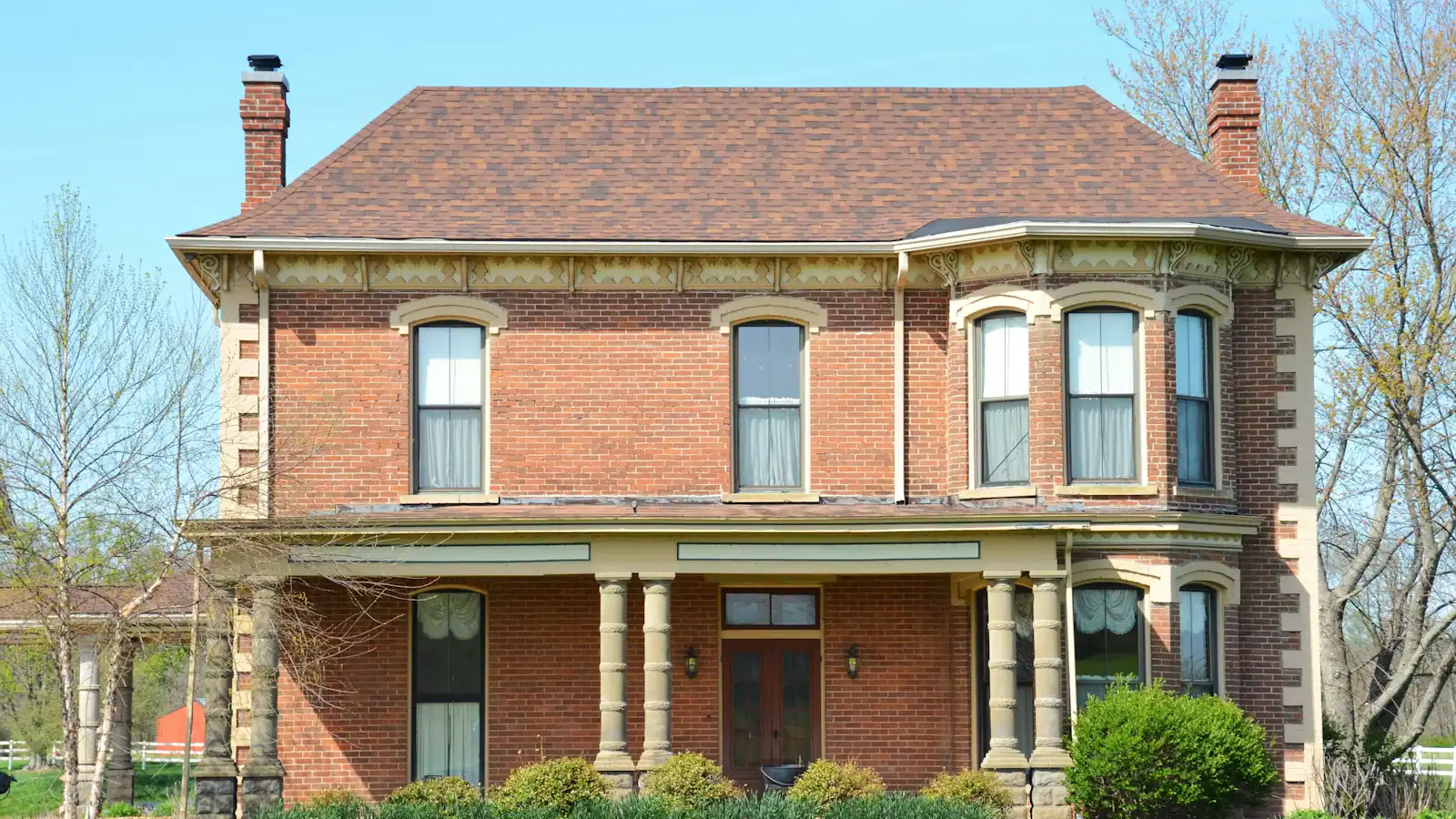
Thirteen hundred buildings on a hill above downtown, saved in 1968 by 125 neighbours who refused to let the bulldozers in.
Photo: Kent county at English WikipediaPublic domain
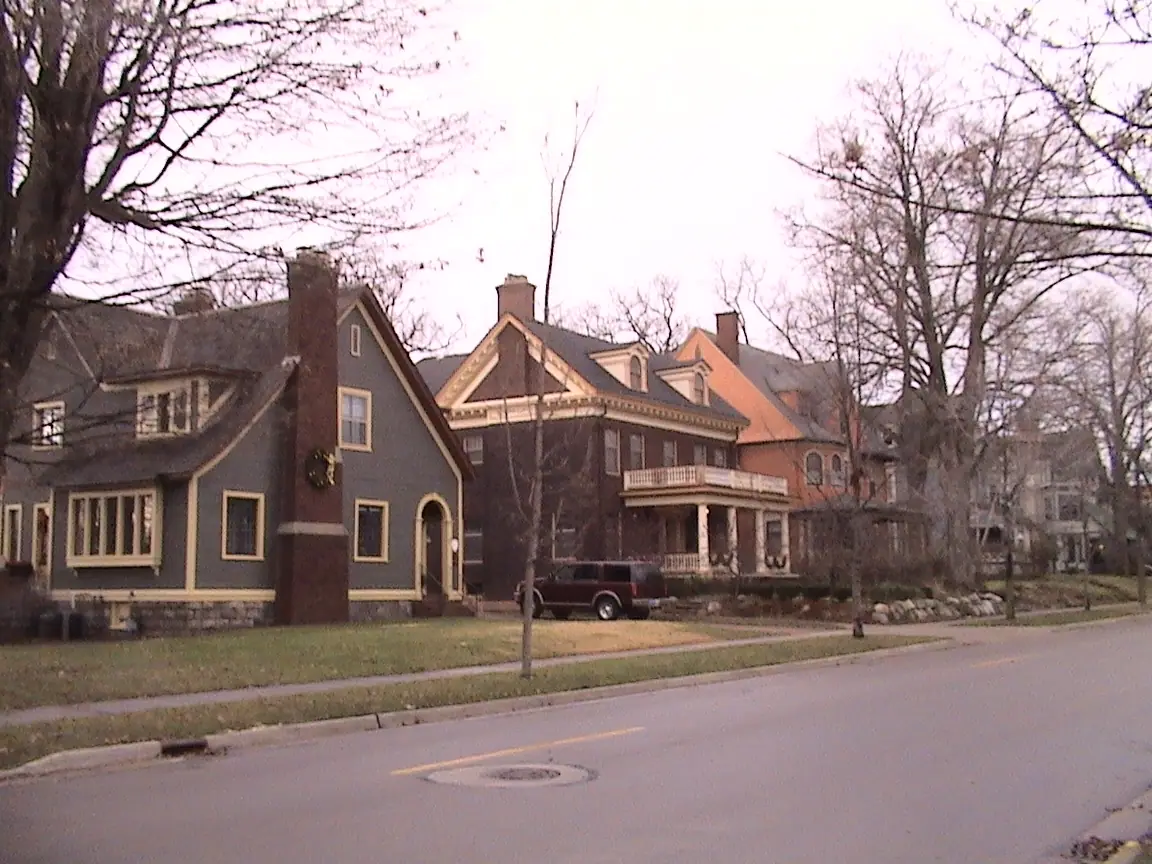
The lumber barons, the furniture manufacturers and the merchants who ran Grand Rapids in the nineteenth century all built on the same rise east of downtown, and they kept building there for eighty years. What is left is around 1,300 buildings covering nearly every style of American architecture from Greek Revival through Italianate, Queen Anne, Shingle, Chateauesque and Colonial Revival to Prairie, with the earliest dating to the 1840s. It is one of the largest urban historic districts in the United States.
It should not still be here. In the 1960s the neighbourhood faced the standard postwar combination: urban renewal clearance, redlining, and speculative buying that turned family houses into carved-up rentals. In 1968, 125 neighbours formed the Heritage Hill Association and fought it — stopping demolition, getting the district onto the National Register, and setting a preservation precedent that other American cities copied. More than 4,000 households live here now.
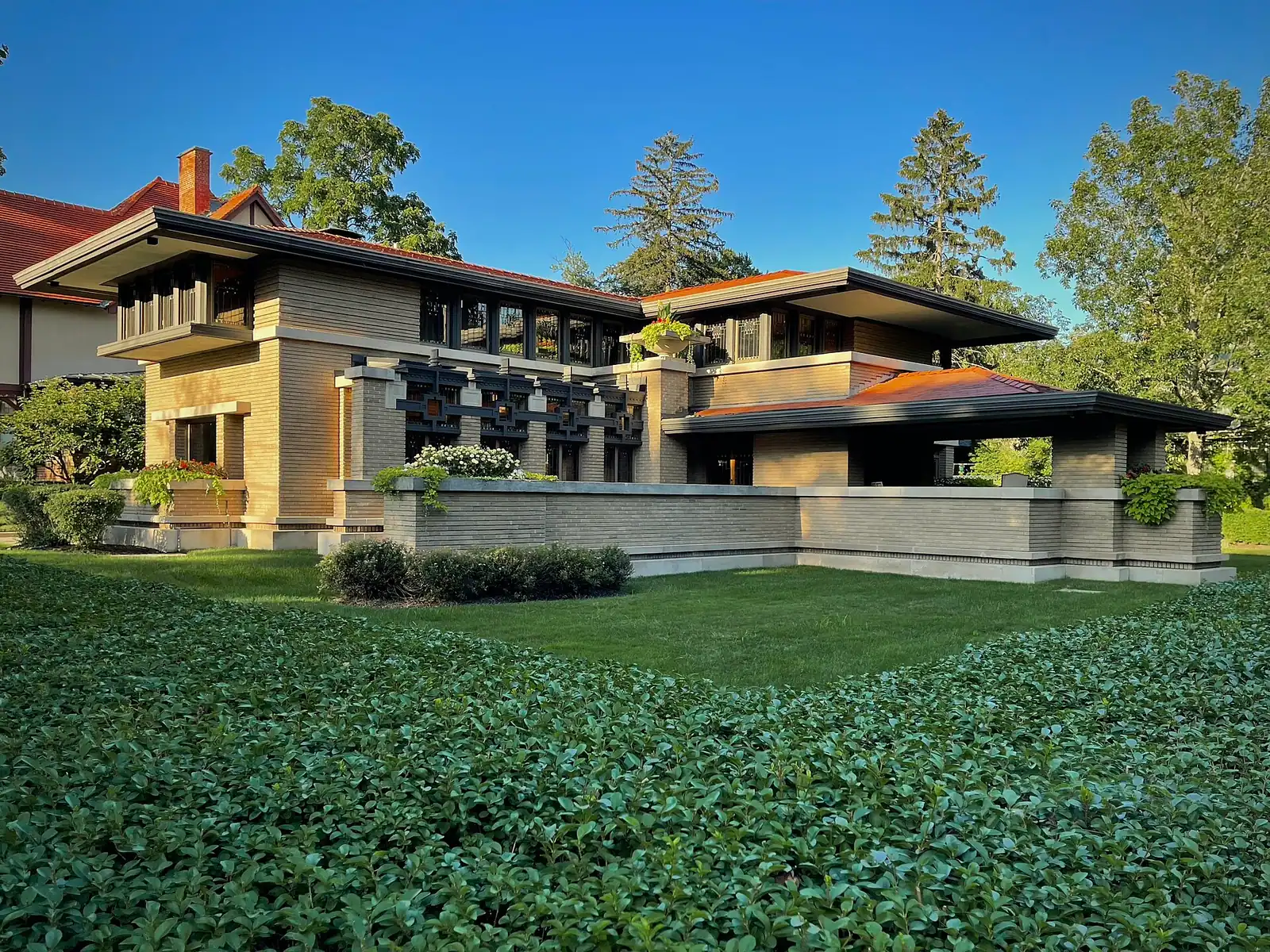
For a visitor this is a walking district rather than an attraction with a gate. The pleasure is in three or four blocks of Madison, College, Cherry and Fountain, where a Greek Revival farmhouse sits two doors from a Queen Anne with a turret and both are around the corner from Frank Lloyd Wright. The Castle, a Chateauesque pile in Scottish granite, is the other building people stop for.
Two buildings open regularly. The Meyer May House, Wright's 1909 Prairie house on Madison, tours free by appointment. Once a year, on the third weekend in May, the Heritage Hill Weekend Tour of Homes opens private houses to ticket holders, which is the only chance most people get to see the interiors.
Everything else you see from the pavement. That is enough.
Heritage Hill sits immediately east of downtown, roughly bounded by Crescent Street to the north, Union Avenue to the east, Pleasant Street to the south and Lafayette Avenue to the west.
On foot from Monroe Center it is about fifteen minutes and a genuine climb; the hill in the name is not decorative. Coming back down is quick.
Parking is on-street throughout, in a residential neighbourhood with block-by-block restrictions. Read the signs. If you are combining the walk with a Meyer May House tour, park once on Madison and do everything from there.
The Rapid's Division Avenue and Wealthy Street services run along the district's western and southern edges, and Wealthy Street itself is the obvious place to eat before or after.
You do not need a plan, but this route takes in the most range in the least distance.
Forty minutes at a wandering pace, an hour if you stop. The hill is a real hill: walking up from downtown is a climb, and the return is easy.
These are private homes. Photograph from the pavement, keep off the porches, and remember that 4,000 households live here.
The district's value is its completeness. Most American historic neighbourhoods represent one boom and therefore one or two styles. Heritage Hill covers roughly eighty years of continuous building, which means the whole arc is legible on foot.
Greek Revival from the 1840s and 1850s: low-pitched gables, plain columns, symmetrical fronts. The oldest fabric in the district.
Italianate from the 1860s and 1870s: tall narrow windows, heavy bracketed eaves, cupolas.
Queen Anne and Shingle from the 1880s and 1890s, when the furniture money arrived: turrets, wraparound porches, asymmetry as a virtue, and a great deal of woodwork by people who made furniture for a living.
Chateauesque, most visibly at The Castle, in imported Scottish granite.
Colonial Revival and Prairie in the early twentieth century, with the Meyer May House as the outlier that makes everything around it look suddenly old-fashioned.
The American Planning Association named Heritage Hill one of its Great Places in America in 2012, which is the kind of award that usually means a neighbourhood has been sanded smooth. This one has not been. Houses here are still being restored one at a time by the people living in them.
Heritage Hill is a residential district, so most of it is a pavement experience. Two exceptions are worth planning around.
The Meyer May House tours free, by appointment, in groups of about eight, on limited days — typically two weekday mornings and Sunday afternoons. Steelcase restored it between 1985 and 1987 and pays for the tours. Book online well in advance.
The Heritage Hill Weekend Tour of Homes runs on the third weekend in May and opens a rotating selection of private houses to ticket holders. This is the one weekend a year when you can see the interiors of houses that are otherwise firmly private, and locals plan around it. Tickets and the house list are published in advance by the Heritage Hill Association.
Several churches and institutional buildings in the district also open for services and events, which is a lower-key way in.
Outside those, do not knock. The Association has spent more than fifty years balancing public interest against the fact that these are people's homes, and the arrangement works because visitors respect it.
In the middle of the twentieth century this neighbourhood was on the losing side of every trend. Families moved to the suburbs. Banks redlined the area, so mortgages were unavailable. Speculators bought large houses cheap and subdivided them into rooming units. Urban renewal money was lined up for clearance.
In 1968, 125 residents formed the Heritage Hill Association to stop it. They blocked the demolition programme, secured National Register listing for the district, and built the local historic district ordinance protections that hold today. The approach became a model that preservation groups in other American cities studied and copied.
That history is why the walk feels different from a restored heritage precinct. Nothing here was rescued wholesale by an institution. It was held onto, house by house, by people who lived in it and are still living in it, and the district is economically and socially mixed as a result.
It is also the clearest single answer to the question of why Grand Rapids has an unusual density of good buildings for its size. The city did not accidentally keep them.
Operators run these trips past Heritage Hill, or stop there as part of a longer route. We list what the booking data supports — not everything that mentions the name.
These bookings earn us a commission through Viator. You pay the same, and the money played no part in the selection.

Excellent Quality
Discover the breweries in Downtown Holland, Michigan while learning about some of Hollands history and the history of the breweries. Enjoy…
3 hours
Prices checked

Low Supplier Cancellation Rate
Discover endless thrills at Allegan Adventure Park, home of Michigan's largest indoor ropes course — where the thrill of adventure awaits…
2 hours
Prices checked

Olive Oil Tasting
Discover the flavors of downtown Grand Rapids on this guided walking food tour! Sample a delightful mix of savory and sweet dishes from…
3 hours
Prices checked

Private and Luxury
Discover the rich history and modern innovations of Holland, MI, on this engaging, pet friendly, guided tour. Explore significant…
2 hours
Prices checked

Food & Drink
Step into a warm and inviting home kitchen for a hands-on Indian cooking experience that immerses you in the heart of India’s culinary…
3–4 hours
Prices checked
Straight-line distances, so allow more on the road — the island is long and has one main parkway.

Historic site
A 1909 Frank Lloyd Wright Prairie house, restored to the last carpet thread, and free to tour if you book in time.
1.5 hoursFree, funded by Steelcase, but by appointment only in groups of about eight0.5 mi away

Neighbourhood
A mile of restored storefronts in East Hills, restarted by a 1911 theatre that spent twenty-five years boarded up.
1–3 hoursFree to walk. Everything on it costs whatever it costs.0.9 mi away

Neighbourhood
Two blocks around a five-way junction, a hot dog counter that turned fifty, and the street fair that shuts the road every September.
1–3 hoursFree to walk around, and the September Streetfair is free to enter.1.4 mi away

Shopping
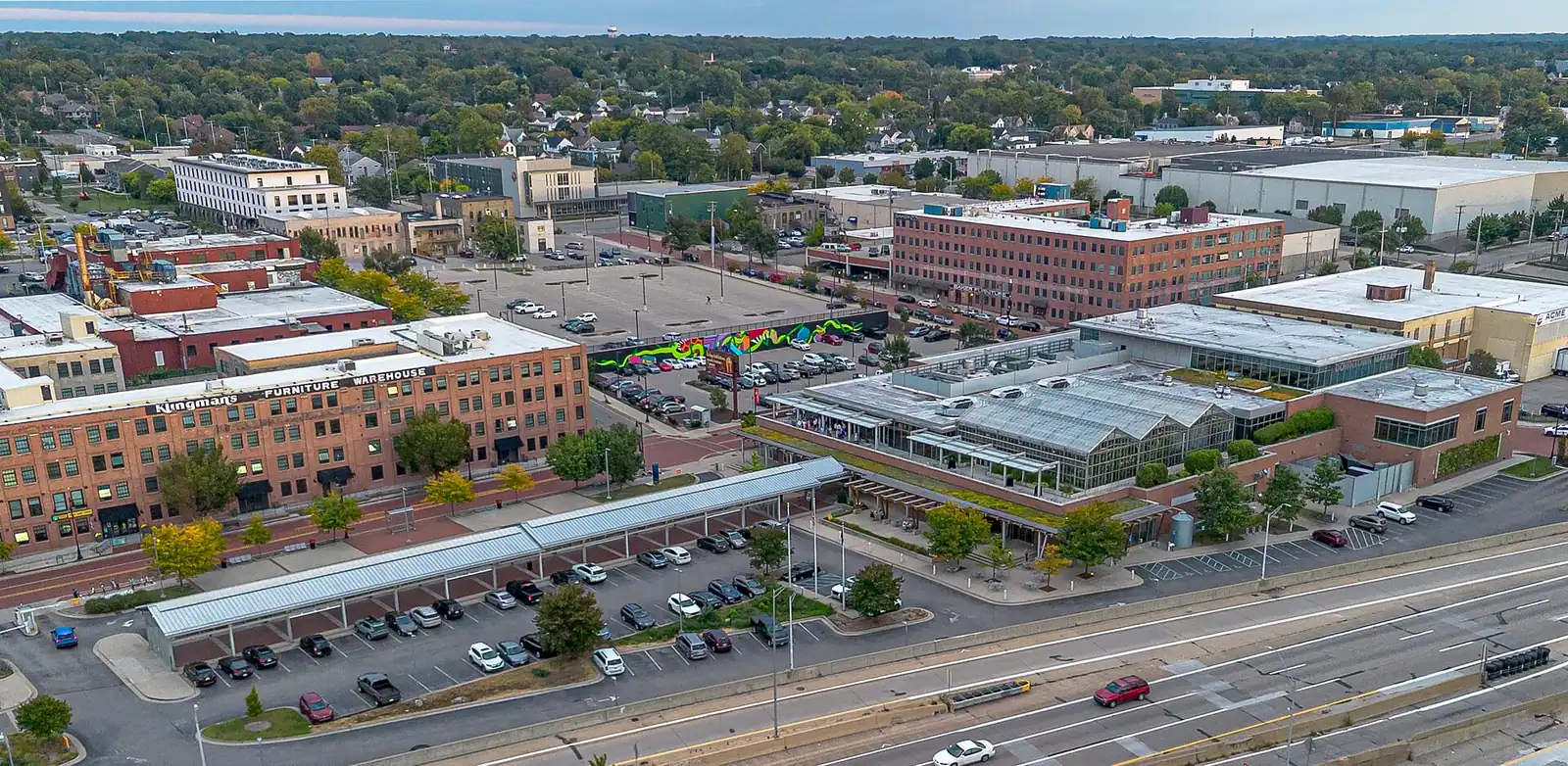
Twenty-odd food merchants under one roof, a 52-stall farmers shed outside, and a greenhouse growing on the second floor.
1–2 hoursFree to enter; you pay the individual merchants0.8 mi away
Where this place fits into a day, and the pages that plan one.

Guide hub
Furniture paid for this city, and then it paid for everything worth coming to see in it. That is the single idea a visitor needs. Grand Rapids made…

Guide hub
A city of two hundred thousand people should not have this list. Grand Rapids does, and the reason is a hundred and fifty years of manufacturing…

Things to do
Every good thing in this city was paid for by chairs. That is barely an exaggeration. William Haldane opened a cabinet shop on the Grand River in…

Budget
The free list in Grand Rapids is not the list you fall back on when the museum tickets are too expensive. In this particular city it contains three…

Who it suits
A weekend for two in Grand Rapids works, but not for the reasons a travel brochure would give. There is no old quarter. There is no waterfront…

Guide
An open competition with no entry jury, hundreds of venues that are mostly not galleries, and a public vote worth a hundred thousand dollars. Here is how to see it without wasting a day.
5 min readIlse Hoekstra

Guide
A restored Frank Lloyd Wright house, an art museum one day a week, the first artwork the NEA ever helped pay for, and a Maya Lin park you can skate on. None of it costs anything.
5 min readIlse Hoekstra

Guide
Two nights, one car, and one hard constraint that decides the whole schedule: the free Frank Lloyd Wright house only opens to the public on Sunday afternoon.
5 min readMarguerite Vanderhoff
Yes, and walking is the only way to see it properly. The streets are public and the district covers around 1,300 buildings east of downtown, roughly between Crescent Street, Union Avenue, Pleasant Street and Lafayette Avenue. Forty minutes along Madison, Cherry, College and Fountain takes in most of the range. The houses are private residences, so photograph from the pavement and stay off the porches.
Nearly every American style from the 1840s to the 1920s, which is what makes the district unusual. Greek Revival at the oldest end, then Italianate, Queen Anne, Shingle, Chateauesque and Colonial Revival, finishing with Frank Lloyd Wright's Prairie-style Meyer May House of 1909. Most historic neighbourhoods represent one building boom. Heritage Hill covers eighty years of continuous construction in the same few blocks.
The Heritage Hill Weekend Tour of Homes runs on the third weekend in May and opens a rotating selection of private houses to ticket holders. It is the only regular opportunity to see interiors that are otherwise firmly private, and it sells out with locals as much as visitors. Tickets and the list of participating houses are published in advance by the Heritage Hill Association each spring.
Because 125 neighbours organised in 1968. The district was facing urban renewal clearance, redlining by banks and speculative subdivision of its large houses. The Heritage Hill Association formed to fight all three, stopped the demolition programme, secured National Register listing and established local protections. The approach became a model other American cities copied, and more than 4,000 households live in the district today.