Skip to content
Search
Menu

These bookings earn us a commission through Viator. You pay the same, and the money played no part in the selection.

Historic site

Meyer May House

Last updated

A 1909 Frank Lloyd Wright Prairie house, restored to the last carpet thread, and free to tour if you book in time.

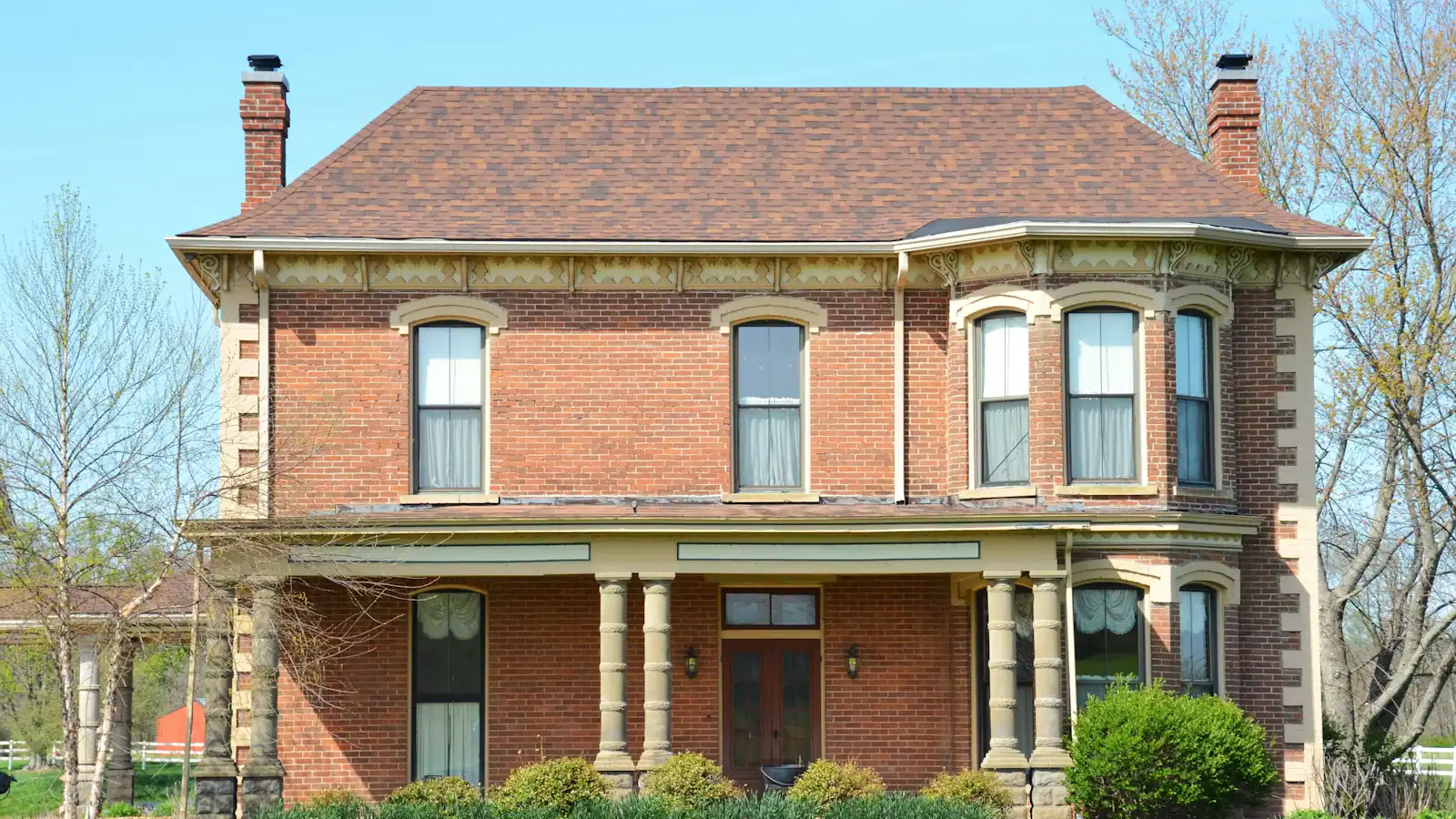
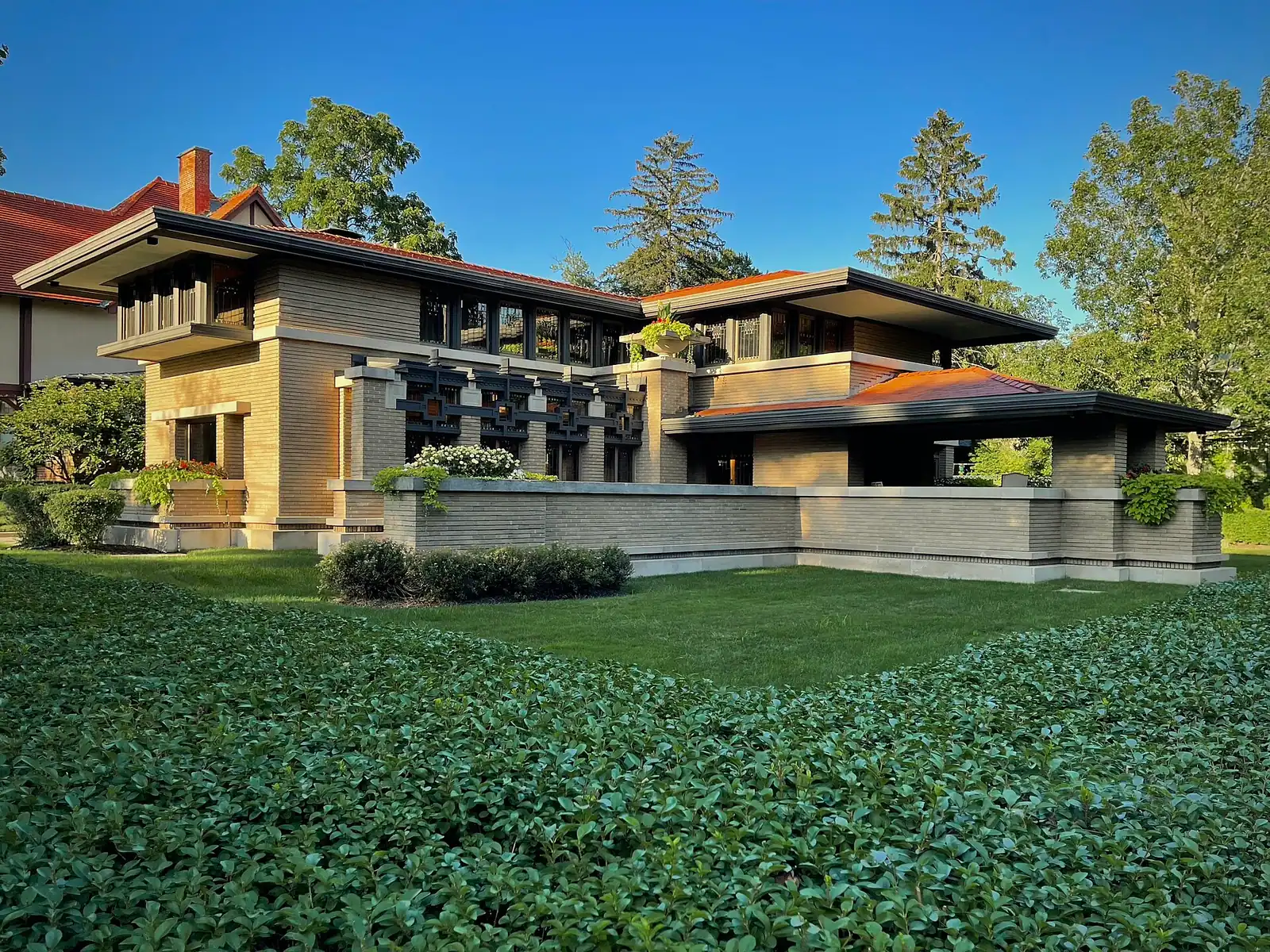
Photo: WMrapidsCC0

Meyer May sold clothes. He ran May's, a menswear store in Grand Rapids, and in 1908 he and his wife Sophie commissioned Frank Lloyd Wright to build them a house on Madison Avenue in Heritage Hill. It was finished in 1909, and it is one of the most completely realised Prairie houses Wright ever produced: a two-storey T-plan in pale Roman brick, hipped Ludowici tile roofs, eaves pushed far out over the walls, and horizontal lines insisted upon everywhere.

What makes it exceptional is not the design but the restoration. Steelcase, the office furniture company headquartered here, bought the house in 1985 and spent the next two years and a great deal of money returning it to its 1909 condition. Not approximately. Carpets were rewoven to Wright's original designs and colours. Later additions were removed. Art glass was repaired. The interiors, supervised originally by George Mann Niedecken, came back with a mixture of original and reproduced Arts and Crafts furniture, and Niedecken's pastel hollyhock mural on the wall between the living and dining rooms was recovered. Wright scholars regularly call it the best-restored Wright house in existence.

The details that stay with people are small. Iridescent gold worked into the mortar lines of the fireplace, so the grout catches light. Wooden grilles concealing the radiators. Art glass windows and skylights that turn the ordinary light of a Michigan afternoon into something the architect chose.

Admission is free, funded by Steelcase, and tours are guided and by appointment in groups of about eight. Days are limited — typically two weekday mornings and Sunday afternoons — and the house closes on a long list of holiday weekends. Allow ninety minutes.

Book online, and book early. This is the one attraction in Grand Rapids where turning up on the day does not work.
Getting there and parking

The house stands on the corner of Madison Avenue and Logan Street in Heritage Hill, about fifteen minutes on foot from Monroe Center and uphill most of the way.

Parking is on-street in a residential district. Read the posted restrictions, which vary block by block, and allow extra time: tours begin at their listed hour and a group of eight does not wait for a ninth.

Driving from downtown takes five minutes. From US-131 take the Wealthy Street exit and head east, then north on Madison. The Rapid's Division Avenue and Wealthy Street services stop within a few blocks, and Wealthy Street itself is a five-minute walk south if you want lunch either side of the tour.

How to actually get in

This is the section that matters. The Meyer May House is free but it is not walk-in, and visitors arrive at the kerb every week and are turned away.

  • Tours are by appointment, guided, and limited to small groups of about eight people.
  • Tour days are limited. The pattern has been two weekday mornings and Sunday afternoons — Tuesday and Thursday from mid-morning to early afternoon, Sunday from midday to mid-afternoon — with the last tour starting well before the listed closing time.
  • Reservations are made online through the house's own website, which Steelcase runs. Book well in advance, especially for Sundays and for anything in the autumn.
  • The house closes on a long list of holiday weekends, including Easter, Mother's Day, Memorial Day weekend, Father's Day, Independence Day weekend, Labor Day weekend, Thanksgiving weekend and the whole Christmas and New Year period.
  • Allow ninety minutes for the full experience, which includes an introductory film before the house itself.
  • Photography rules are set by the house and have varied. Ask at the start rather than assuming.

Confirm the current tour days and booking rules before you plan a trip around it; they have changed more than once.

What Wright actually did here

The house is a two-storey T-plan in pale Roman brick — long, thin bricks with the horizontal mortar joints raked deep and the vertical joints filled flush, so the eye reads horizontal bands and the building looks lower and longer than it is. That trick is repeated everywhere: broad overhanging eaves, a low hipped roof in Ludowici tile, window bands rather than punched openings.

Inside, the plan flows. Living and dining rooms are separated by a partial wall rather than a door, and Niedecken's hollyhock mural sits on it. Built-in furniture, wooden grilles over the radiators, and art glass in windows, doors and skylights control the light at every point.

The fireplace is the detail people photograph. Wright had iridescent gold worked into the mortar joints, so the grout lines glint when light moves across the brick. It is a small, expensive, entirely characteristic decision.

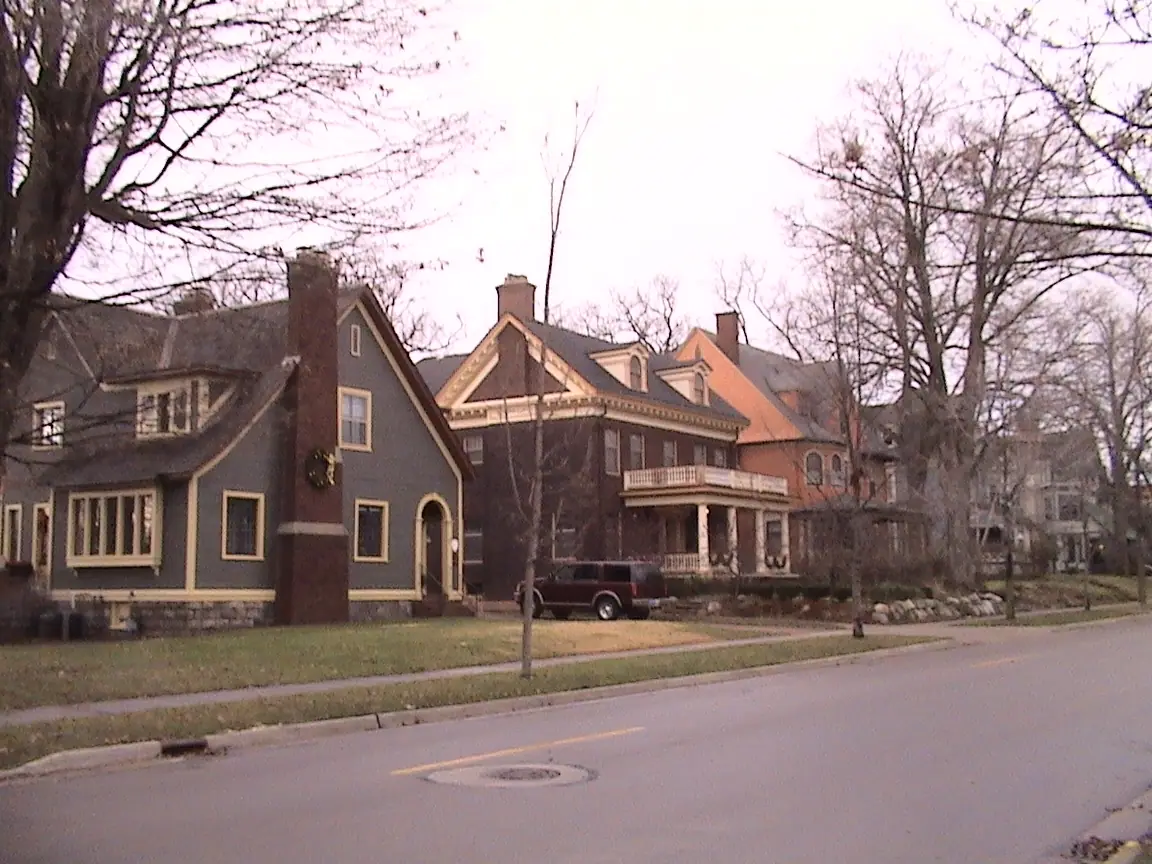
The garden and the conservatory extension were part of the original conception rather than additions. The house sits on a corner lot in Heritage Hill, surrounded by Victorian and Colonial Revival neighbours, and the contrast with what was fashionable in Grand Rapids in 1909 is the fastest way to understand why Wright mattered.

The Steelcase restoration, 1985 to 1987

By the early 1980s the house had been subdivided, altered and worn. Steelcase, whose headquarters are in the Grand Rapids area, bought it in 1985 and committed to a full restoration rather than a sympathetic renovation, which is a very different and much more expensive proposition.

Later partitions and additions came out. Original fabric was repaired rather than replaced where it survived. Carpets were rewoven from Wright's drawings in his specified colours. Art glass was conserved. Furniture was a mix of surviving originals and exact reproductions of Niedecken's pieces. The house opened to the public in 1987 and has been free to visit ever since, with Steelcase carrying the cost.

That is why architecture people travel here. Plenty of Wright houses survive. Very few of them look, room by room and object by object, the way they looked when the client moved in. The May House is the reference case, and it exists because a furniture company in a furniture town decided that getting it exactly right was worth doing.

It is also a reminder that Grand Rapids' design reputation is not a marketing line. Steelcase, Herman Miller and Haworth are all headquartered in West Michigan.

Heritage Hill around it

  • The house sits inside Heritage Hill, one of the largest urban historic districts in the United States, with around 1,300 houses covering nearly every American architectural style from the 1840s onward.
  • Walk the surrounding blocks before or after your tour. Twenty minutes on Madison, Cherry and College avenues gives you Italianate, Queen Anne, Greek Revival and Colonial Revival within a few hundred yards of a Wright Prairie house.
  • The Castle, a Chateauesque mansion in Scottish granite, is the other building in the district people photograph.
  • Parking is on-street in a residential neighbourhood. Read the signs and leave a margin; the tour starts on time and does not wait.
  • It is a fifteen-minute walk from downtown, uphill on the way there, which is where the district's name comes from.
  • Wealthy Street is five minutes south and is the right place for lunch either side of a tour.

Near Meyer May House

Straight-line distances, so allow more on the road — the island is long and has one main parkway.

  • A large Victorian house with decorative trim behind a low fence on a residential street

    Neighbourhood

    Free

    Heritage Hill Historic District

    Thirteen hundred buildings on a hill above downtown, saved in 1968 by 125 neighbours who refused to let the bulldozers in.

    0.5–1.5 hoursFree to walk; the annual Tour of Homes in May is ticketed0.5 mi away

  • Brick storefronts and a wide pavement on a city street in early evening light

    Neighbourhood

    Free

    Wealthy Street

    A mile of restored storefronts in East Hills, restarted by a 1911 theatre that spent twenty-five years boarded up.

    1–3 hoursFree to walk. Everything on it costs whatever it costs.0.9 mi away

  • Shoppers moving between produce stalls inside a covered market hall

    Shopping

    Free

    Grand Rapids Downtown Market

    Twenty-odd food merchants under one roof, a 52-stall farmers shed outside, and a greenhouse growing on the second floor.

    1–2 hoursFree to enter; you pay the individual merchants0.6 mi away

  • Visitors standing in a daylit gallery looking at a large painting on a white wall

    Museum

    Grand Rapids Art Museum

    The first LEED Gold certified art museum anywhere, built by a city whose fortune came from making furniture well.

    1.5–2.5 hoursRoughly $10–15 per adult; general admission free on Thursday evenings1 mi away

Meyer May House: common questions

Is the Meyer May House free to tour?

Yes. Admission is free, paid for by Steelcase, which bought and restored the house in the 1980s. It is not walk-in, though. Tours are guided, by appointment, and limited to small groups of about eight people on a handful of days each week. Reservations are made online in advance, and Sunday slots fill first. Turning up at the door without a booking does not work.

When can you tour the Meyer May House?

Tour days are limited. The pattern has been two weekday mornings, typically Tuesday and Thursday from mid-morning to early afternoon, plus Sunday from midday to mid-afternoon, with the last tour starting well before closing. The house also shuts on a long list of holiday weekends through the year. Days and times have changed more than once, so confirm the current schedule when you book rather than relying on an older guide.

Why is the Meyer May House considered so well restored?

Because Steelcase did a full restoration rather than a renovation. Between 1985 and 1987 later partitions and additions were removed, art glass was conserved, carpets were rewoven from Frank Lloyd Wright's own designs and colours, and the interiors were refurnished with a mix of original and exactly reproduced Arts and Crafts pieces. George Mann Niedecken's hollyhock mural was recovered. Wright scholars routinely cite it as the reference case.

How long does the Meyer May House tour take?

About ninety minutes, including an introductory film before you enter the house itself. The house is a two-storey Prairie design from 1909 and the tour covers both floors, the interiors and the garden. It is worth adding another twenty minutes to walk the surrounding Heritage Hill blocks, where the Victorian and Colonial Revival neighbours make Wright's design decisions much easier to read.