Historic site
Free
Meyer May House
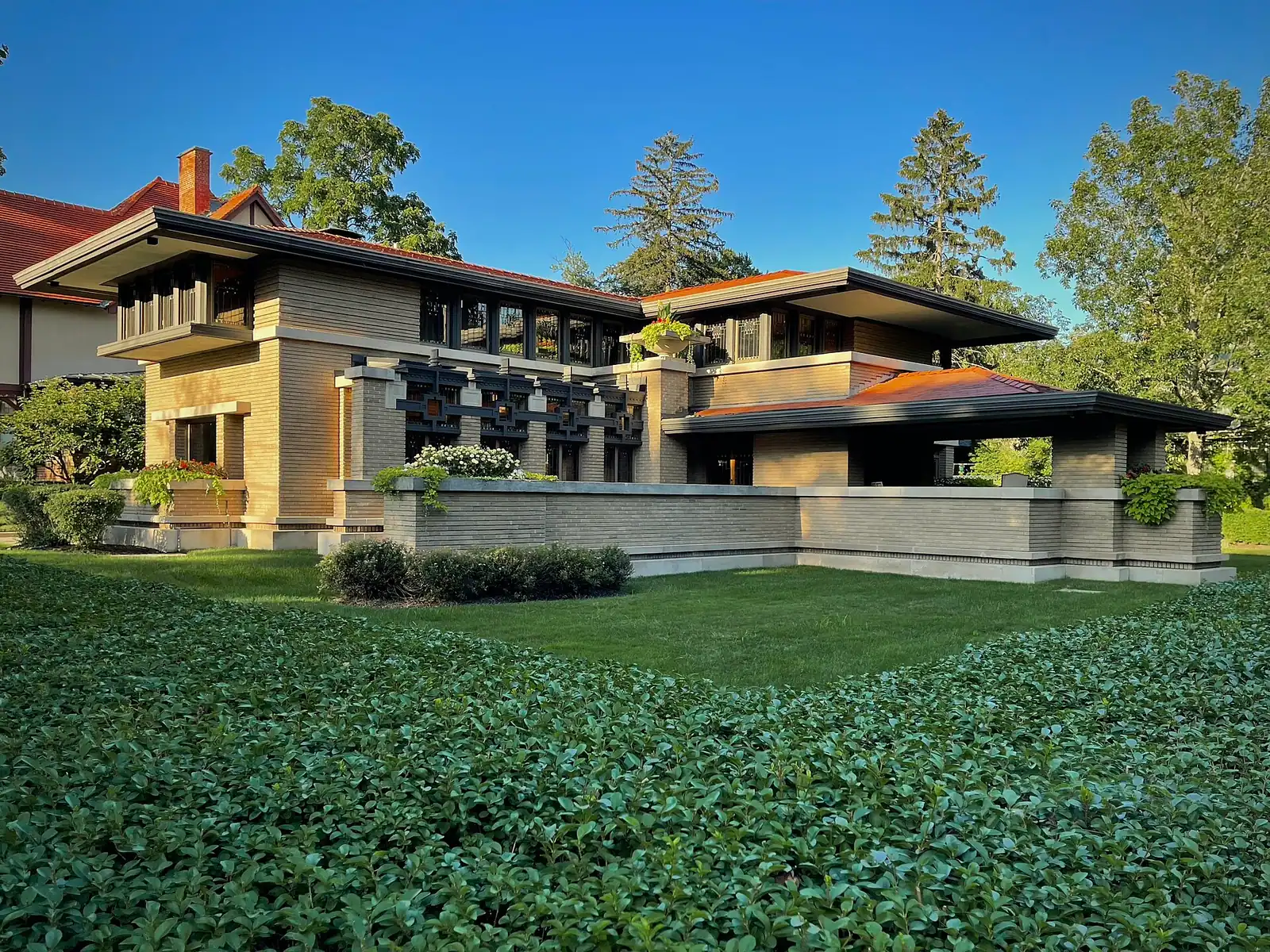
A 1909 Frank Lloyd Wright Prairie house, restored to the last carpet thread, and free to tour if you book in time.
1.5 hoursFree, funded by Steelcase, but by appointment only in groups of about eight
Things to Do
Grand Rapids museums, sequenced for one grey day: a 1928 carousel over the river, a president buried on the lawn, and the world's first LEED Gold art museum.
Grand Rapids is overcast about two hundred and five days a year, and through the winter the sky is grey or mostly grey roughly two thirds of the time. That is not a complaint, it is the single most useful planning fact on this page. In a city with that climate, the indoor half of the itinerary is not a fallback for a bad afternoon. It is the spine of a trip from November to April, and the museums here are unusually good for a metropolitan area of this size, because furniture money built them and kept building them.
Three of the four big ones stand within about half a mile of each other. The Grand Rapids Public Museum and the Gerald R. Ford Presidential Museum sit a short walk apart on the west bank of the Grand River, close enough that you can see one from the grounds of the other, and the Grand Rapids Art Museum is roughly ten minutes on foot across the water in the downtown core. That geography is the whole argument for doing them as a walking day rather than three separate drives.
Each one does something the others do not. The Public Museum is the general collection: an 1890s street rebuilt indoors, a planetarium named for a Grand Rapids astronaut who died aboard Apollo 1, a working 1928 carousel in a glass pavilion hanging over the river, and a floor about how this city furnished the country. The Ford Museum is a presidency told from the hometown end, with the president and first lady buried on the lawn outside. GRAM is a serious art collection in a building that was, when it opened in 2007, the first art museum in the world certified LEED Gold.
The fourth is the Grand Rapids Children's Museum downtown, which is a different proposition entirely and is covered below, because taking a four-year-old to a presidential museum is a mistake you only make once.
A word on honesty. These are working institutions with real constraints. GRAM's award-winning building has needed significant repair, and state money was approved in 2025 towards it. The Public Museum has spent recent years renovating in stages, including its carousel, which came back in February 2026. Exhibitions rotate, hours change with the season, and the schedules below are shapes rather than promises. Check each one in the week you travel.
When to go
The sequence that works, on a grey Saturday, starting at ten.
Begin at the Gerald R. Ford Presidential Museum on the riverbank. It is the most linear of the three and rewards a fresh head: roughly ninety minutes to two hours if you read the labels, an hour if you skim. Walk out to the gravesite afterwards rather than before, because it lands differently once you have been through the Nixon resignation room.
Cross Pearl Street to the Grand Rapids Public Museum. Two to three hours, more with children, and the one place here where you should deliberately not try to see everything. Pick two floors.
Eat. Then cross the river into the downtown core for the Grand Rapids Art Museum, which is the right third act: quieter, smaller in footprint, and about ninety minutes.
Total, with lunch, is about seven hours of a short winter day, and you will have walked maybe a mile and a half in total. If that is too much, drop GRAM and do it on a different morning, because it is the one that pairs best with a coffee and nothing else.
In December and January the river wind on the Pearl Street bridges is genuinely unpleasant. It is a short crossing, but dress as though you are outside for twenty minutes rather than five.
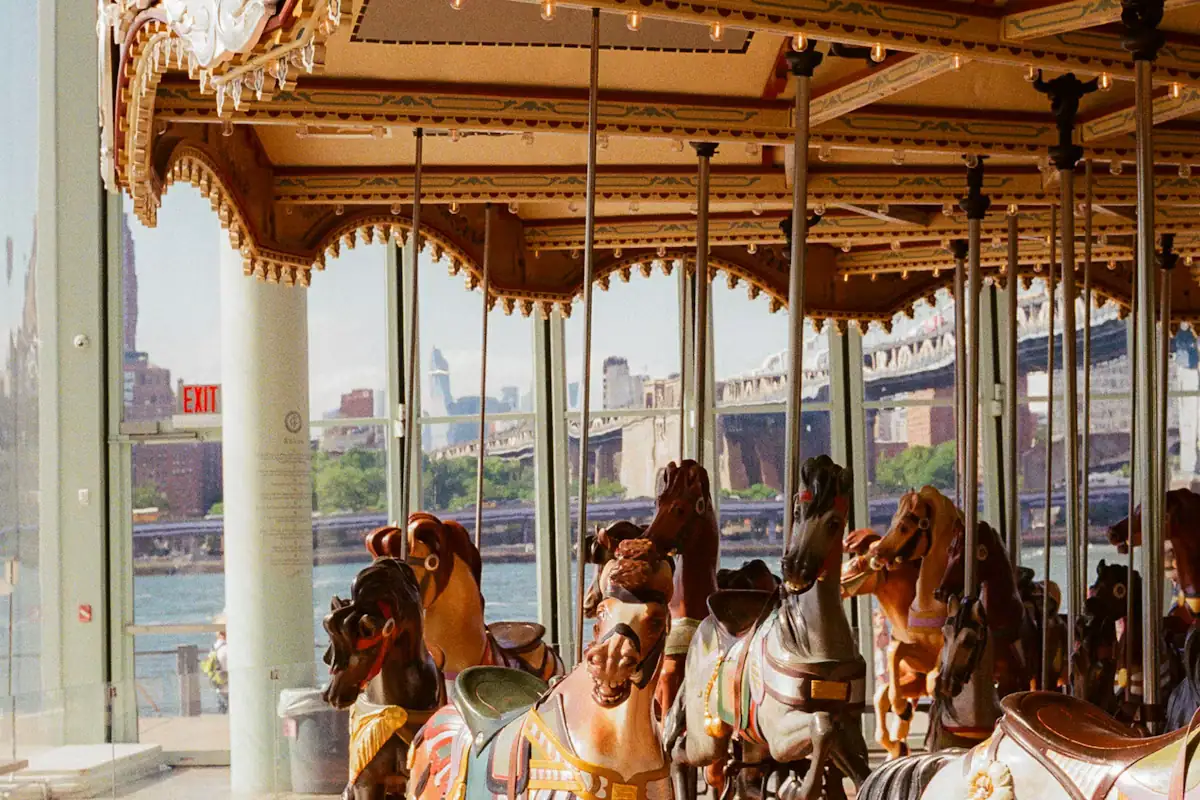
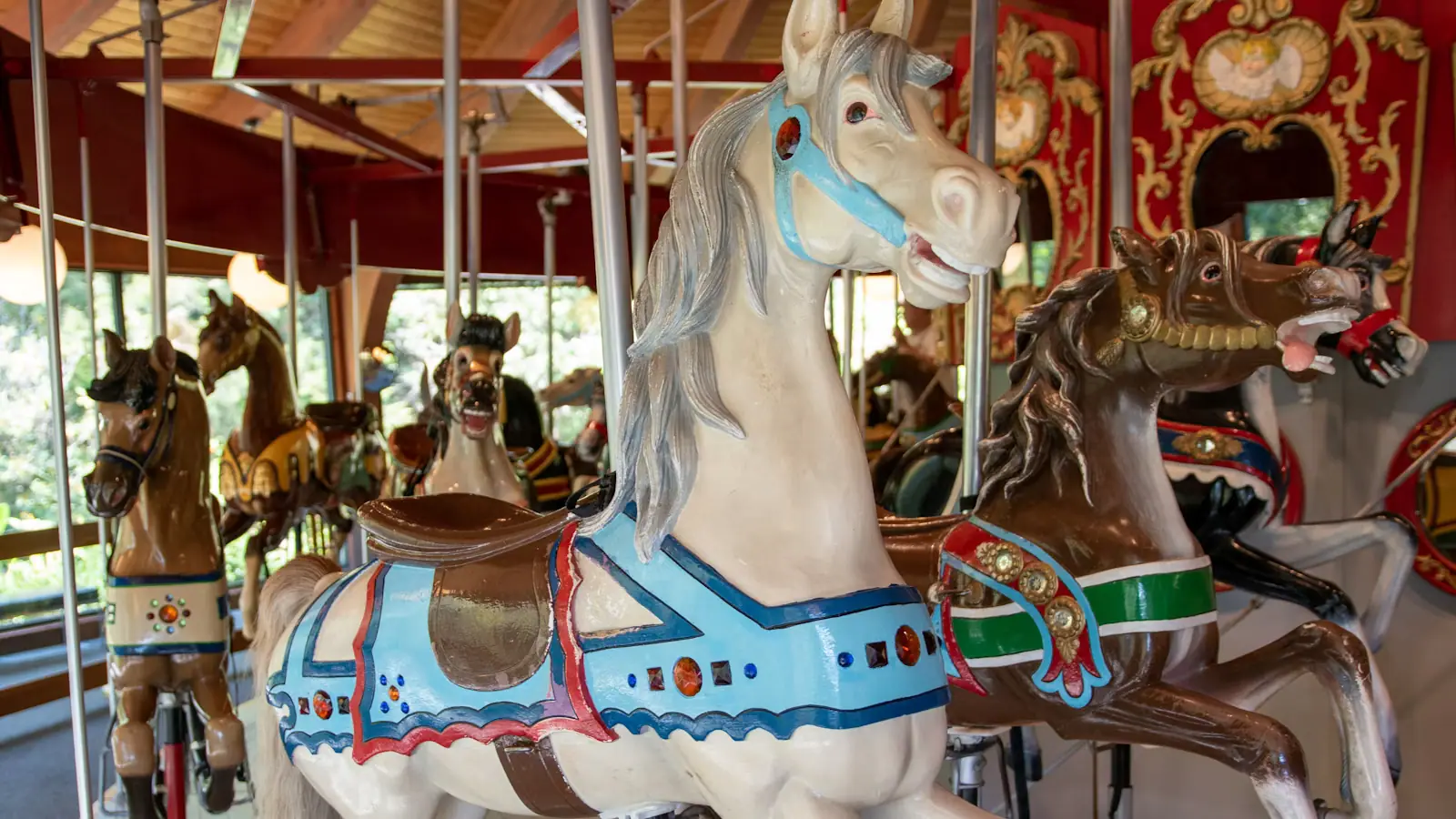
The Van Andel Museum Center opened in 1994 on the west bank, and the building's best move is at the north end, where a glass pavilion cantilevers a 1928 Spillman carousel out over the Grand River. You ride it with the water underneath and a Wurlitzer band organ working through its paper rolls. It closed for a long renovation and came back in the middle of February 2026, which locals had been waiting on for a while.
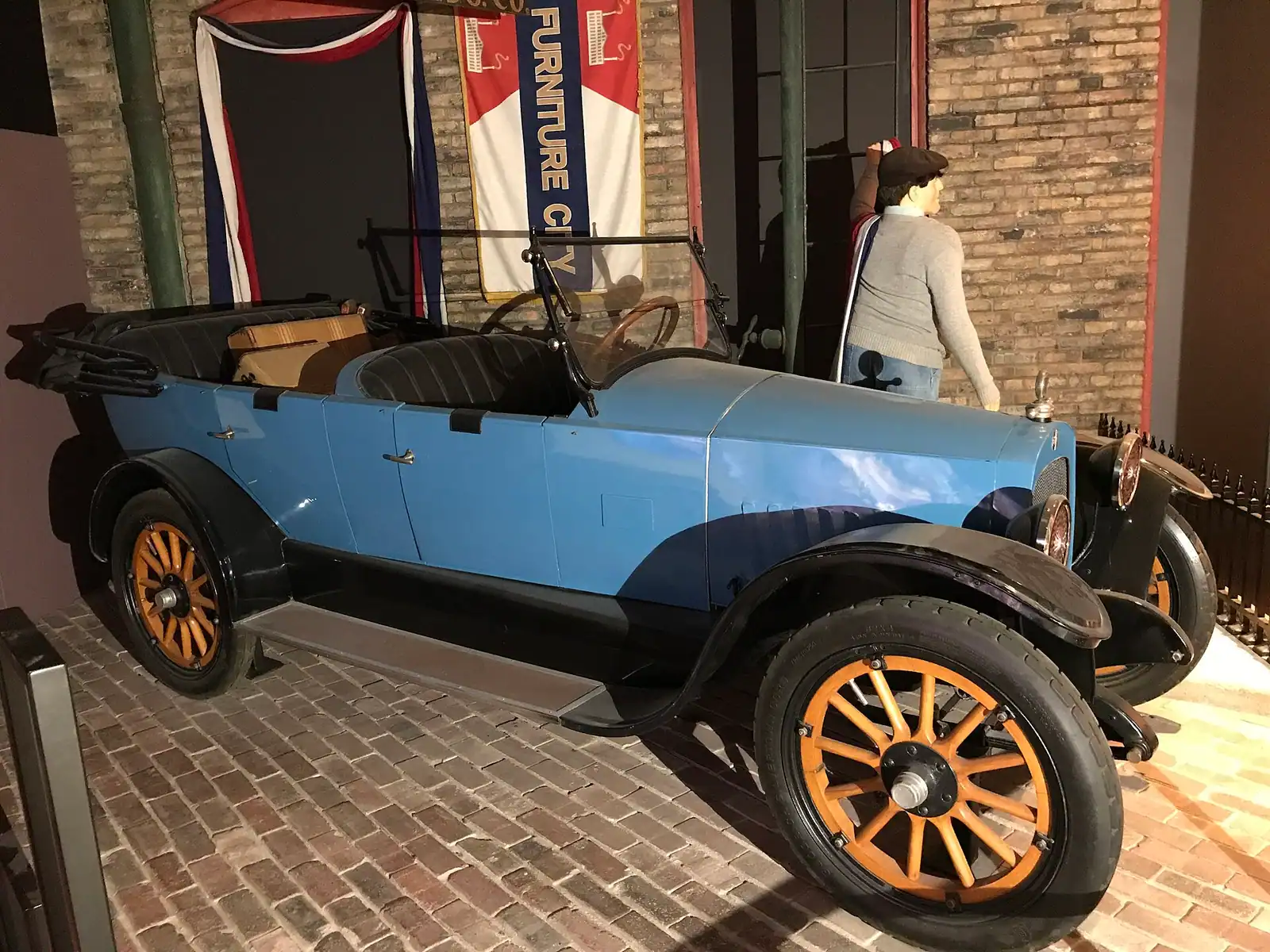
Upstairs, Streets of Old Grand Rapids rebuilds an 1890s streetscape indoors, complete with shopfronts you can walk into, and a second storey of the exhibit opened recently. It is the kind of thing that sounds twee and is not, largely because the buildings are real salvage rather than plywood.
The Furniture Factory exhibit is the one that explains the city. Grand Rapids was the American furniture capital for the better part of a century, and the museum holds more than two thousand pieces of it — not as a decorative-arts display but as industrial history, with the machines and the pay packets and the immigrant workforce in the frame.
Under the roof sits the Roger B. Chaffee Planetarium, named for the Grand Rapids man who died in the Apollo 1 fire in 1967. It took its biggest projection upgrade in a decade in 2026. Planetarium shows are usually a separate ticket on top of admission and run to a timetable, so check what is showing before you arrive rather than after.
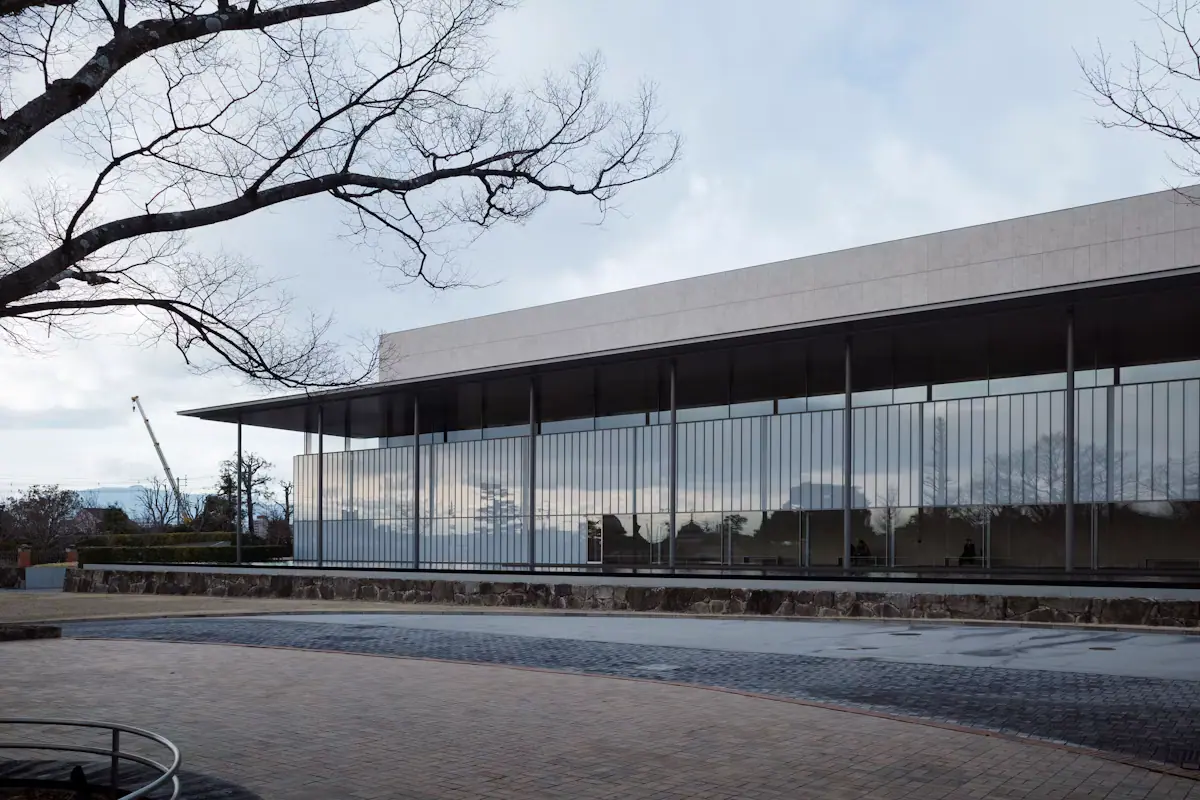
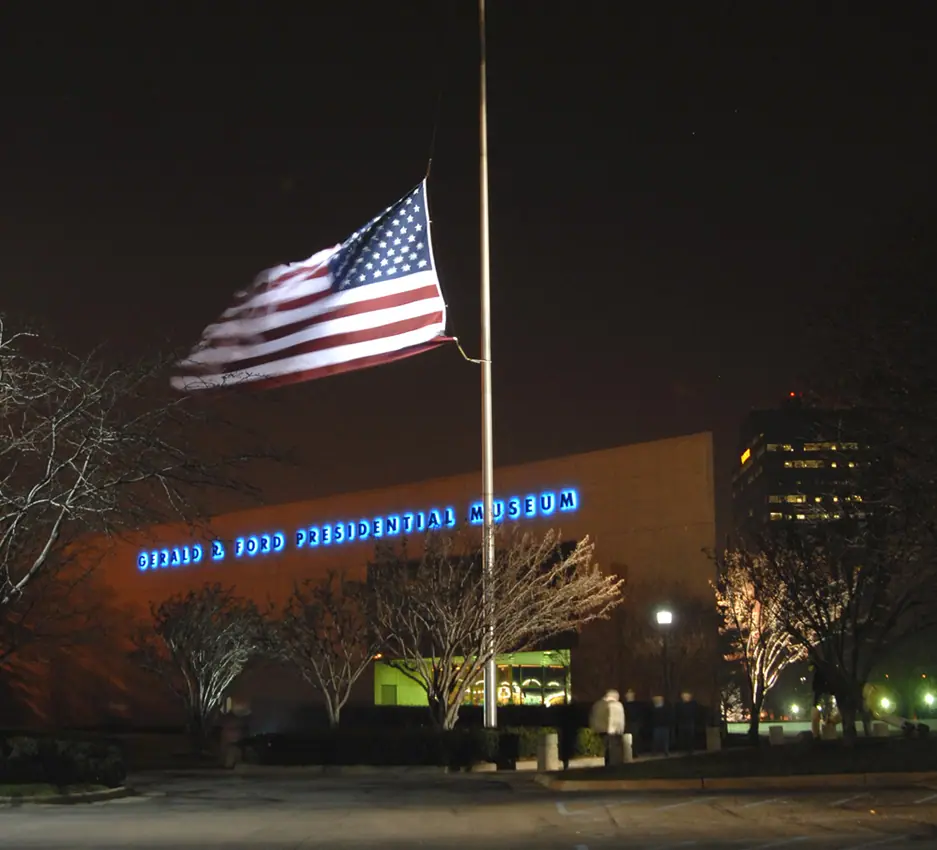
Gerald Ford grew up in Grand Rapids, represented the district in Congress for twenty-five years, and became president without ever having been elected to the ticket. The museum that tells that story stands on the riverbank in a low building opened in 1981, with a three-hundred-foot glass wall on its east side facing the water and the downtown skyline.
The permanent exhibition is strongest in the years nobody plans for: the Nixon resignation, the pardon that probably cost Ford the 1976 election, the fall of Saigon, the Bicentennial. Betty Ford gets real space rather than a spouse's alcove, which given what she did for how America talks about addiction and breast cancer is the correct call. Both Fords are buried on the grounds, on a landscaped slope outside the north end of the building, and the site is open and quiet and free to walk to.
One genuine oddity worth knowing: the Ford presidential library is not here. It sits in Ann Arbor, on the University of Michigan campus about a hundred and thirty miles east, which makes this the one presidential library and museum in the country split between two cities. Researchers go east. Visitors come here.
Admission has been modest — around ten dollars for an adult, a few dollars for school-age children, free for the youngest — and the special exhibition programme is better than you would expect. The 2026 show built around America's foreign relationships included the gown Queen Elizabeth II wore dancing with Ford at the White House in July 1976. Check what is on before you go.
The Grand Rapids Art Museum started in 1910 as the Grand Rapids Art Gallery, spent from 1981 in the old federal building on Pearl Street, and opened its current home in 2007. That building matters: designed by wHY Architecture of Los Angeles with Design Plus of Grand Rapids, it was the first art museum anywhere in the world to be certified LEED Gold, it cost in the region of seventy-five million dollars, and it redeveloped an entire downtown block. Newsweek put it on a list of the year's most important buildings.
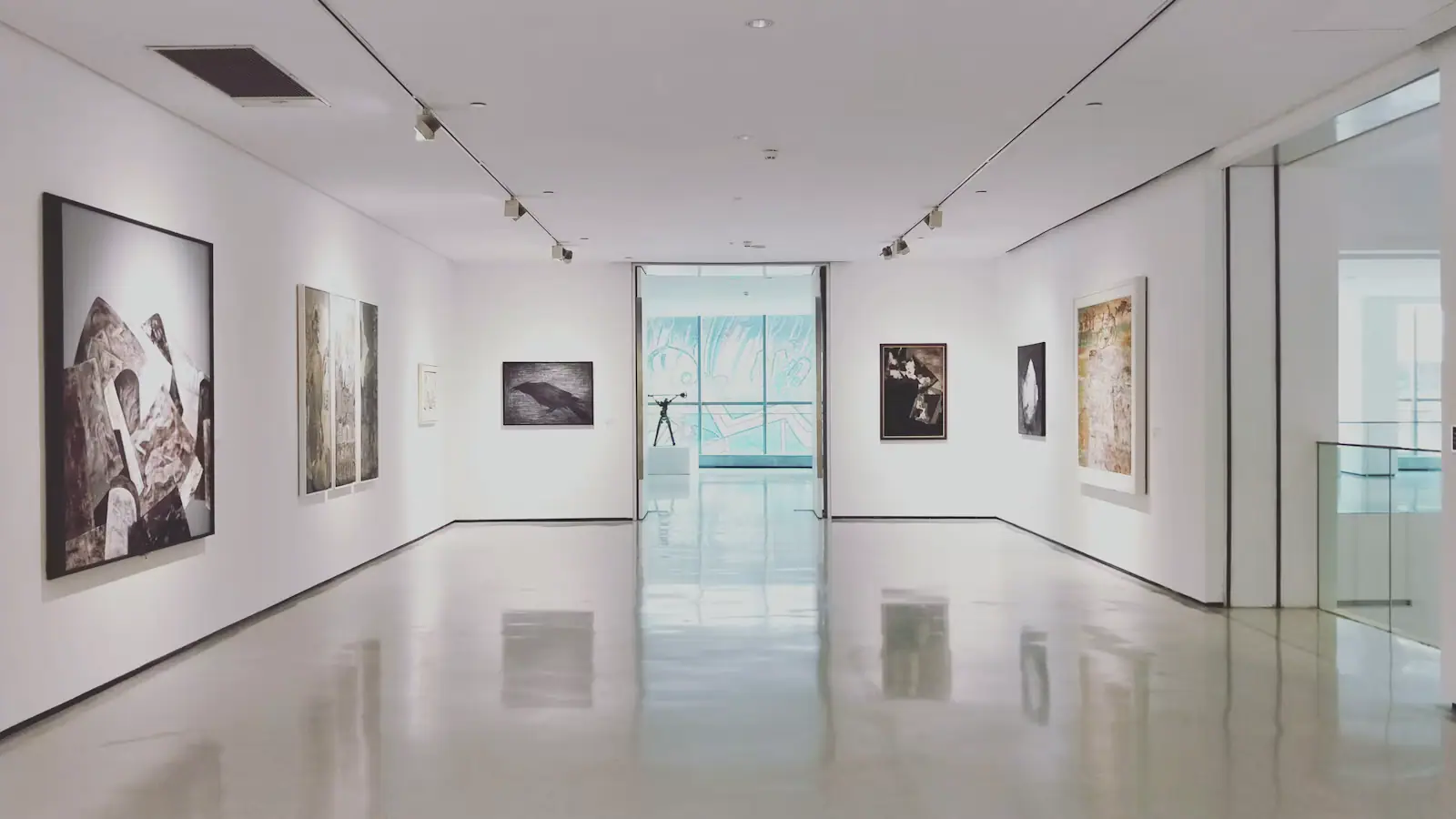
What that means in the room is daylight. The galleries are top-lit through a system designed to bring in as much natural light as conservation allows, which in a city with two hundred grey days is a very deliberate choice, and it changes how the paintings read hour by hour.
The collection runs to roughly five thousand works, strongest in nineteenth and twentieth-century European and American art, with more than three and a half thousand of them prints, drawings and photographs — which is why the rotating works-on-paper shows are often the most interesting thing in the building. Design and furniture are threads here too, as they should be in this city.
Honest note. A green building that is nearly twenty years old is still a building, and this one has had serious maintenance problems; state money was approved in 2025 towards infrastructure work. None of that spoils a visit. It does mean a gallery can be shut without notice.
Local tips
What it costs
Bands rather than figures, because all four change their pricing and none of them owes this page a warning.
The Ford Museum has been the cheapest of the three big ones, around ten dollars for an adult with reduced rates for school-age children and free entry for the youngest, and it is federal rather than municipal, so its schedule follows national holidays rather than local ones. The Public Museum and GRAM both sit higher, in the teens for an adult, with children's rates and family tickets that change the arithmetic for a group of four. The planetarium is typically an add-on ticket rather than part of admission.
Two things worth checking before you pay full price. Several Grand Rapids institutions run a free or reduced-admission window — an evening, a first-of-the-month morning — and these move around. And if you hold a membership at a museum at home, check reciprocal schemes before you buy, because the North American programmes cover more of this city than most visitors realise.
Parking downtown is the other cost nobody budgets. The municipal ramps near the river are the sensible option, they charge by the hour, and on a weekday they are competing with a working city. On a Saturday it is easy. Between late November and March, factor in that a cheap surface lot four blocks away is a different proposition at twenty degrees than it is in July.
Everything above changes. Confirm current admission and hours in the week you travel.
Beyond the big four the picture is genuinely mixed, and a guide that pretended otherwise would be useless.
The Grand Rapids African American Museum & Archives moved into a much larger downtown home in 2026, opening in phases across the year, with exhibition space, archives, a theatre and a café planned. It documents Black life, work and politics in this city specifically rather than in general, which is exactly what a local museum should do and exactly what most cities this size do not have.
The Meyer May House in Heritage Hill is not billed as a museum and functions as one: a fully restored Frank Lloyd Wright house, furnished, free to tour, run by the furniture company that paid to bring it back. It is covered in full on the architecture and design page.
Blandford Nature Center out on the west side keeps historic buildings — a log cabin, a schoolhouse, a barn, a sugarhouse — alongside its wildlife work, which makes it a museum of a kind for anyone interested in how this part of Michigan was settled.
And the loss. The Urban Institute for Contemporary Arts, the city's contemporary art centre for more than four decades, ceased operations in March 2023 after funding problems it never recovered from, and its purpose-built downtown building has since been sold and repurposed. If you find it on an old list, that is why. What the city has instead is covered on the art and galleries page.
On the ground
Every place below has its own page — hours, parking, what it costs and what to expect when you get there.
Historic site
A 1909 Frank Lloyd Wright Prairie house, restored to the last carpet thread, and free to tour if you book in time.
1.5 hoursFree, funded by Steelcase, but by appointment only in groups of about eight
Museum
A presidential museum on the riverbank where the 38th president and his wife are buried a short walk from the front door.
1.5–2.5 hoursAround $15–20 per adult; the gravesite on the grounds is free to visit
Museum
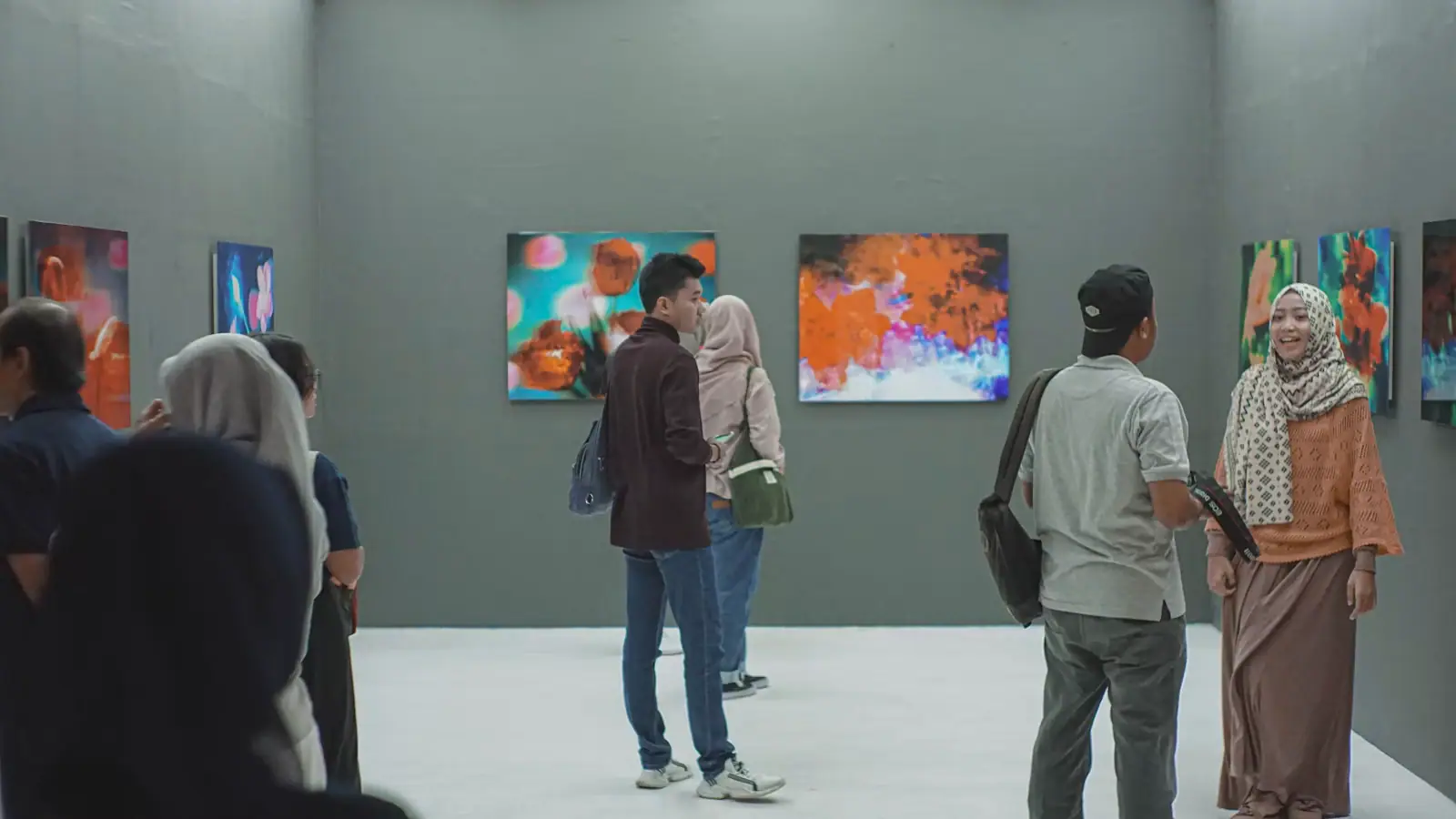
The first LEED Gold certified art museum anywhere, built by a city whose fortune came from making furniture well.
1.5–2.5 hoursRoughly $10–15 per adult; general admission free on Thursday evenings
Museum
A 76-foot whale hangs over the Galleria, an 1890s street runs through the basement, and the 1928 carousel turns beside the river.
2–3.5 hoursAround $12–16 per adult; carousel rides and planetarium shows cost extra
Entertainment
A 1928 Spillman carousel in a glass pavilion over the Grand River, back in service since February 2026 after a two-year rebuild.
15–45 minutesRides are ticketed separately from museum admission, at a few dollars a turn
Museum
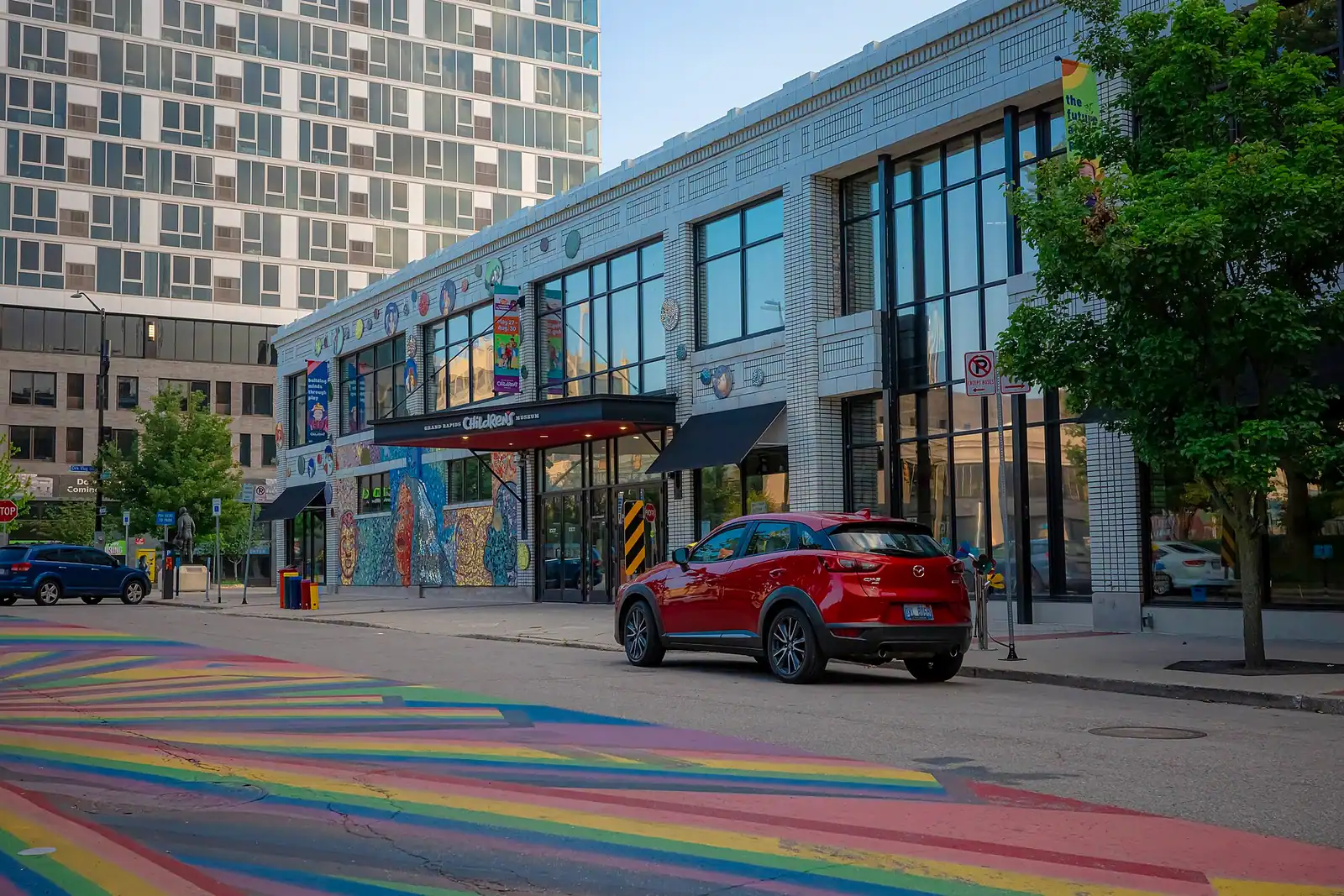
Three floors of hands-on play for under-12s, and the first place downtown parents go when the lake-effect snow starts.
1.5–2.5 hoursAround $12 per person aged 1–64; under 1 free; reduced rates for seniors and service workers
Museum
Grand Rapids lost its contemporary art centre in 2023. Here is what happened to UICA and where the work moved to.
0.5–1 hoursNot applicable — the institution is closed. Its successor galleries at Kendall are free.
Straight answers
It depends what you want from an afternoon. For a general collection with the widest appeal, the Grand Rapids Public Museum: an 1890s street rebuilt indoors, a planetarium, a working 1928 carousel over the river and a floor on the furniture industry that built the city. For history with a narrative, the Gerald R. Ford Presidential Museum. For art in a building worth seeing on its own, GRAM. All three sit within half a mile of each other.
Yes. Gerald R. Ford and Betty Ford are both buried on the grounds of the Gerald R. Ford Presidential Museum, on a landscaped slope beside the Grand River in downtown Grand Rapids. The gravesite is outside the paid museum and open to walk to. Note that the Ford presidential library is a separate institution in Ann Arbor, about a hundred and thirty miles east, which makes this the only presidential library and museum split between two cities.
Yes. The museum's 1928 Spillman carousel turns inside a glass pavilion that reaches out over the Grand River, accompanied by a Wurlitzer band organ playing paper rolls. Rides are usually a small extra charge on top of museum admission or included depending on the ticket. The carousel and its pavilion reopened in the middle of February 2026 after an extended renovation, so older guidance describing it as closed is out of date.
Treat these as bands and check before you go. The Ford Museum has been the cheapest of the three big downtown institutions at around ten dollars for an adult, with reduced youth rates and free entry for the youngest children. The Public Museum and the Grand Rapids Art Museum sit higher, in the teens for an adult, with family pricing that changes the sums for a group. Planetarium shows are normally an add-on rather than part of general admission.
Because of the building as much as the collection. When GRAM opened its current home in 2007 it became the first art museum anywhere in the world to be certified LEED Gold, and Newsweek listed it among the most important buildings of that year. It was designed by wHY Architecture with Design Plus of Grand Rapids and redeveloped a whole downtown block. Inside, the galleries are lit largely from above with daylight, which matters in a famously grey city.
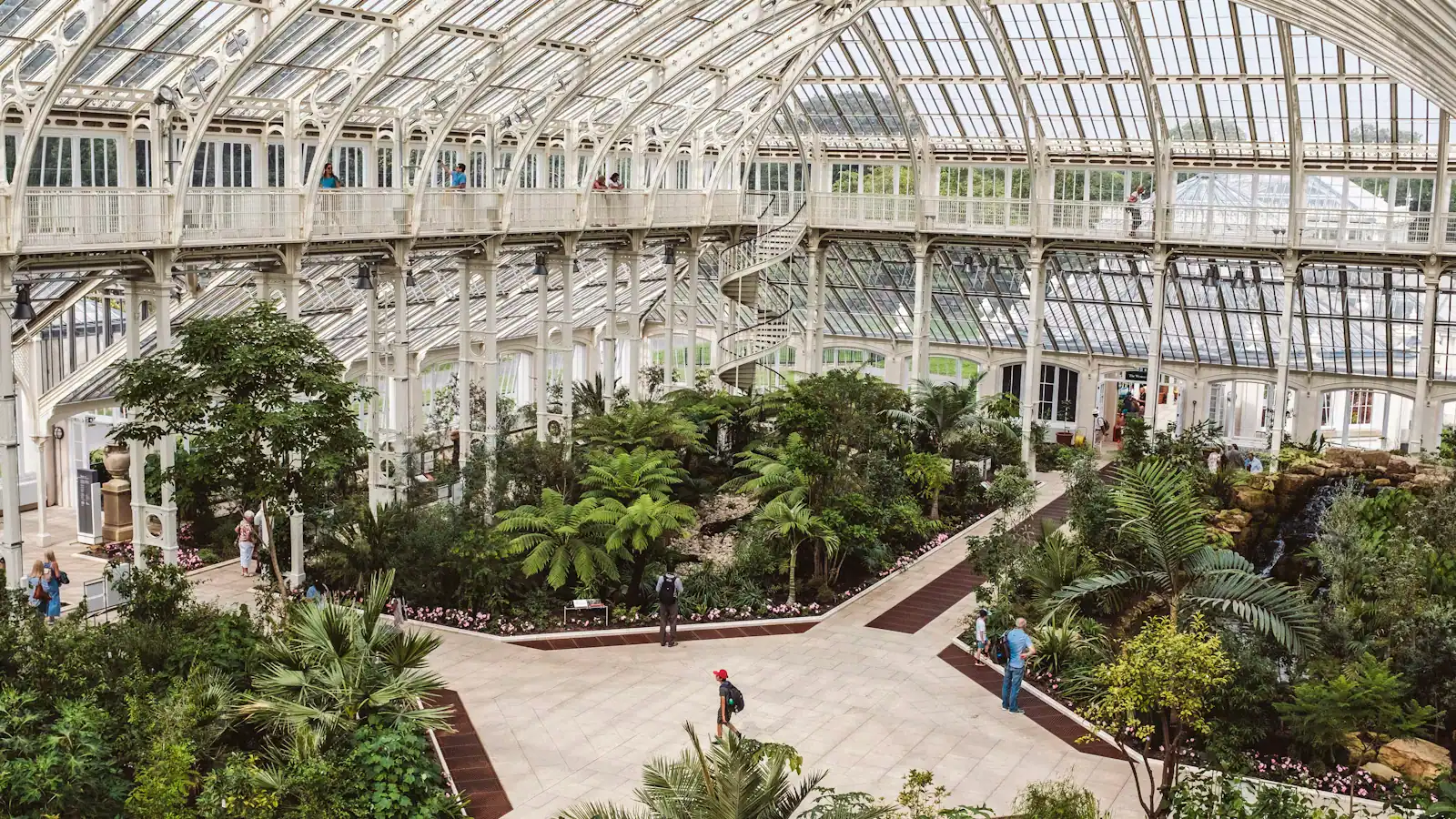
A great deal, because the city plans for it. Grand Rapids is cloudy roughly two hundred and five days a year and overcast about two thirds of the winter, so the indoor options are the main event rather than a backup. Three museums sit within half a mile downtown, the Meijer Gardens conservatory is a warm glasshouse six miles northeast, and the brewery taprooms open early on a wet afternoon.
No. The Urban Institute for Contemporary Arts ceased operations in March 2023 after more than four decades, following funding difficulties that had built up through the pandemic years, and its purpose-built downtown gallery has since been sold and converted to other use. Older lists still include it. What the city has now is a college gallery programme, commercial galleries in the neighbourhoods and the two big collections at GRAM and Meijer Gardens.
Ninety minutes to two hours if you read the labels, about an hour if you move through the permanent exhibition at pace. The core of it covers a presidency nobody planned for: the Nixon resignation, the pardon, the fall of Saigon and the Bicentennial, with real space given to Betty Ford's own work. Leave ten minutes at the end to walk out to the gravesite, which sits outside the ticketed building beside the river.
Keep exploring
Guide hub
Furniture paid for this city, and then it paid for everything worth coming to see in it. That is the single idea a visitor needs. Grand Rapids made…
Things to do
Most cities put art in their museums and then decide whether anyone cares. Grand Rapids did it the other way round. In 1969 a committee of local…
Things to do
Every good thing in this city was paid for by chairs. That is barely an exaggeration. William Haldane opened a cabinet shop on the Grand River in…
Who it suits
Grand Rapids is better with children than its reputation suggests, and the reason is the same reason it is better with adults: a century of local…
Who it suits
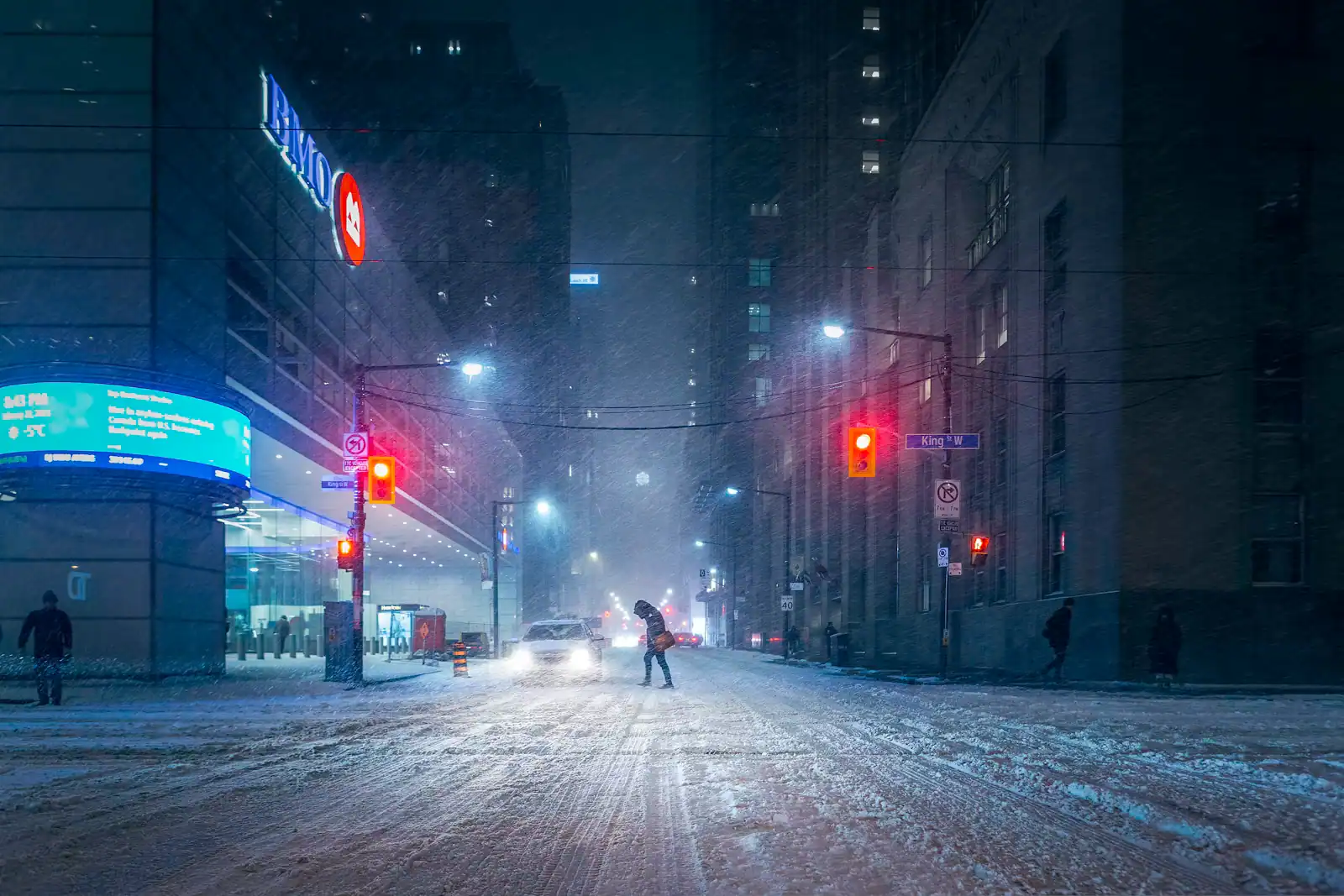
Assume you will need this page. Grand Rapids takes something like thirty-eight inches of rain a year on top of around seventy-six inches of snow…
By season
Start with the numbers, because everything else on this page depends on them. Grand Rapids collects somewhere around seventy to seventy-eight inches…
Read next
Guide
Michigan's second city is a furniture town that spent its furniture money on art. Here is how the address grid works, what is walkable, and what needs a car.
6 min readMarguerite Vanderhoff
Guide
Two nights, one car, and one hard constraint that decides the whole schedule: the free Frank Lloyd Wright house only opens to the public on Sunday afternoon.
5 min readMarguerite Vanderhoff
Guide
The zoo shuts for the winter, the carousel does not, and the best hour of a family day here costs three dollars and runs on a platform out over the river.
5 min readMarguerite Vanderhoff

Guide
Seventy-odd inches of snow, the cloudiest January of any month, and a city that responds by putting a hundred art installations outdoors and flooding a Maya Lin park into an ice rink.
6 min readMarguerite Vanderhoff