Skip to content
Search
Menu

These bookings earn us a commission through Viator. You pay the same, and the money played no part in the selection.

Entertainment

1928 Spillman Carousel

Last updated

A 1928 Spillman carousel in a glass pavilion over the Grand River, back in service since February 2026 after a two-year rebuild.

Almost every city museum has something it wheels out for the local news. Grand Rapids has a working 1928 carousel in a glass box hanging over the river, and for two years it was switched off. It came back on Friday 13 February 2026, and it came back better than it went away.

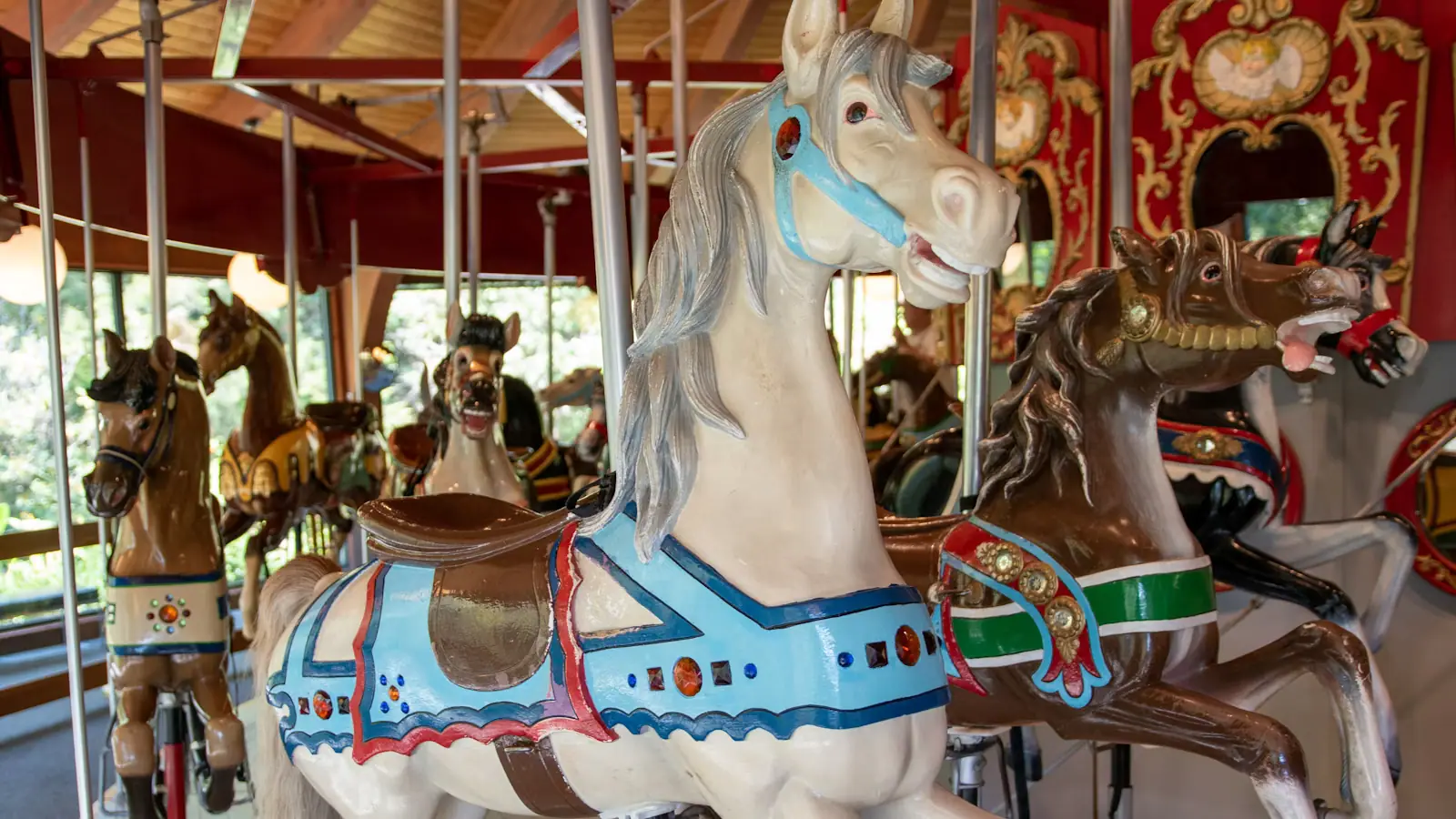
The machine itself was built by the Spillman Engineering Company of North Tonawanda, New York, in 1928, at the tail end of the American carousel industry. It carries forty-four hand-carved wooden horses, two chariots and six menagerie animals — a giraffe, a whale, a deer, a goat, a tiger and a camel. The museum describes it as one of only three of its style known to have been produced by the company. It did not come from Michigan: staff ran a nationwide search in the spring of 1981 and bought it from a private owner in Pennsylvania.

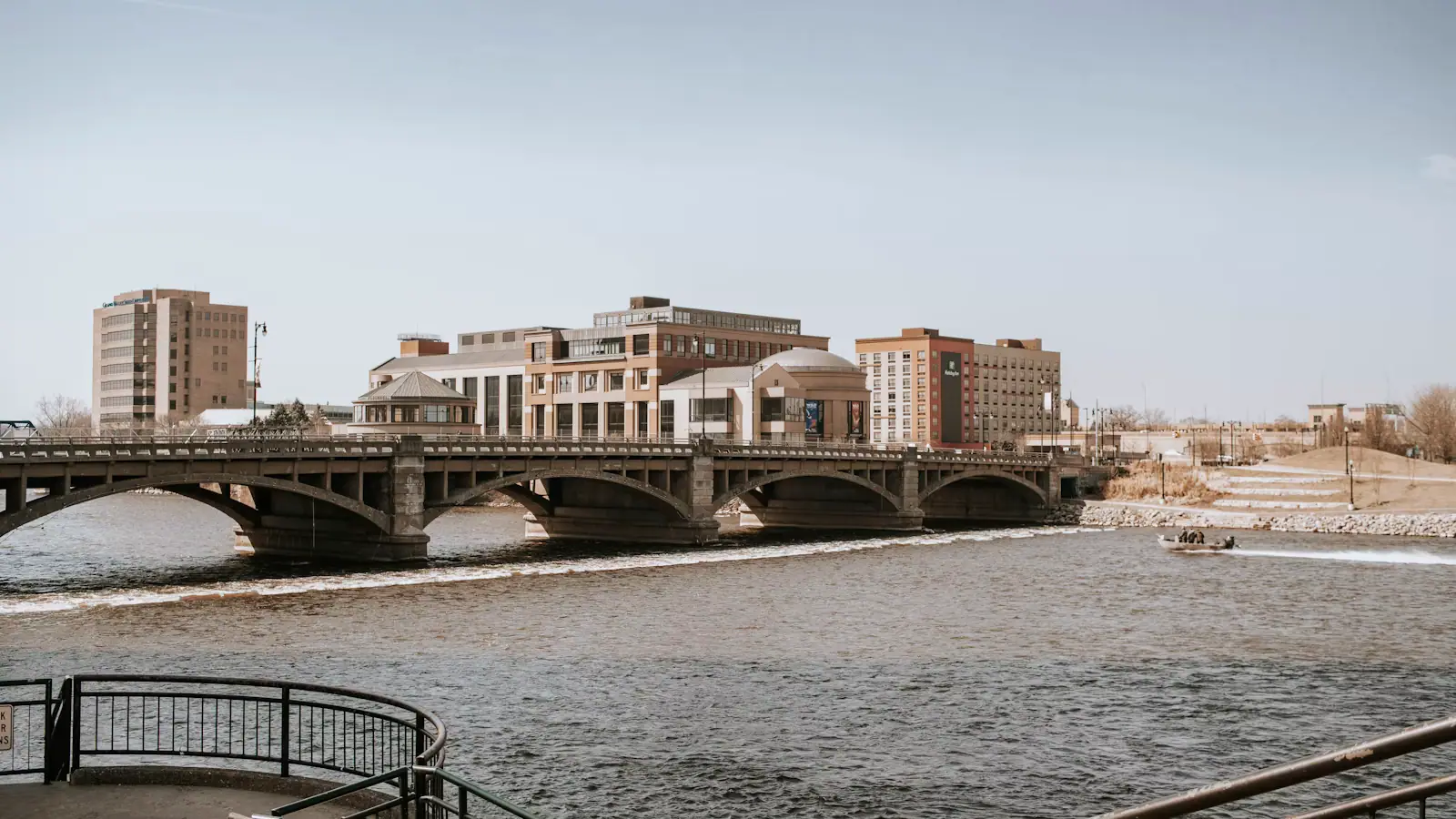
What makes it work as an attraction is the room it sits in. The Cook Carousel Pavilion is a glass and cast-stone drum cantilevered off the museum's first floor directly over the Grand River, funded by the late Grand Rapids philanthropist Peter C. Cook. You ride a ninety-eight-year-old carousel with the river moving past the glass on three sides. In February, with ice on the water and snow coming off the west bank, that is a genuinely strange and good experience.

The two-year closure was part of a roughly $50 million museum renovation and expansion. The figures were stripped and repainted, a wheelchair-accessible chariot and a ramp were added with Disability Advocates of Kent County, the sound baffling was upgraded so the band organ no longer overwhelms the space, and a new lift and a covered, heated walkway now connect the pavilion to the rest of the building.

Rides are ticketed separately from museum admission. It is a small charge — recently in the region of $3, less for members — and it is worth it once even if you are an adult on your own.
Getting there and parking

The carousel is inside the Grand Rapids Public Museum on the west bank of the Grand River, reached from the museum's first-floor galleria and then across the covered walkway into the pavilion.

Driving, come off US-131 at Pearl Street and head east; the museum's own car park sits beside the building and is the easiest paid parking on this side of the river. From downtown on foot it is about ten minutes from Rosa Parks Circle over the Pearl Street bridge, past Ah-Nab-Awen Park and the Ford Museum.

One warning for 2026 and 2027. Rapids restoration work is under way on this exact stretch of river, so riverbank paths and some approaches on the west bank are subject to closure and diversion. Check the museum's current access notes rather than following an old map down to the water.

Forty-four horses, a whale and a camel

Spillman Engineering was one of the last serious American carousel builders, working in North Tonawanda alongside the rest of a small industry clustered on the Niagara frontier. By 1928 the market for hand-carved wooden carousels was collapsing. This machine sits right at the end of that tradition.

The count: forty-four horses, all hand-carved and individually painted, plus two chariots for people who do not want to sit astride anything, plus six menagerie animals. The menagerie is the part children go for. In order of demand from anyone under seven: the whale, the tiger, the giraffe, the camel, the deer, and then the goat, which is the one you get if you dawdle.

Carousel carving has a grammar. The outer row, seen by the crowd, gets the most elaborate work and the jewelling; the inner rows are plainer. Look at the outside animals from the queue rather than from the platform and you will see the difference immediately.

The 2026 rebuild stripped and repainted just over fifty figures. Repainting a historic carousel is a contested exercise — there is a school that argues for preserving worn original paint — and the museum went with full restoration, which is the more common choice for a machine that people are going to keep riding.

What the two-year closure changed

The pavilion closed for roughly two years and reopened on 13 February 2026 with extended hours on the night. Almost everything you notice is new.

Accessibility was the headline of the work. There is now a wheelchair-accessible chariot, a ramp onto the platform, and a new lift serving the pavilion, all developed in consultation with Disability Advocates of Kent County. Before the closure, riding this carousel from a wheelchair meant a transfer. It no longer does.

Sound. New baffling was installed. A band organ in a glass drum is a physics problem, and the old arrangement was punishing for anyone sound-sensitive. It is now a room you can hold a conversation in.

Connection. The pavilion was separated from the main museum structure to satisfy Kent County Trail System connectivity along the riverbank, and a covered, heated walkway now links the two. In a Michigan February that detail is not cosmetic.

The wider project. All of this sits inside a roughly $50 million renovation and expansion of the whole museum, with an outdoor classroom on the riverfront following on. Expect parts of the building and the river frontage to be under work for a while yet.

What a ride costs and when to take one

Carousel rides are ticketed separately from museum admission. You cannot ride on a museum ticket alone, and you do not need a museum ticket to be told the price at the desk.

The museum has recently listed rides at around $3 a go, with a reduced rate of about $1 for members and for scheduled groups. Children under 42 inches must ride with a paying adult, and that supervising companion's ticket is free. The accessible chariot is charged at the standard rate. All of these figures were set before the reopening, so confirm at the desk.

Timing. The pavilion has generally opened with the museum, which has recently run 9am to 5pm on weekdays and 10am to 5pm at weekends. The carousel closes for maintenance one day a month — an old machine in daily service needs it — so if the ride is the reason for your visit, check that day before you drive in.

Go late in the afternoon in winter. The pavilion's glass faces west across the Grand River, and the last hour of light coming through it while the organ is running is the best thing the museum does. In summer, go early: school groups arrive mid-morning and the queue for the whale is not short.

The river outside the glass

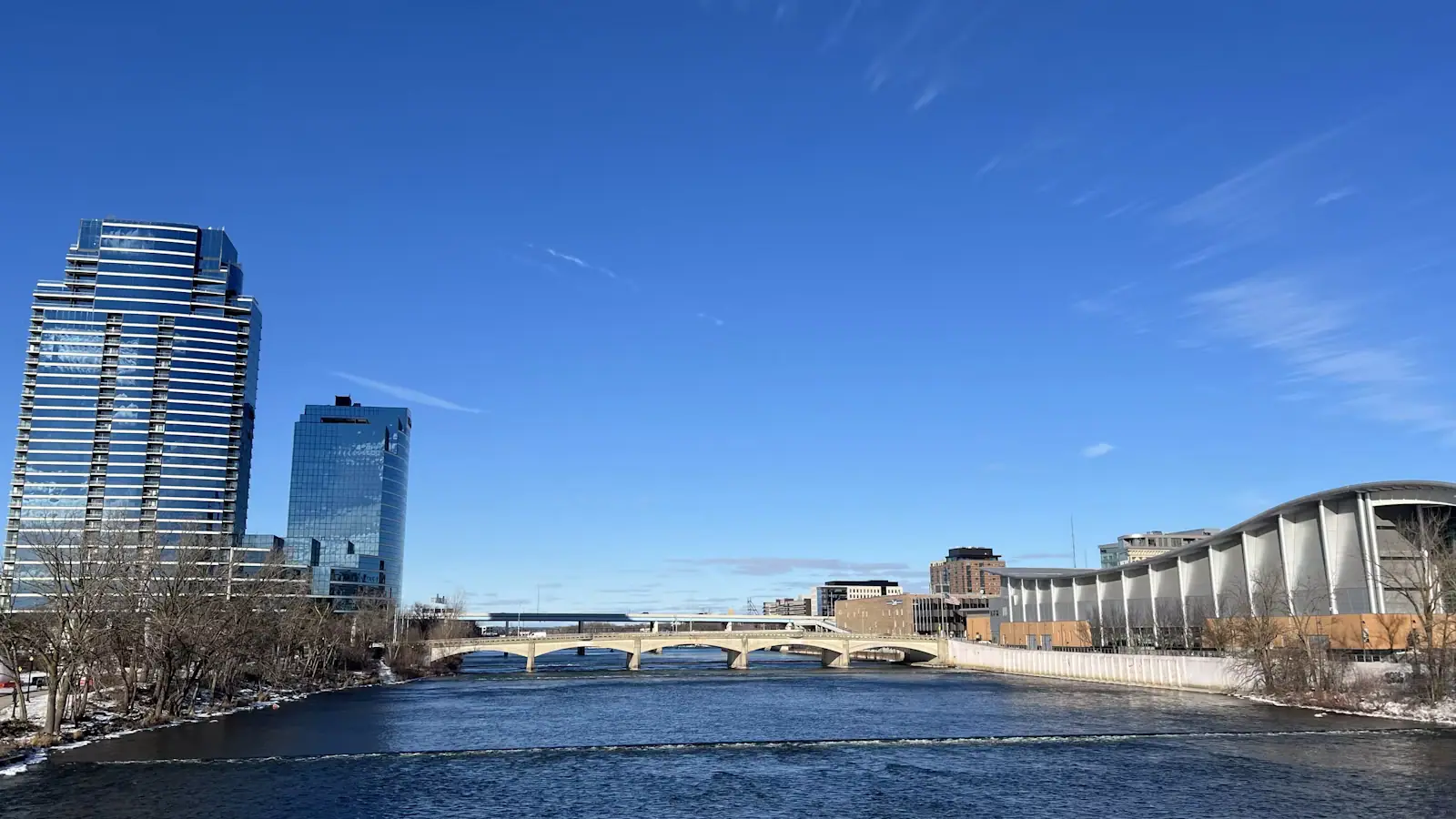
The pavilion sits directly over the Grand River, which is currently the most interesting construction site in Michigan.

The Grand Rapids Whitewater project — an effort to restore the rapids the city is named after, lost to a line of dams built in the late nineteenth and early twentieth centuries — broke ground on its Lower Reach in June 2026. That reach runs from Fulton Street to Bridge Street, which is exactly the stretch the museum overlooks. The work includes dam removals and the installation of natural rock structures, and it is expected to take about two years.

For a visitor this cuts both ways. From the carousel windows you are watching a river being physically rebuilt, which is not a view many museums can offer. On the ground, expect riverbank path closures, plant, fencing and noise along the west bank through the construction window, and check the museum's own notices for how to reach the entrance on the day.

When it is finished, the museum will sit above moving water and a set of standing waves rather than a slack impoundment. It is worth knowing that the view from the glass is temporary in both directions.

Near Spillman Carousel

Straight-line distances, so allow more on the road — the island is long and has one main parkway.

  • Ornate painted carousel horses inside a glass pavilion with a city skyline beyond

    Museum

    Grand Rapids Public Museum

    A 76-foot whale hangs over the Galleria, an 1890s street runs through the basement, and the 1928 carousel turns beside the river.

    2–3.5 hoursAround $12–16 per adult; carousel rides and planetarium shows cost extra50 ft away

  • A river running past open ground with city buildings rising behind

    Park

    Free

    Ah-Nab-Awen Park

    Six and a half acres on the west bank whose name means resting place, with grass mounds that stand for the burial mounds once here.

    0.5–1 hoursFree. Some festivals held in the park are separately ticketed1,010 ft away

  • The Grand River running past low riverfront buildings in downtown Grand Rapids

    Museum

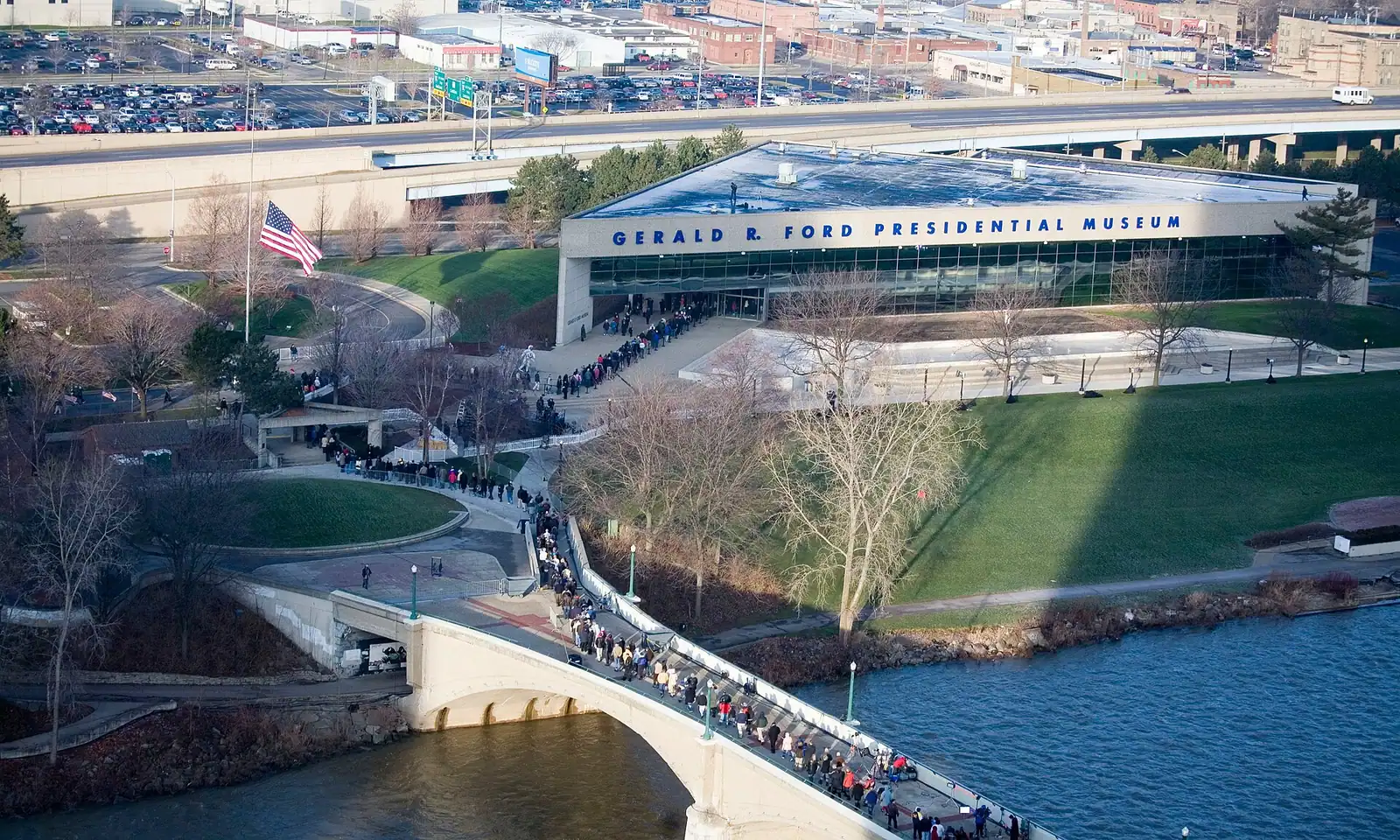
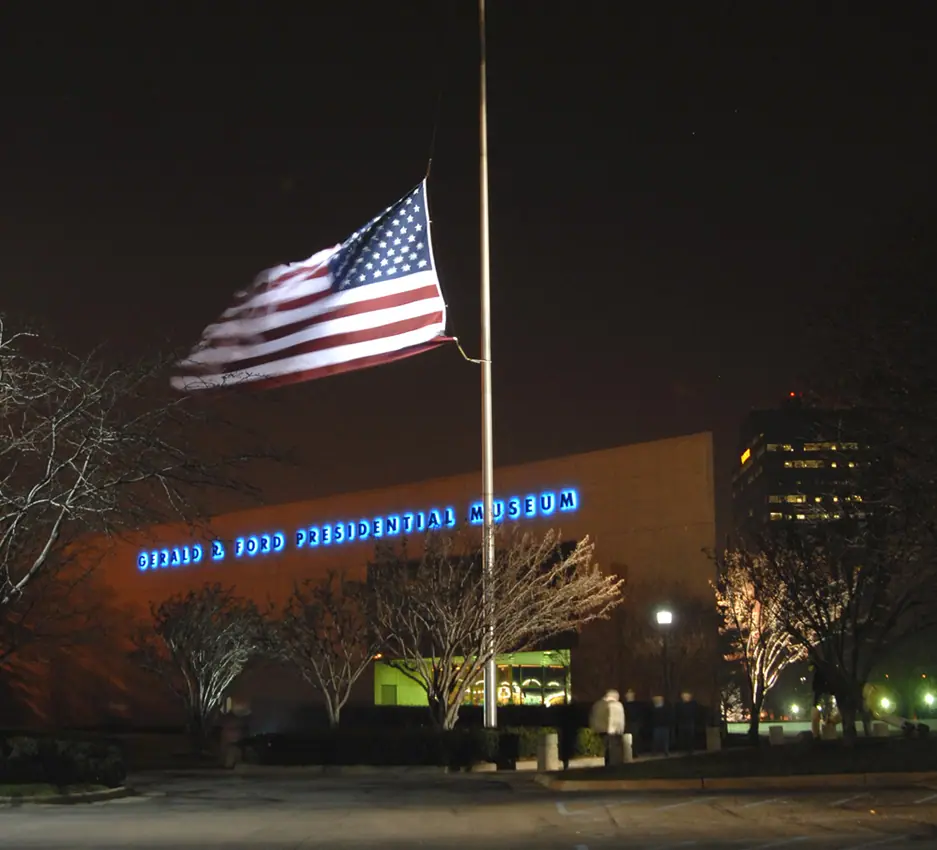
    Gerald R. Ford Presidential Museum

    A presidential museum on the riverbank where the 38th president and his wife are buried a short walk from the front door.

    1.5–2.5 hoursAround $15–20 per adult; the gravesite on the grounds is free to visit1,010 ft away

  • A blue steel pedestrian bridge crossing a river in front of downtown buildings

    Trail

    Free

    Grand River Riverwalk

    A downtown loop on both banks of a river that is currently being torn up so it can have its rapids back.

    1–1.5 hoursFree. Parking is the only cost and that is a downtown ramp390 ft away

Spillman Carousel: common questions

Is the carousel at the Grand Rapids Public Museum open again?

Yes. The 1928 Spillman carousel and its Cook Carousel Pavilion reopened on Friday 13 February 2026 after roughly two years closed for renovation. The figures were stripped and repainted, a wheelchair-accessible chariot and ramp were installed, the sound baffling was upgraded and a new lift and heated walkway now connect the pavilion to the museum. It closes one day a month for maintenance.

How much does it cost to ride the carousel in Grand Rapids?

Rides are ticketed separately from museum admission, at a few dollars a turn. The museum has recently listed about $3 for general visitors and around $1 for members and booked groups. Children under 42 inches must ride with a paying adult and that companion ticket is free. Rates were set before the February 2026 reopening, so check at the desk on the day.

What animals are on the Grand Rapids carousel?

Forty-four hand-carved wooden horses, two chariots and six menagerie animals: a giraffe, a whale, a deer, a goat, a tiger and a camel. The whale is the one every small child wants and the goat is the one you get if you queue slowly. The machine was built by the Spillman Engineering Company of North Tonawanda, New York, in 1928, and the museum bought it from a private owner in Pennsylvania in 1981.

Can you visit the carousel without going into the museum?

The pavilion is reached through the museum building, so in practice you go in through the museum and buy a ride ticket at the desk. It is not a separate street-level attraction. If the carousel is the whole point of your visit, allow fifteen to twenty minutes and check the monthly maintenance closure, and be aware that riverfront construction on the rapids restoration project affects approaches on this bank.