Skip to content
Search
Menu

These bookings earn us a commission through Viator. You pay the same, and the money played no part in the selection.

Park

Ah-Nab-Awen Park

Last updated

Six and a half acres on the west bank whose name means resting place, with grass mounds that stand for the burial mounds once here.

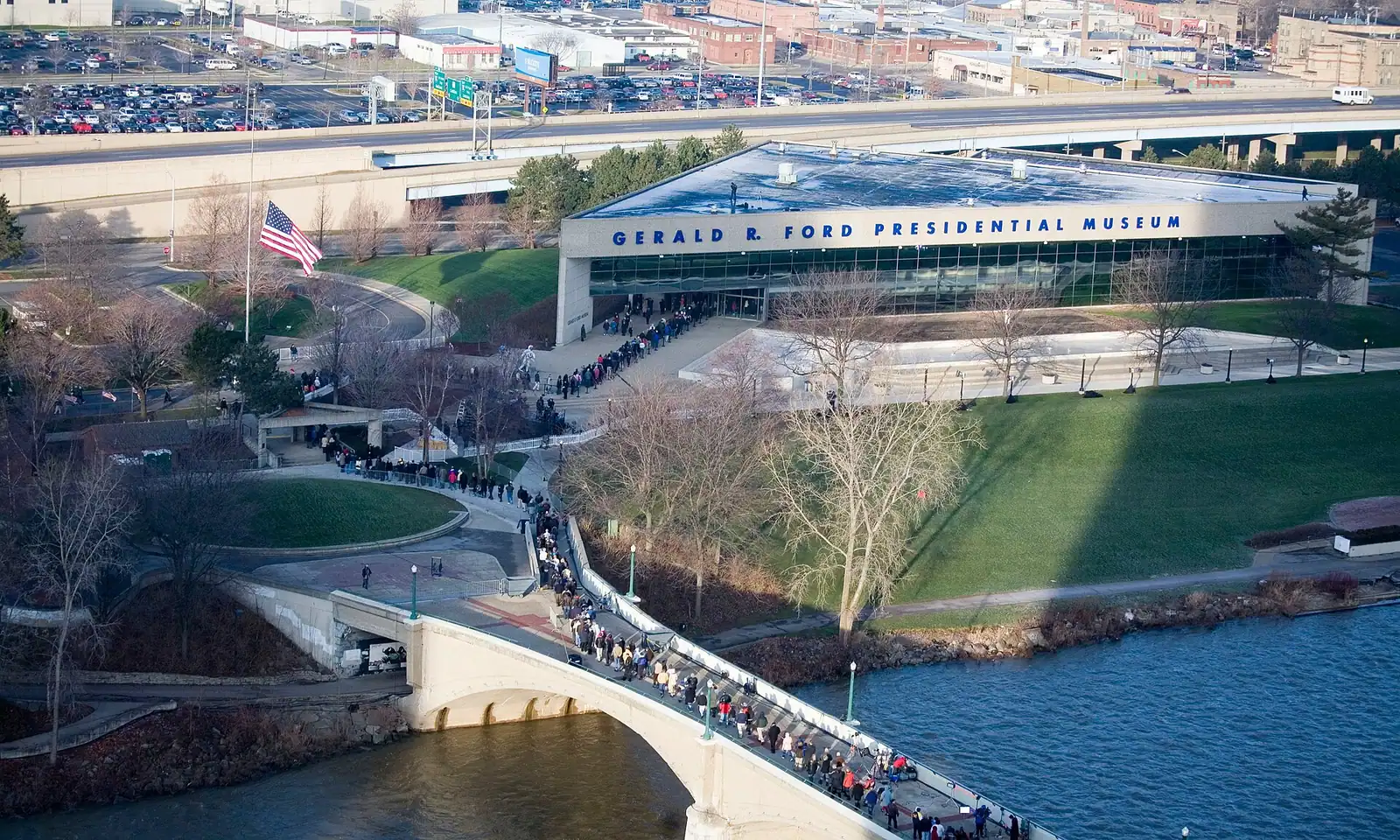
Most people cross this park on their way to something else. It sits on the west bank of the Grand between the Bridge Street and Pearl Street crossings, six and a half acres of open lawn with the Gerald R. Ford Presidential Museum on one side and the river on the other, and it is the widest piece of green in downtown Grand Rapids.

The name is the reason to slow down. Ah-Nab-Awen means "resting place" in Anishinaabemowin, and it was proposed by the elders of the Three Fires Council when the park was created as a bicentennial project with unusually extensive public consultation. An Indigenous village stood on this ground. Burial mounds stood along this stretch of river and were destroyed as the city grew. The low grass mounds shaped into the park's lawn are there to commemorate them, which is why people picnic on ground that is quietly doing something else.

Near the river is "Manidoo Bawating", an eleven-foot steel sculpture whose name means "Spirit of the Rapids", installed to represent and honour the traditions of the Native American community whose land this is. It reads as abstract public art from a distance and as something more specific up close.

The rest of the year the park is the city's festival lawn. Fourth of July fireworks are launched from here, Celebration on the Grand uses it, and during ArtPrize in the autumn it carries large-scale installations and the crowds that come with them.

Free, open all hours, and the natural anchor for a riverwalk loop. The river construction works between Fulton Street and Bridge Street run right past it, so expect fencing and noise for the next couple of years.

Getting there and parking

The park lies on the west bank of the Grand River between the Bridge Street and Pearl Street crossings, immediately north of the Gerald R. Ford Presidential Museum and a few hundred yards south of the Grand Rapids Public Museum.

On foot from Monroe Center, cross the river on the Pearl Street bridge or the Blue Bridge; either takes under ten minutes. The DASH shuttle from the free peripheral lots stops nearby.

Parking is in the downtown ramps on Front Avenue and Pearl Street rather than at the park itself. During festivals and on the Fourth of July the surrounding streets close and the ramps fill hours ahead, so arrive early or walk in from further out.

What the name means, and the mounds

Ah-Nab-Awen translates as "resting place" in Anishinaabemowin, the language of the Anishinaabe peoples. The name was put forward by the elders of the Three Fires Council — the Ojibwe, Odawa and Potawatomi — when the park was designed, and it was adopted rather than a commemorative English name, which in the 1970s was not the default choice.

An Indigenous village occupied this bank of the Grand. Burial mounds stood along this stretch of river and most were destroyed as Grand Rapids industrialised through the nineteenth century. The surviving group, the Norton Mounds, sits south of downtown and is a National Historic Landmark that is not open for general public access.

The low grass mounds shaped into the park's lawn commemorate what was here. They are deliberately unmarked and unfenced, and most visitors read them as landscaping. Knowing what they are changes how the space feels, which is presumably the point.

If you are crossing the park on a riverwalk loop, this is a fair place to spend three minutes rather than ninety seconds.

Manidoo Bawating, the spirit of the rapids

Near the river stands "Manidoo Bawating", an eleven-foot steel sculpture whose name means "Spirit of the Rapids". It was introduced to the park to represent and honour symbols and traditions of the Native American community connected to this place, and it works as the park's one clear marker of that history.

The name carries an extra weight in Grand Rapids. The rapids the city is named for were destroyed by nineteenth-century dam building and channel work, and the Grand River Restoration project now under construction immediately upstream is an attempt to put them back. A sculpture called Spirit of the Rapids, standing beside a river with no rapids in it and looking at a construction site that is building some, is about as loaded as public art gets in this city.

Take the time to walk around it. The steel reads differently against the water at different hours, and it is at its best in the low light of a late afternoon.

The park also holds a bicentennial memorial and several smaller markers relating to Grand Rapids' history, which are easy to miss on a fast crossing.

The festival lawn

This is where Grand Rapids puts things that need a lot of grass and a river view.

Fourth of July. The city's fireworks are launched over the Grand and the park is one of the main viewing lawns. It fills early and the surrounding streets close.

Celebration on the Grand and other community-wide festivals use the park through the summer, generally with a stage at the south end and stalls along the riverside path.

ArtPrize, for roughly two and a half weeks from mid-September into early October, brings large-scale outdoor installations here. Ah-Nab-Awen has hosted some of the competition's biggest and most-photographed entries, and during the festival the riverwalk through the park becomes the busiest pedestrian route in the city.

Winter empties it completely. The wind comes down the river channel and there is nothing to break it, which is also why it is the best place downtown to see snow lying untouched.

Event dates are published by the city and the organisers each year. Check before planning around one.
Using the park

  • Free and open at all hours, with no gate and no admission.
  • The natural anchor for a riverwalk loop. Start here, cross on the Blue Bridge, return on the other bank.
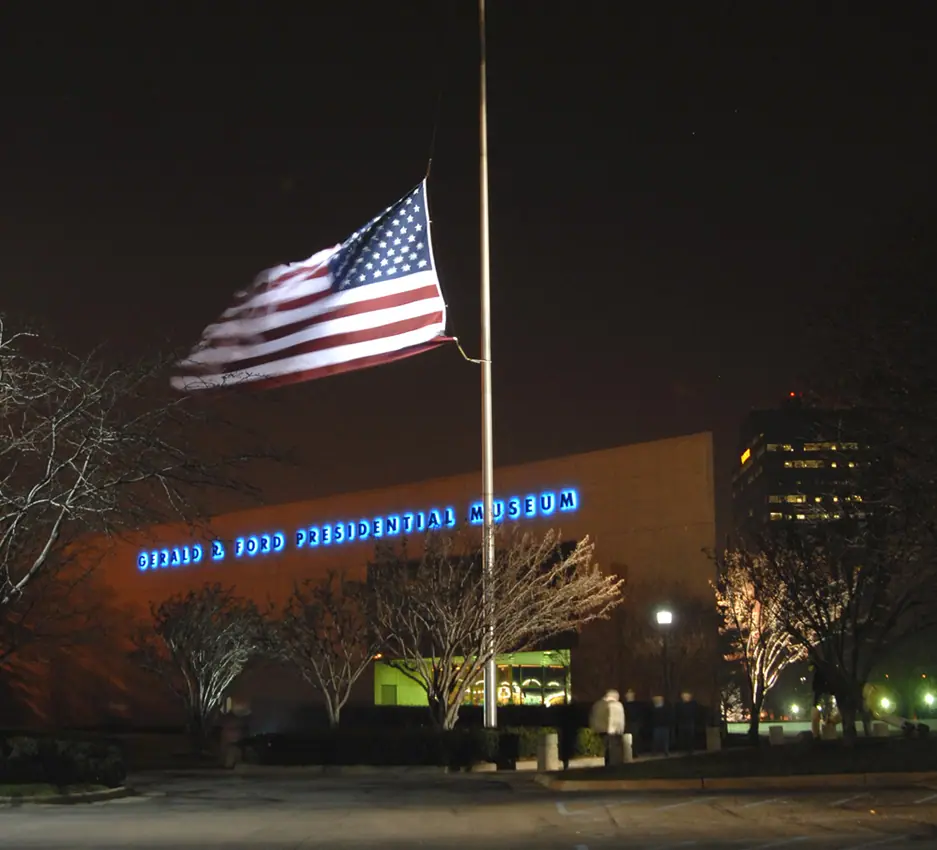
  • The Ford Museum is next door and the Ford gravesite is on its north lawn, a two-minute walk.
  • The Grand Rapids Public Museum is a few hundred yards north along the same bank.
  • Parking is downtown ramps, not a park lot. Front Avenue and Pearl Street are closest.
  • Restrooms are not always open; the museums either side are the practical answer during opening hours.
  • The Grand River Restoration works between Fulton Street and Bridge Street run alongside the park. Expect fencing, plant and a rerouted bank path for the next couple of years, and check current closures if a specific route matters.
  • Twenty minutes is enough unless there is an event on, in which case clear an evening.

Near Ah-Nab-Awen

Straight-line distances, so allow more on the road — the island is long and has one main parkway.

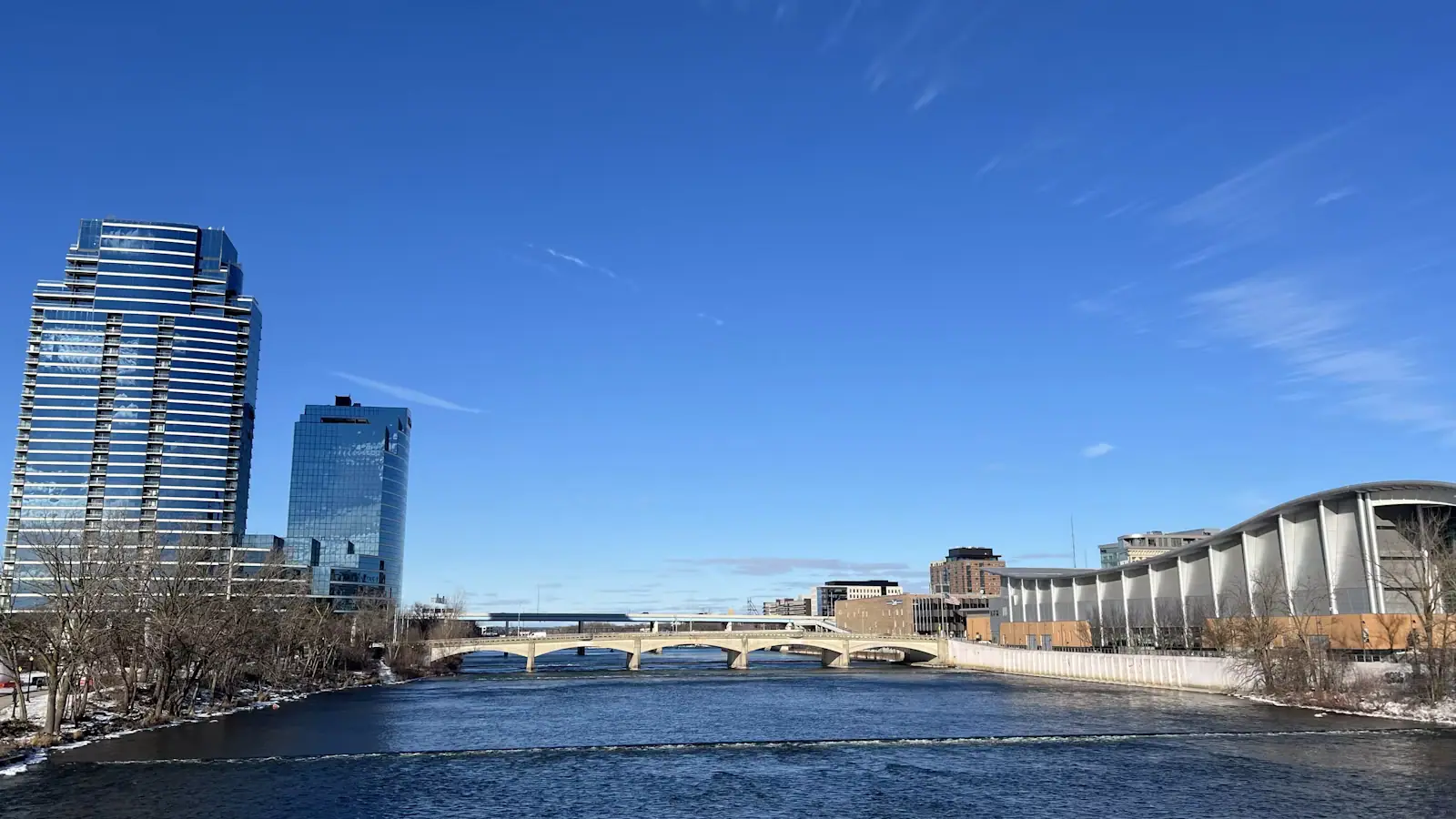
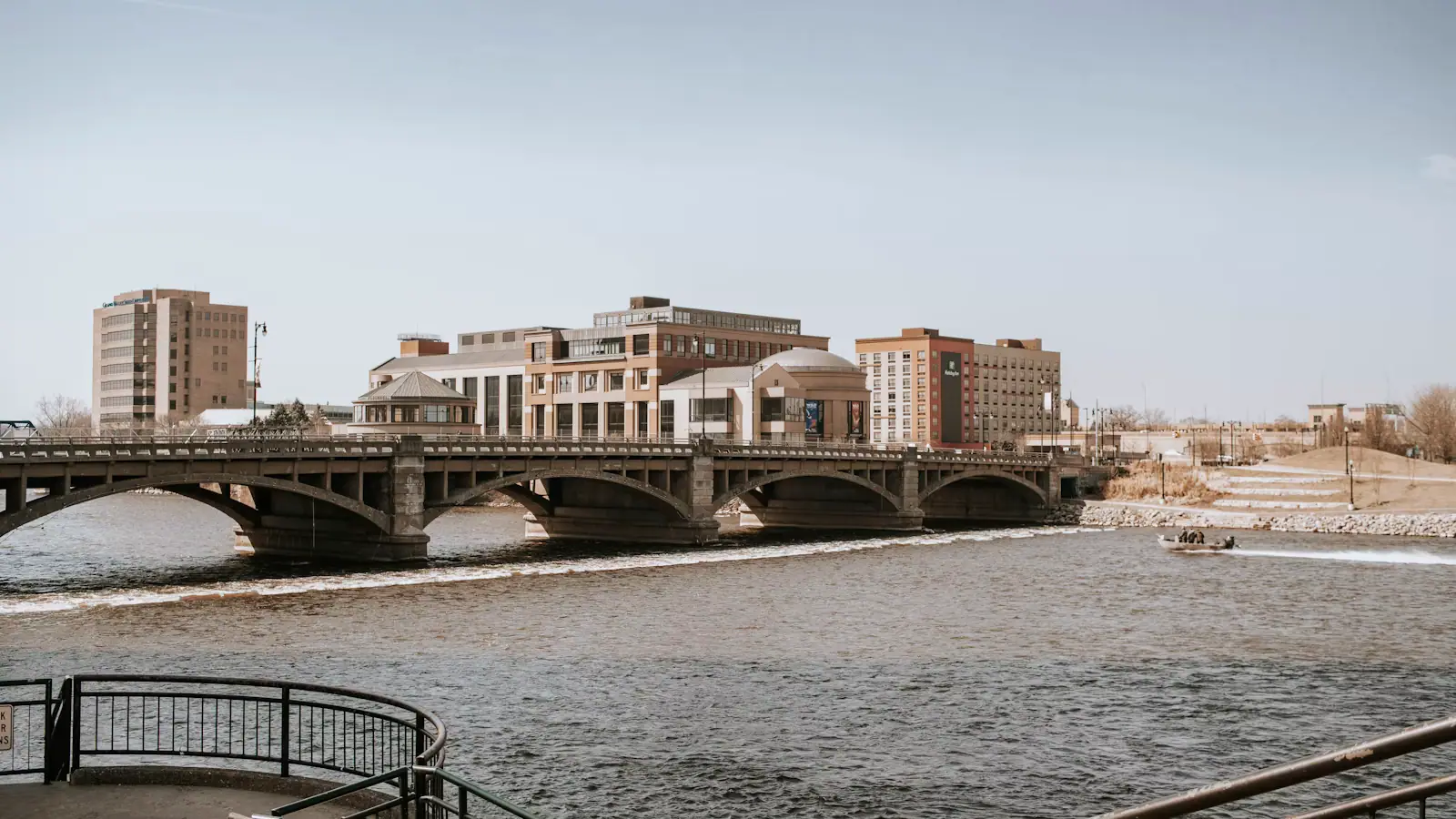
  • The Grand River running past low riverfront buildings in downtown Grand Rapids

    Museum

    Gerald R. Ford Presidential Museum

    A presidential museum on the riverbank where the 38th president and his wife are buried a short walk from the front door.

    1.5–2.5 hoursAround $15–20 per adult; the gravesite on the grounds is free to visit440 ft away

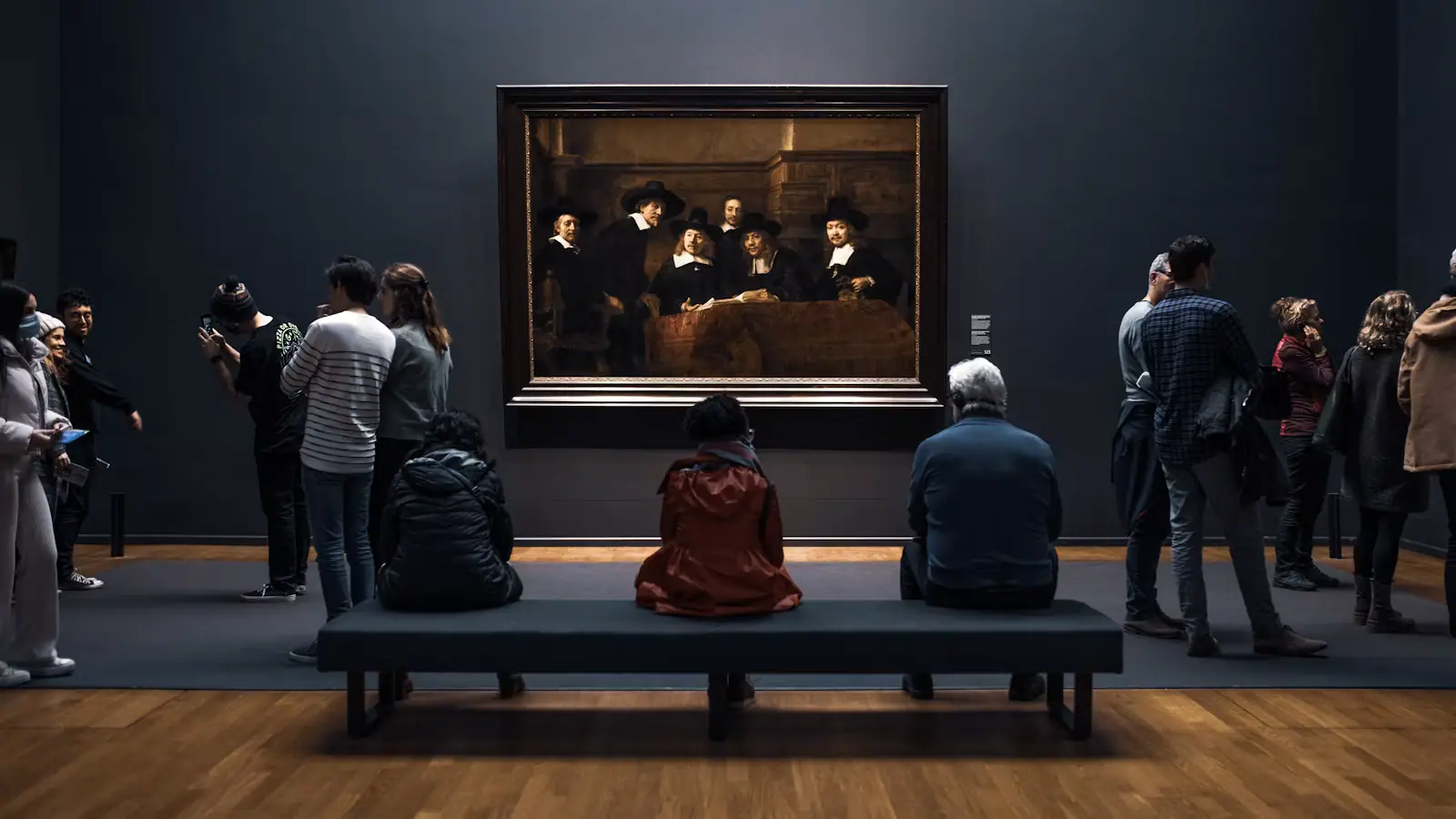
  • Ornate painted carousel horses inside a glass pavilion with a city skyline beyond

    Museum

    Grand Rapids Public Museum

    A 76-foot whale hangs over the Galleria, an 1890s street runs through the basement, and the 1928 carousel turns beside the river.

    2–3.5 hoursAround $12–16 per adult; carousel rides and planetarium shows cost extra980 ft away

  • A blue steel pedestrian bridge crossing a river in front of downtown buildings

    Trail

    Free

    Grand River Riverwalk

    A downtown loop on both banks of a river that is currently being torn up so it can have its rapids back.

    1–1.5 hoursFree. Parking is the only cost and that is a downtown ramp0.2 mi away

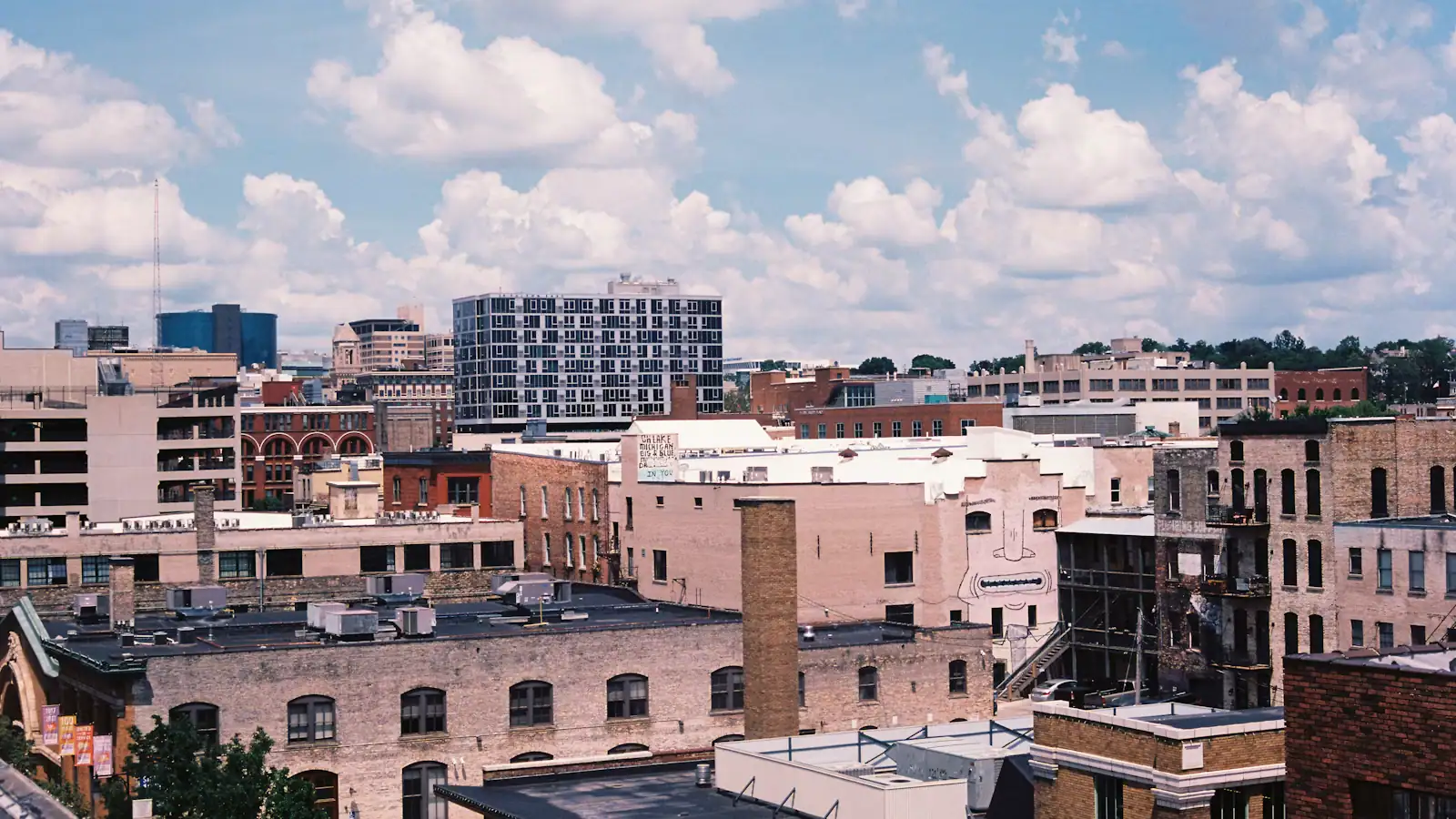
  • People standing in front of a warehouse wall covered in large multicoloured murals

    Landmark

    Free

    Calder Plaza

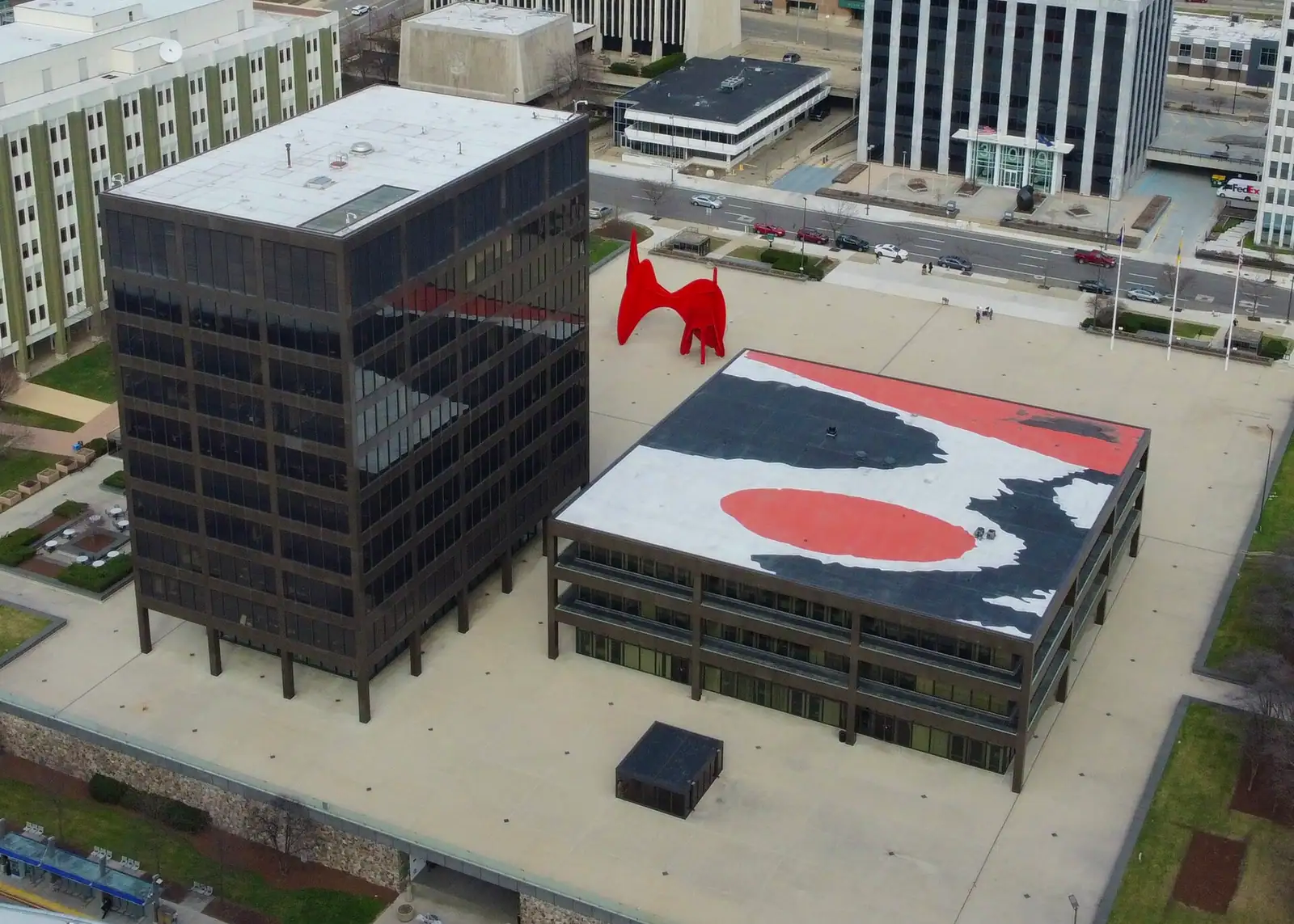
    Forty-two tons of vermilion steel that changed how a furniture town saw itself, and the Calder painting on the roof behind it.

    15–45 minutesFree. An open civic plaza with no ticketing at any time of year.0.4 mi away

Ah-Nab-Awen: common questions

What does Ah-Nab-Awen mean?

It means resting place in Anishinaabemowin, the language of the Anishinaabe peoples. The name was proposed by the elders of the Three Fires Council — the Ojibwe, Odawa and Potawatomi — when the park was created as a bicentennial project on the west bank of the Grand River. An Indigenous village stood on this ground, and the low grass mounds in the lawn commemorate burial mounds that once stood along this stretch of river.

What is the sculpture in Ah-Nab-Awen Park?

Manidoo Bawating, an eleven-foot steel sculpture whose name means Spirit of the Rapids. It was introduced to the park to represent and honour symbols and traditions of the Native American community connected to this place. The name carries extra weight here, because the rapids Grand Rapids is named for were destroyed by nineteenth-century dams and are now the subject of an active restoration project immediately upstream.

What happens at Ah-Nab-Awen Park?

It is the city's main downtown festival lawn. Fourth of July fireworks are launched over the river with the park as a principal viewing area, Celebration on the Grand and other community festivals use it through the summer, and during ArtPrize from mid-September into early October it carries large outdoor installations. Outside events it is simply the widest piece of open green space in downtown Grand Rapids.

Is Ah-Nab-Awen Park worth visiting?

As a destination in itself, twenty minutes. As the anchor of a downtown riverwalk loop, yes — it connects the Ford Museum and its gravesite, the Public Museum and the Blue Bridge within a ten-minute walk. Go knowing what the name and the mounds mean and it becomes a more interesting stop than the lawn suggests. Expect construction fencing along the bank for the next couple of years.