Landmark
Free
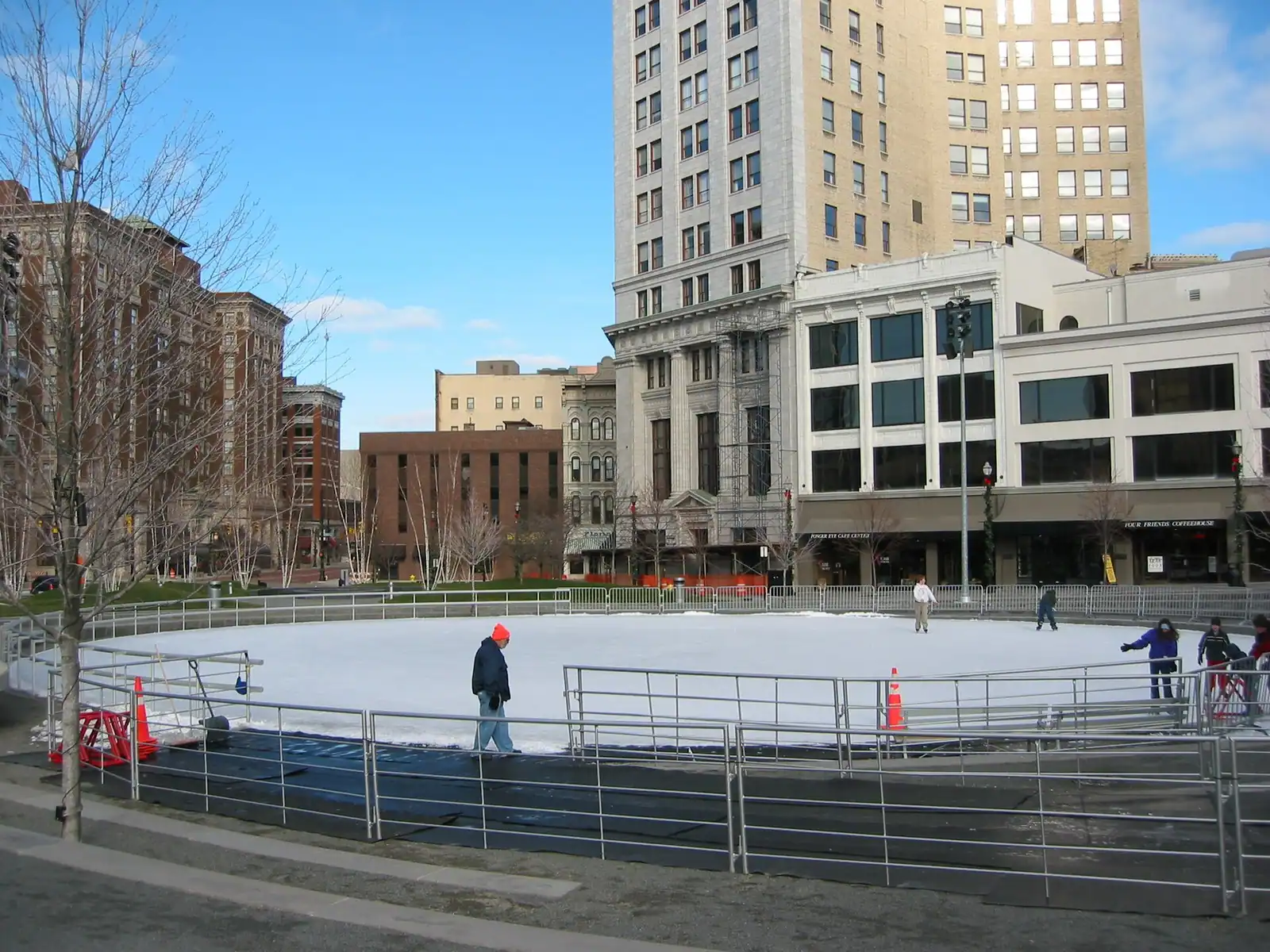
Rosa Parks Circle
A Maya Lin artwork you are allowed to walk on, and from December a public ice rink with the night sky under the ice.
0.5–2 hoursThe plaza is free at all times. Winter skating sessions carry a small charge.0.3 mi away
Landmark
Last updated
Forty-two tons of vermilion steel that changed how a furniture town saw itself, and the Calder painting on the roof behind it.
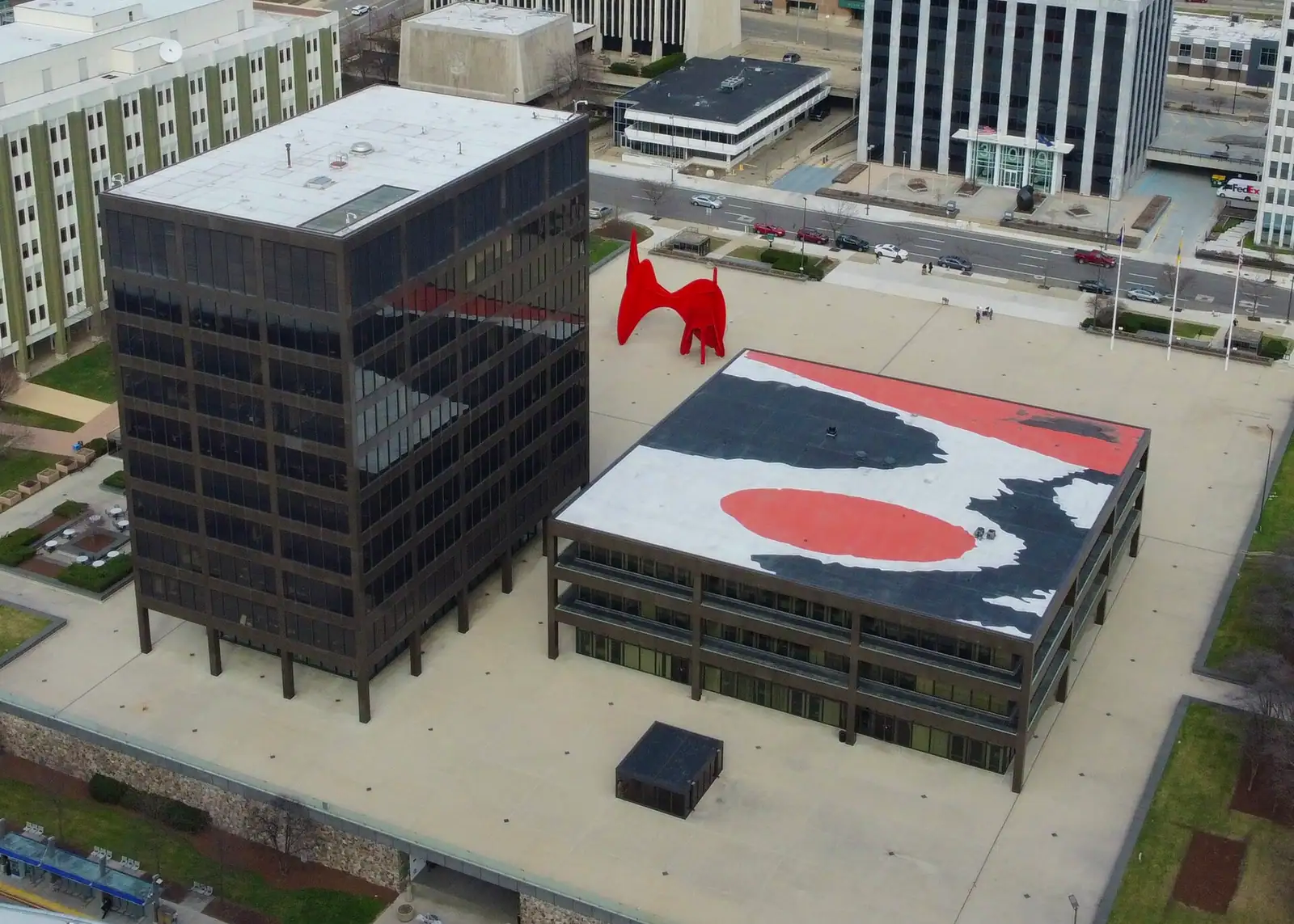
In 1967 the National Endowment for the Arts had a new Art in Public Places programme and no projects. Grand Rapids, a manufacturing city with a demolished downtown and a reputation for conservatism, applied. The grant was the first the programme ever made, and in 1969 a crane set a 42-ton vermilion steel stabile down on the concrete between the new City Hall and the Kent County Administration Building. Alexander Calder called it La Grande Vitesse — the great swiftness, which is French for Grand Rapids.
The numbers still surprise people who have only seen photographs. It stands roughly 43 feet high, runs about 54 feet long and 30 feet across, and it is not a mobile: nothing moves. What moves is you. The plates are arranged so that the silhouette reorganises itself completely as you walk a quarter circle around it, and the best thing you can do here is not stand still for the photograph everyone takes from the Monroe Avenue side.
The sculpture arrived into a raw argument. The plaza it sits on, formally Vandenberg Plaza, was built across ground cleared in the urban renewal that took the city's 1888 Romanesque city hall with it. A large red abstract object was not a consensus choice in 1969 and the correspondence of the time says so. Within a decade the city had put the shape on its letterhead and its municipal vehicles, and the argument was over.
It matters for a visitor for one reason. Every claim this city makes about art — ArtPrize, the sculpture park out on the East Beltline, the museum that faces Rosa Parks Circle — traces back to the moment a furniture town bought a Calder and then decided it liked it. Fifteen minutes on this plaza is the fastest way to understand why Grand Rapids behaves the way it does about art.
Calder Plaza occupies the block bounded by Monroe Avenue NW, Ottawa Avenue NW and Michigan Street, with City Hall on the south side and the Kent County Administration Building along the north. There is no gate and no opening time; you walk on from any corner.
Driving in, use the Michigan Street or Pearl Street exits from US-131 and cross east into the grid. The Government Center ramp sits directly beneath and beside the plaza, which makes this one of the easier downtown stops to park for; on-street metering applies on the surrounding blocks during business hours.
On foot it is four blocks north of Rosa Parks Circle and the Art Museum, about eight minutes, and roughly the same from the Grand River and the Blue Bridge going west. The free DASH shuttle stops nearby on its downtown loop. Anyone visiting the Public Museum on the west bank can walk here in about twelve minutes over the Pearl Street bridge.
Calder worked in two modes. Mobiles hang and move; stabiles stand and do not. La Grande Vitesse is firmly the second kind, and the movement is engineered into the viewing rather than the object.
Walk it. From the Monroe Avenue approach it reads as a single arching gesture with legs. Move ninety degrees towards the Ottawa Avenue side and the plates fold into something closer to a bird crouching. From directly underneath it is a cage of red struts framing sky and the flat facade of the County building. The maquette for it lives in the Grand Rapids Art Museum's collection, which is worth ten minutes if you want to see the shape in the hand before you see it at scale.
The colour is not a generic red. Calder used a specific saturated vermilion across his large works and the plaza repaints it on a cycle, which is why it never looks weathered in photographs.
One quiet detail: the piece was fabricated in France and shipped in sections. It went up in a fortnight in the summer of 1969, and the dedication drew a crowd that had spent two years arguing about whether the city should have bought it.
There are two Calders here, and the second one is on a roof.
In 1974 Calder gave the city a painted mural laid directly onto the roof of the Kent County Administration Building, the long slab on the north side of the plaza. Red, black and white, abstract, enormous — when it was finished it was described as the largest painting he had made. It was intended to be seen from the air and from the upper floors of the buildings around it, which in 1974 meant a small number of office workers and anyone landing at the airport on the right approach.
You cannot see it from ground level. If you want it, you need height: an upper floor of a downtown hotel or office building on the right side, or a window seat on a flight into Gerald R. Ford International on a day when the approach lines up. The mural has been repainted more than once, which is its own quiet story about maintaining a gift nobody can look at.
Ask a local about the roof Calder and roughly half of them will not know it exists. That is a reasonable test of whether you are talking to someone who grew up here.
Be honest about the setting. This is a hard-surfaced civic plaza built in the 1960s idiom, ringed by government buildings, and on a grey Tuesday in February it is a cold and largely empty rectangle with a red sculpture on it. There is no cafe, no shade to speak of and the wind funnels through.
It comes alive on a schedule. Festival of the Arts, which has used this plaza since 1970 and takes over the first weekend of June, fills it with stages, food stalls and several hundred thousand people across three days, free to attend. Calder's Festival Sun was adapted as the event's emblem, so the plaza is effectively the festival's logo. During ArtPrize in late September and early October the plaza carries large outdoor entries and sits on the main walking route between downtown venues.
For photographs, come early. Morning light rakes across the plates from the east and the plaza is empty. Late afternoon puts the County building's shadow across the base. In snow the contrast between vermilion steel and white ground is the single best photograph in downtown Grand Rapids, and almost nobody is there to take it.
Allow fifteen to twenty minutes unless something is on.
Grand Rapids in the 1960s was a furniture town losing its furniture industry and demolishing large parts of its own centre in the name of renewal. The Vandenberg Center scheme that produced this plaza cleared blocks of nineteenth-century commercial buildings, including a city hall that people still talk about losing.
Buying a Calder with federal money was not a soothing gesture in that context. It was contested in the papers and in council. What happened next is the interesting part: the city adopted the object. The silhouette went onto official stationery and city vehicles, the plaza took the artist's name in everyday speech even though the formal name is Vandenberg, and the precedent was set that public art here is a civic argument worth having.
Everything downstream follows from that. Frederik Meijer Gardens built a sculpture park that now holds work by Rodin, Moore and Oldenburg. The Art Museum rebuilt itself as the first LEED Gold certified art museum in the world. ArtPrize arrived in 2009 and turned the entire centre into an open competition venue for a fortnight each autumn.
If you only have time for one piece of context before a Grand Rapids art weekend, stand under the red steel and read the plaque.
Straight-line distances, so allow more on the road — the island is long and has one main parkway.
Landmark
A Maya Lin artwork you are allowed to walk on, and from December a public ice rink with the night sky under the ice.
0.5–2 hoursThe plaza is free at all times. Winter skating sessions carry a small charge.0.3 mi away
Museum
The first LEED Gold certified art museum anywhere, built by a city whose fortune came from making furniture well.
1.5–2.5 hoursRoughly $10–15 per adult; general admission free on Thursday evenings0.3 mi away
Museum
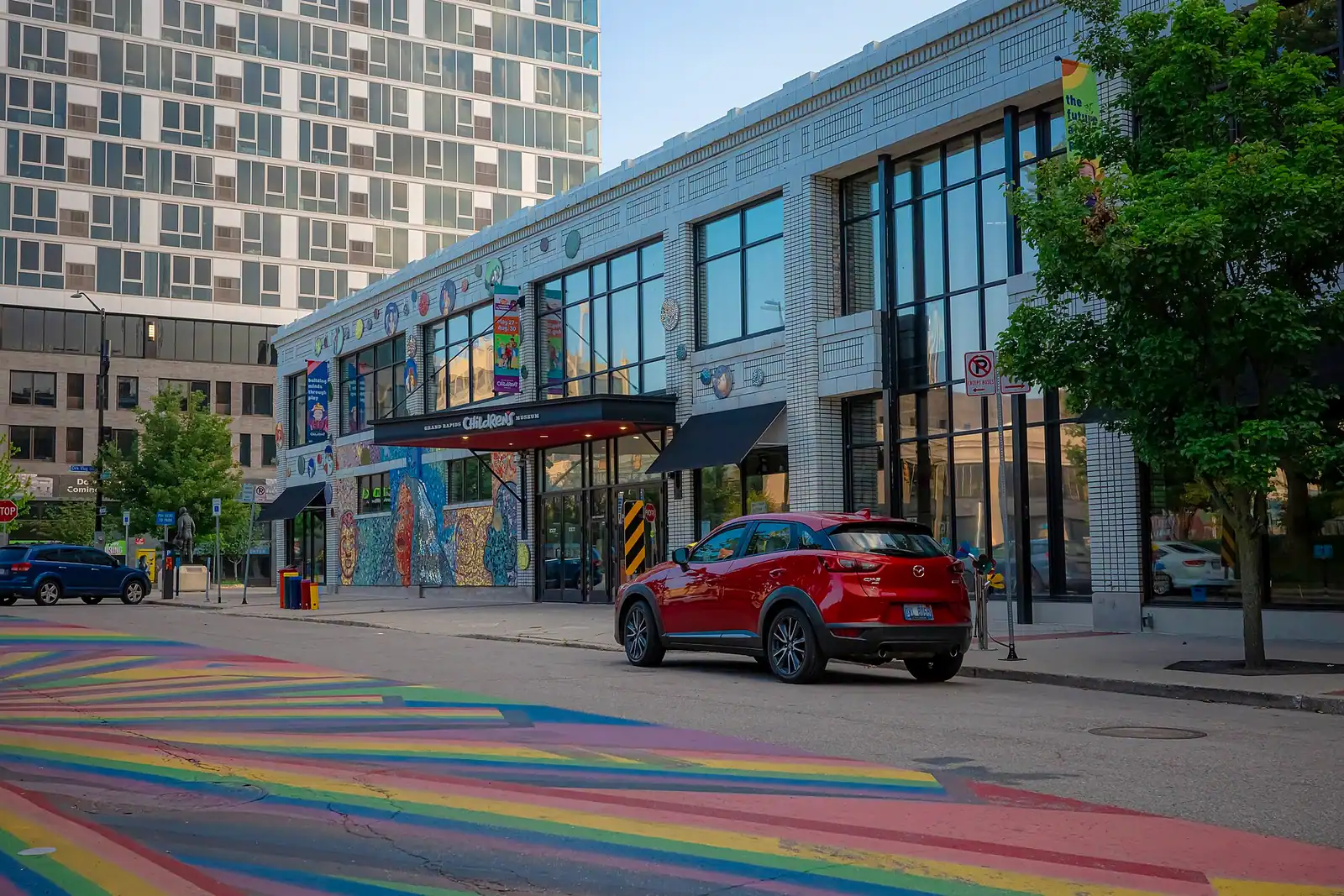
A 76-foot whale hangs over the Galleria, an 1890s street runs through the basement, and the 1928 carousel turns beside the river.
2–3.5 hoursAround $12–16 per adult; carousel rides and planetarium shows cost extra0.4 mi away
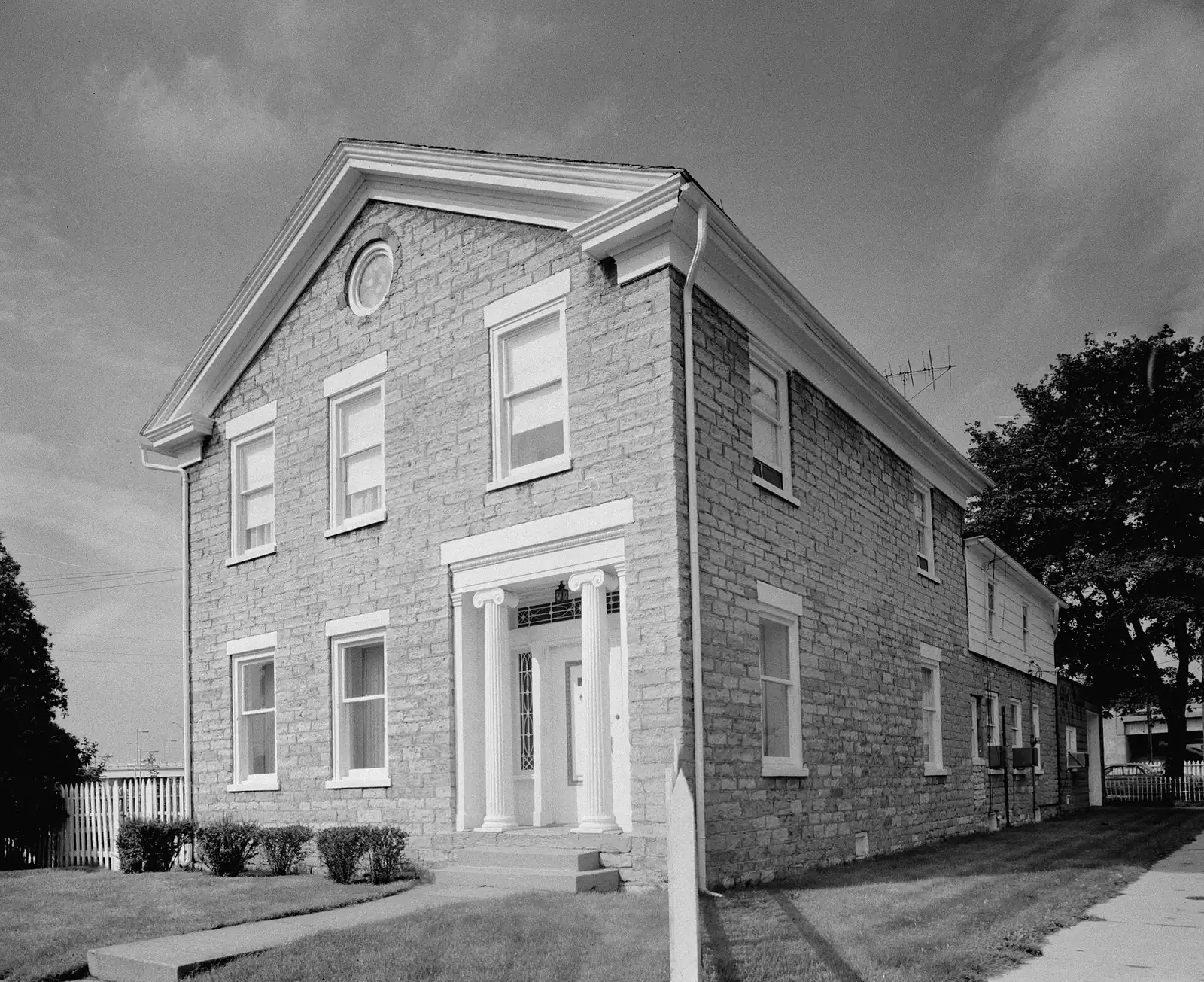
Dining district
The furniture district that built the city, now lofts, offices and the brewery that moved back in a decade after Founders moved out.
1–3 hoursFree to walk. You pay for what you drink and eat.0.5 mi away
Where this place fits into a day, and the pages that plan one.
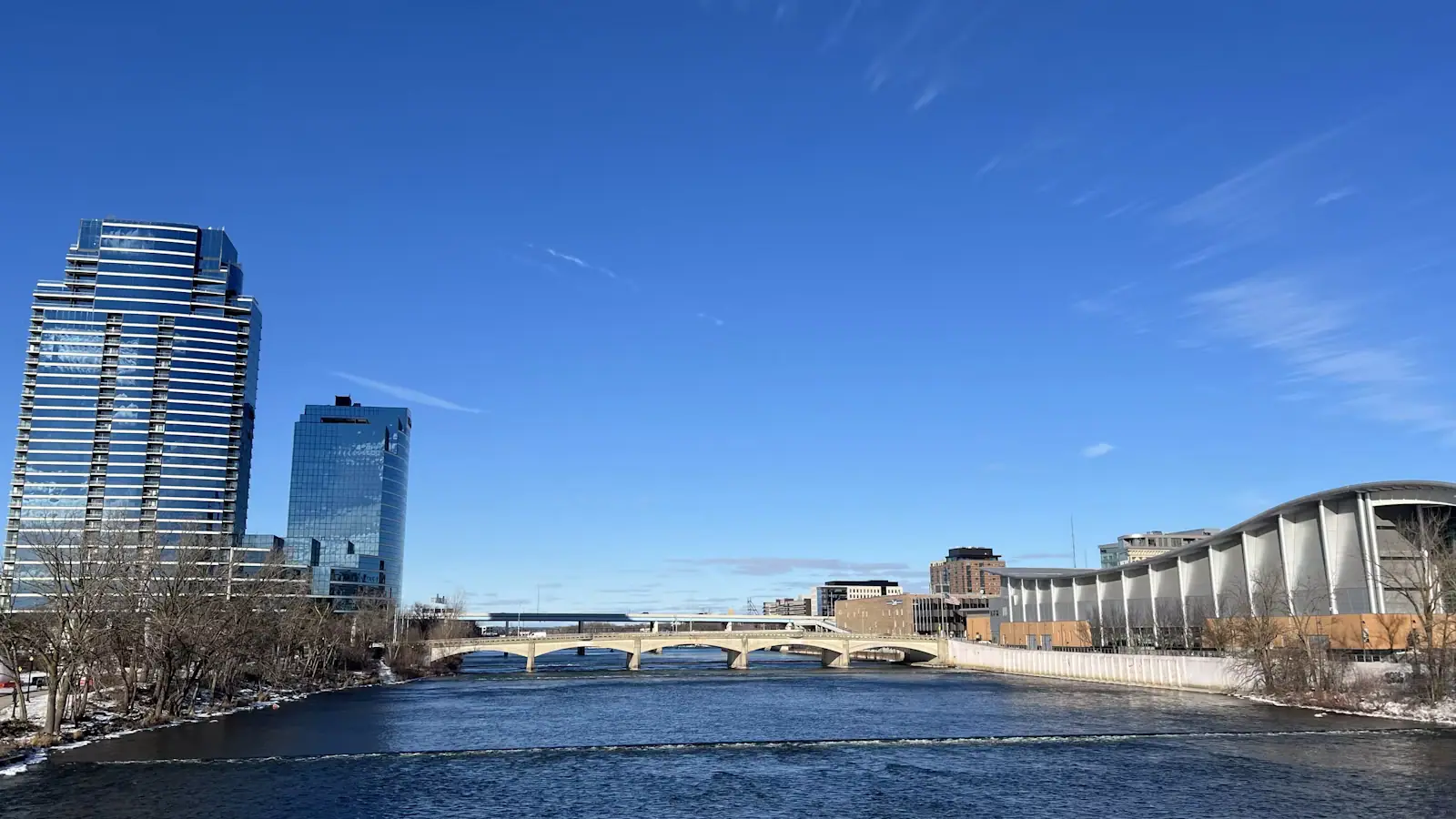
Guide hub
Furniture paid for this city, and then it paid for everything worth coming to see in it. That is the single idea a visitor needs. Grand Rapids made…
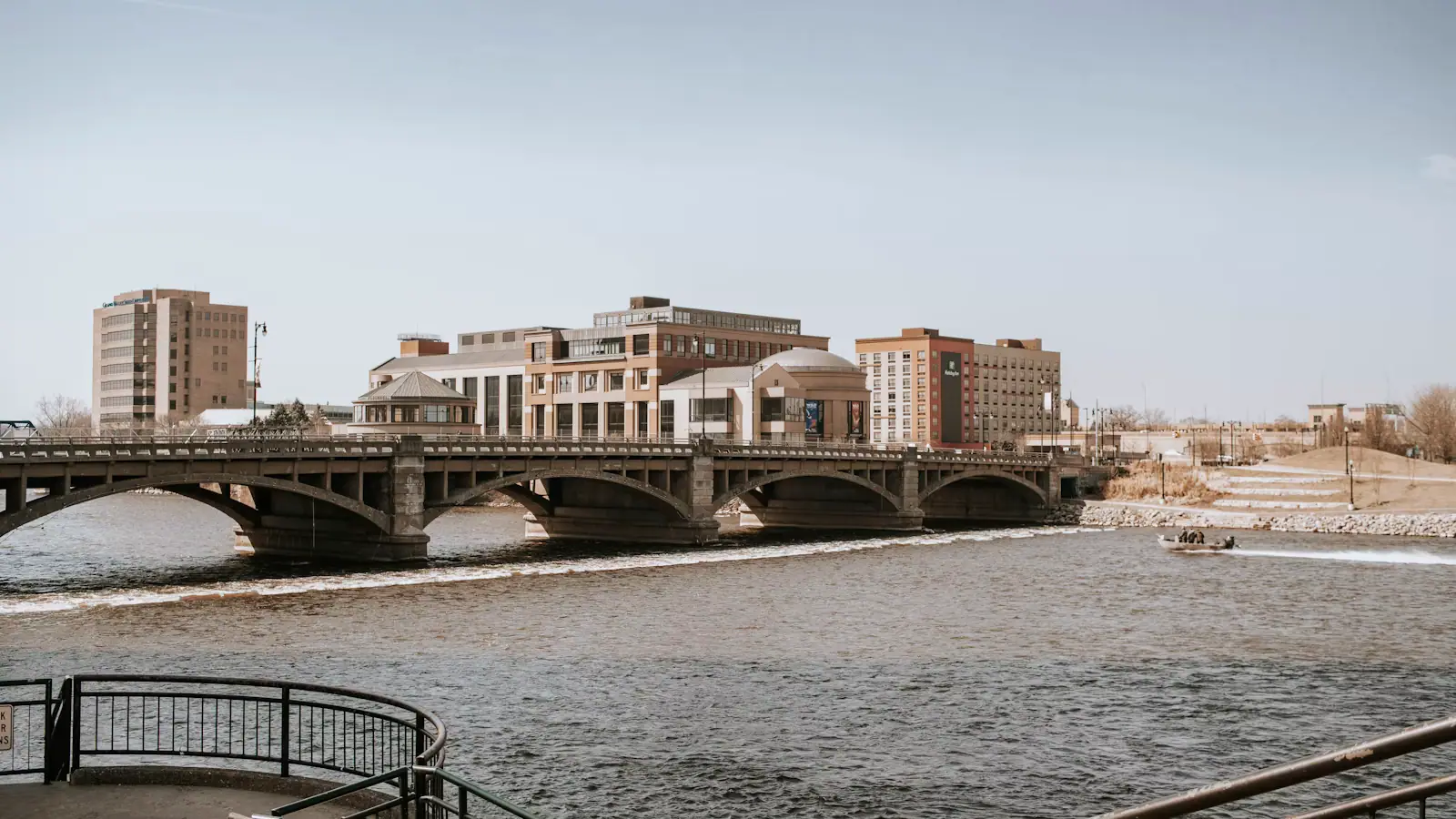
Guide hub
A city of two hundred thousand people should not have this list. Grand Rapids does, and the reason is a hundred and fifty years of manufacturing…
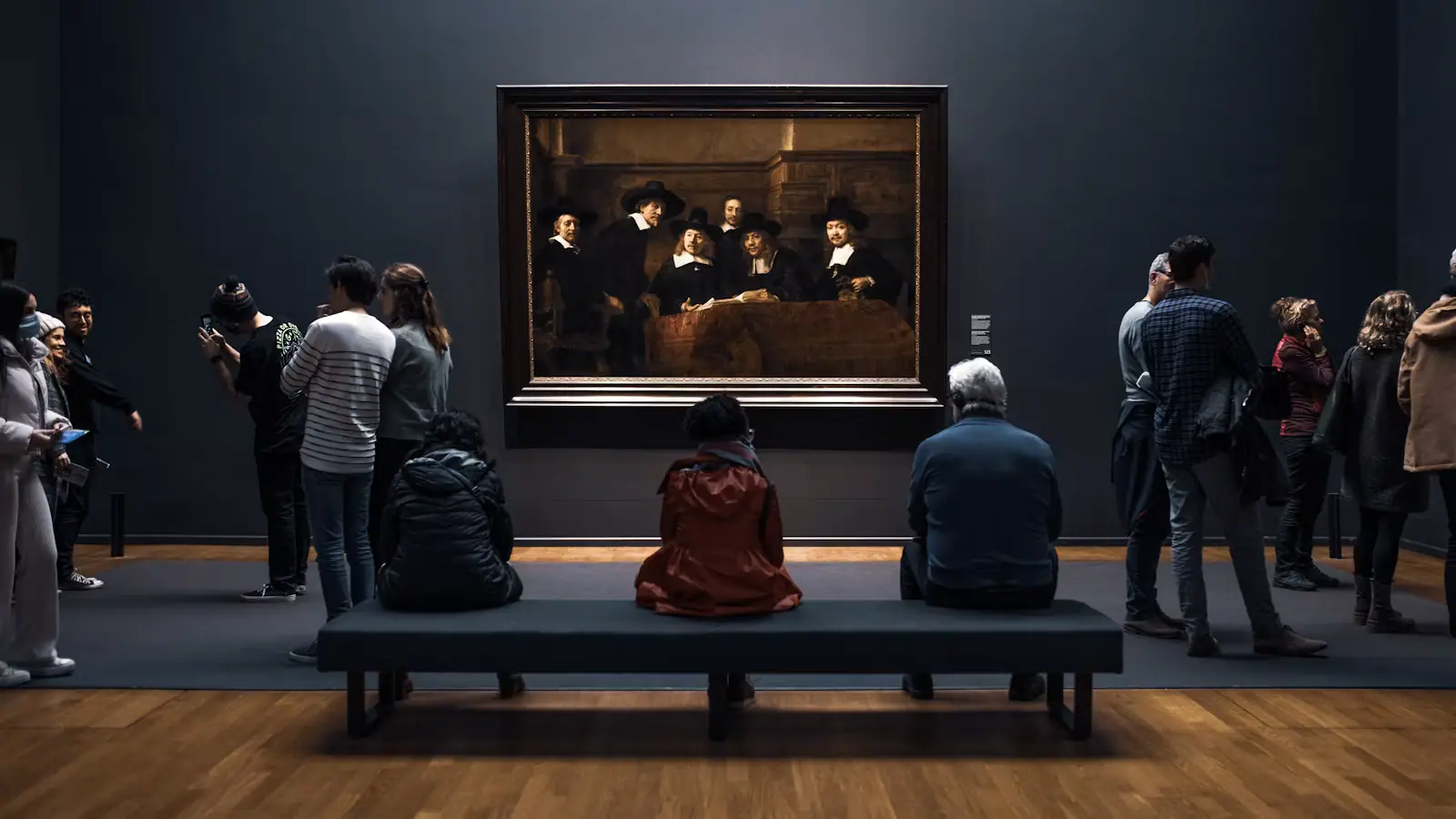
By season
For a little over two weeks each autumn, roughly a thousand works of art appear across downtown Grand Rapids and the city stops behaving normally…
Things to do
Most cities put art in their museums and then decide whether anyone cares. Grand Rapids did it the other way round. In 1969 a committee of local…
Things to do
Every good thing in this city was paid for by chairs. That is barely an exaggeration. William Haldane opened a cabinet shop on the Grand River in…
Budget
The free list in Grand Rapids is not the list you fall back on when the museum tickets are too expensive. In this particular city it contains three…
Guide
An open competition with no entry jury, hundreds of venues that are mostly not galleries, and a public vote worth a hundred thousand dollars. Here is how to see it without wasting a day.
5 min readIlse Hoekstra
Guide
A restored Frank Lloyd Wright house, an art museum one day a week, the first artwork the NEA ever helped pay for, and a Maya Lin park you can skate on. None of it costs anything.
5 min readIlse Hoekstra
Guide
Michigan's second city is a furniture town that spent its furniture money on art. Here is how the address grid works, what is walkable, and what needs a car.
6 min readMarguerite Vanderhoff
It is La Grande Vitesse by Alexander Calder, installed in 1969 and standing about 43 feet tall in painted steel. The title is French for the great swiftness, which translates the city's own name. It was the first public artwork funded by the National Endowment for the Arts through its Art in Public Places programme, and the city liked it enough to put the silhouette on its letterhead and municipal vehicles.
Yes. It is an open civic plaza between City Hall and the Kent County Administration Building, with no gate, no ticket and no closing time. You can walk up to the sculpture and underneath it at any hour. The only cost is parking: the Government Center ramp adjoins the plaza and on-street meters operate on the surrounding blocks during business hours.
Yes. In 1974 Calder painted a large red, black and white abstract directly onto the roof of the Kent County Administration Building on the north side of the plaza, as a gift to the city. It was made to be seen from the air and from upper floors nearby, so you cannot see any of it from the plaza itself. A high hotel or office window, or the right approach into the airport, is the only way to catch it.
Fifteen to twenty minutes on an ordinary day. Walk a full circle around the sculpture rather than photographing it from one side; the plates reorganise completely as you move. Plan longer during Festival of the Arts on the first weekend of June, when the plaza fills with stages and food stalls, or during ArtPrize in late September when large outdoor entries are installed here.