Museum
Grand Rapids Art Museum
The first LEED Gold certified art museum anywhere, built by a city whose fortune came from making furniture well.
1.5–2.5 hoursRoughly $10–15 per adult; general admission free on Thursday evenings140 ft away
Landmark
Last updated
A Maya Lin artwork you are allowed to walk on, and from December a public ice rink with the night sky under the ice.
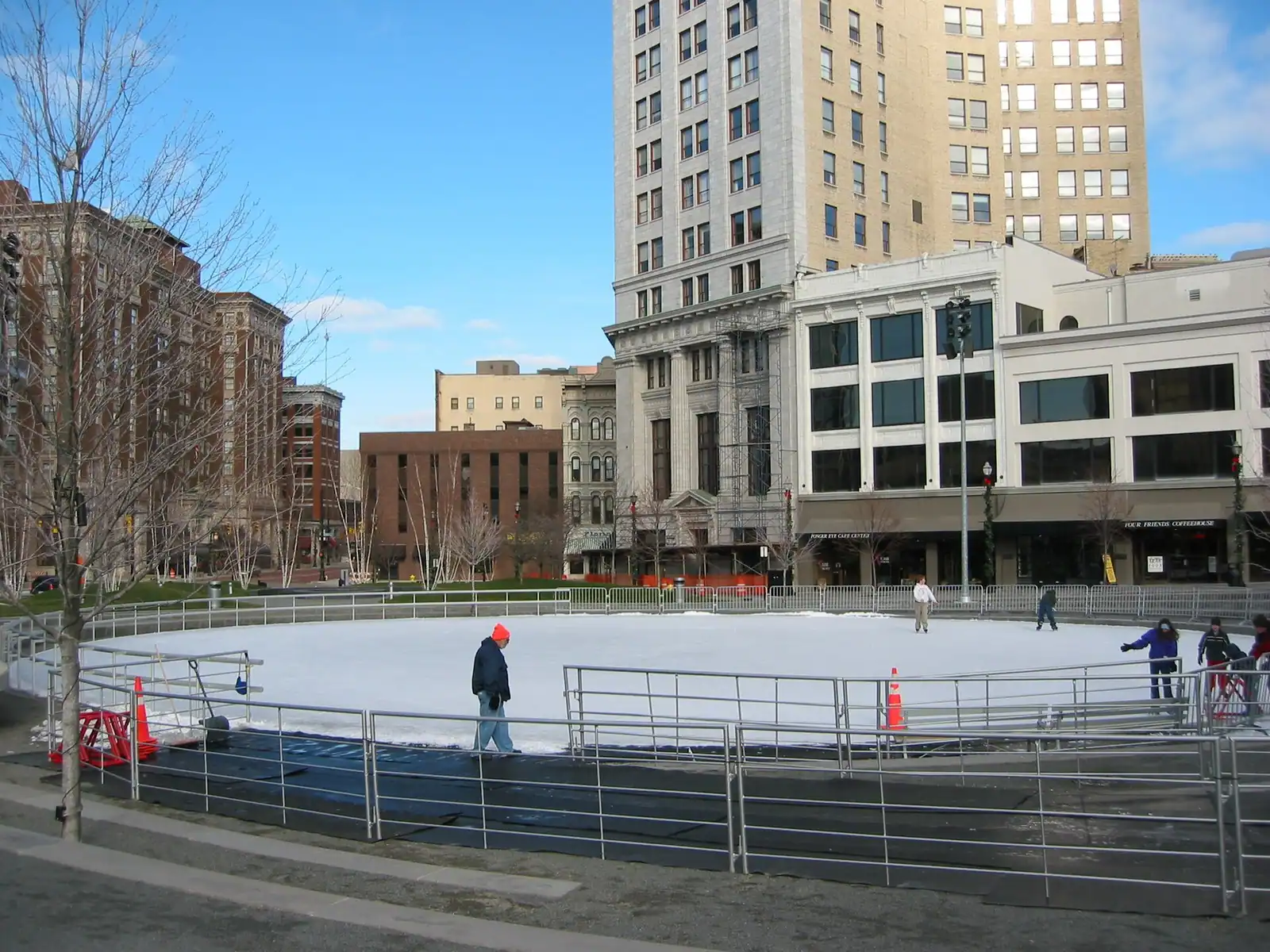
Most cities keep their signature public artwork behind a rope. Grand Rapids put its in the ground and lets four hundred people a night skate on it. Rosa Parks Circle is a shallow bowl of concentric steps dropped into the block where Monroe Center meets Monroe Avenue, designed by Maya Lin, who won the Vietnam Veterans Memorial competition as an undergraduate. Her Grand Rapids piece is called Ecliptic. It opened in 2001 on the site of an unloved 1970s amphitheatre and it is now the closest thing downtown has to a living room.
The design is about water changing state. There is a mist fountain, a shallow pool, and in winter a frozen surface. Set into the floor are 166 fibre-optic points arranged as the Michigan sky looked at midnight on 1 January 2000, so on a dark December evening you are skating over a fixed moment of the state's sky. Almost nobody arriving for a public session knows this. It is worth looking down for a second before you push off.
The bowl works because it is small. Stone steps ring it on three sides and function as seating for a few hundred people without anyone having to install seating, which is why the Circle absorbs a free concert, a protest, a lunch hour and a film screening equally well. The Grand Rapids Art Museum stands directly across the plaza, its glass frontage facing in, and during ArtPrize each autumn the Circle is one of the busiest venues in the competition footprint.
Set expectations properly. This is a plaza, not an afternoon. In summer you will spend ten minutes here, most of them in the shade of the surrounding buildings, and the fountain is more of a mist than a spectacle. In winter, with rental skates on, it becomes a two-hour stop and one of the few outdoor things in Grand Rapids that improves when the temperature drops. Go in the dark. The lights under the ice are the entire point and they do nothing at two in the afternoon.
The Circle sits at the junction of Monroe Center and Monroe Avenue NW, directly across the plaza from the Grand Rapids Art Museum. Coming in on US-131 use the Pearl Street exit and head east; from I-196 take the Ottawa Avenue or College Avenue exits and work south-west through the grid.
There is no parking at the plaza itself. City ramps on Ottawa, Ionia and around the Government Center are all within a two to three block walk, and on-street spaces are metered during business hours and pay-by-app. On event nights — arena shows, ArtPrize weekends, the December rink rush — assume the closest ramps fill and park one ring further out.
The free DASH shuttle loops the downtown core and stops within a block. Its route was redrawn under a City pilot and now runs roughly every eight minutes, so use the current map rather than a printed one. On foot, the Circle is about five minutes from the Grand River, six from Van Andel Arena and four from Calder Plaza.
Lin was commissioned in the late 1990s to replace a sunken concrete amphitheatre that downtown had stopped using. What she produced is one of very few Maya Lin works the public physically stands inside.
The organising idea is water in three states. Mist rises from jets at the edge in warm weather. A thin sheet of water sits in the bowl through the shoulder seasons. From December the same surface is frozen and skated on. The concentric stone rings that step down into the bowl double as amphitheatre seating and as a drainage and freezing system, which is the sort of thing you only notice when someone points it out.
The 166 fibre-optic lights are the part people remember. They are set below the skating surface and mapped to the Michigan sky at midnight on 1 January 2000 — not a generic star field, a specific night. Seen from the top step after dark with skaters crossing them, they read as a slow-moving constellation.
The Rosa Parks statue sits on the Monroe Center edge of the plaza rather than in the bowl. The Circle was renamed for Parks, who lived in Michigan for the second half of her life, and the naming is not decorative: this is the place downtown where marches and vigils assemble.
The City freezes the bowl for a published winter season that has recently run from early December to the back end of February. The most recent posted season ran 5 December to 22 February. Dates move with the weather and the City's budget, so check the current posting rather than assuming a date.
Admission has lately sat around $6 for adults and $3 for under-18s, and the price includes skate rental, which is unusual — most rinks charge the rental separately. Sessions are walk-up, with reservations offered at busier times. Expect queues on the two weeks around Christmas and on any Friday evening when the temperature is above 20°F.
Practical notes from anyone who has done it. The ice is outdoor ice, so a thaw week in January can shut it down at no notice. There is no substantial warming house, so dress as though you are standing outside for an hour, because you are. Gloves are not optional; the stone steps are cold to sit on and the rink edge is rougher than an indoor sheet. Skating standards are forgiving. This is a rink where half the crowd is holding the rail.
Rates and hours are reviewed every season. Confirm both before you build an evening around them.
From spring the ice comes out and the Circle turns into downtown's default venue for anything that needs a bowl and no ticketing.
The programme is a mix of free outdoor films, lunchtime and evening concerts, dance nights and civic gatherings. The most Grand Rapids thing that has happened here is a Guinness World Record: on 7 August 2012 the Grand Rapids Original Swing Society put 756 people swing dancing on the plaza simultaneously.
During ArtPrize, which in 2026 runs 18 September to 3 October, the Circle sits at the centre of the downtown venue cluster and usually carries at least one large-scale entry. The plaza is also where the crowd walking between the Art Museum, Monroe Center and the river ends up, so it is the easiest place downtown to read how busy the city is on a given evening.
Summer daytime is the weakest time to come. The surrounding buildings shade the bowl for much of the afternoon, the mist fountain is modest, and there is nothing to buy on the plaza itself. Treat it as a two-minute stop on the way to the Art Museum unless something is programmed.
The Circle is the pivot point of walkable downtown Grand Rapids, which is genuinely compact — the entire core is about fifteen minutes end to end on foot.
Parking is the usual downtown arithmetic. City ramps sit within two or three blocks in every direction and on-street metering applies during the day. The free DASH shuttle loops the core roughly every eight minutes, though the City re-drew the route in a recent pilot, so pull up the current map rather than an old one.
Straight-line distances, so allow more on the road — the island is long and has one main parkway.
Museum
The first LEED Gold certified art museum anywhere, built by a city whose fortune came from making furniture well.
1.5–2.5 hoursRoughly $10–15 per adult; general admission free on Thursday evenings140 ft away
Landmark
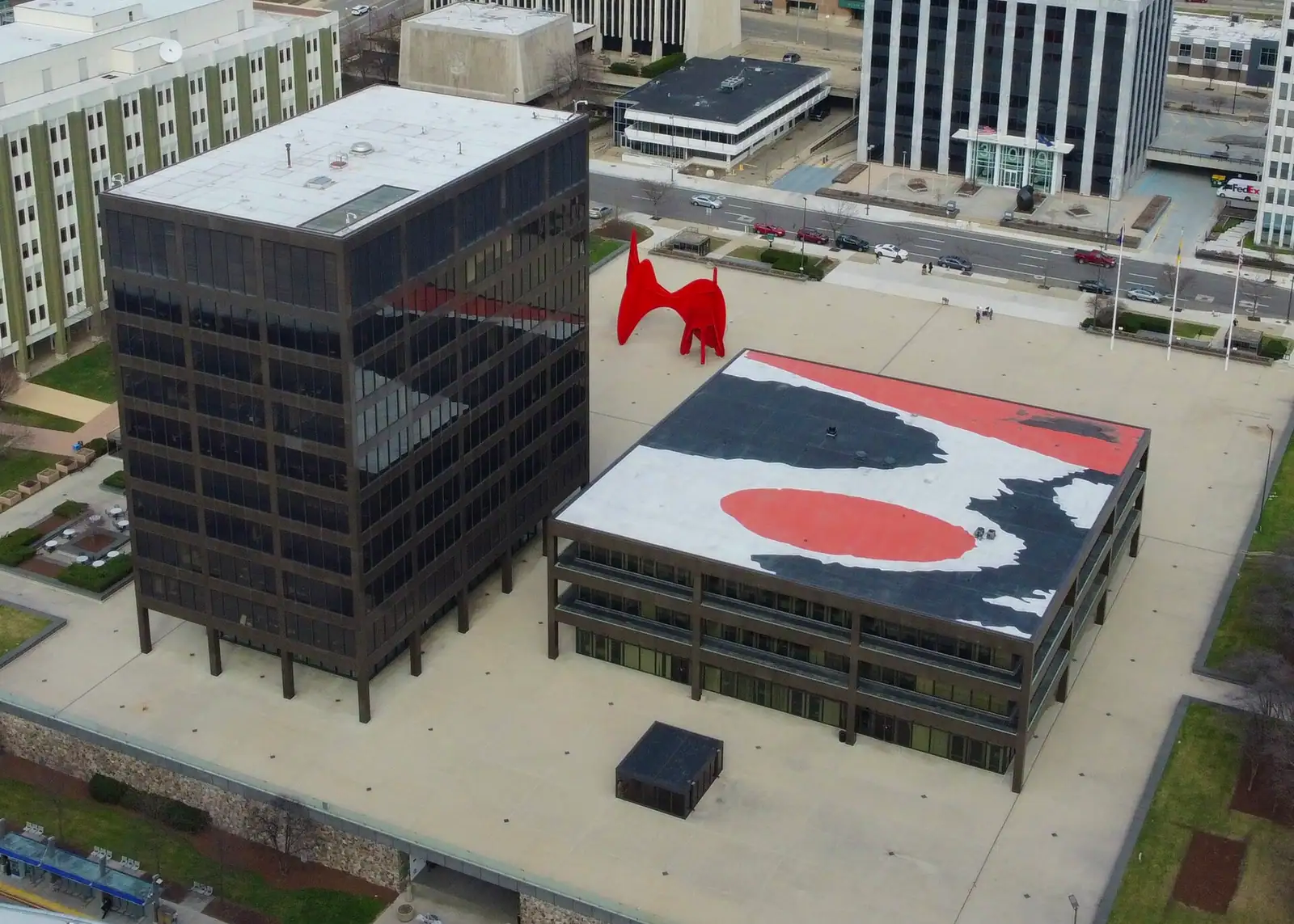
Forty-two tons of vermilion steel that changed how a furniture town saw itself, and the Calder painting on the roof behind it.
15–45 minutesFree. An open civic plaza with no ticketing at any time of year.0.3 mi away
Museum
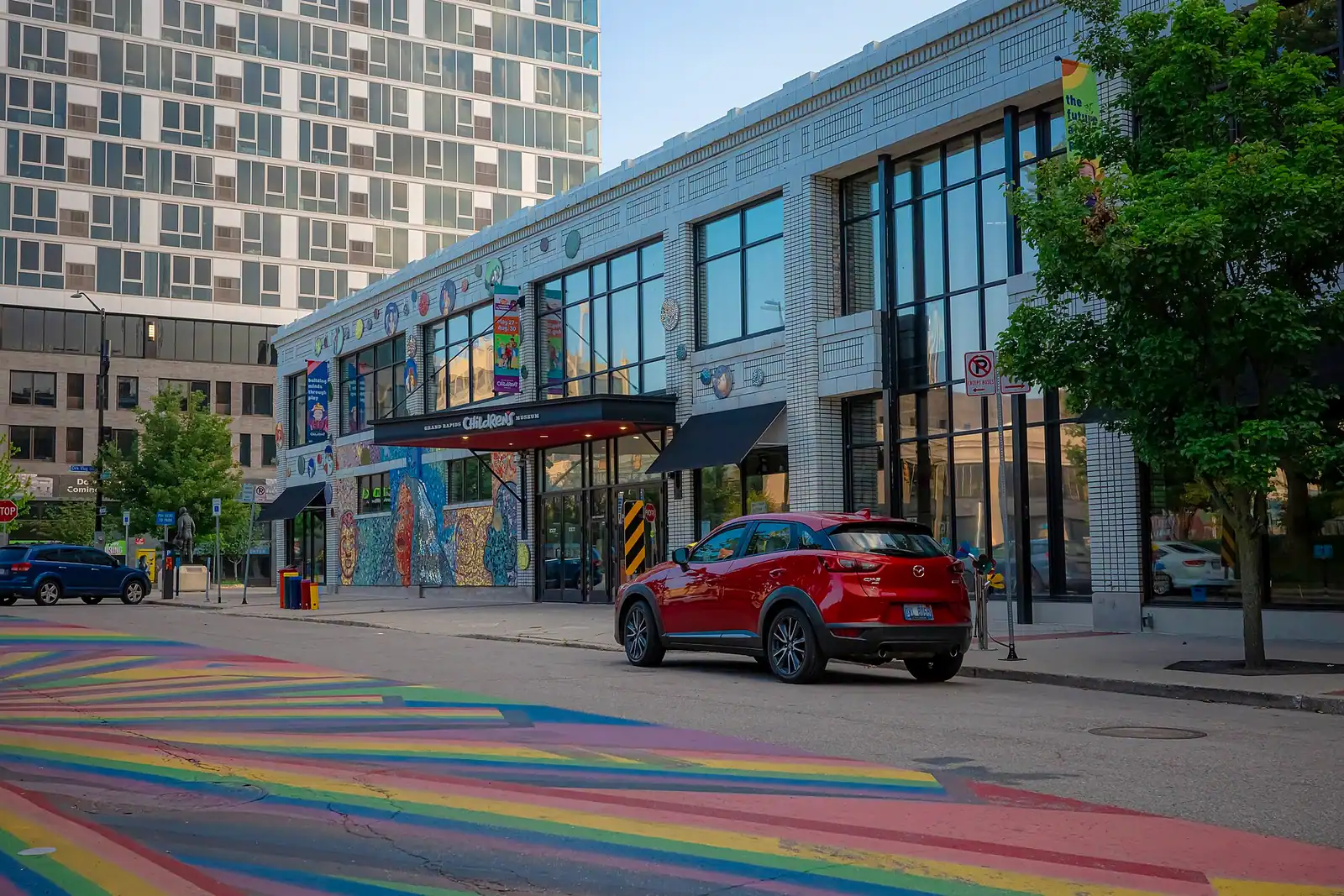
A 76-foot whale hangs over the Galleria, an 1890s street runs through the basement, and the 1928 carousel turns beside the river.
2–3.5 hoursAround $12–16 per adult; carousel rides and planetarium shows cost extra0.3 mi away
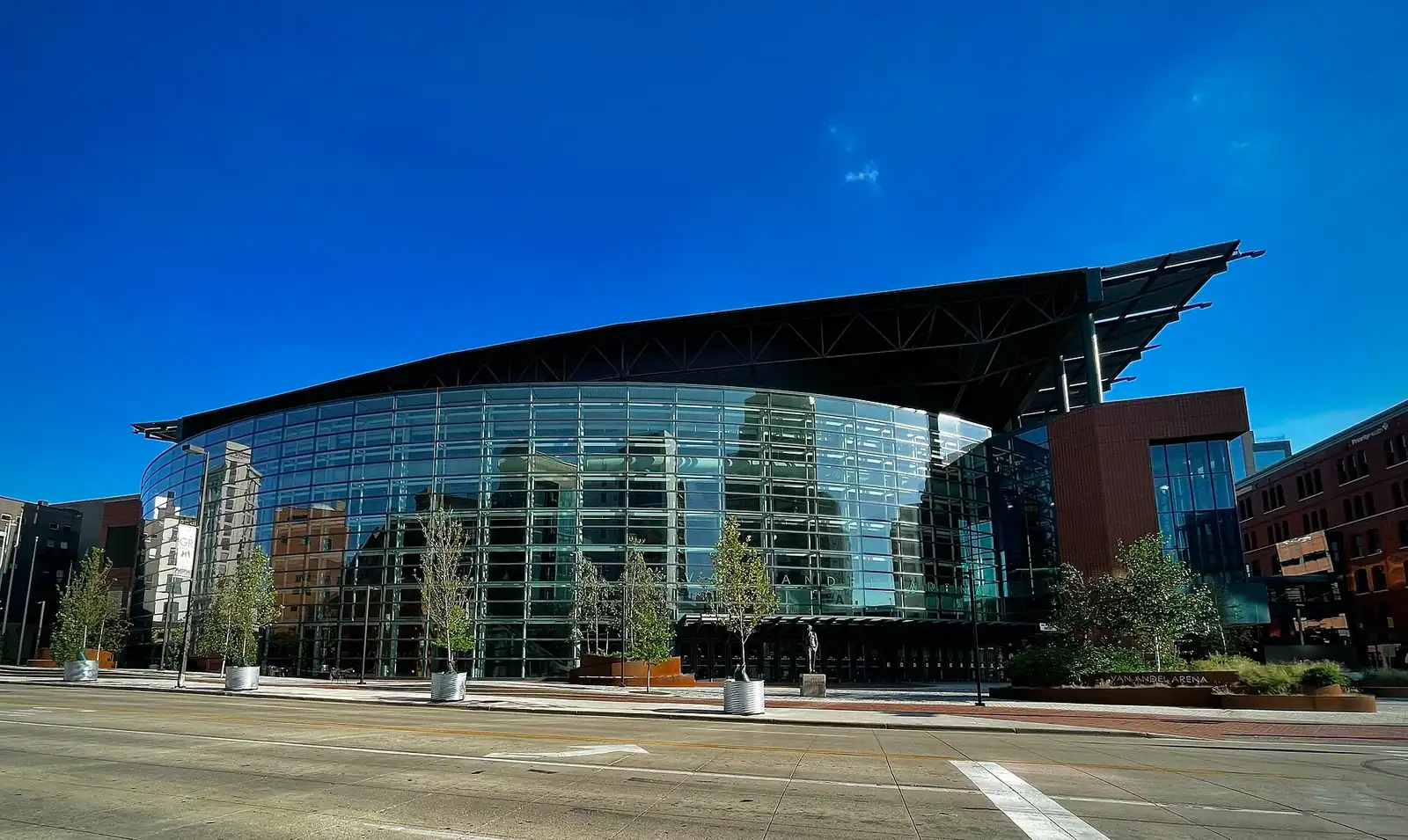
Entertainment
The 1996 arena that pulled downtown Grand Rapids back to life, and still empties four thousand people onto Fulton Street at once.
2.5–4 hoursTicketed by event; Griffins hockey is the cheapest way in0.2 mi away
Where this place fits into a day, and the pages that plan one.
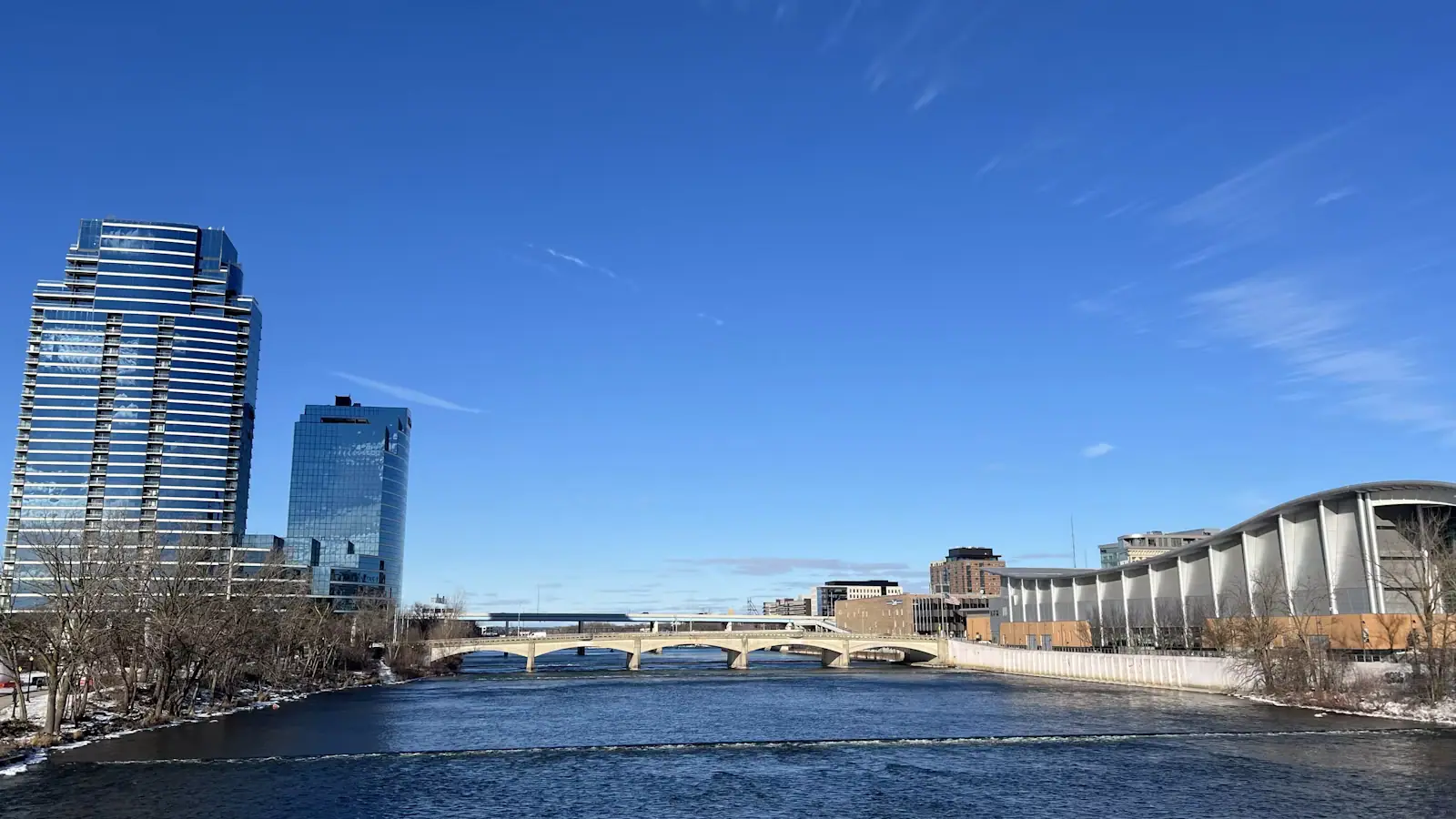
Guide hub
Furniture paid for this city, and then it paid for everything worth coming to see in it. That is the single idea a visitor needs. Grand Rapids made…
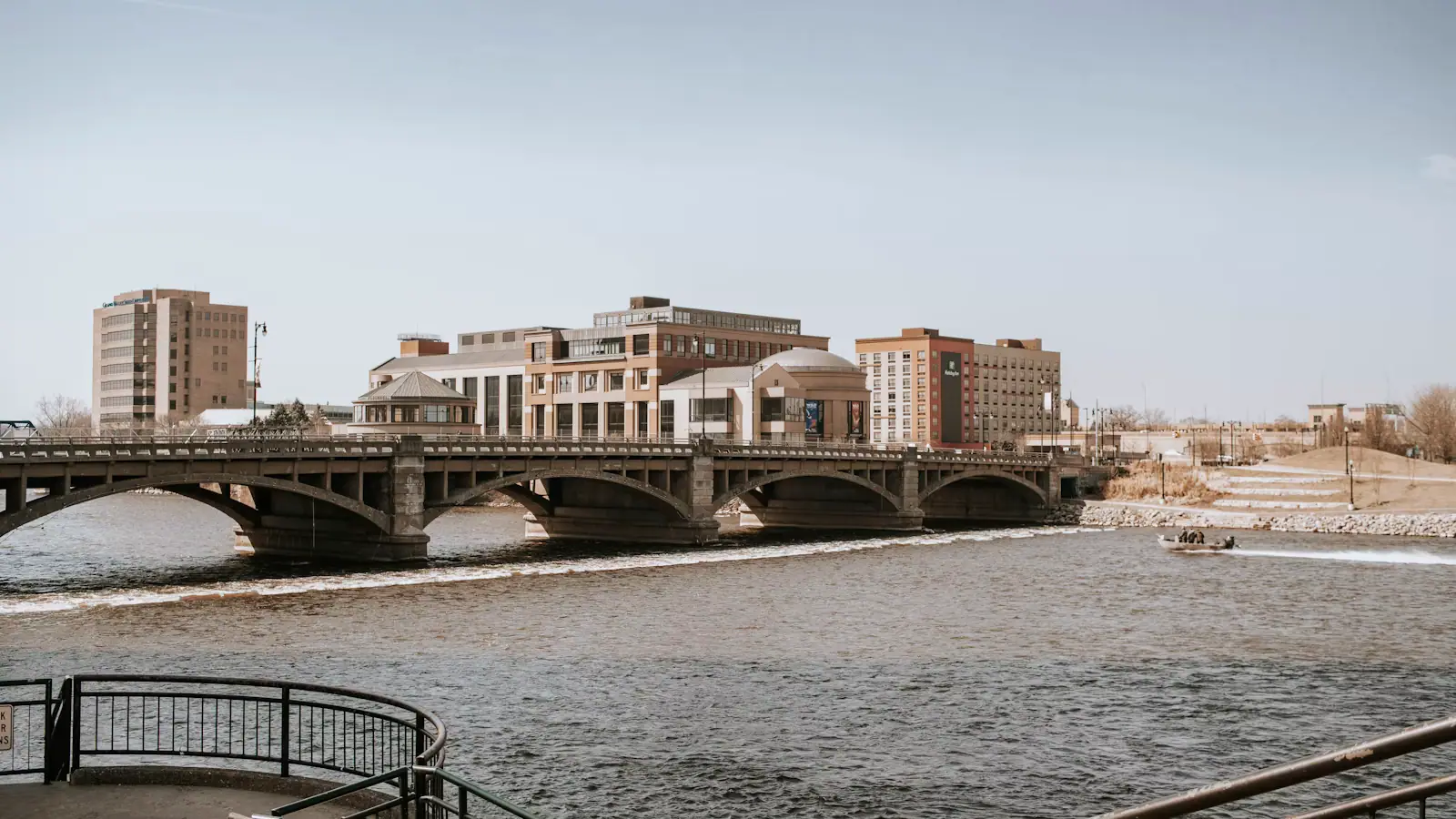
Guide hub
A city of two hundred thousand people should not have this list. Grand Rapids does, and the reason is a hundred and fifty years of manufacturing…
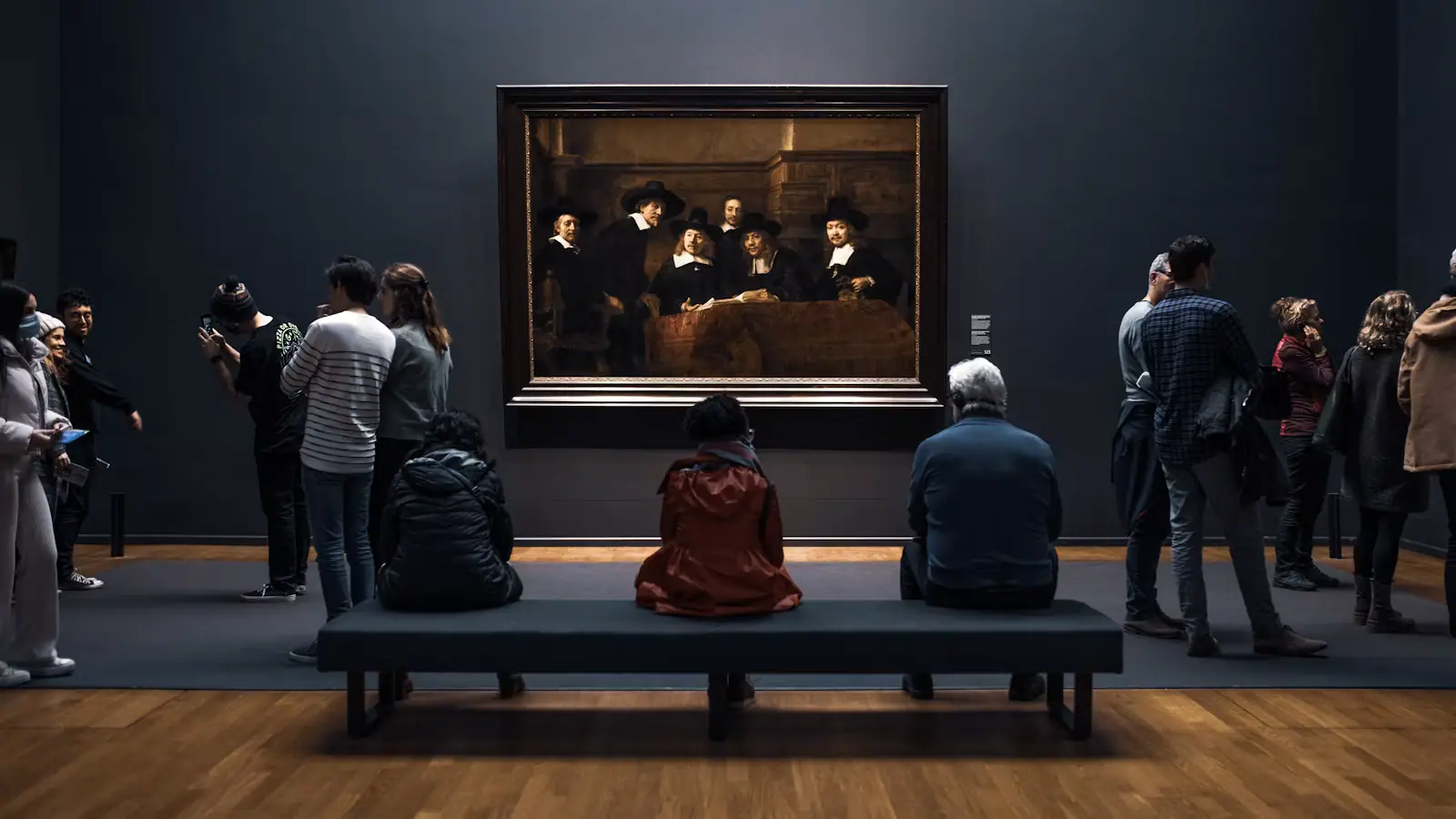
By season
For a little over two weeks each autumn, roughly a thousand works of art appear across downtown Grand Rapids and the city stops behaving normally…
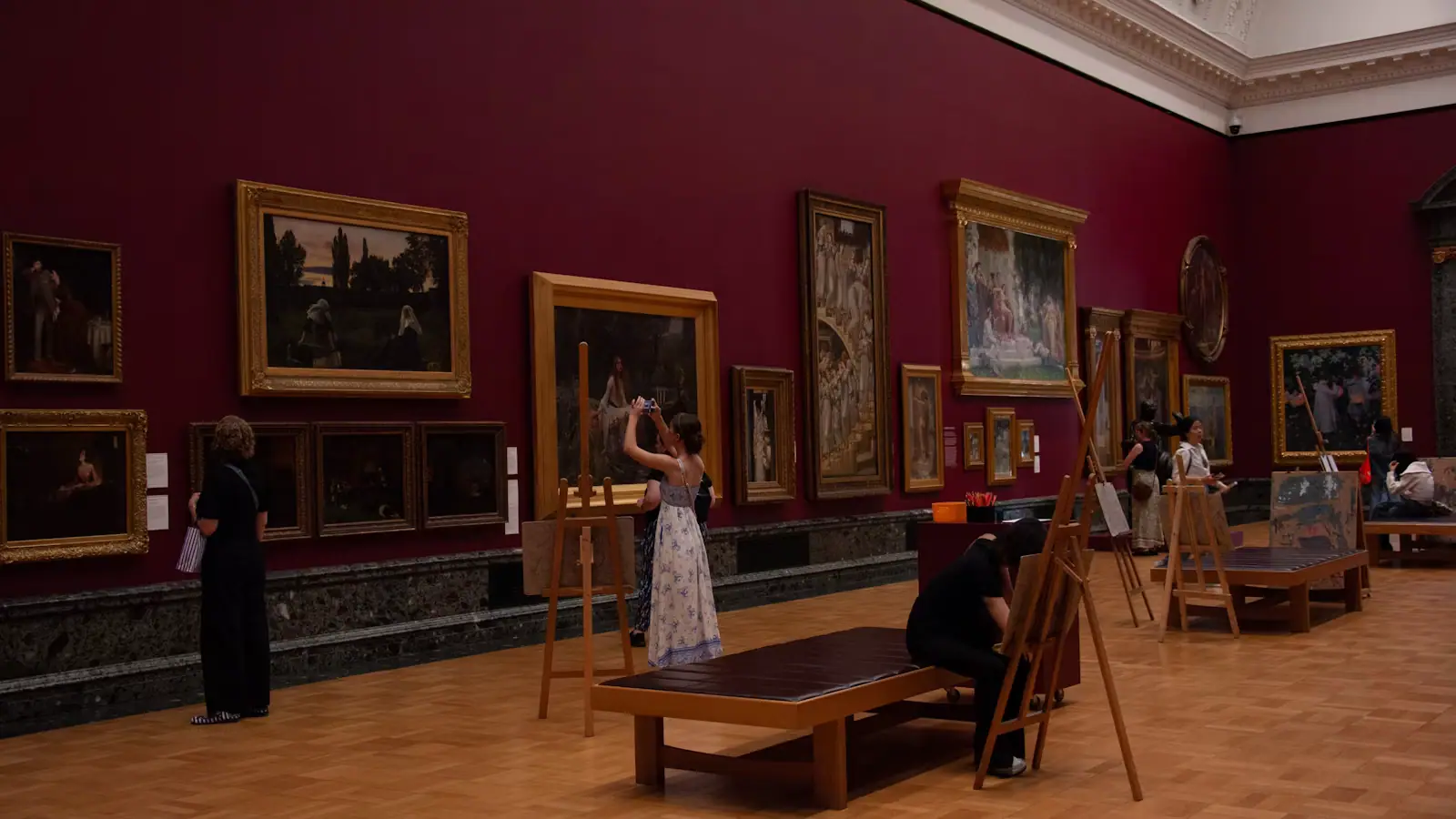
Things to do
Most cities put art in their museums and then decide whether anyone cares. Grand Rapids did it the other way round. In 1969 a committee of local…
Budget
The free list in Grand Rapids is not the list you fall back on when the museum tickets are too expensive. In this particular city it contains three…
By season
Start with the numbers, because everything else on this page depends on them. Grand Rapids collects somewhere around seventy to seventy-eight inches…
Guide
An open competition with no entry jury, hundreds of venues that are mostly not galleries, and a public vote worth a hundred thousand dollars. Here is how to see it without wasting a day.
5 min readIlse Hoekstra
Guide
A restored Frank Lloyd Wright house, an art museum one day a week, the first artwork the NEA ever helped pay for, and a Maya Lin park you can skate on. None of it costs anything.
5 min readIlse Hoekstra

Guide
The zoo shuts for the winter, the carousel does not, and the best hour of a family day here costs three dollars and runs on a platform out over the river.
5 min readMarguerite Vanderhoff
Maya Lin, the architect and artist behind the Vietnam Veterans Memorial in Washington. Her Grand Rapids commission is a named artwork called Ecliptic, opened in 2001 on the site of a disused 1970s amphitheatre. It is one of the few Lin works the public physically walks and skates on rather than views from a distance, and the design is built around water in three states: mist, standing water and ice.
Recent winters have charged around $6 for adults and $3 for under-18s, with skate rental included in that price rather than billed separately. Sessions are mostly walk-up, with reservations offered at peak times. The City sets rates and session hours fresh each season and the rink can close during a thaw, so check the current posting before you drive in.
Usually in early December, running to the second half of February. The most recently published season ran from 5 December to 22 February. Because this is outdoor ice in a city that swings between hard freezes and January thaws, the opening date shifts year to year and mid-season closures happen. Evenings are the best time to skate: the fibre-optic lights set below the surface only read after dark.
Briefly. Without the ice it is a small stone bowl that the surrounding buildings shade for much of the afternoon, and the mist fountain is modest. It earns its keep in warm weather as a venue: free films, concerts, dance nights and, during ArtPrize in late September, one of the busiest stops on the downtown route. Check what is programmed rather than turning up expecting a spectacle.
One hundred and sixty-six fibre-optic lights, arranged to match the Michigan night sky exactly as it appeared at midnight on 1 January 2000. They are part of Maya Lin's design rather than decoration added later, and they are the reason locals tell visitors to skate in the evening. From the top step after dark, with skaters crossing above them, they read as a slow constellation moving under the surface.