Historic site
Free
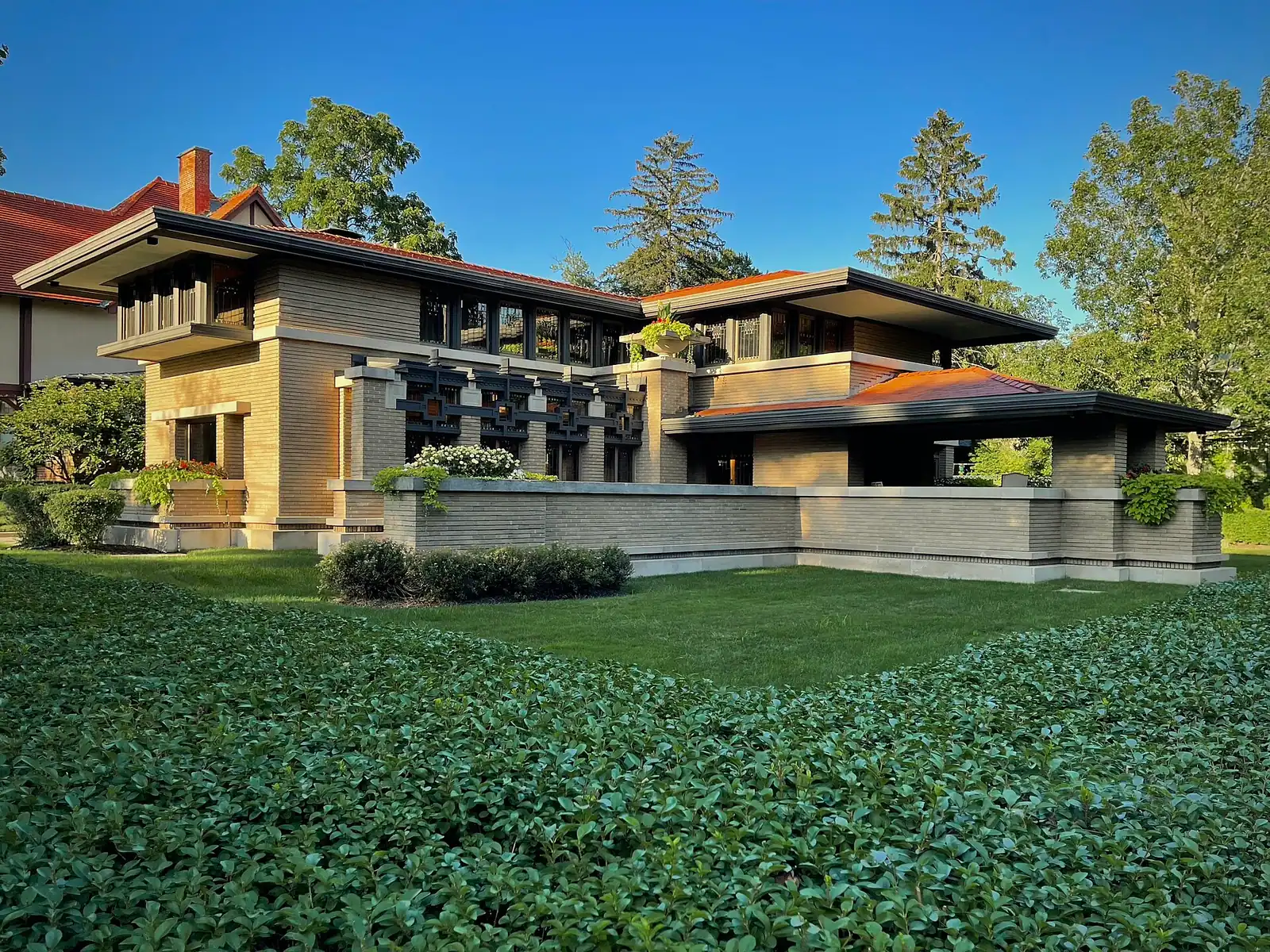
Meyer May House
A 1909 Frank Lloyd Wright Prairie house, restored to the last carpet thread, and free to tour if you book in time.
1.5 hoursFree, funded by Steelcase, but by appointment only in groups of about eight
Things to Do
Free things to do in Grand Rapids: the Calder on Calder Plaza, a free Frank Lloyd Wright house tour, Blandford's trails and every day of ArtPrize.
 Unsplash
The free list in Grand Rapids is not the list you fall back on when the museum tickets are too expensive. In this particular city it contains three of the best things available at any price, and the reason is historical: the civic art here was bought with public and philanthropic money and then put outdoors, where nobody can charge for it.
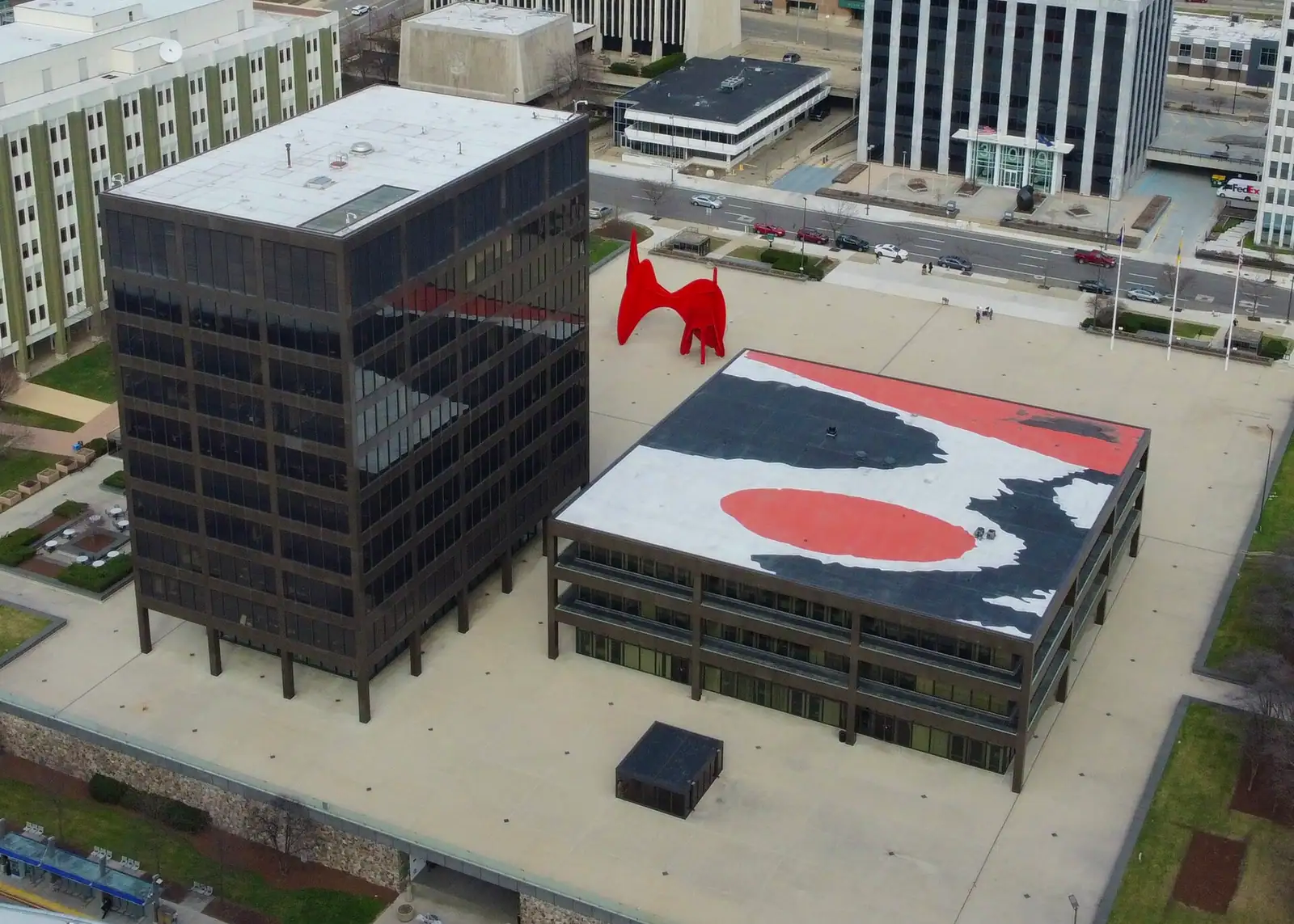
Exhibit one is the Calder. La Grande Vitesse has stood on the plaza since 1969 — forty-two tons of red steel in twenty-seven bolted sections, about fifty-four feet long and forty-three high, and it was the first work the National Endowment for the Arts ever funded under its public art programme. The city took to it so completely that an abstraction of its outline went into the municipal logo, where it still sits on bin lorries and letterheads. You can walk up and touch it at any hour.
Exhibit two is a house. The Meyer May House, a Frank Lloyd Wright Prairie design completed around 1909, stands on a corner in Heritage Hill eight blocks from the office towers. Steelcase, the office-furniture company founded here in 1912, bought it in the 1980s and restored it to the original drawings, reweaving carpets, remaking leaded glass and returning the furniture to where Wright had drawn it. It has been open to the public without charge ever since. Tour days are limited and reservations are encouraged, so book before you travel. It takes about ninety minutes and it is the best free hour in Michigan.
Exhibit three is seasonal. For a little over two weeks each autumn, ArtPrize turns roughly a hundred and sixty downtown venues into galleries and charges nobody anything. In 2026 it runs from 18 September to 3 October.
After those, the list gets deep rather than thin: a Maya Lin public square, thirteen hundred historic houses on a single hill, 264 acres of trails six miles from downtown, and a working market you can walk through for nothing. What follows is arranged by how far you have to go.
 Unsplash
Everything in this section sits within about fifteen minutes' walk of the main hotel cluster, and the whole sequence takes an unhurried two hours.
Calder Plaza. Start here. The plaza takes its name from the sculpture rather than the other way round, and the scale only registers when you are standing underneath it.
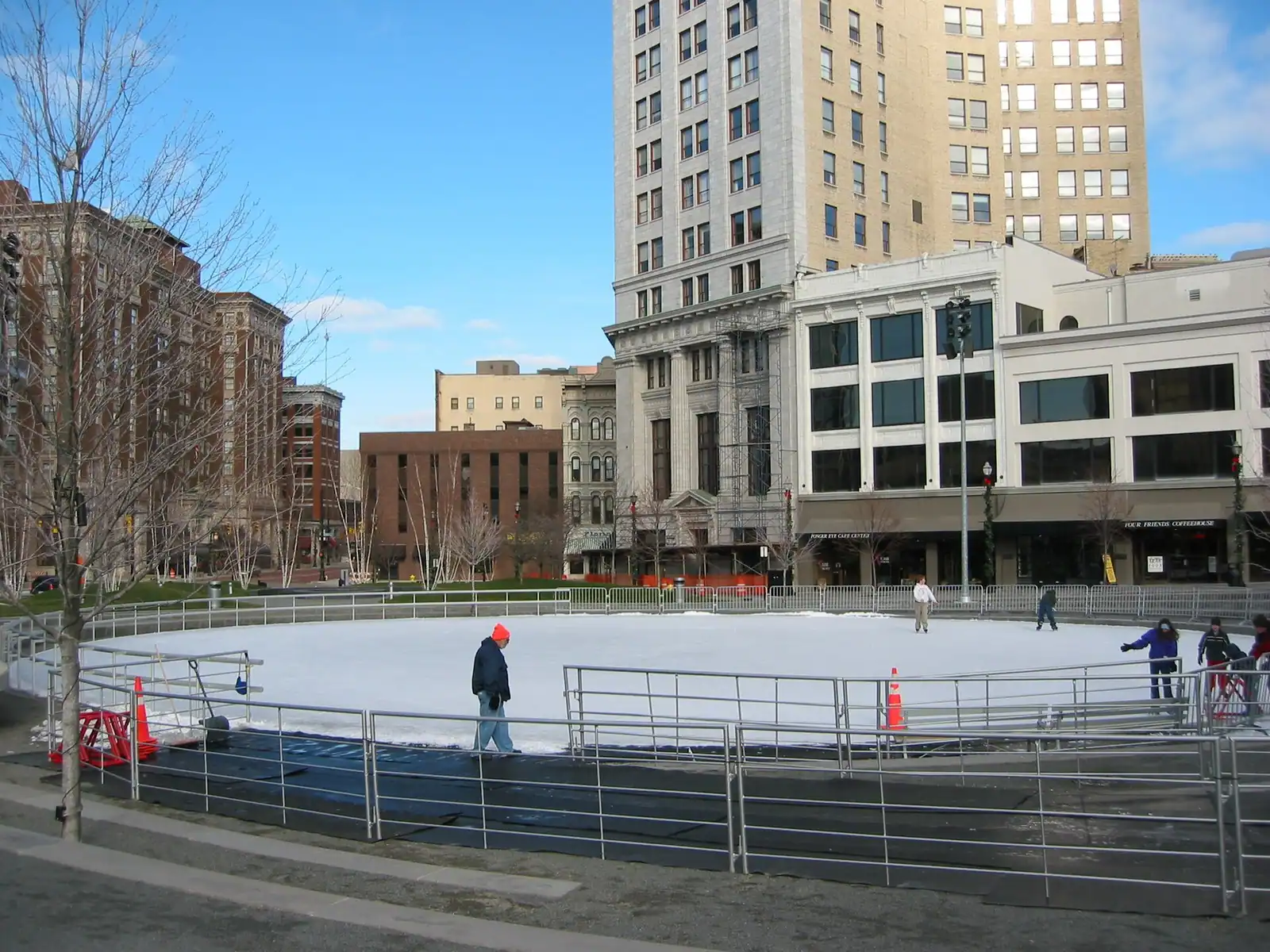
Rosa Parks Circle, a block away, is Maya Lin's Ecliptic: a sunken bowl that works as an amphitheatre in summer and a rink in winter, with fibre-optic lights set into the surface mapping the stars that stood over Grand Rapids at midnight on the first of January 2000. Walking in and looking costs nothing; skating is ticketed.
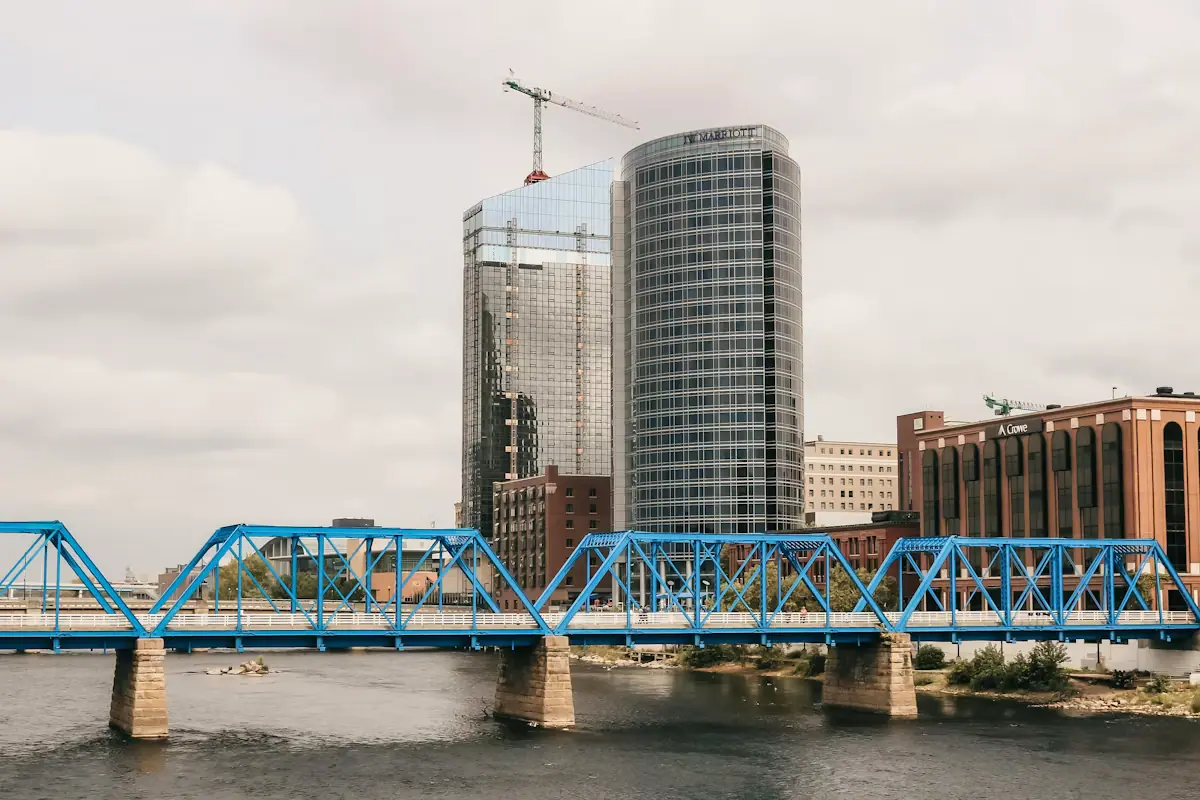
The pedestrian bridges over the Grand. Use them rather than the riverwalk, which has intermittent closures while the rapids restoration proceeds, and stop halfway to watch a downtown river being physically rebuilt.
Ah-Nab-Awen Park on the west bank, wrapping the grounds of the Ford Presidential Museum. The museum charges; the grounds, including the burial site of Gerald and Betty Ford, do not.
Downtown Market at the south end. Walking through a hall of twenty-odd food merchants costs nothing, though the odds of leaving empty-handed are poor.
Local tips
When to go
ArtPrize is the largest free thing that happens in Grand Rapids and it is not a small free thing. Founded in 2009 as an open competition — any artist may enter, any downtown venue may host, the public votes — it fills roughly a hundred and sixty venues across a walkable core with more than a thousand entries, and charges admission to none of them.
The venues are the trick. Bars, churches, hotel lobbies, bank atria, shop windows, bridges and the two big museums all take work, which means a day of ArtPrize gets you inside buildings you would otherwise never enter. Several institutions that normally charge admission have historically opened free or reduced during the run; check the current year's programme rather than assuming.
The 2026 dates are 18 September to 3 October, preceded by a preview period opening on the 12th. Nothing about that preview costs any more than the rest of it does, which is nothing, and fewer people are in the way.
Two pieces of advice. Take the venue map as a route rather than a checklist — nobody sees a thousand entries and the attempt ruins the day. And book accommodation early, because this is the one stretch of the year when downtown room rates in Grand Rapids behave like a big city's.
Confirm the dates for your own year. The event has changed hands and format more than once since it began.
 Unsplash
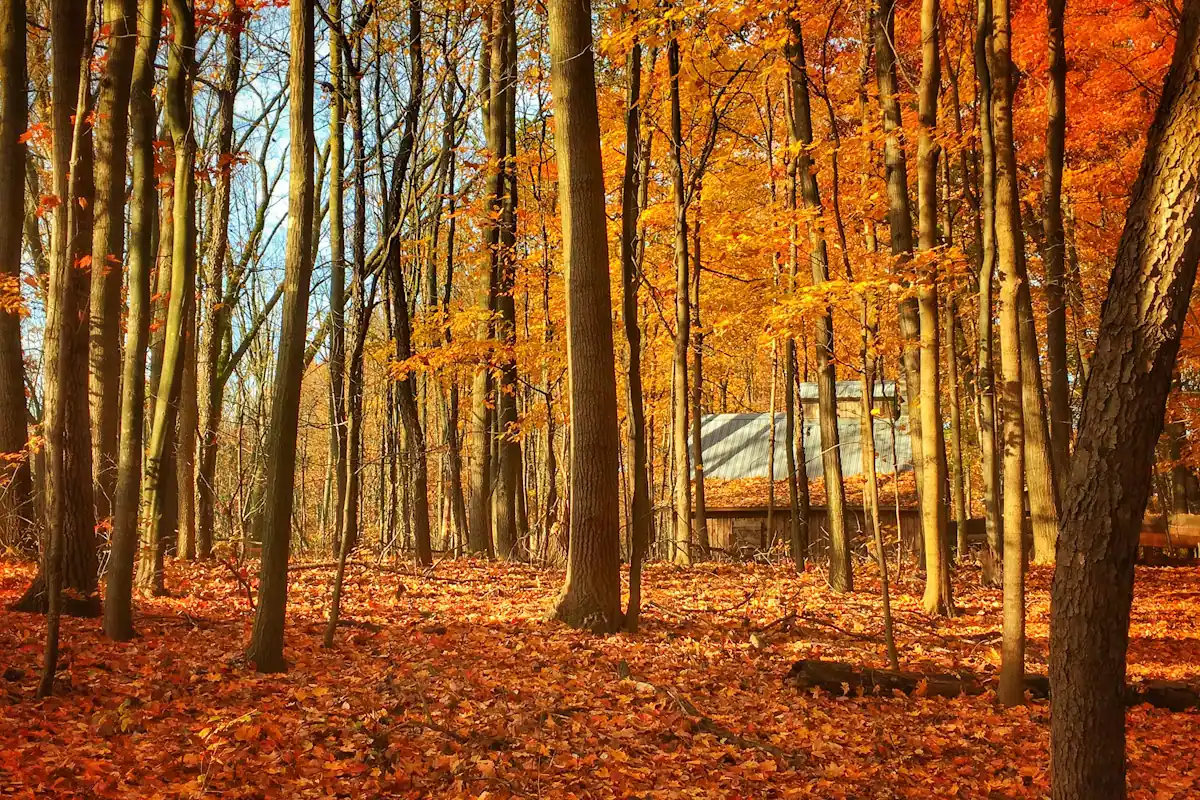
Blandford Nature Center, about six miles north-west, holds 264 acres of woodland, meadow and a working farm. The trails are free to walk and quiet on a weekday; the interpretive buildings and the farm programmes are ticketed. Autumn here is the best value in the region.
Millennium Park, south-west toward Grandville, is roughly fourteen hundred acres of reclaimed gravel workings and industrial ground with about six miles of Grand River frontage — lakes, a beach, trails, and almost no out-of-town visitors. A seasonal vehicle entry charge has applied at the main beach area in the past, so check before you count on a free day.
Provin Trails Park on the north side is a small pine-and-sand woodland with no facilities and no crowd: half an hour of walking, free, and almost nobody knows about it.
Riverside Park on the east bank puts playgrounds, picnic ground and river frontage inside the city.
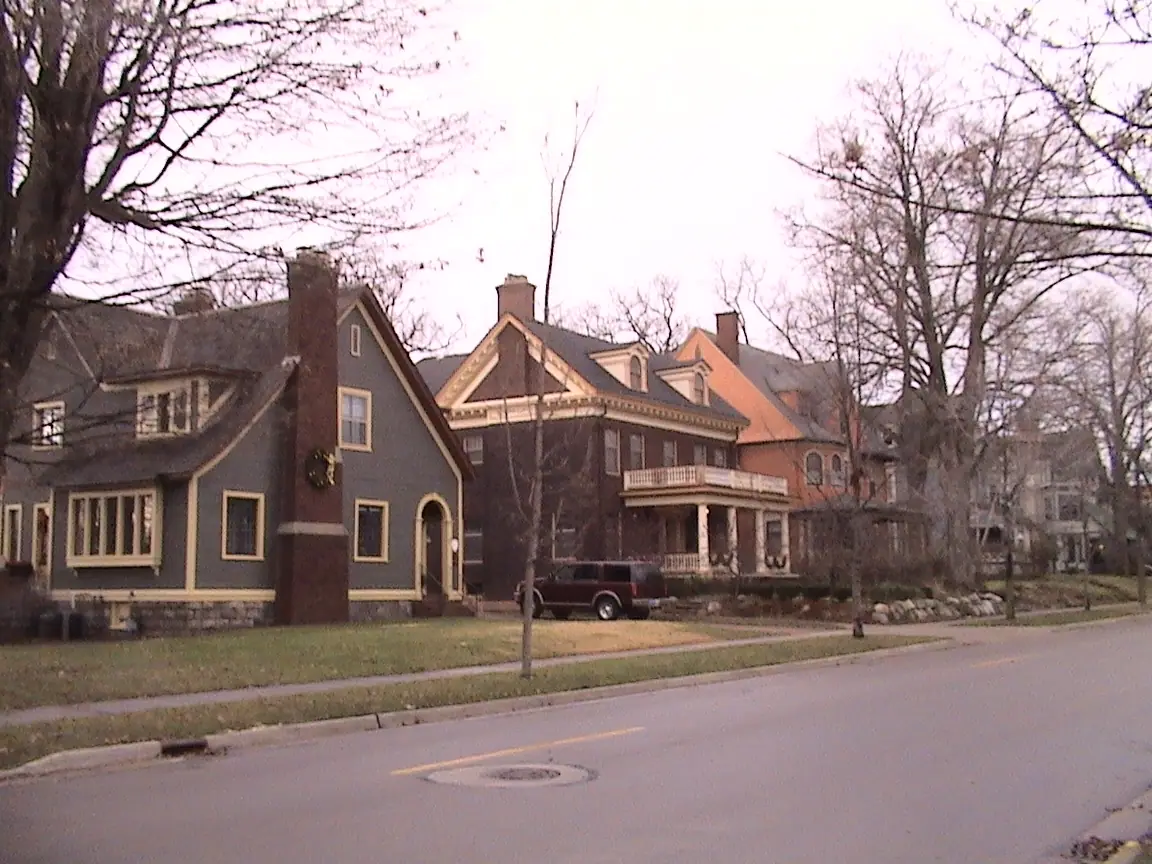
Heritage Hill deserves listing here as well, because an hour spent walking its streets is an architecture tour that costs nothing.
One honest caveat that applies to all of it: from December to March these are snow walks rather than strolls, and several trails are unploughed. That is fine with the right boots and miserable without them.
What it costs
A few things cost a little and are disproportionately good value, which is worth knowing when the free list runs out.
Skating at Rosa Parks Circle. A session fee plus skate hire, and cheap by any standard. You are skating on a Maya Lin artwork in the middle of a downtown, which is not a sentence many cities can offer.
A Griffins hockey ticket. American Hockey League games at Van Andel Arena through the winter, priced far below major-league sport, in a building a short walk from the downtown hotels.
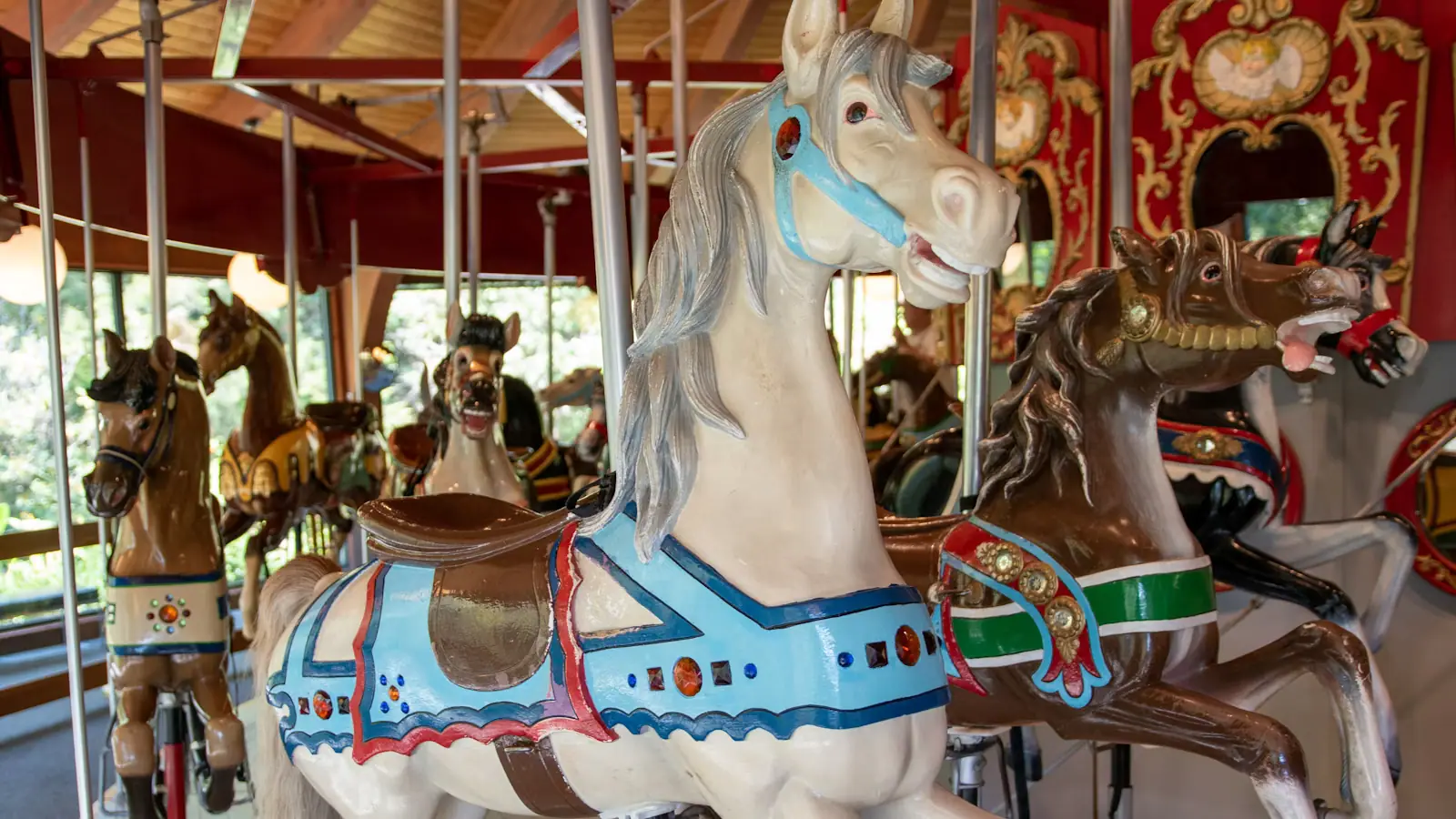
The carousel at the Public Museum. Historically included in general admission rather than charged separately — worth checking, because it changes the value calculation entirely with small children.
Museum evenings. Several institutions here have at various times run reduced-price or free evening sessions, often sponsored. These arrangements change, so look at the current schedule rather than trusting an older article.
The public library's pass scheme. Grand Rapids Public Library cardholders can borrow passes giving free entry to several major attractions. It is designed for residents, not tourists, but if you are staying with family in the area it is worth asking whether they have a card.
The free downtown shuttle costs nothing at all and removes most parking charges from a downtown day.
On the ground
Every place below has its own page — hours, parking, what it costs and what to expect when you get there.
Historic site
A 1909 Frank Lloyd Wright Prairie house, restored to the last carpet thread, and free to tour if you book in time.
1.5 hoursFree, funded by Steelcase, but by appointment only in groups of about eight
Landmark
Forty-two tons of vermilion steel that changed how a furniture town saw itself, and the Calder painting on the roof behind it.
15–45 minutesFree. An open civic plaza with no ticketing at any time of year.
Neighbourhood
Thirteen hundred buildings on a hill above downtown, saved in 1968 by 125 neighbours who refused to let the bulldozers in.
0.5–1.5 hoursFree to walk; the annual Tour of Homes in May is ticketed
Landmark
A Maya Lin artwork you are allowed to walk on, and from December a public ice rink with the night sky under the ice.
0.5–2 hoursThe plaza is free at all times. Winter skating sessions carry a small charge.
Trail
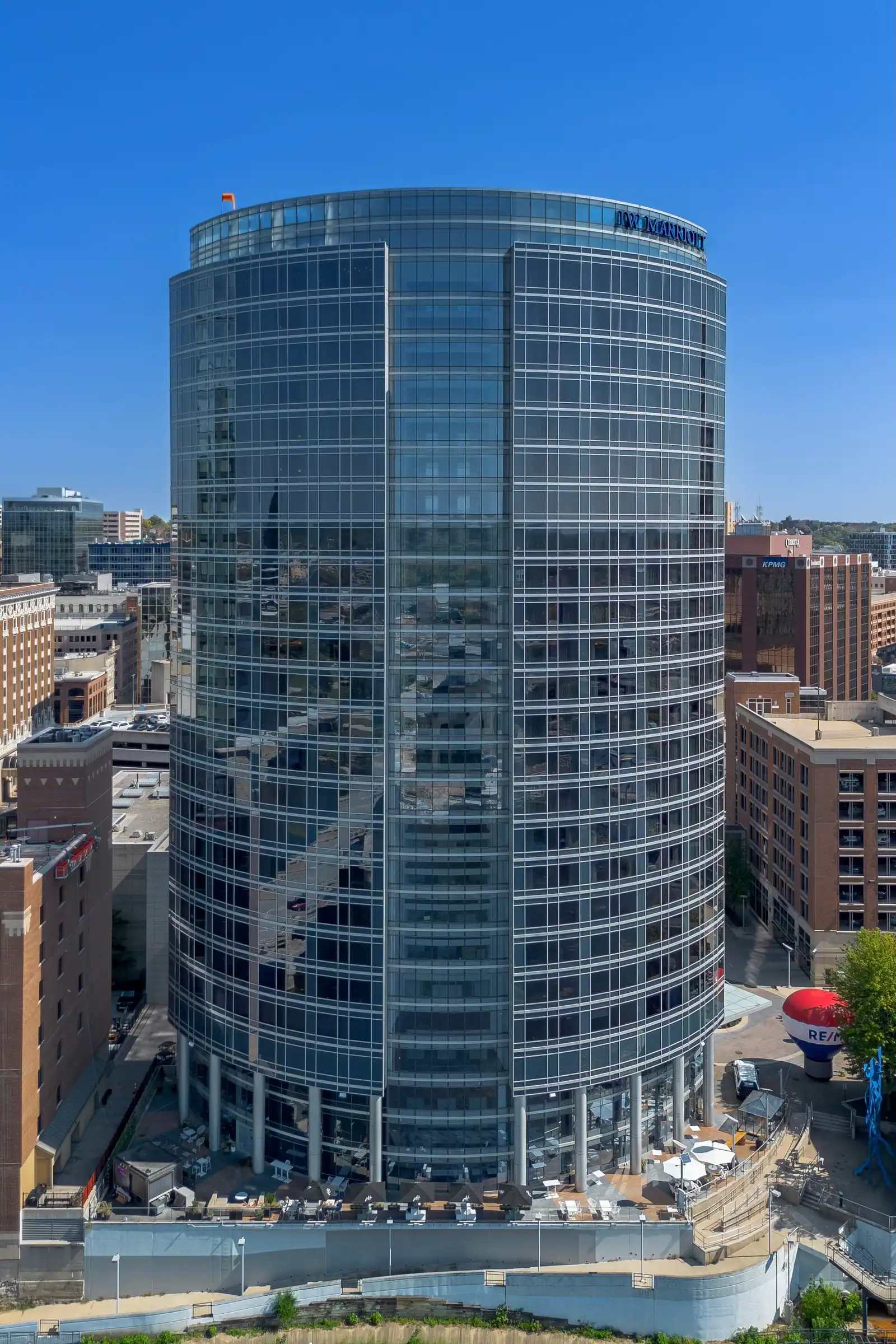
A downtown loop on both banks of a river that is currently being torn up so it can have its rapids back.
1–1.5 hoursFree. Parking is the only cost and that is a downtown ramp
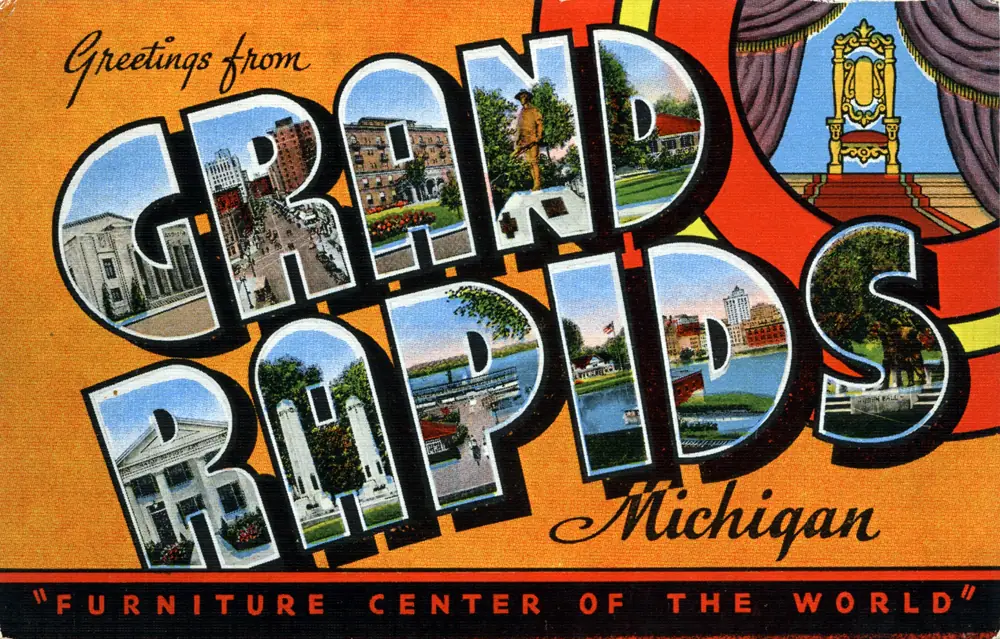
Nature preserve
Two hundred and sixty-four acres of woodland inside the city limits, with a sugarhouse that boils sap from late February.
1.5–3 hoursAround $5 per person; members and the youngest children free
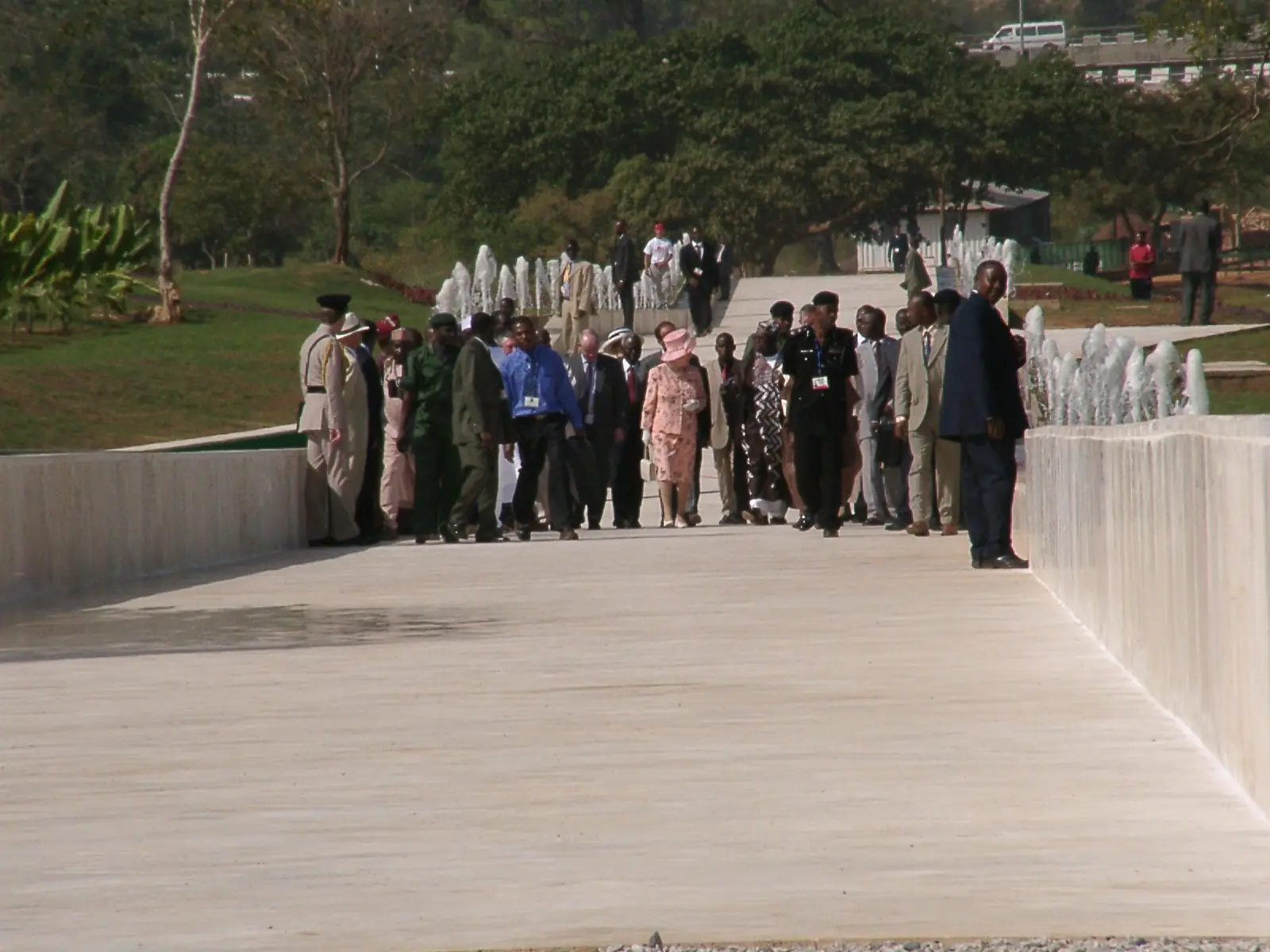
Park
Fifteen hundred acres of former gypsum mine and gravel pit, now West Michigan's largest urban park, with a swimming beach in the middle.
1.5–5 hoursPark free; the beach and splash pad area carries a daily charge
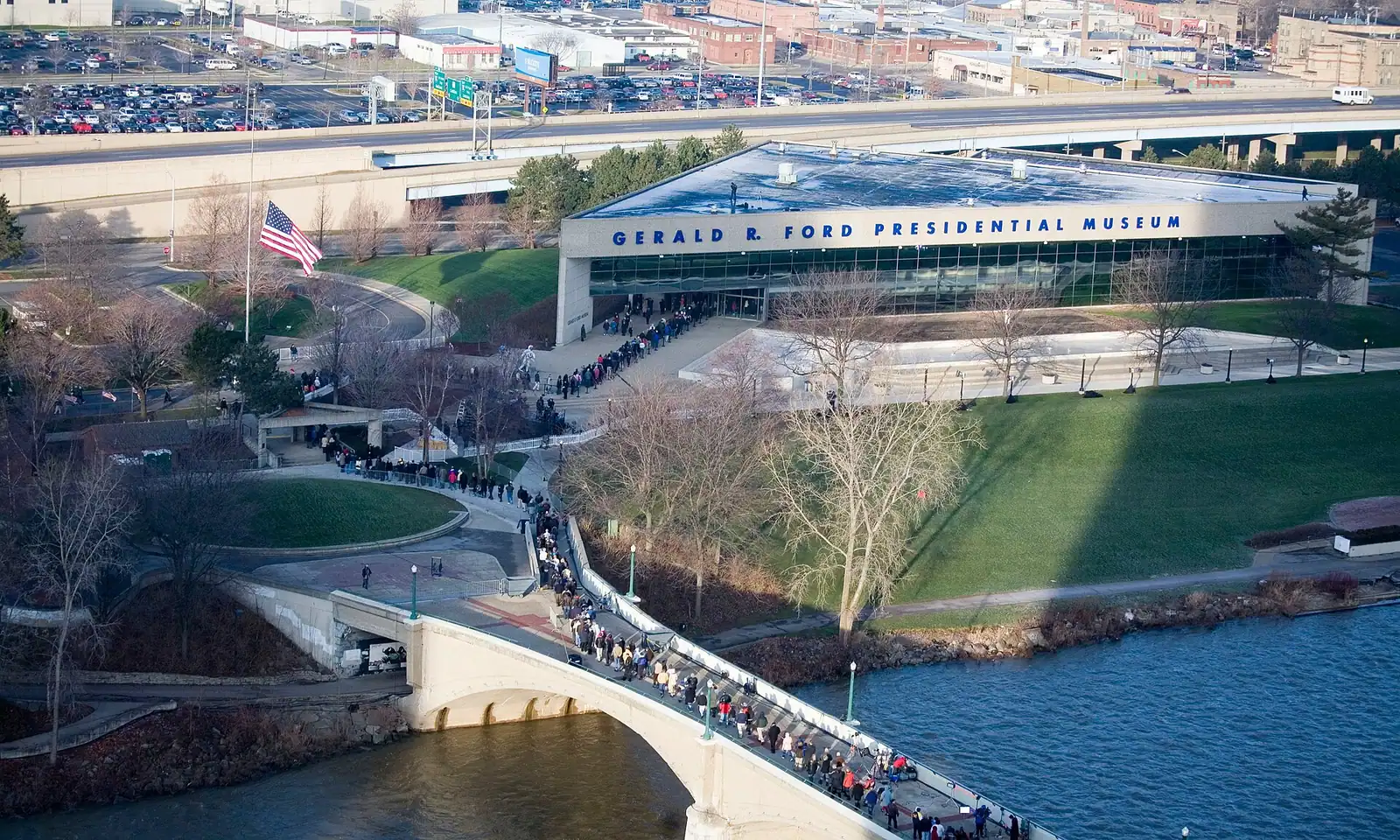
Park
Six and a half acres on the west bank whose name means resting place, with grass mounds that stand for the burial mounds once here.
0.5–1 hoursFree. Some festivals held in the park are separately ticketed
Neighbourhood
Two blocks around a five-way junction, a hot dog counter that turned fifty, and the street fair that shuts the road every September.
1–3 hoursFree to walk around, and the September Streetfair is free to enter.
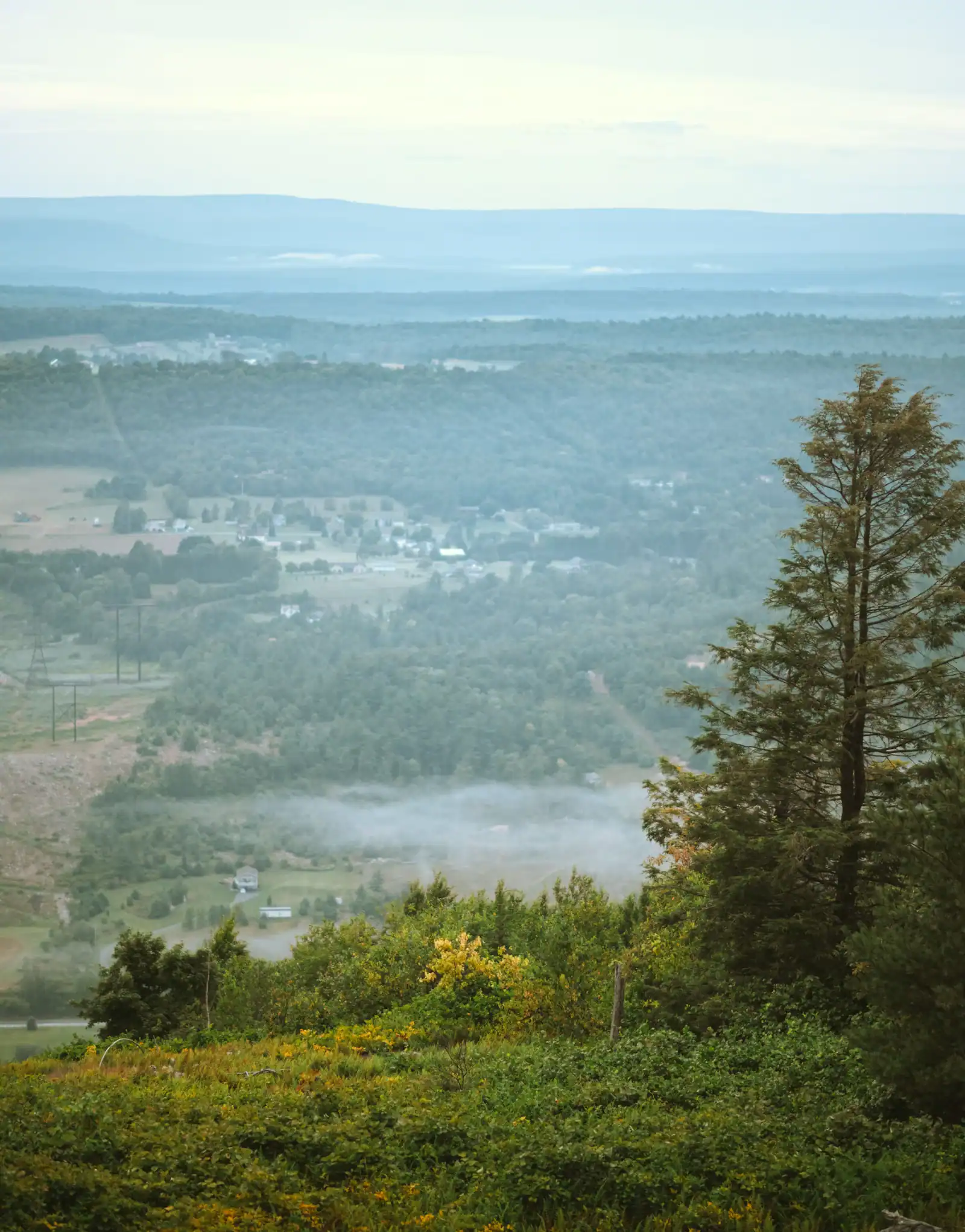
Park
A hundred acres of riverbank ten minutes north of downtown: free disc golf, a kayak launch and a paved route to the White Pine Trail.
1–3 hoursFree, including the eighteen-hole disc golf course and the boat launch.
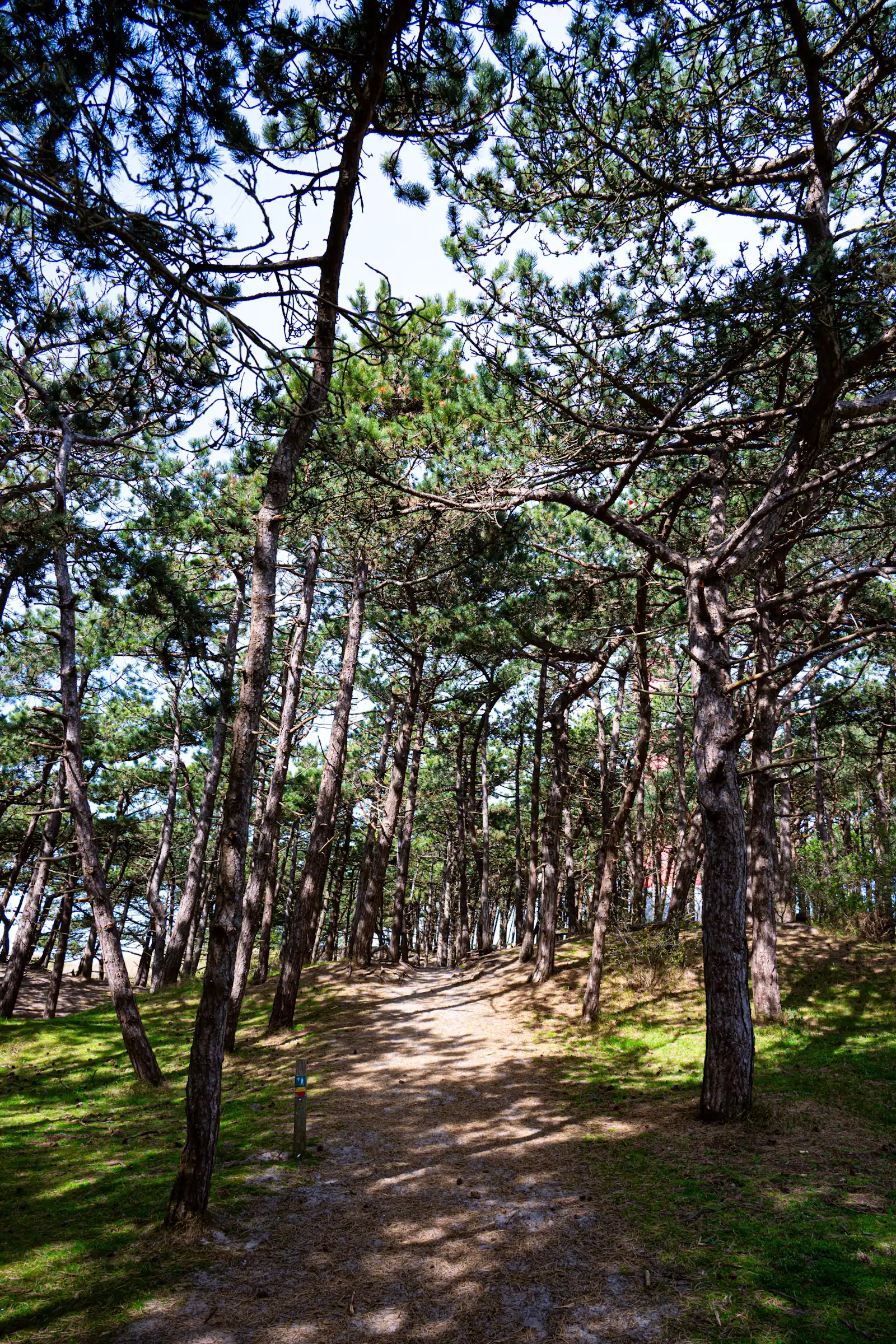
Trail
Forty-six acres of pine and glacial sand where the city goes to ski when the lake-effect snow arrives, ten minutes from the East Beltline.
1–2 hoursNo admission charge for the park or the trails.
Museum
Grand Rapids lost its contemporary art centre in 2023. Here is what happened to UICA and where the work moved to.
0.5–1 hoursNot applicable — the institution is closed. Its successor galleries at Kendall are free.
Straight answers
An unusual amount, and the best of it is not filler. You can tour a restored Frank Lloyd Wright house at no charge, stand under a forty-two-ton Calder that the National Endowment for the Arts funded as its first public art commission, walk into a Maya Lin public square, cover thirteen hundred historic houses on foot in Heritage Hill, and walk 264 acres of trails at Blandford Nature Center. Every autumn, ArtPrize adds a hundred and sixty free venues.
Yes. There is no charge to tour the house or to watch the accompanying film about its restoration. It is a Frank Lloyd Wright Prairie house of around 1909 in Heritage Hill, bought and comprehensively restored by Steelcase, the office-furniture company founded in Grand Rapids in 1912. Tours run on a limited number of days and reservations are strongly encouraged, so arrange a slot before you travel rather than arriving on spec. Allow ninety minutes.
Yes, entirely. ArtPrize places more than a thousand entries across roughly a hundred and sixty downtown venues and charges nothing to see any of it, which is the whole premise of the competition. In 2026 it runs from 18 September to 3 October, with a quieter preview week from the 12th. What is not free is the hotel room: downtown rates during the run are the highest of the year, so book early or stay a mile out and ride the free shuttle in.
No. Meijer Gardens is a ticketed attraction and adult admission has been running in the low twenties, with lower rates for children and students. It is the one major thing in Grand Rapids that does not appear on a free list, and it is worth the money. Members of reciprocal garden schemes sometimes get discounted entry, and Grand Rapids Public Library cardholders can borrow passes — a resident benefit rather than a visitor one.
Yes, and the walk is better than it sounds. Calder Plaza, Rosa Parks Circle, the pedestrian bridges, Ah-Nab-Awen Park and the Downtown Market hall all cost nothing and sit within about fifteen minutes of each other. The free DASH shuttle loops the core if you would rather not walk it. The one caveat is the riverwalk itself, which has intermittent closures while the rapids restoration works continue — use the bridges instead.
Several, though the list shortens. The downtown public art is outdoors and open at any hour, Heritage Hill under snow is genuinely worth an hour, and Blandford's trails stay open although they are not ploughed. Walking into Rosa Parks Circle to look is free; skating is ticketed and cheap. The practical limits are daylight, since it is dark by late afternoon in January, and footwear, because the pavements ice.
Not downtown, mostly. Street parking is metered and the ramps charge by the hour, with rates rising during arena events and ArtPrize. The usual workaround is to park in a cheaper ramp on the edge of the core and take the DASH shuttle in, which costs nothing. Outside downtown, parking at the parks, at Blandford and at most neighbourhood restaurant streets is free, though Millennium Park has charged seasonally for vehicle entry.
Keep exploring
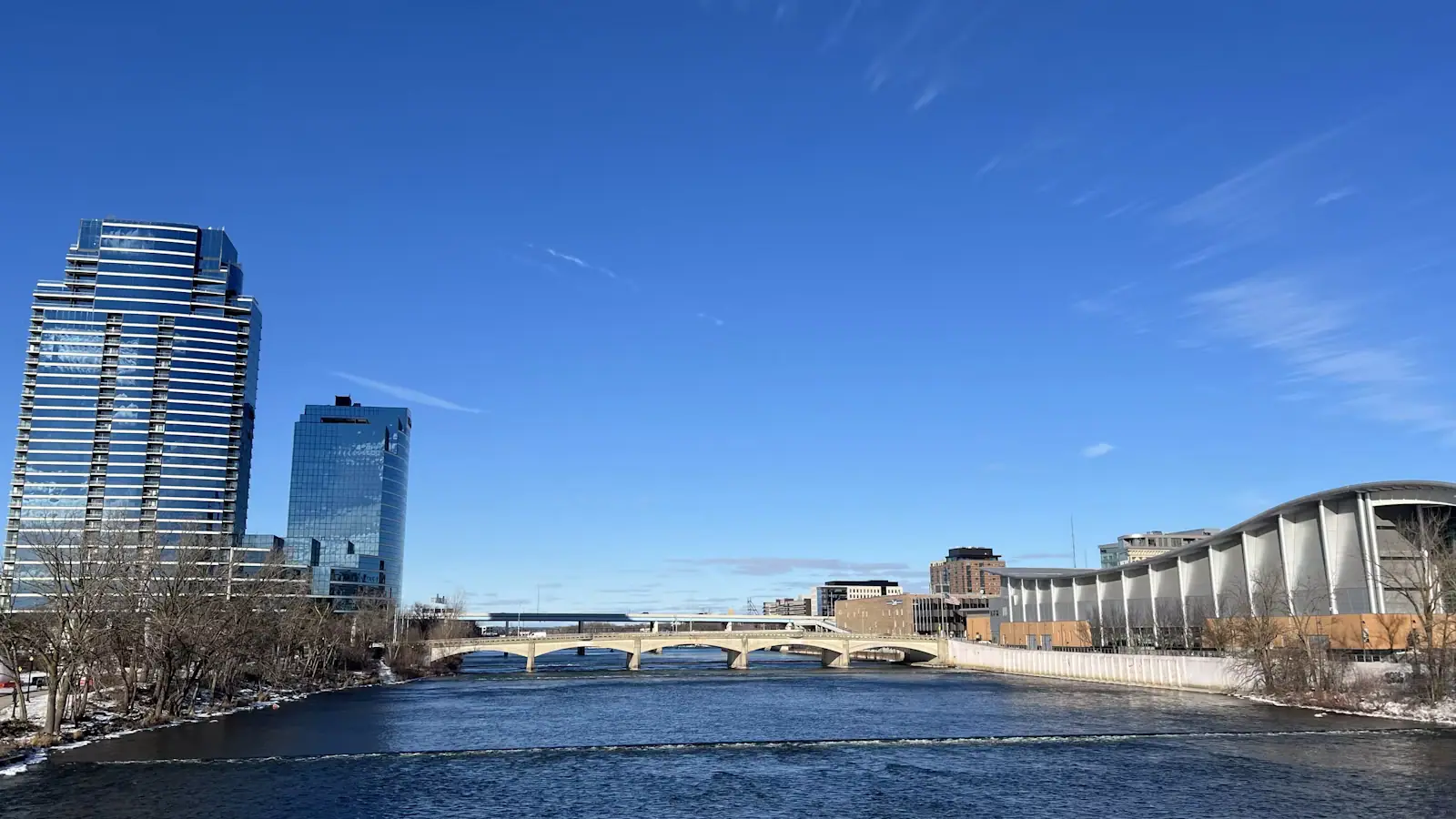
Guide hub
Furniture paid for this city, and then it paid for everything worth coming to see in it. That is the single idea a visitor needs. Grand Rapids made…
Guide hub
A city of two hundred thousand people should not have this list. Grand Rapids does, and the reason is a hundred and fifty years of manufacturing…
Things to do
Every good thing in this city was paid for by chairs. That is barely an exaggeration. William Haldane opened a cabinet shop on the Grand River in…
Things to do
Almost nothing green in Grand Rapids is original. The largest park in the city is fifteen hundred acres of former gypsum workings and gravel pits…
By season
For a little over two weeks each autumn, roughly a thousand works of art appear across downtown Grand Rapids and the city stops behaving normally…
Who it suits
Grand Rapids is better with children than its reputation suggests, and the reason is the same reason it is better with adults: a century of local…
Read next
Guide
A restored Frank Lloyd Wright house, an art museum one day a week, the first artwork the NEA ever helped pay for, and a Maya Lin park you can skate on. None of it costs anything.
5 min readIlse Hoekstra
Guide
Michigan's second city is a furniture town that spent its furniture money on art. Here is how the address grid works, what is walkable, and what needs a car.
6 min readMarguerite Vanderhoff
Guide
Two nights, one car, and one hard constraint that decides the whole schedule: the free Frank Lloyd Wright house only opens to the public on Sunday afternoon.
5 min readMarguerite Vanderhoff
Guide
An open competition with no entry jury, hundreds of venues that are mostly not galleries, and a public vote worth a hundred thousand dollars. Here is how to see it without wasting a day.
5 min readIlse Hoekstra