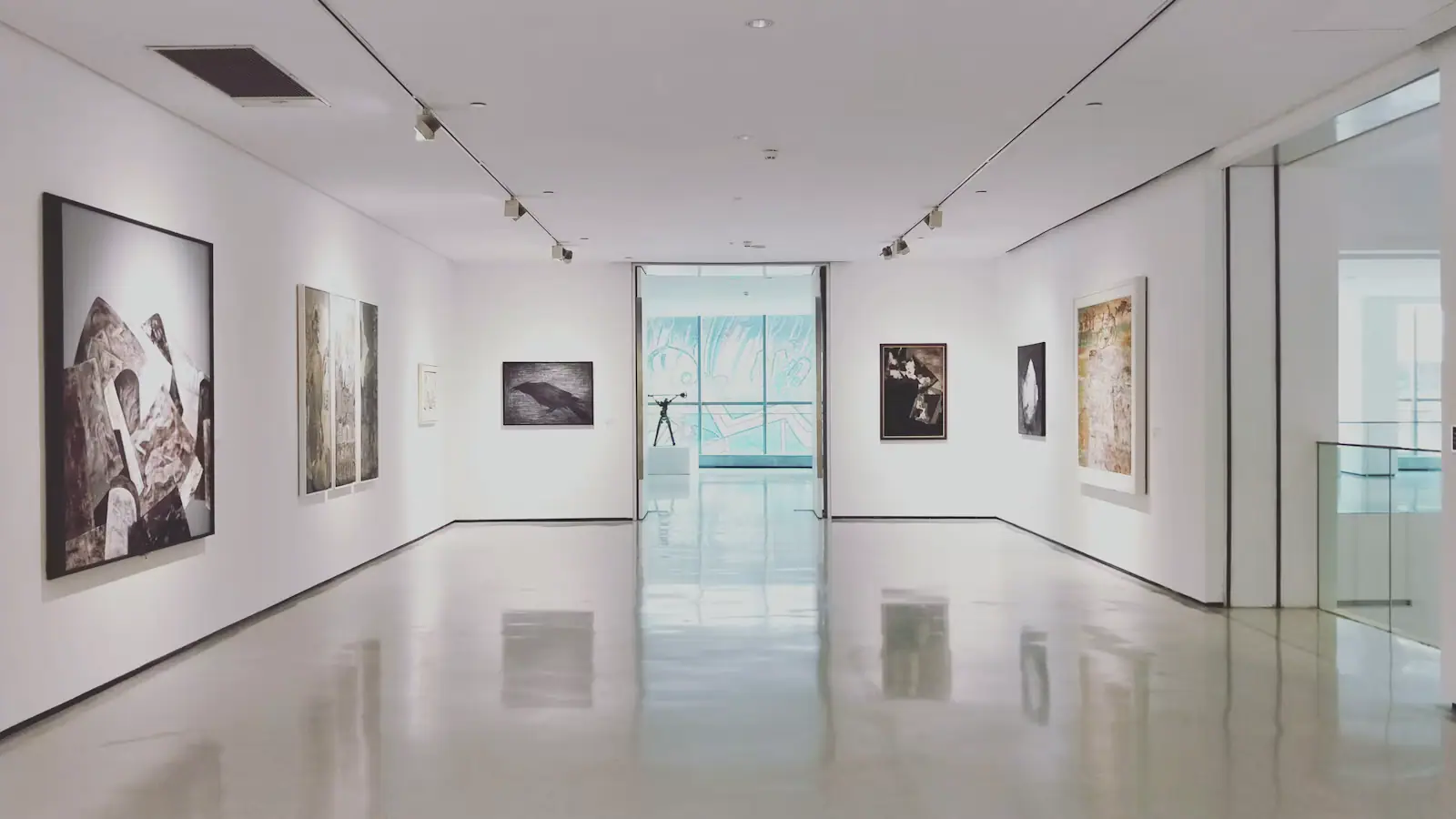
Grand Rapids is a furniture town that spent its furniture money on art. That single sentence explains more about a first visit here than any list of attractions can, because almost everything a visitor ends up looking at was paid for by somebody who made chairs, or groceries, or soap, and then decided the city should have a sculpture park.
The furniture is not metaphorical. West Michigan still builds a large share of the world's office seating: Steelcase here, Herman Miller in Zeeland, Haworth in Holland, all within forty minutes of each other. The pattern that follows is the thing to understand. Steelcase restored a Frank Lloyd Wright house and gives the tours away free. A grocer named Fred Meijer endowed a 158-acre sculpture park. The families behind Amway put an arena and a convention centre on the south edge of downtown. This is a city where private industrial fortunes became public buildings, which is why a metro of roughly a million people carries cultural institutions sized for somewhere much larger.
Where you actually are
Thirty miles east of Lake Michigan, on the Grand River, in the middle of the state's western third. The lakeshore is a day trip, not a view from your hotel window. Anyone booking here expecting sand outside the lobby has misread the map by half an hour of driving.
Gerald R. Ford International Airport sits about 13 miles south-east of downtown. Budget twenty to twenty-five minutes by car in ordinary traffic, more in the Friday afternoon crawl on 28th Street.
The address grid, which nobody explains and everybody needs
Grand Rapids is quartered. Division Avenue runs north-south and Fulton Street runs east-west, and where they cross is the origin point. Every address in the city therefore carries a quadrant: NW, NE, SW, SE. Founders is on Grandville Avenue SW. The Meyer May House is on Madison Avenue SE. Get the quadrant wrong and your navigation app will send you two miles the wrong way across the river.
Learn that one rule and the city becomes legible in an afternoon.
The five things that explain the place
| Place | Time to give it | Why it is here |
|---|---|---|
| Frederik Meijer Gardens & Sculpture Park | Half a day | A grocery fortune, 158 acres, over 300 sculptures |
| Grand Rapids Art Museum | 2 hours | The world's first LEED Gold certified art museum |
| Gerald R. Ford Presidential Museum | 2 hours | The only president from here, buried on the grounds |
| Meyer May House | 1 hour, free | Wright's 1908 Prairie house, restored by Steelcase |
| Calder Plaza and Rosa Parks Circle | 30 minutes, free | The first NEA-funded public artwork, and a Maya Lin park |
Those five, in that order of priority, are a genuine first visit. Everything else is preference.
What is walkable and what is not
The downtown core is small and flat enough to cross on foot in twenty minutes: Monroe Center, the Van Andel Arena blocks, Heartside, the riverfront, the Downtown Market at the south end. The DASH shuttle covers it free, running roughly every eight minutes, and it exists mainly to move people from the cheap outer lots into the centre. Those lots run around three to five dollars for the day. Compared with hotel valet, that is most of a decent lunch back in your pocket.
What is not walkable: Meijer Gardens, which is out in Grand Rapids Township on the east side and takes twenty minutes to drive; John Ball Zoo, up Fulton Street on the west side; Blandford Nature Center; and the lakeshore towns. If your whole trip is those, you want a car. If your whole trip is downtown, museums and beer, you do not.
Where to base yourself
Downtown, if this is your first visit. The Amway Grand Plaza is the obvious address and the interesting one: it absorbed the Pantlind Hotel of 1913-15, designed by Warren and Wetmore, the firm behind Grand Central Terminal, and then grew a twenty-nine-storey glass tower onto the side of it in the early eighties. The lobby is the old hotel. The rooms are usually the new one.
East Hills and Eastown, a mile or two out along Cherry and Wealthy Streets, are where people who live here eat. Heritage Hill, between the two, is the historic district: around 1,300 houses, the oldest from the 1840s, in more than sixty architectural styles, and one of the largest urban historic districts in the country. You can walk it with a map from the neighbourhood association and never pay anything.
Two honest warnings
The riverfront is a construction site. The long-delayed restoration of the rapids that gave the city its name broke ground in June 2026 on the Lower Reach, between Fulton Street and Bridge Street, and is expected to run about two years. Four low-head dams come out. Sections of riverwalk close and reopen as the work moves. It is genuinely good news and a genuinely disrupted waterfront at the same time, so check what is open rather than planning a river walk from an old photograph.
Winter closes things. John Ball Zoo runs a season, not a year: in 2026 it opened on 20 March and runs to late November. Patios shut. The lakeshore towns go quiet. None of that makes a winter trip bad, but it makes a winter trip different, and a first-timer who has booked around the zoo in January will be unhappy.
Late September is not a normal week
ArtPrize takes over downtown from 18 September to 3 October in 2026, with preview days the week before. Hundreds of entries go into museums, hotel lobbies, bars, churches and the street itself, the public votes, and hundreds of thousands of people come. If you want that, book early and expect full hotels. If you want a quiet city, come literally any other fortnight.
Five things that surprise people
- The president. Gerald Ford grew up here, and he and Betty Ford are buried on the museum grounds beside the river.
- The astronaut. The planetarium at the Public Museum is named for Roger B. Chaffee, born here, who died in the Apollo 1 fire in 1967.
- The Calder. La Grande Vitesse, installed in 1969, was the first public artwork part-funded by the National Endowment for the Arts. The city liked it enough to put it on the bin lorries.
- The beer. This is not a marketing line. There are eight breweries inside the downtown walk alone.
- The quiet. For a city this size, Sunday mornings downtown are empty in a way visitors from bigger places find slightly unnerving.
Last updated
Opening hours, ordinances and prices move with the season. We re-check this guide rather than rewrite it, and the date above is the last time someone did. How we research and correct.