Skip to content
Search
Menu

These bookings earn us a commission through Viator. You pay the same, and the money played no part in the selection.

Park

Frederik Meijer Gardens & Sculpture Park

Last updated

A grocery fortune turned into 158 acres of Rodin, Oldenburg and orchids, plus the one glasshouse in Michigan that fills up in February.

Fred Meijer sold groceries. The 158 acres northeast of downtown that carry his name are what he did with the money, and they are why a mid-sized Midwestern city has a botanical garden with a Rodin in it. The place opened in April 1995 and has become the busiest paid attraction in the region: 881,625 people came through in 2025, more than the population of Grand Rapids itself.

The two halves pull in opposite directions, which is the point. Indoors, the Lena Meijer Tropical Conservatory runs five storeys and roughly 15,000 square feet under glass, warm and wet while the parking lot outside is frozen. Outdoors, the sculpture collection is spread across meadow, woodland and a boardwalk over wetland, with work by Rodin, Degas, Oldenburg, Plensa, Bourgeois and Chihuly. The object everyone photographs is The American Horse, a 24-foot bronze cast by Nina Akamu from Leonardo da Vinci's never-built Sforza monument. Fred Meijer funded two casts: this one, and one that went to Milan.

Two exhibitions set the year and both can sell out the timed-entry slots. Butterflies Are Blooming fills the conservatory from the start of March to the end of April with thousands of tropical butterflies flying loose; the 2026 edition was the 31st, with more than 7,000 butterflies and moths from around 60 species. From late November into the first days of January, Christmas & Holiday Traditions runs more than forty decorated trees through the building, each dressed for a different country, alongside a model railway garden and a ticketed evening light walk that begins at the amphitheatre.

The eight-acre Japanese garden, added in 2015, is the corner most visitors underestimate. The waterfall and the hillside loop take longer than the map suggests, and in October it is the best colour on the property.

Book ahead. On a butterfly Saturday or a December evening the entry slots genuinely run out, and the East Beltline approach queues.
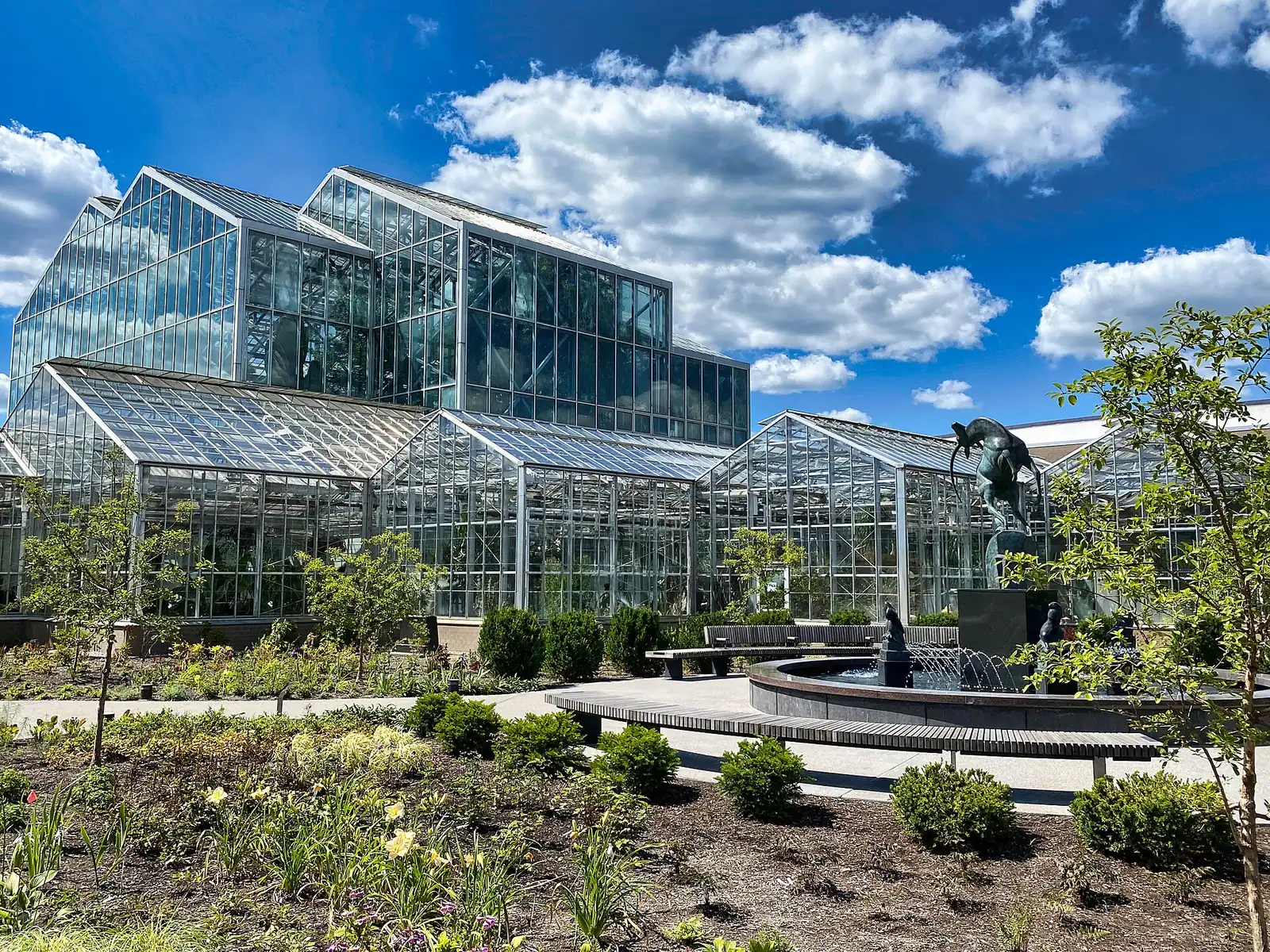
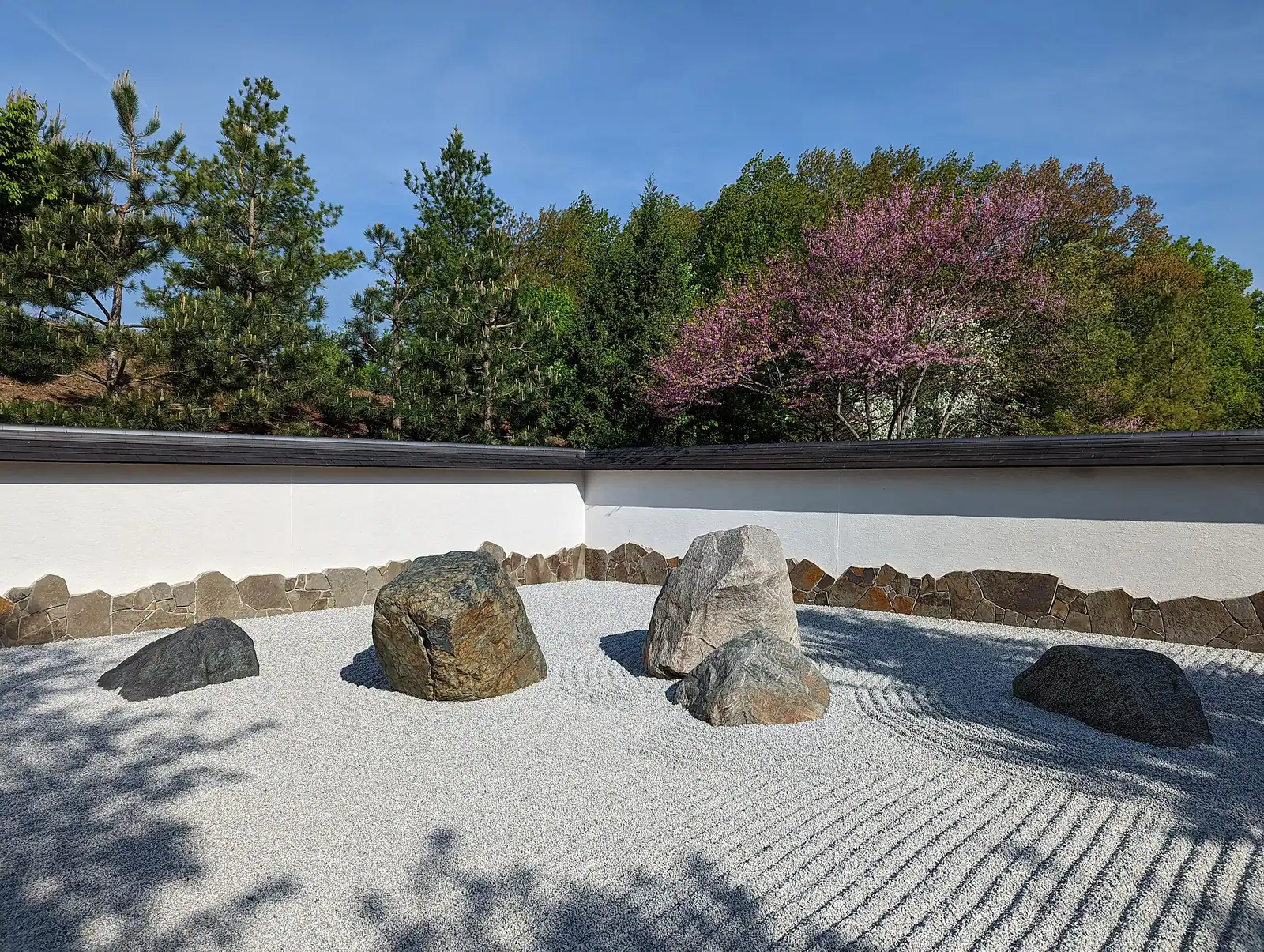
Getting there and parking

The gardens sit northeast of the city on East Beltline Avenue, close to the I-96 interchange, about fifteen to twenty minutes from downtown outside rush hour. There is no useful transit connection, so this is a car or rideshare trip.

Parking is free, on site, and generous by the standards of anything else on this list. It still backs up: on a butterfly Saturday or a December evening the queue forms on the Beltline itself, and a fifteen-minute drive becomes thirty-five.

Coming from the airport at Ford International, the gardens are roughly twenty minutes north and are an easy first or last stop on a trip without going downtown at all.

The two exhibitions that decide when you come

Meijer Gardens is a year-round attraction with two enormous spikes, and knowing which one you are walking into changes everything about the visit.

Butterflies Are Blooming, March into April. The conservatory is warmed and humidified and several thousand butterflies are released to fly free among the visitors. It is the largest temporary tropical butterfly exhibition in the United States and it runs for two months, typically 1 March to 30 April. Late morning on a sunny day is when the insects are most active; a grey March morning is quieter in every sense. Expect to queue on the glasshouse stairs at weekends.

Christmas & Holiday Traditions, late November into early January. More than forty trees, each decorated for a different country's celebration, plus a railway garden that children park themselves in front of. The evening light walk along a mile of the outdoor grounds is ticketed separately from daytime admission and runs on its own schedule.

Between those two, the calendar is much softer. Late June through August is when the outdoor gardens are actually at their best and the crowds are at the amphitheatre rather than in the beds. October is the sleeper: the Japanese garden turns, and you can have the boardwalk almost to yourself on a weekday.

Dates shift by a week or so each year, so confirm the current run before you build a trip around either.

What is actually in the sculpture collection

This is not a park with a few statues in it. The collection is genuinely serious, and it is the reason art travellers detour here rather than to a larger city.

The outdoor holdings run from Rodin and Degas through mid-century modernism to contemporary work, sited across around thirty acres of meadow, woodland and wetland. Claes Oldenburg's oversized objects, Jaume Plensa's seated figures, Louise Bourgeois, Magdalena Abakanowicz, Ai Weiwei and Dale Chihuly have all been shown or installed here at various points, and indoor galleries carry rotating exhibitions.

The American Horse anchors the whole thing. Leonardo designed a colossal bronze horse for Ludovico Sforza in the 1480s and never cast it; the clay model was destroyed by French troops. Nina Akamu produced a modern interpretation at 24 feet, and Fred Meijer paid for two casts so that one could go to Milan and one could stand on a Michigan hillside. It sits at the end of a long approach, which is deliberate.

Practical note for photographers: the outdoor pieces face every direction, so there is no single good hour. Early light works on the meadow sculptures, late light on the horse.

The Japanese garden and the wetland boardwalk

The eight-acre Richard and Helen DeVos Japanese Garden opened in 2015 and is the most deliberately paced part of the property. A cascading waterfall anchors it, with a hillside path, a tea house, a Zen garden of raked gravel and contemporary sculpture placed sparingly rather than scattered.

It rewards slowness in a way the rest of the site does not. Allow forty minutes even if you think you will spend fifteen. The stone paths are uneven in places and the grades are real, which matters if anyone in your group has limited mobility; there are gentler routes but they are not the scenic ones.

The wetland boardwalk on the other side of the grounds is the opposite kind of walk: flat, quiet, and much more about birds than about art. It is one of the few places on a 158-acre developed site where the original West Michigan landscape is still doing what it did before the gardens were built. Redwing blackbirds in spring, frogs loud enough to hear from the path in early summer.

Neither of these fits into a ninety-minute visit alongside the conservatory. Choose.

How long 158 acres really takes

  • Two and a half hours is the honest minimum for the conservatory plus a decent loop of the outdoor sculpture. Four to five if you want the Japanese garden and the boardwalk as well.
  • Parking is free and on site, which is not true of most things downtown. The East Beltline entrance backs up on butterfly weekends and December evenings.
  • A seasonal tram covers the outdoor grounds when weather allows. Ask at the desk rather than assuming it is running.
  • Buy timed entry online. Walk-up is possible on a quiet Tuesday and a bad idea in March or December.
  • Indoor and outdoor are a single ticket, so a rainy forecast is not a reason to cancel. The conservatory, the galleries and the children's garden are all under cover.
  • The café and gift shop are near the entrance, and there is no food out on the grounds, so eat before you walk the far loop.
  • Members get in free and it pays back fast if you are local and intend to come back for both exhibitions.

Summer concerts on the lawn

The Frederik Meijer Gardens Amphitheater opened in 2003 with a covered stage and tiered lawn seating for about 1,900. It runs an outdoor concert series through the warm months and books a mix of touring folk, indie, roots and legacy acts at a scale where the back row is still close.

Treat a concert night as a different visit rather than an add-on. Gates open in the evening, you are funnelled toward the lawn rather than the gardens, and you will see very little of the sculpture. People bring low chairs and blankets; the lawn is tiered turf, not seating.

Shows sell out, sometimes fast, and members get an early window. If a concert is your reason for being in Grand Rapids, buy the ticket first and build the rest of the day around it — including the Christmas light walk, which uses the same amphitheatre as its starting point in winter.

Near Meijer Gardens

Straight-line distances, so allow more on the road — the island is long and has one main parkway.

  • Orange and white koi swimming in a shallow garden pond

    Park

    Richard & Helen DeVos Japanese Garden

    Eight acres by Hoichi Kurisu, with four waterfalls, a teahouse built in Japan and a Zhang Huan head sitting in the moss.

    1–1.5 hoursIncluded in general admission to Meijer Gardens; there is no separate Japanese Garden ticket0.3 mi away

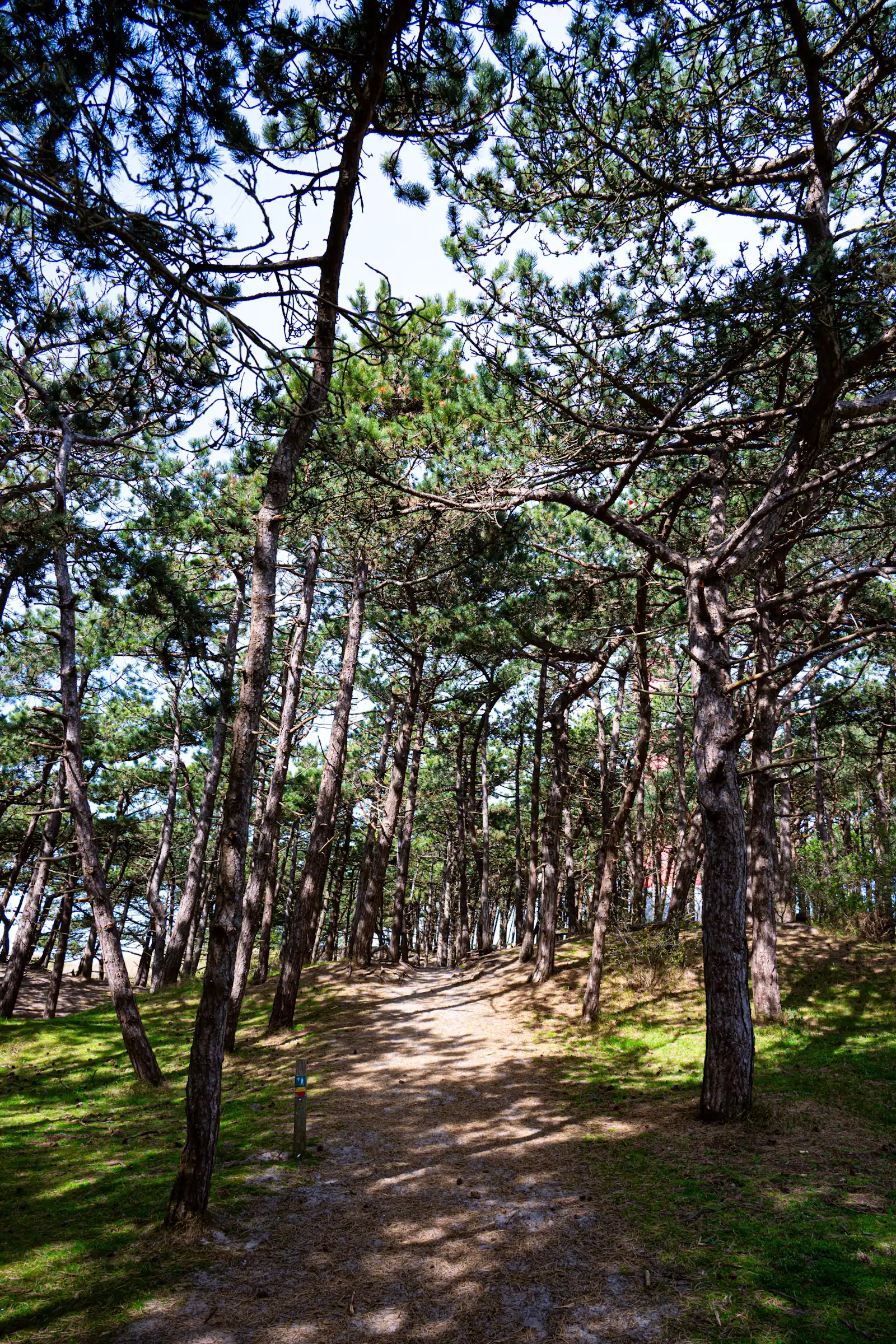
  • Tall pine trunks and open understorey in a sunlit stretch of sandhill forest

    Trail

    Free

    Provin Trails Park

    Forty-six acres of pine and glacial sand where the city goes to ski when the lake-effect snow arrives, ten minutes from the East Beltline.

    1–2 hoursNo admission charge for the park or the trails.3.1 mi away

  • A woodland path covered in fallen autumn leaves between bare trees

    Nature preserve

    Blandford Nature Center

    Two hundred and sixty-four acres of woodland inside the city limits, with a sugarhouse that boils sap from late February.

    1.5–3 hoursAround $5 per person; members and the youngest children free6.4 mi away

  • Visitors standing in a daylit gallery looking at a large painting on a white wall

    Museum

    Grand Rapids Art Museum

    The first LEED Gold certified art museum anywhere, built by a city whose fortune came from making furniture well.

    1.5–2.5 hoursRoughly $10–15 per adult; general admission free on Thursday evenings4.2 mi away

Meijer Gardens: common questions

How long do you need at Frederik Meijer Gardens?

Two and a half hours covers the tropical conservatory and a reasonable loop of the outdoor sculpture. Add the eight-acre Japanese garden and the wetland boardwalk and you are at four to five hours. The site is 158 acres and the walking is real, so people routinely underestimate it. If you only have ninety minutes, do the conservatory and the sculpture nearest the building, and accept that you are skipping the best of the grounds.

When is the butterfly exhibit at Meijer Gardens?

Butterflies Are Blooming normally runs from the start of March to the end of April in the Lena Meijer Tropical Conservatory, with thousands of tropical butterflies flying free among visitors. The 2026 edition was the 31st year, with more than 7,000 butterflies and moths from around 60 species. It is the busiest period of the year here, so book a timed slot online and aim for a weekday. Late morning on a sunny day is when the butterflies are most active.

Is Meijer Gardens worth visiting in winter?

Yes, and arguably more so than a lot of Michigan attractions. The five-storey conservatory is warm and green in January, the indoor galleries carry rotating exhibitions, and from late November into early January the building fills with more than forty decorated trees for Christmas & Holiday Traditions. There is also a ticketed evening light walk on the outdoor grounds. Dress for the outdoor sections separately: the sculpture park stays open and the snow on it photographs well.

Is parking free at Meijer Gardens?

Yes. Parking is free and on site, which makes this an easier arrival than most of the downtown attractions, where you are paying a ramp or a meter. The catch is volume rather than cost. On butterfly weekends in March and April, and on December light-walk evenings, the queue to turn in from East Beltline Avenue can add twenty minutes to the drive. Arriving in the first hour after opening avoids nearly all of it.