Skip to content
Search
Menu

These bookings earn us a commission through Viator. You pay the same, and the money played no part in the selection.

Park

Richard & Helen DeVos Japanese Garden

Last updated

Eight acres by Hoichi Kurisu, with four waterfalls, a teahouse built in Japan and a Zhang Huan head sitting in the moss.

Grand Rapids does not have mountains, a temple tradition or a thousand years of garden practice. What it had in 2015 was money, eight acres of glacial slope on the eastern edge of the city, and the willingness to hire Hoichi Kurisu and then leave him alone. The result is one of the better Japanese gardens in North America and, for a lot of visitors, the single most surprising thing in West Michigan.

Kurisu's design works the land rather than flattening it. Paths climb and drop across a hillside, water runs through four separate falls, and the route is composed so that the garden reveals itself in pieces — you do not see the whole thing from anywhere. The two principal waterfalls, at the north and south edges, were designed as a contrasting pair, one broad and one narrow, and the sound of each carries to different parts of the loop. The teahouse was built in Japan by Japanese craftsmen, taken apart, shipped across the Pacific and reassembled here with traditional tools.

The planting is not a museum of Japanese species. Japanese maples, flowering cherries and bamboo sit alongside Michigan natives and temperate plants from elsewhere, which is the honest response to a USDA zone that would kill half a Kyoto garden by February.

Then there is the sculpture, which is where opinions split. This is part of Frederik Meijer Gardens & Sculpture Park, so contemporary work by Anish Kapoor, Zhang Huan, David Nash, Masayuki Koorida, Jenny Holzer and Giuseppe Penone is permanently sited among the moss and the stone. Purists find it an intrusion. Most visitors find that a mirrored Kapoor disc at the end of a gravel path does exactly what a borrowed-view device is supposed to do. Decide for yourself; it takes about an hour to walk.

You cannot visit the Japanese Garden on its own. It is inside Meijer Gardens, reached on general admission, which also buys you the conservatory, the sculpture park and the rest of the 158-acre site.
Getting there and parking

The Japanese Garden is inside Frederik Meijer Gardens & Sculpture Park on the East Beltline, in Grand Rapids Charter Township on the city's eastern edge. From downtown allow fifteen to twenty minutes by car via I-196 east and the East Beltline exit, longer in the weekday afternoon peak.

This is not a walkable destination from the centre and public transport to it is thin. If you are carless, budget for a rideshare each way and note that the return leg from the East Beltline can involve a wait.

Parking on site is free and there is plenty of it, which is a relief after a morning of downtown ramps. From the car park, the Japanese Garden is reached through the main visitor centre and then out past the conservatory; signage is clear and the walk to the garden entrance takes about five minutes.

What Kurisu built, and how to walk it

Hoichi Kurisu trained in Japan and has spent a career building gardens in North America. The eight acres here opened on 10 June 2015 after several years of construction, and the design brief was unusually generous: build it properly, on real topography, at scale.

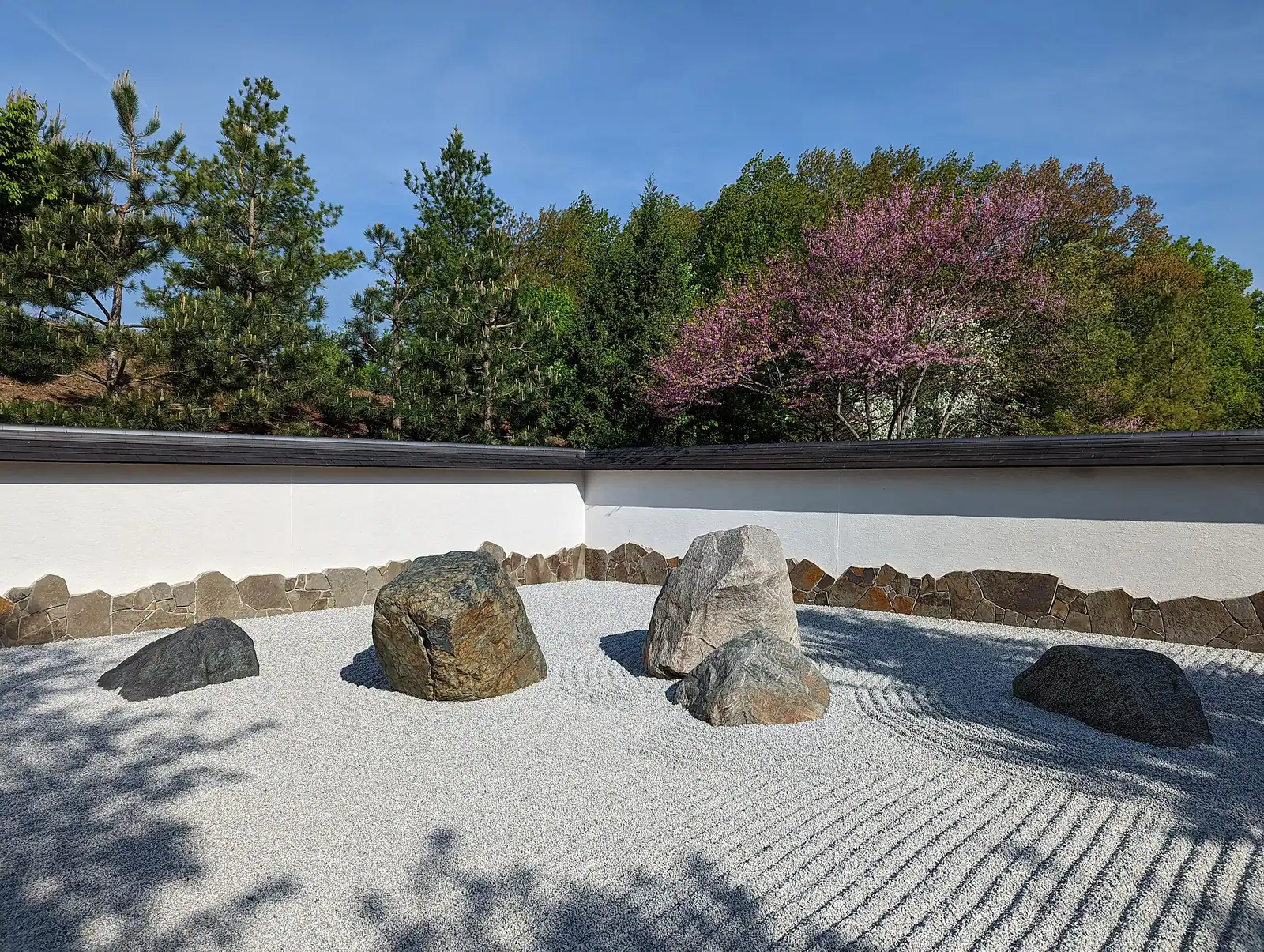
Walk it anti-clockwise. The entrance takes you past a dry landscape garden — raked gravel, set stone, no water — which is the quietest part of the site and the part most people hurry through. From there the path drops towards the main pond, crosses on a bridge, and climbs the far bank through the maples, where the higher of the two big waterfalls comes into earshot before it comes into view. That sequencing is deliberate. Kurisu gardens are composed as a walk, not a viewpoint.

The bonsai collection sits in its own enclosure and rewards five slow minutes. The teahouse is a building to look at rather than enter; it is opened for demonstrations rather than general access, so do not plan a tea ceremony around a casual visit.

Surfaces are good — compacted gravel and stone, well drained — but the gradients are real. There is climbing in both directions and a few stretches of stepped path. Anyone with limited mobility should ask at the admissions desk which sections are currently passable and whether the grounds tram is running.

Contemporary sculpture in a Japanese garden

This is the design decision that makes the garden argue with itself, and it is worth understanding before you walk in.

A traditional Japanese garden controls what you see and when. Contemporary sculpture demands attention on its own terms. Putting the second inside the first should not work. Here it mostly does, because the pieces were sited rather than dropped: each one sits at a point in the walking sequence where a Japanese garden would conventionally place a stone, a lantern or a framed view.

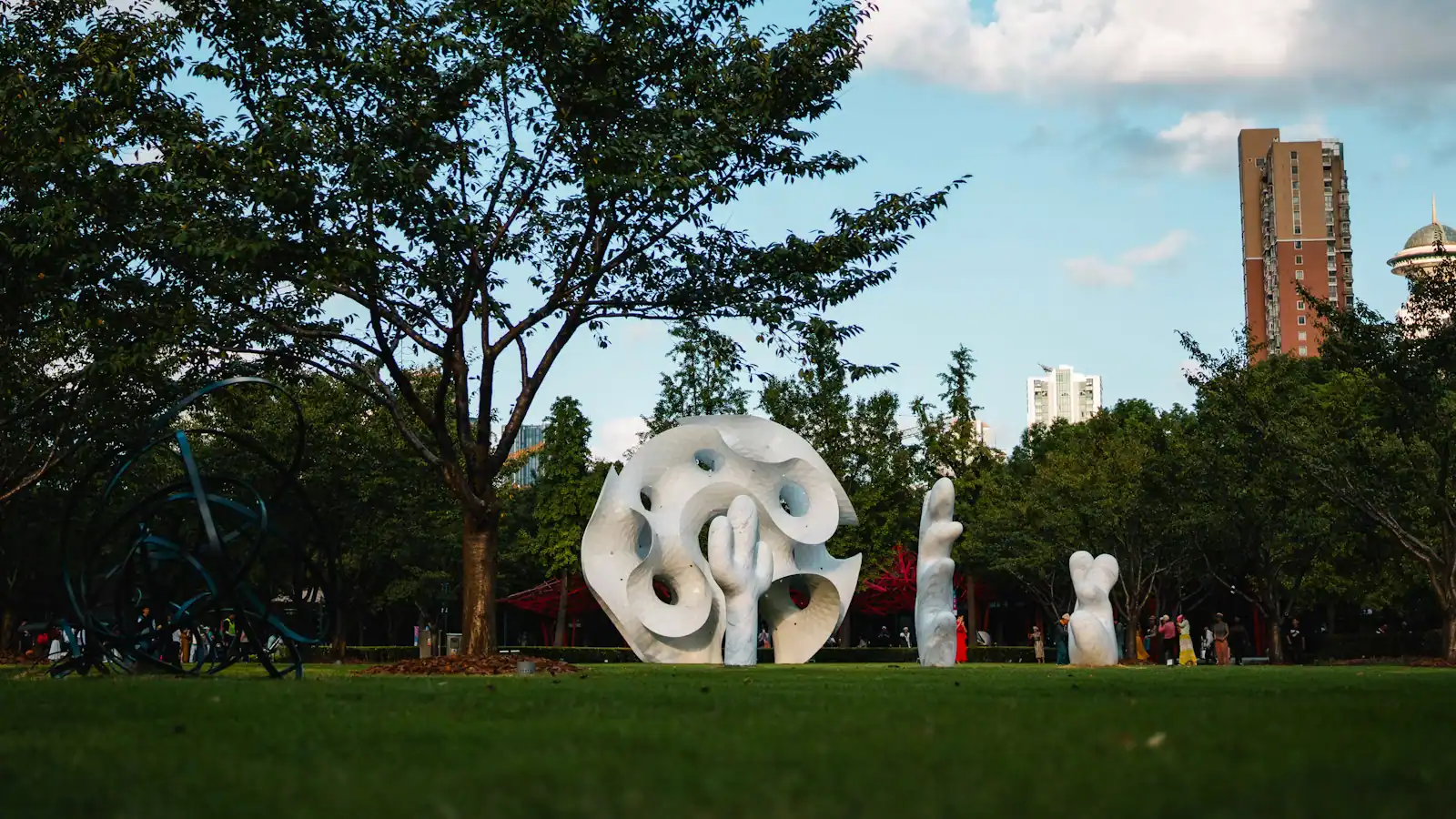
The names are serious. Anish Kapoor supplies the reflective intervention that turns the sky and the surrounding trees into part of the object. Zhang Huan contributes one of the works visitors remember longest, a monumental head that reads as both figure and landform. David Nash works in charred and carved wood, which sits comfortably against the planting. Masayuki Koorida, Jenny Holzer and Giuseppe Penone round out a list that would be credible in any sculpture park in the world.

If you come from a strict garden tradition you may find it intrusive. If you come from contemporary art you will find the siting unusually thoughtful. Either way, this is the clearest statement of what Grand Rapids does with art: buy serious work, put it outdoors, let the public walk around it for the price of general admission.

Season by season, and when not to bother

Late April into May is the flowering cherry window and the garden's busiest ordinary period. It is short and it moves with the spring, so check what is actually in bloom rather than booking on the calendar.

June to August gives you the fullest green and the loudest water. Mornings are best; the site fills after lunch, and there is no shade on the open sections of path.

Mid-October is, for a lot of regulars, the peak. The Japanese maples turn in a way no other week of the year matches, and the light in this part of Michigan in autumn is low and clean. If you can only come once, come now.

Winter is the connoisseur's visit and the riskiest one. Snow on stone and bare structure is exactly what the design was built to show, but the paths climb, ice forms, and the site restricts access to sections of the outdoor grounds in hard weather. Call ahead in January and February rather than driving out on spec.

Two site-wide events change the whole calculation. Butterflies Are Blooming runs from 1 March to 30 April inside the conservatory and makes the entire park busy on every weekend of those two months. Christmas and Holiday Traditions runs from November into the first week of January and does the same. Neither is in the Japanese Garden, but both will decide how long you queue to get in.

Tickets, timing and doing it in one visit

There is no separate ticket. The Japanese Garden is included in general admission to Frederik Meijer Gardens & Sculpture Park, which had 881,625 visitors in 2025 and is the most-visited attraction in the region by a distance.

Budget forty-five to seventy-five minutes for the Japanese Garden alone and three hours for the site as a whole. The realistic one-visit route is conservatory first if the weather is bad, Japanese Garden second, then the main sculpture park with Nina Akamu's twenty-four-foot American Horse and Ai Weiwei's Iron Tree.

Practical notes:

  • Arrive at opening or after 3pm. The middle of the day is the crowd.
  • The site is on the East Beltline, roughly fifteen to twenty minutes from downtown by car and effectively unreachable without one. Parking is free and large.
  • Food is available on site but limited at peak times. Eating before you come is the better plan.
  • No picnicking in the gardens, and no drones. The Japanese Garden in particular asks for quiet; it is the one part of the site where that request is taken seriously.
  • Admission prices are reviewed periodically. Check the current rate before you travel rather than relying on a figure from an older guide.

Near Japanese Garden

Straight-line distances, so allow more on the road — the island is long and has one main parkway.

  • Tall tropical plants and palms growing under the glass roof of a large conservatory

    Park

    Frederik Meijer Gardens & Sculpture Park

    A grocery fortune turned into 158 acres of Rodin, Oldenburg and orchids, plus the one glasshouse in Michigan that fills up in February.

    2.5–5 hoursAround $20–25 per adult, with lower rates for seniors, children and members0.3 mi away

  • A woodland path covered in fallen autumn leaves between bare trees

    Nature preserve

    Blandford Nature Center

    Two hundred and sixty-four acres of woodland inside the city limits, with a sugarhouse that boils sap from late February.

    1.5–3 hoursAround $5 per person; members and the youngest children free6.6 mi away

  • A striped awning and painted lettering above a storefront with a US flag on the wall

    Neighbourhood

    Free

    Eastown

    Two blocks around a five-way junction, a hot dog counter that turned fifty, and the street fair that shuts the road every September.

    1–3 hoursFree to walk around, and the September Streetfair is free to enter.2.8 mi away

  • Tall pine trunks and open understorey in a sunlit stretch of sandhill forest

    Trail

    Free

    Provin Trails Park

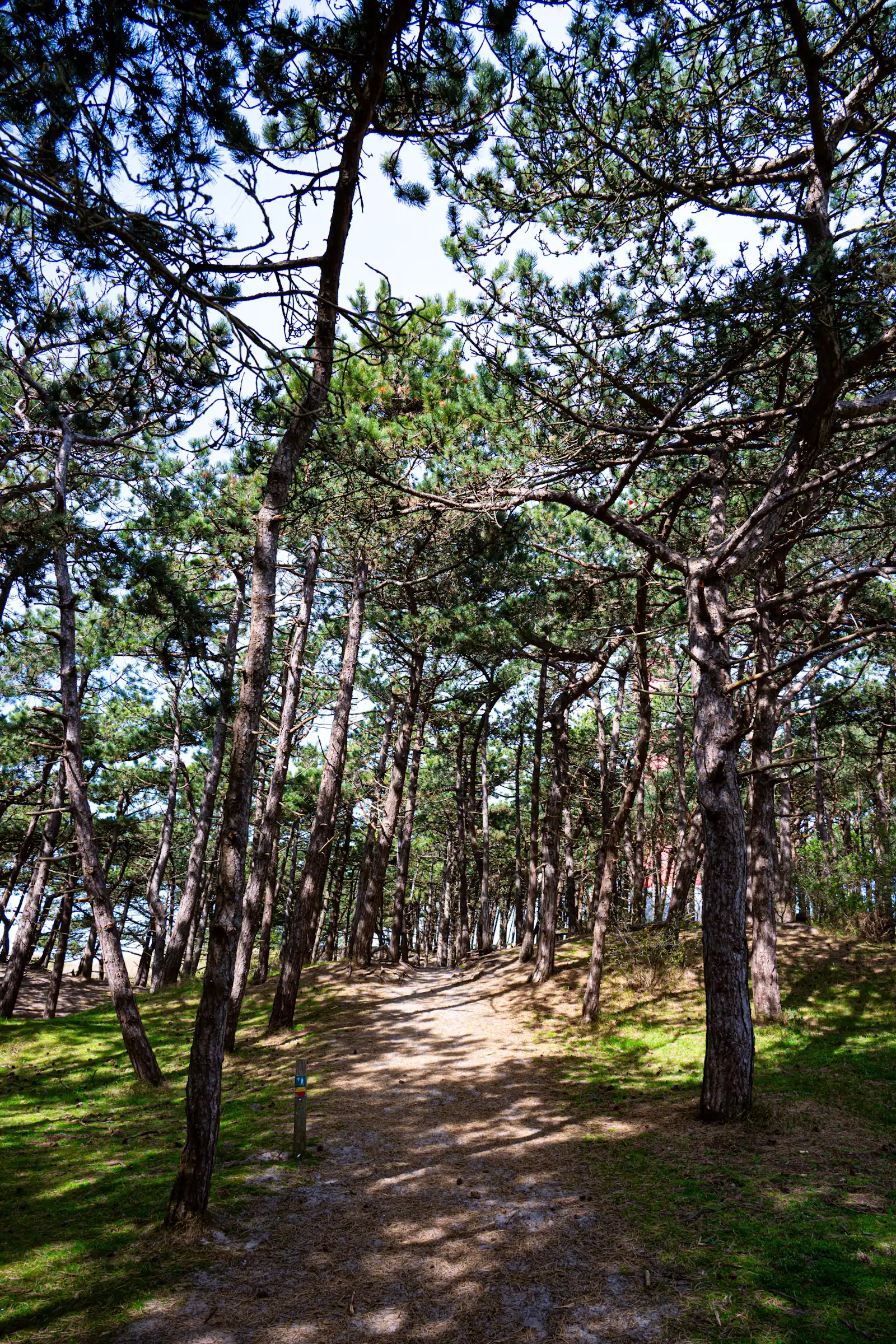
    Forty-six acres of pine and glacial sand where the city goes to ski when the lake-effect snow arrives, ten minutes from the East Beltline.

    1–2 hoursNo admission charge for the park or the trails.3.3 mi away

Japanese Garden: common questions

Do you need a separate ticket for the Japanese Garden at Meijer Gardens?

No. The Richard & Helen DeVos Japanese Garden is part of Frederik Meijer Gardens & Sculpture Park and is covered by general admission, along with the tropical conservatory, the main sculpture park and whichever seasonal exhibition is running. Members enter free. There is no way to visit the Japanese Garden on its own, and no reduced ticket for seeing only part of the site.

How long does the Japanese Garden take to walk?

Forty-five minutes at an unhurried pace, up to about ninety if you stop at the bonsai collection and the sculpture. It covers eight acres on a hillside, so the walk involves real climbing and descending rather than a flat loop. Allow three hours for the whole Meijer Gardens site if you also want the conservatory and the main sculpture park with the twenty-four-foot American Horse.

When is the best time to visit the Japanese Garden in Grand Rapids?

Mid-October, when the Japanese maples turn. Late April into May is the flowering cherry window, but it is short and weather-dependent. Summer gives the fullest planting and the most water noise. Winter shows the structure at its best under snow and is the quietest visit of the year, but sloped paths ice up and sections can close, so check conditions before driving out in January.

Who designed the Japanese Garden at Meijer Gardens?

Hoichi Kurisu of Kurisu International, a designer trained in Japan who has built gardens across North America. The eight-acre garden opened on 10 June 2015 after several years of construction. Its teahouse was built in Japan by Japanese craftsmen, dismantled for shipping and reassembled on site with traditional tools, and the four waterfalls were designed as a composed sequence rather than as separate features.