Beach
Free
Saugatuck
A hand-cranked ferry across the Kalamazoo River, 302 steps up a dune to a Cold War radar dome, and a beach on the far side.
5–10 hoursThe town is free to walk; the ferry, beach parking and the state park each charge separately.
Things to Do
Lake Michigan day trips from Grand Rapids: Holland, Grand Haven and Saugatuck are 30 to 45 minutes west. Which town suits which day, and when to drive.
 Unsplash
You are staying in a city thirty miles from the third largest lake in North America, and that is a very different proposition from staying on it. Grand Rapids is an inland city. It has a river, not a shoreline. But the western edge of Michigan is close enough that a lake day is a normal part of a trip here, and the drive is short enough that you can be back in time for dinner in Uptown.
The numbers that matter. Holland is roughly thirty miles out on I-196, which is a thirty to forty minute drive. Grand Haven is about forty minutes, north and west. Saugatuck is forty to fifty-five minutes depending on the day. Muskegon is about forty-five. All four sit on the same coast and none of them resembles the others.
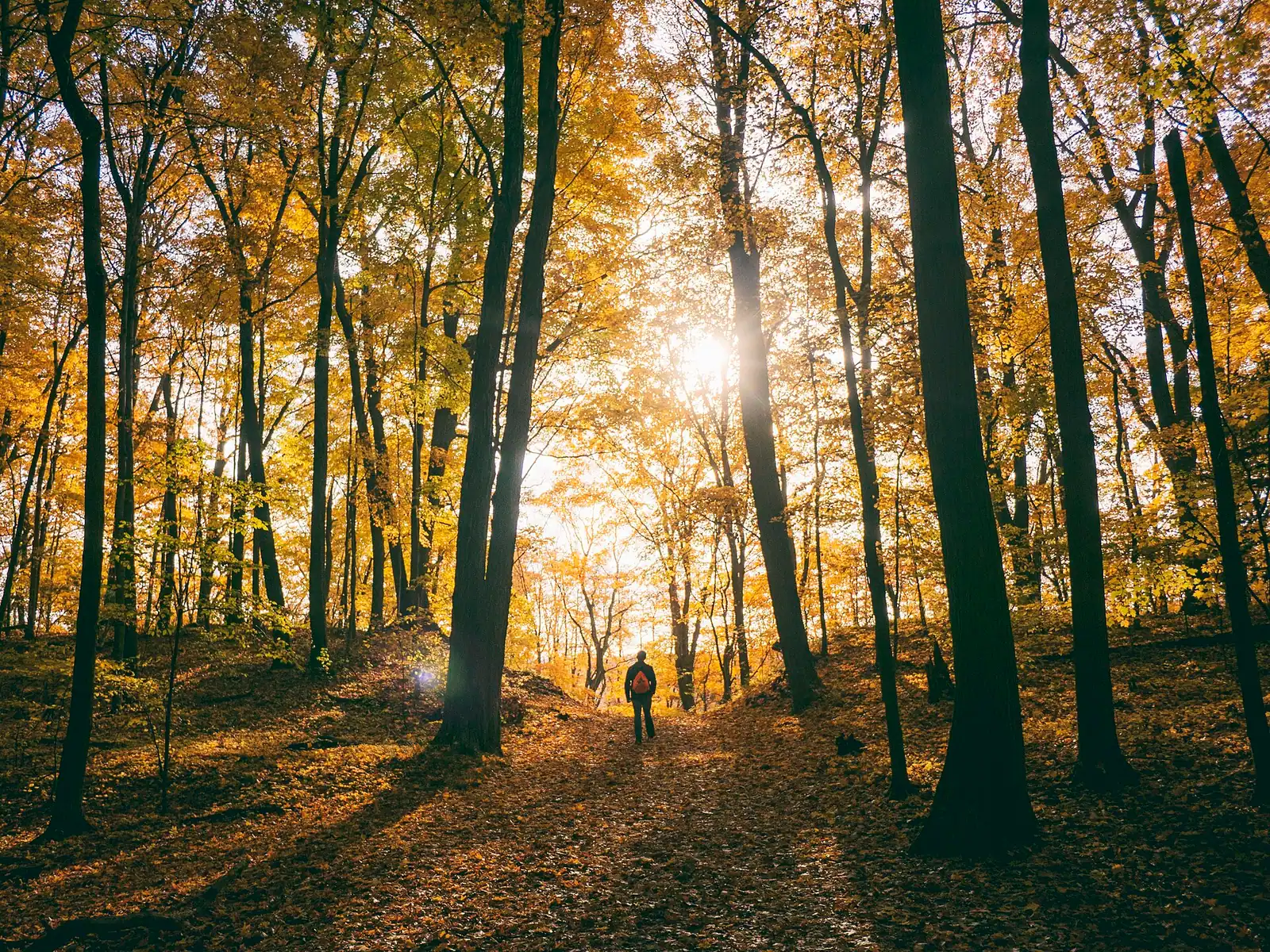
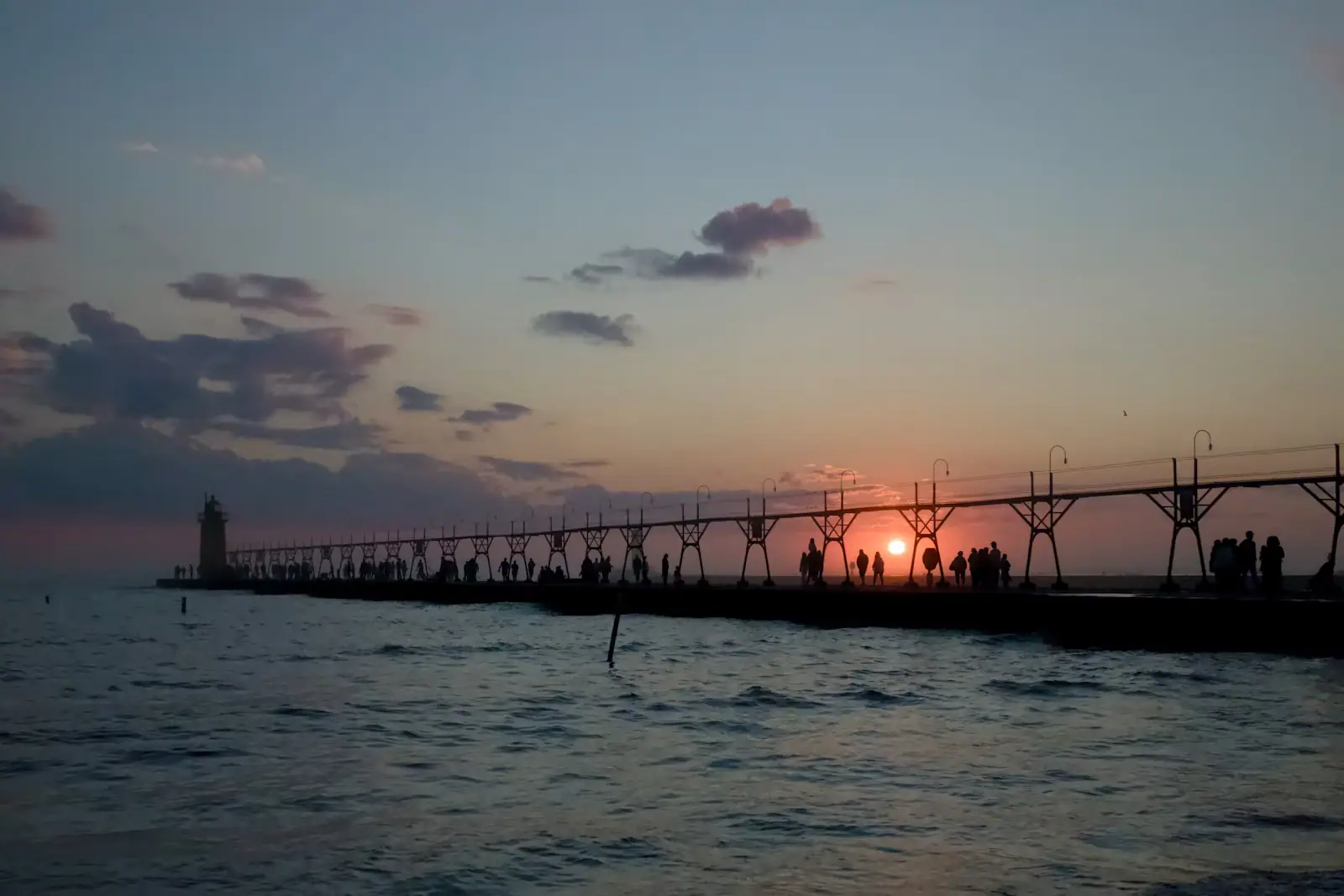
What makes this shoreline unusual is the sand. Lake Michigan's eastern shore carries some of the largest freshwater dune systems in the world, built by prevailing westerly winds pushing sand off the lake for thousands of years, which is why the beaches here are wide and pale and backed by hills rather than by rock. It also faces west, which means the sun sets over water. In a state where almost everything else looks east, that single fact is why these towns have visitor economies at all.
Two honest cautions before you plan a day. First, the water is cold. Lake Michigan warms slowly and does not become comfortable for most people until well into July, and it goes cold again quickly in September. A June beach day here is a sit-on-the-sand day for most visitors, not a swimming day. Second, the traffic. On a hot summer Friday and Saturday, westbound I-196 and the roads into Holland and Grand Haven carry the entire metropolitan area doing exactly what you are doing, and the beach car parks fill by late morning.
The way to use this page is to pick the town by the kind of day you want rather than by the distance, because forty minutes is forty minutes in every direction. Holland is a town with a lake attached. Grand Haven is a lakefront with a town attached. Saugatuck is an arts village with dunes around it. Choose accordingly, leave early, and remember that you are going home to a city.
 Unsplash
Holland was founded by Dutch separatists in 1847 and has never stopped mentioning it, which sounds like a marketing decision and is actually a genuine continuity. The heritage here is not a theme; the town was Dutch-speaking within living memory.
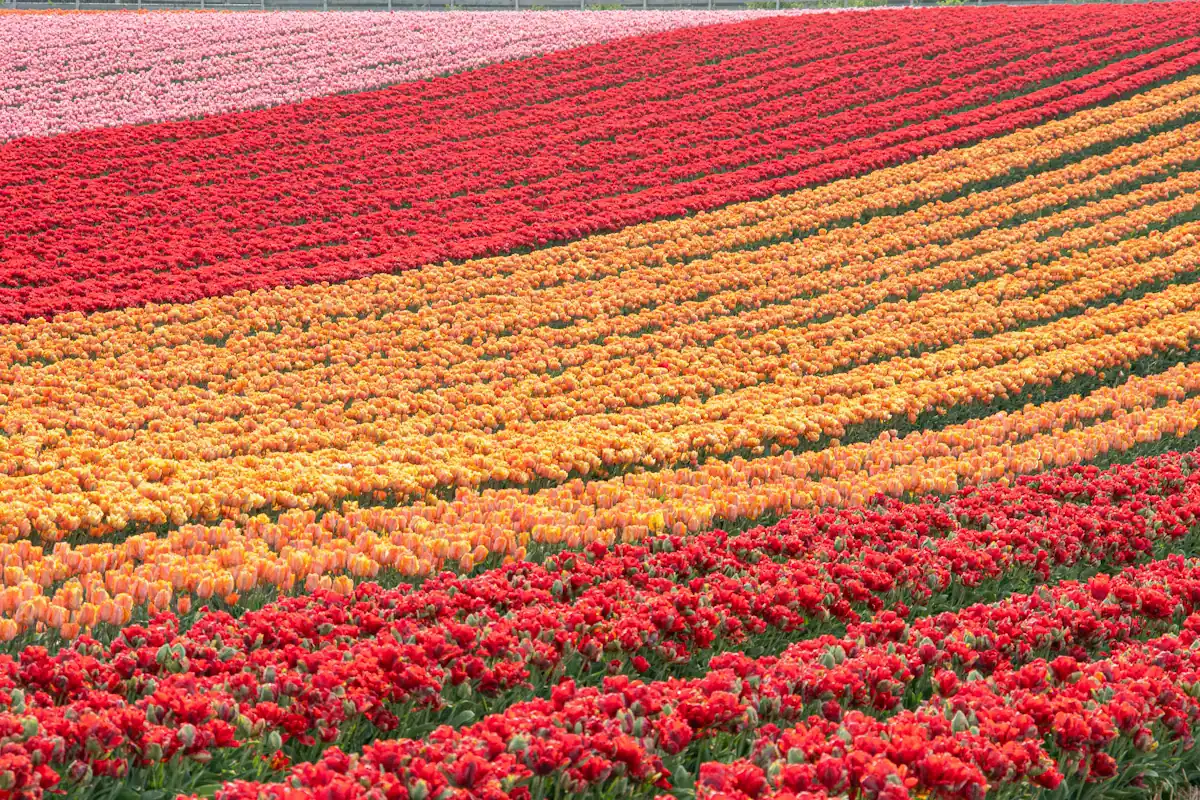
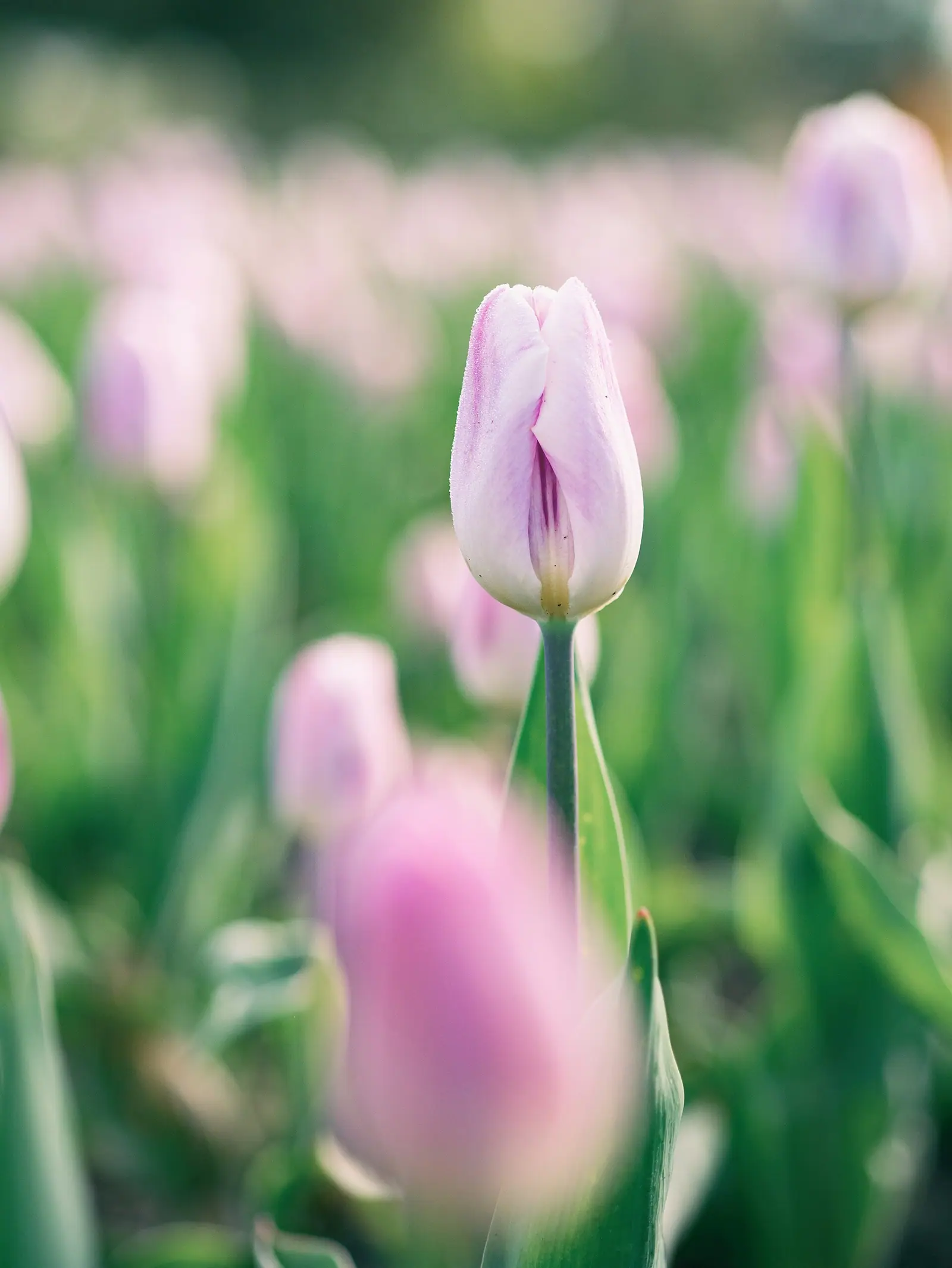
Windmill Island Gardens holds De Zwaan, an eight-sided Dutch smock mill somewhere in the region of two hundred and fifty years old, shipped over from the Netherlands and reassembled here. It still turns and it still grinds wheat into flour, which makes it, by common description, the only authentic working Dutch windmill in the United States. Around a hundred and fifty thousand tulips go into the grounds for spring.
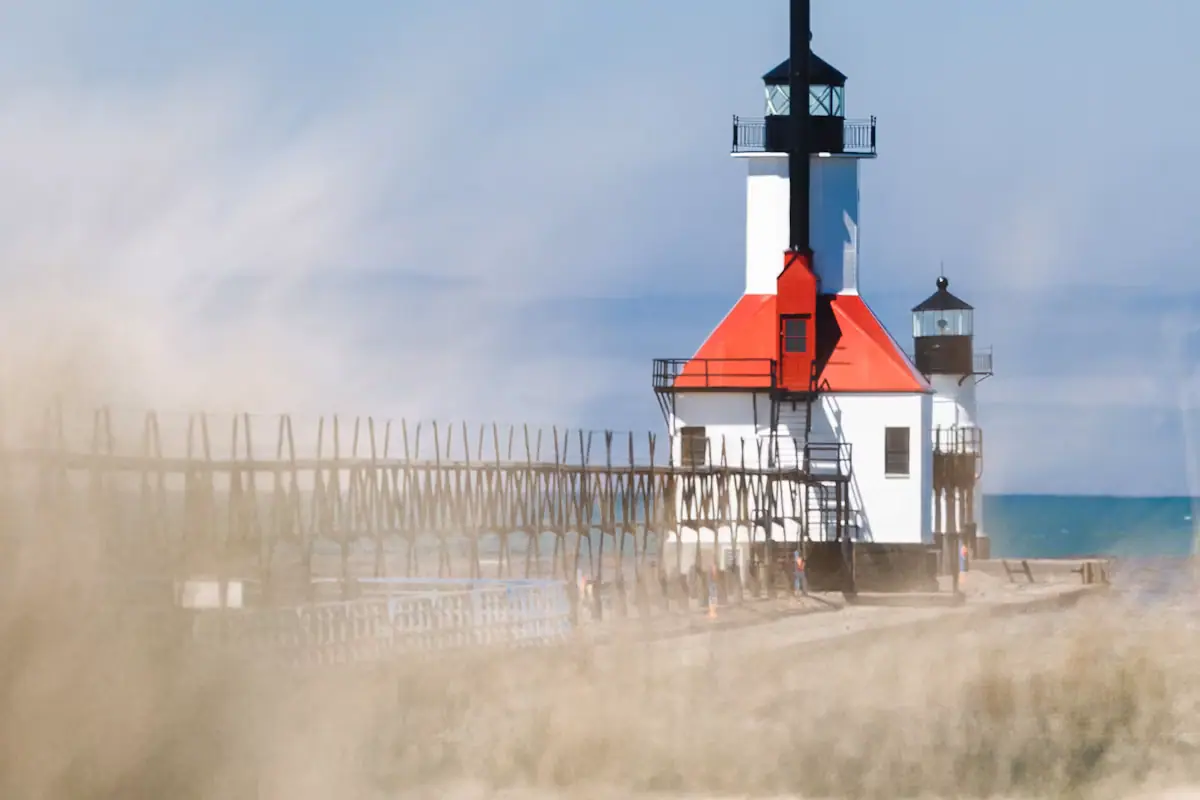
Holland State Park puts you on one of Michigan's most visited beaches with a view of Big Red, the Holland Harbor Light, which went up in 1870, stands about forty-two feet and has only worn its famous red since 1956. The north pier boardwalk that gives the best view of it is wheelchair accessible, which is worth knowing because very little else on this coast is.
Tulip Time is the reason people book flights. The 2026 festival ran from 1 to 10 May with two parades and a reported six million tulips planted across the town. It is genuinely large, it is genuinely crowded, and accommodation in both Holland and Grand Rapids tightens for it. If you are visiting in early May, either build the trip around it or deliberately avoid those ten days, because there is no middle course.
 Unsplash
Grand Haven sits where the Grand River, the same river that runs through the middle of Grand Rapids, finally reaches the lake. That connection is not a coincidence of geography; it is the reason both towns exist.
The organising feature is the boardwalk, about two and a half paved and flat miles running from the downtown waterfront out along the channel to the beach and the pier. It is the easiest long walk on this coast and the most usable for anyone with mobility limits, pushchairs or a bicycle.
At the end of it is the south pier, with its lighthouses at the far end, and the caution that comes with it. More on the water below; the short version is that a pier is the most dangerous place on a Great Lake and the best place to photograph one.
Grand Haven State Park is a compact beach with a campground behind it, and it does something unusually good: beach wheelchairs and a track chair are available to borrow at no charge from the campground office, which makes this the accessible beach on this stretch of coast.
The thing to stay for is the Musical Fountain, built in 1962 and described as the world's largest of its kind. Water, light and music, about twenty to twenty-five minutes, free, played after dark from Memorial Day to Labor Day and on Friday and Saturday evenings in May and September. Watch it from the waterfront across the channel.
One week to know about: the Coast Guard Festival in late July, which in 2026 ran from the 24th to the 2nd of August with more than thirty-five events, ship tours, parades and fireworks. The town is full.
 Unsplash
Saugatuck has been an artists' town since the early twentieth century, when a Chicago art school set up a summer painting colony in the dunes here, and the gallery density downtown is a direct inheritance of that. It is also one of the oldest established LGBTQ+ resort towns in the Midwest, which gives the place a character that Holland, forty minutes north, conspicuously does not share.
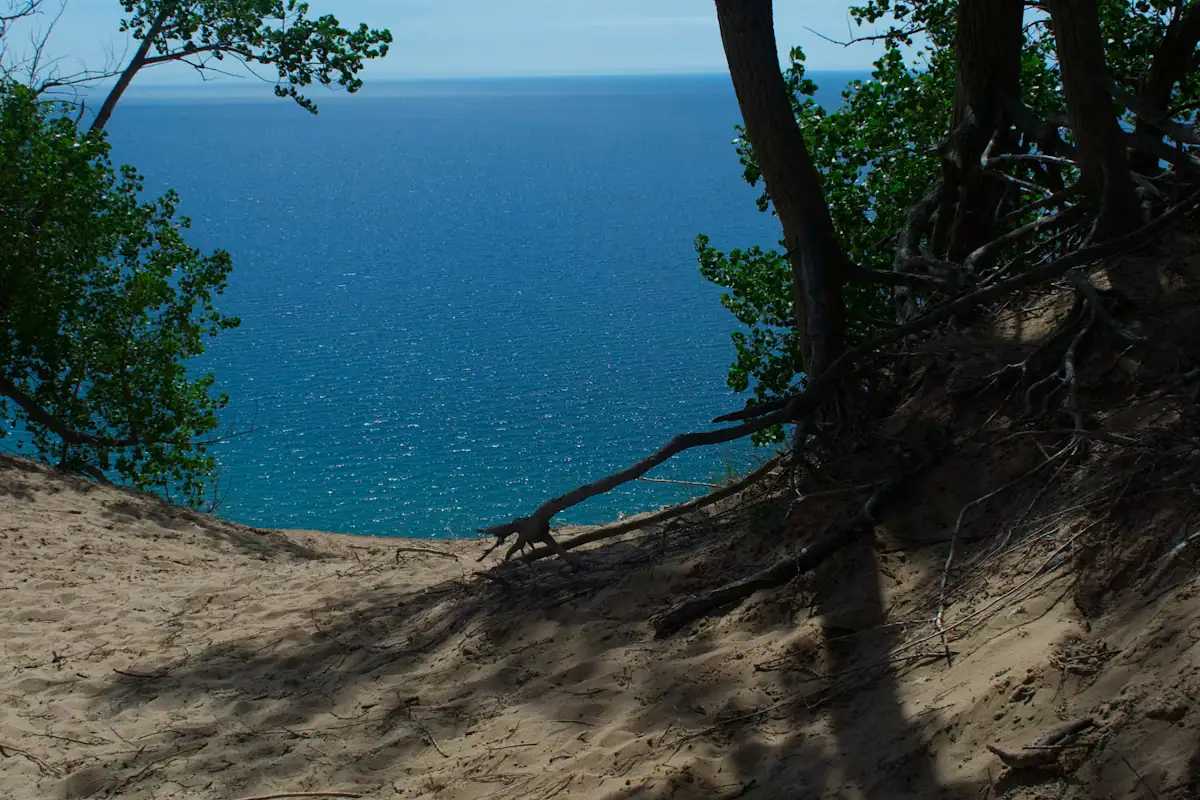
The mechanics of a day here are unusual and worth understanding. The town sits on the Kalamazoo River, not on the lake, and the beach is on the far side. To get across you can drive round, or you can take the chain ferry, a hand-cranked boat that pulls itself along a chain laid on the riverbed, takes about five minutes, and is generally described as the last operating chain ferry in the country.
On the far bank, Mount Baldhead is a dune with a staircase up it. Counts differ between about two hundred and eighty and three hundred and three steps, which tells you something about how anybody trying to count while climbing gets on. At the top you look down on the lake, the river mouth and the town.
Down the far side is Oval Beach, the best beach of the three towns on this page and one that has turned up in international shoreline rankings. It runs a defined season, roughly Memorial Day weekend to Labor Day weekend, and it charges for parking.
North of town, Saugatuck Dunes State Park is the quiet alternative: no concessions, a walk of some distance through forest and dune before you reach sand, and consequently almost nobody on it in June.
Local tips
When to go
May belongs to Holland. Tulip Time ran 1 to 10 May in 2026 and the town is transformed and rammed in equal measure. Outside those ten days, May is quiet, cold at the water and lovely on the dunes.
June is the honest disappointment month. The land is warm, the lake is not, and a lot of visitors spend the day sitting on sand looking at water they will not get into. It is also the best month for Saugatuck Dunes State Park, because there is nobody there.
Mid-July to late August is the swimming season, and it is the busy one. Weekends are crowded, car parks fill early and accommodation on the coast is expensive. The late-July Coast Guard Festival fills Grand Haven completely.
September is the best month on this coast and it is not close. The lake holds its summer warmth into the first half of the month, the crowds evaporate after Labor Day, the light is better, and the Grand Haven fountain still plays on Friday and Saturday evenings. If you have any flexibility at all, come in September.
October gives you dune walks in colour and a lake that has gone cold. November to March is a photographer's coast: ice formations, empty beaches and short daylight, with most of the town closed around you.
How they compare
The mistake is treating these as interchangeable beach towns. They are not remotely alike.
| Town | Drive from downtown | The day it gives you | Best for | Skip it if |
|---|---|---|---|---|
| Holland | About 30 miles, 30 to 40 minutes on I-196 | Dutch heritage, a working windmill, a lighthouse you can walk to, one of Michigan's busiest state park beaches | Families, first-timers, and anybody in the first ten days of May | You want quiet; it is the most visited of the three |
| Grand Haven | Roughly 40 minutes via I-96 and US-31 | A two and a half mile boardwalk, a long south pier with lighthouses, a free musical fountain after dark | A full day with an evening attached, and accessible beach access | You are going only for the beach; Holland's is bigger |
| Saugatuck and Douglas | 40 to 55 minutes, traffic dependent | Galleries, a hand-cranked ferry, a dune climb with around three hundred steps, and the best beach of the three | Couples, walkers, people who want the least commercial version of this coast | You are travelling with anyone who cannot manage stairs or sand |
| Muskegon | About 45 minutes north | An amusement park, a state park, a preserved Second World War submarine | Teenagers, rain contingency | You want the postcard shoreline; it is a working port city |
One more piece of arithmetic. Millennium Park, inside Grand Rapids, is fifteen minutes from downtown and its water is warmer. If the plan is a swim with small children rather than a day at the lake, stay in town and save ninety minutes of driving.
Before you book
A freshwater lake with no tide and no salt reads as safe, and on the wrong day it is not. Three specific things, none of which are the ocean advice you have read elsewhere.
Cold, for longer than you expect. Lake Michigan holds an enormous volume of water and warms slowly. It is commonly still in the fifties in June and does not reach what most people would call swimmable until the second half of July. It cools quickly after Labor Day. A May or June trip here is a walk-on-the-sand trip.
Never swim beside a pier. The long structures at Holland, Grand Haven and the other channel mouths generate strong currents running alongside them, and these are the conditions that account for a large share of Great Lakes drownings every summer. Walk out on the pier if it is open and calm. Do not get in the water next to it, and do not climb on a pier at all when waves are breaking over it, which happens fast when the wind swings onshore.
Assume nobody is watching. Most Michigan beaches, including state park beaches on this coast, are unguarded. Where a flag system is flown, it is advisory and the beach stays open under a red flag. Read the flag, then make your own decision, and keep children within arm's reach regardless of what colour is on the pole.
Winter is a separate hazard entirely. The shoreline ice formations from January onward are spectacular and draw photographers from across the Midwest. Shelf ice forms over open water, is undercut by waves and collapses without warning. Look at it from the sand.
On the ground
Every place below has its own page — hours, parking, what it costs and what to expect when you get there.
Beach
A hand-cranked ferry across the Kalamazoo River, 302 steps up a dune to a Cold War radar dome, and a beach on the far side.
5–10 hoursThe town is free to walk; the ferry, beach parking and the state park each charge separately.
Beach
Forty minutes west of the city: two red lights on a pier, a boardwalk along the channel and a fountain that plays to music after dark.
4–10 hoursThe town, boardwalk, pier and fountain are free. The state park charges vehicle entry.
Landmark
Thirty miles south-west: a 250-year-old Dutch windmill that still grinds flour, and a downtown whose pavements are heated from below.
4–10 hoursThe town and beaches are free; Windmill Island Gardens and the state park charge separately
Trail
A downtown loop on both banks of a river that is currently being torn up so it can have its rapids back.
1–1.5 hoursFree. Parking is the only cost and that is a downtown ramp
Park
Fifteen hundred acres of former gypsum mine and gravel pit, now West Michigan's largest urban park, with a swimming beach in the middle.
1.5–5 hoursPark free; the beach and splash pad area carries a daily charge
Straight answers
About thirty to forty-five minutes by car, depending on which town you aim for. Holland is roughly thirty miles out on I-196 and takes thirty to forty minutes. Grand Haven is about forty minutes via I-96 and US-31. Saugatuck runs forty to fifty-five minutes with traffic. Muskegon is about forty-five minutes north. Grand Rapids itself is an inland city on a river, not a lakeside one.
It depends on the day you want. Holland is a town with a lake attached: Dutch heritage, a working windmill, a lighthouse and the busiest beach. Grand Haven is a lakefront with a town attached, with a two and a half mile boardwalk and a free musical fountain after dark. Saugatuck is an arts village with dunes, the best beach of the three and the least commercial feel.
Later than most visitors expect. The lake holds an enormous volume of water and warms slowly, commonly sitting in the fifties through June and only becoming comfortable for most people in the second half of July. It stays warm into the first half of September and then cools quickly. A trip in May or June is a sit-on-the-sand trip rather than a swimming one.
Early May. The 2026 festival ran from 1 to 10 May, with two parades and a reported six million tulips planted across the town. It is one of the largest festivals in the state and it fills accommodation in Holland and tightens it in Grand Rapids too. If you are visiting in the first ten days of May, plan around it deliberately, in one direction or the other.
Usually, with two specific cautions that matter more than anything else. Do not swim beside the long piers at the channel mouths: they generate strong currents alongside them and account for a large share of Great Lakes drownings each summer. And assume nobody is watching, because most beaches on this coast are unguarded and the flag system is advisory rather than a closure.
Yes, per vehicle rather than per person, under the Recreation Passport system. Michigan-plated cars add it to their annual registration; out-of-state vehicles buy a daily or annual pass at the gate. Rates change, so check the current figure. If you are driving a hire car, ask whether it already carries a passport. Saugatuck's Oval Beach is run by the city and charges separately.
A hand-cranked boat that pulls itself across the Kalamazoo River along a chain laid on the riverbed, connecting downtown Saugatuck to the Mount Baldhead and Oval Beach side. The crossing takes about five minutes and it is generally described as the last operating chain ferry in the United States. It runs seasonally rather than year-round, so check before you plan a day around it.
For photographs and emptiness, yes. Ice formations build along the shoreline from January and draw people from across the Midwest. For anything else, less so: a good number of shops, galleries and restaurants in Saugatuck and Douglas close or cut days outside the May to October season. Do not walk on shelf ice under any circumstances; it forms over open water and collapses without warning.
Keep exploring
Guide hub
Furniture paid for this city, and then it paid for everything worth coming to see in it. That is the single idea a visitor needs. Grand Rapids made…
Things to do
Almost nothing green in Grand Rapids is original. The largest park in the city is fifteen hundred acres of former gypsum workings and gravel pits…
Who it suits
Grand Rapids is better with children than its reputation suggests, and the reason is the same reason it is better with adults: a century of local…

Who it suits
A weekend for two in Grand Rapids works, but not for the reasons a travel brochure would give. There is no old quarter. There is no waterfront…
Plan your trip
Grand Rapids runs on a different calendar from most American cities, and getting that wrong is the commonest planning mistake made here. Summer is…
Plan your trip
The honest answer is a split one. Downtown Grand Rapids is genuinely walkable and has a free shuttle looping through it, so a visitor who never…
Read next
Guide
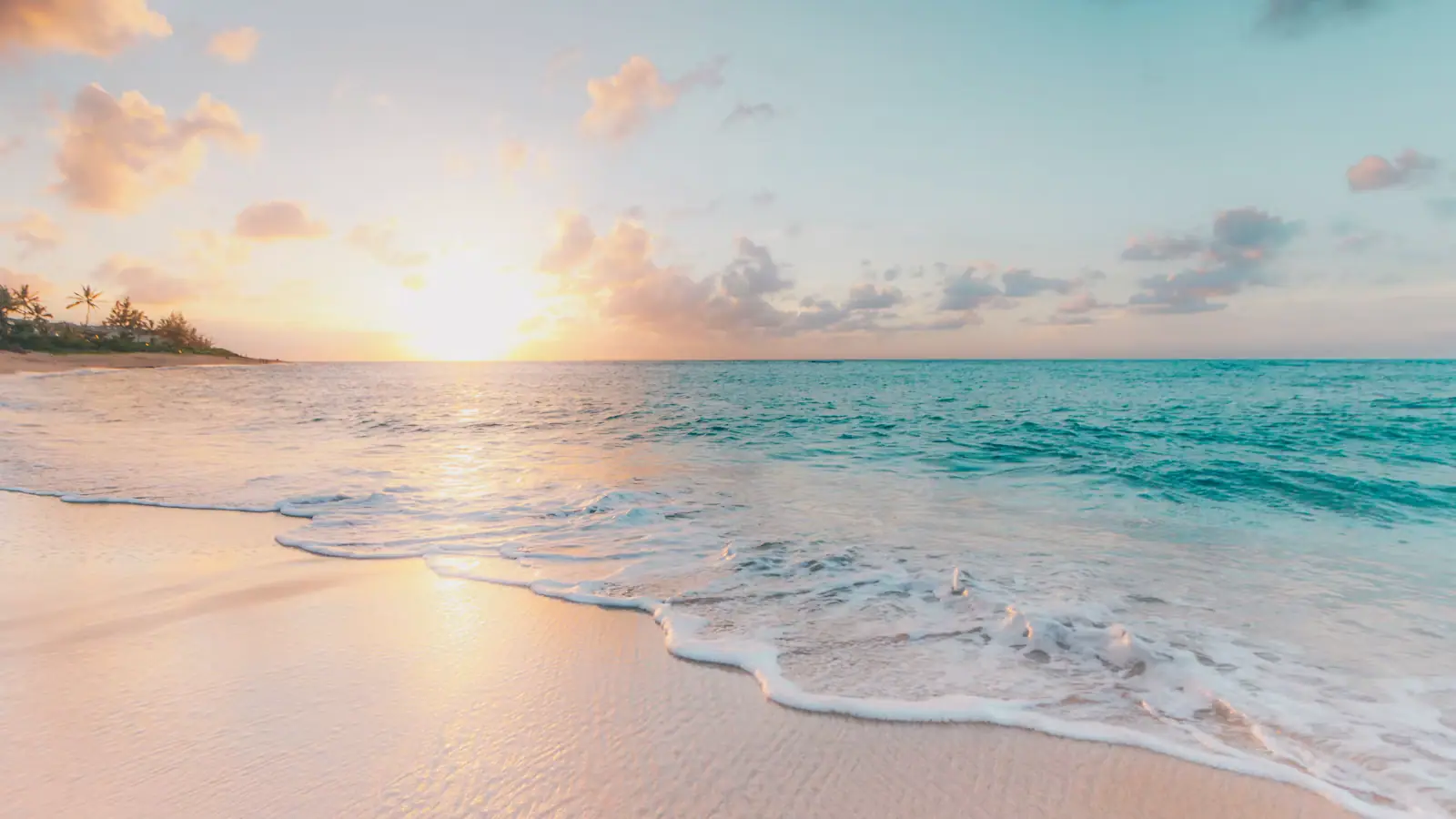
Four very different towns sit within forty-five minutes of downtown. Picking the wrong one for what you want is the most common way a Michigan beach day goes flat.
5 min readTheo Brandsma
Guide
Late September is the best fortnight and the most expensive one. March is the worst month and nobody says so. Here is the year, month by month, without the tourism-board gloss.
5 min readMarguerite Vanderhoff
Guide
Two nights, one car, and one hard constraint that decides the whole schedule: the free Frank Lloyd Wright house only opens to the public on Sunday afternoon.
5 min readMarguerite Vanderhoff

Guide
The zoo shuts for the winter, the carousel does not, and the best hour of a family day here costs three dollars and runs on a platform out over the river.
5 min readMarguerite Vanderhoff