Skip to content
Search
Menu

These bookings earn us a commission through Viator. You pay the same, and the money played no part in the selection.

Landmark

Holland, Michigan

Last updated

Thirty miles south-west: a 250-year-old Dutch windmill that still grinds flour, and a downtown whose pavements are heated from below.

Holland gets written about twice a year — in May when the tulips are out, and never otherwise — which is a shame, because the two genuinely remarkable things about it have nothing to do with flowers.

The first is De Zwaan. It is a Dutch windmill, roughly two and a half centuries old, standing on Windmill Island Gardens on the edge of town. It was not built as an attraction: it was bought in the Netherlands in the 1960s, dismantled, shipped and re-erected here, and it is widely described as the last authentic windmill the Dutch government allowed to leave the country. It still turns and still grinds flour, which makes it a working machine rather than a photograph opportunity. The thirty-six acres of gardens around it open from mid-April to the first weekend of October.

The second is underneath your feet in the town centre. Since 1988 Holland has run what is generally described as the largest municipal snowmelt system in the United States: more than ten acres of streets and pavements heated from below by water circulated through over a hundred miles of pipe, warmed with waste heat from power generation, capable of clearing an inch of snow an hour at 20°F with a wind blowing. The idea was brought back from Europe by a local industrialist. The effect is a lakeshore downtown that stays walkable through a Michigan January, which is precisely when a day trip from Grand Rapids would otherwise be pointless.

Then there is the rest: Hope College anchoring the centre, a genuinely good downtown of independent shops along Eighth Street, Lake Macatawa running out to Lake Michigan, and Big Red, the lighthouse on the south side of the channel that is on more Michigan postcards than any other building.

Thirty miles from Grand Rapids and thirty-five to forty minutes on I-196. It is the easiest full-day trip in this guide, and unlike most lakeshore towns it works in winter.

Getting there and parking

Roughly thirty miles south-west of Grand Rapids and thirty-five to forty minutes on I-196, which runs door to door with no awkward last leg. Exits for downtown Holland and for Ottawa Beach Road and the state park are separately signed, so decide before you leave which end of the day you are starting at.

Downtown parking is straightforward outside Tulip Time: street spaces and lots within a couple of blocks of Eighth Street. During the festival in early May, park on the edge and walk or use the shuttles; driving into the centre on a festival Saturday is a mistake.

Windmill Island Gardens is a few minutes from downtown with its own car park. Holland State Park and the Big Red viewpoint are about ten minutes further west at the end of Ottawa Beach Road, and the park requires a Michigan Recreation Passport on the vehicle.

Intercity bus and rail services do reach Holland, which makes it the most feasible of the three lakeshore towns without a car, though you will still want a taxi for the beach end.

De Zwaan, and why it matters that it works

Most reproduction windmills in America are sheds with sails bolted on. De Zwaan is not one of those. It is a genuine Dutch mill of around 250 years of age, bought in the Netherlands, taken to pieces, shipped across the Atlantic and rebuilt on this site, and it is commonly described as the last authentic windmill the Dutch permitted to be exported.

It still operates. A miller works the mill, the sails turn under wind, and the stones grind flour that is sold on site. Anyone who has only seen static windmills will find the noise and vibration of a working one a surprise — the whole structure moves.

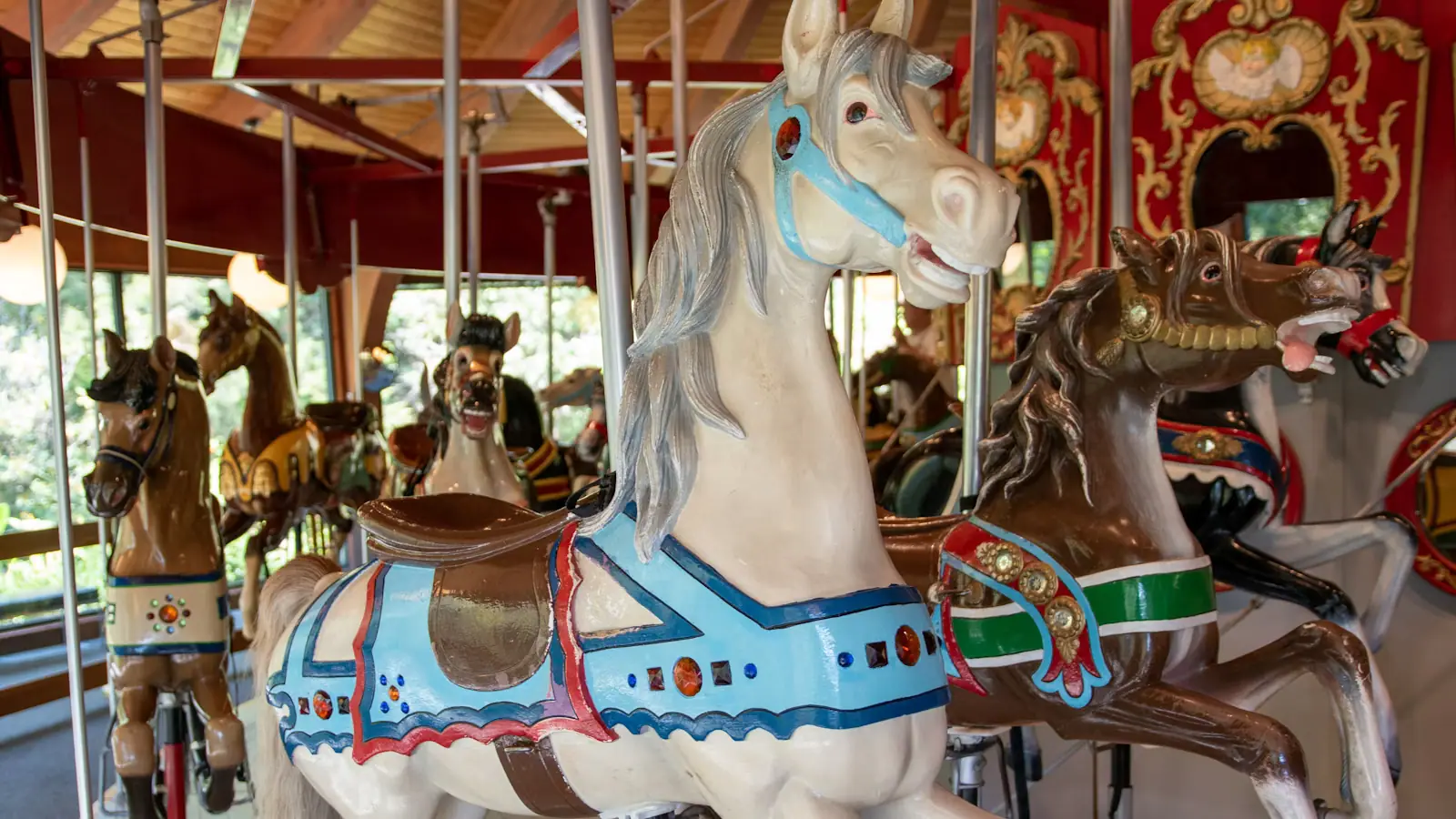
It stands on Windmill Island Gardens, thirty-six acres of planted ground with canals, a carousel, a replica street and a formal garden layout. The season runs from mid-April to the first weekend of October; in 2026 that was 13 April to 4 October. Outside those dates the island is closed and the mill is a distant silhouette from the road.

Practical points. Climbing inside the mill is usually part of the visit but the stairs are steep and ladder-like in the Dutch fashion, so it is not for everyone. Go early: tour groups arrive mid-morning. And during Tulip Time the island shifts to extended hours with a late-afternoon last admission, which is the single busiest week of its year.

Tulip Time, and the gamble on the bloom

Tulip Time runs for ten days at the start of May — 1 to 10 May in 2026 — and it is the reason most out-of-town visitors have heard of Holland at all. Around six million tulips are planted across the city in beds, parkways and gardens, there are two parades, and the town fills.

Here is what the promotional material will not tell you. Tulips do not read the festival calendar. A warm April brings them early and they can be past their best by the time the parade starts; a cold spring holds them back and the beds are still tight green buds during the festival's first weekend. It happens often enough that locals check bloom reports rather than booking on the dates.

So if the flowers specifically are the point, watch the bloom status in the week beforehand and be willing to come in late April instead. If the festival is the point — the parades, the costumes, the street scrubbing, the food — the dates are the dates.

Either way, plan the logistics. Park on the edge and walk or use the shuttles. Book a restaurant table or accept a wait. Expect the drive from Grand Rapids to take longer than forty minutes on the two Saturdays.

For a quieter version of the same idea, the tulip beds around Windmill Island and along the main civic parkways are free to look at from the pavement outside festival hours, and late April on a weekday costs you nothing and nobody is there.

The heated pavements, and the winter trip nobody makes

Grand Rapids averages around seventy-seven inches of snow a year and its cloudiest month is January, which is why most guides quietly write off the lakeshore from December to March.

Holland is the exception, for an engineering reason. Since 1988 the city has run a hydronic snowmelt system under its downtown: pipework carrying water heated to about 95°F, circulated at something like 4,700 gallons a minute through more than 120 miles of pipe beneath more than ten acres of street and pavement. It is generally described as the largest municipal system of its kind in the United States, and it is rated to clear an inch of snow an hour even at 20°F with a 10mph wind. The heat is waste heat captured from power generation, which is why running it is economically sane.

What that means for a visitor in February: bare, dry pavements along Eighth Street while everything either side of the city is under snow. Shops open, restaurants trading, and a walkable downtown in conditions that would make any other lakeshore town a write-off.

Pair it with the lakeshore in winter properly. Drive out to the state park and look at the ice formations building on the channel and the pier — the lake in a January blow is a spectacle in its own right — then come back into the heated centre to thaw out. It is the best cold-weather day trip from Grand Rapids and hardly anybody from out of town does it.

Big Red: how to actually see it

The lighthouse at the mouth of the Holland channel is on more Michigan postcards than any other structure, and visitors routinely fail to work out how to get to it.

Start with what it is. A light has stood on this site since 1870. The present building took shape in 1907 as a fog signal station painted a dull manila colour, gained its light tower in 1936 — which brought it to 49 feet — and was not painted the red it is famous for until 1956. So the thing you photograph is a twentieth-century building with a nineteenth-century job.

Now the access problem. Big Red sits on the south side of the channel, reached by a private road through a residential area, and it is not open for casual walk-up visits. Occasional open days are run by the preservation group that maintains it; those are announced and ticketed.

What everyone actually does is view it from the north side. Holland State Park's beach at the end of Ottawa Beach Road looks straight across the channel at it, and that is the standard photograph — red building, pier, water, and the dune behind. The park is a Michigan state park, so a Recreation Passport is needed on the vehicle.

Best light is late afternoon and evening, when the sun is behind you and on the building. In winter the same view comes with ice shelves on the channel, which is better.

Near Holland

Straight-line distances, so allow more on the road — the island is long and has one main parkway.

  • A small town of pale rooftops and a church spire seen from above, wrapped by wooded hills and river water

    Beach

    Free

    Saugatuck

    A hand-cranked ferry across the Kalamazoo River, 302 steps up a dune to a Cold War radar dome, and a beach on the far side.

    5–10 hoursThe town is free to walk; the ferry, beach parking and the state park each charge separately.10.4 mi away

  • A lighthouse rising above a harbour-side building at the water's edge

    Beach

    Free

    Grand Haven

    Forty minutes west of the city: two red lights on a pier, a boardwalk along the channel and a fountain that plays to music after dark.

    4–10 hoursThe town, boardwalk, pier and fountain are free. The state park charges vehicle entry.20 mi away

  • A sandy beach on calm inland water with trees along the far shore

    Park

    Millennium Park

    Fifteen hundred acres of former gypsum mine and gravel pit, now West Michigan's largest urban park, with a swimming beach in the middle.

    1.5–5 hoursPark free; the beach and splash pad area carries a daily charge21.3 mi away

  • Tall tropical plants and palms growing under the glass roof of a large conservatory

    Park

    Frederik Meijer Gardens & Sculpture Park

    A grocery fortune turned into 158 acres of Rodin, Oldenburg and orchids, plus the one glasshouse in Michigan that fills up in February.

    2.5–5 hoursAround $20–25 per adult, with lower rates for seniors, children and members29.4 mi away

Holland: common questions

How far is Holland, Michigan from Grand Rapids?

About thirty miles south-west, thirty-five to forty minutes on I-196. It is the easiest lakeshore day trip from the city because the motorway runs the whole way and there is no fiddly final leg. Holland is also the most practical of the three lakeshore towns to reach without a car, since intercity bus and rail services call there, though you will still want a taxi to get out to the beach.

When is Tulip Time in Holland?

Ten days at the start of May; the 2026 festival ran 1 to 10 May. Around six million tulips are planted across the city and there are two parades. The catch is that bloom timing does not follow the calendar: a warm April can put the tulips past their best before the festival opens, and a cold spring can leave them shut. Check bloom reports in the week before rather than booking blind on the dates.

Is the windmill in Holland, Michigan a real Dutch windmill?

Yes. De Zwaan is a genuine Dutch mill of around 250 years old, bought in the Netherlands in the 1960s, dismantled, shipped and rebuilt on Windmill Island. It is widely described as the last authentic windmill the Dutch government permitted to leave the country, and it still works: a miller operates it and it grinds flour that is sold on site. The island season runs mid-April to the first weekend of October.

Can you walk up to Big Red lighthouse in Holland?

Not usually. Big Red sits on the south side of the Holland channel, reached by a private road through a residential area, and it is not open to casual visitors; the preservation group that maintains it runs occasional announced, ticketed open days. The standard view is from the north side at Holland State Park, at the end of Ottawa Beach Road, which requires a Michigan Recreation Passport on the vehicle.

Is Holland worth visiting in winter?

More than any other town on this stretch of Lake Michigan, because of the snowmelt system installed in 1988. Over ten acres of downtown streets and pavements are heated from below, using waste heat from power generation, and rated to clear an inch of snow an hour at 20°F. The result is a walkable, open, dry town centre in February. Combine it with ice formations on the channel out at the state park.