Landmark
Free
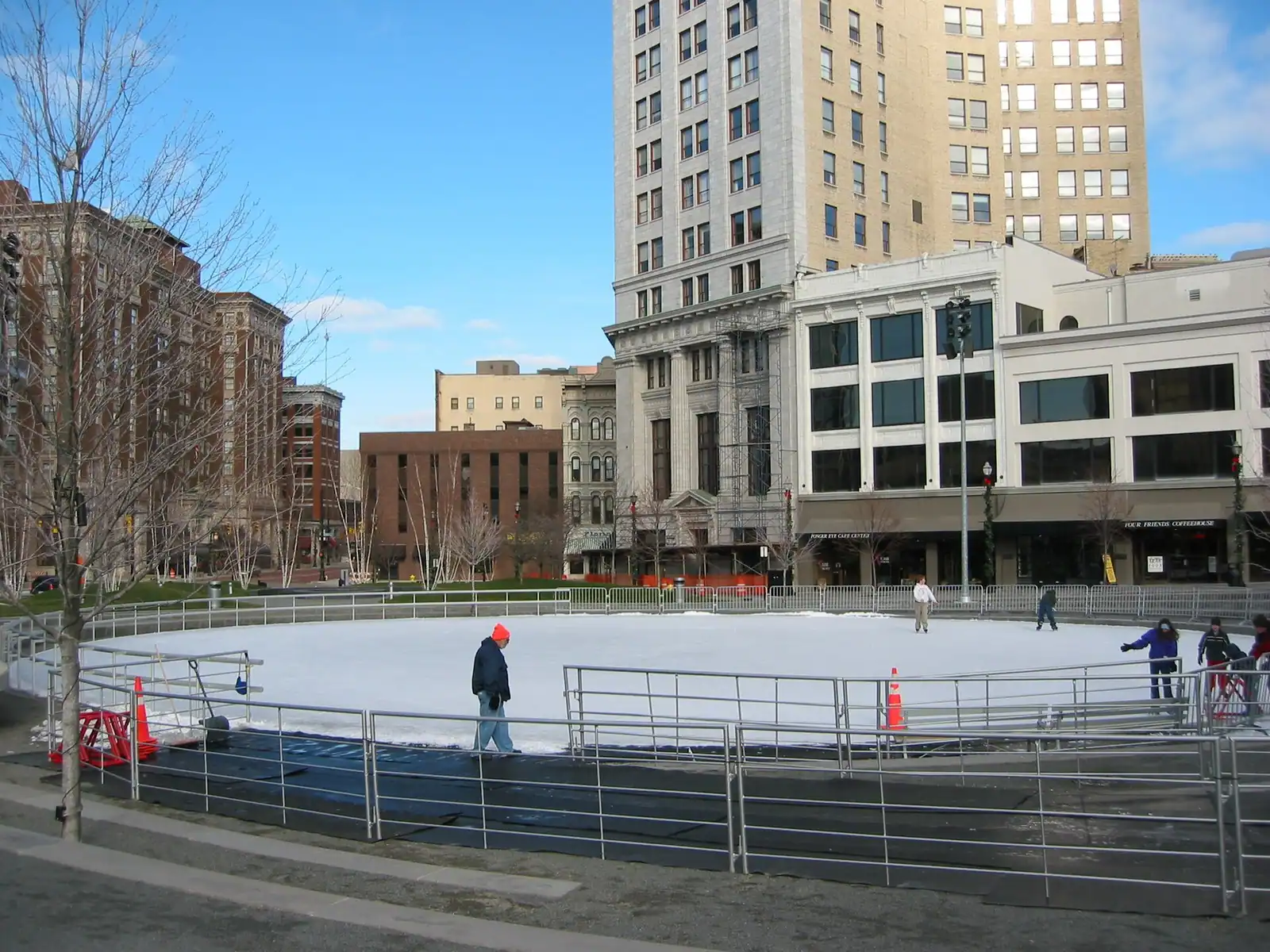
Rosa Parks Circle
A Maya Lin artwork you are allowed to walk on, and from December a public ice rink with the night sky under the ice.
0.5–2 hoursThe plaza is free at all times. Winter skating sessions carry a small charge.140 ft away
Museum
Last updated
The first LEED Gold certified art museum anywhere, built by a city whose fortune came from making furniture well.
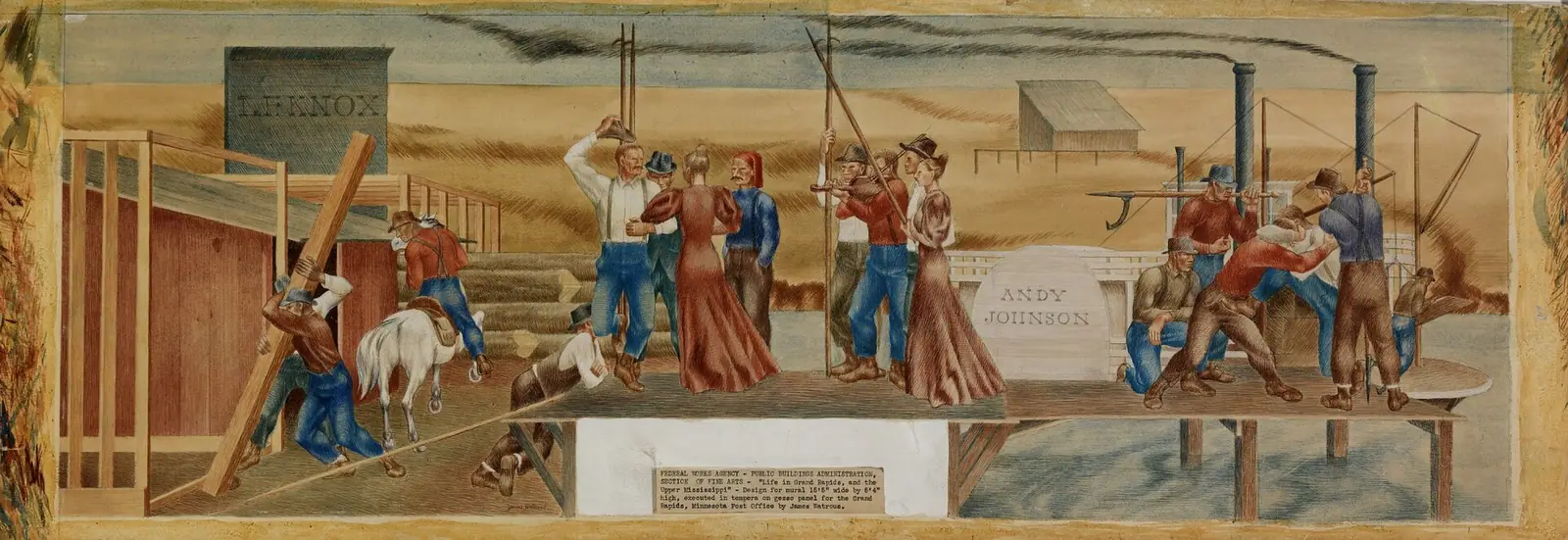
Photo: James WatrousPublic domain
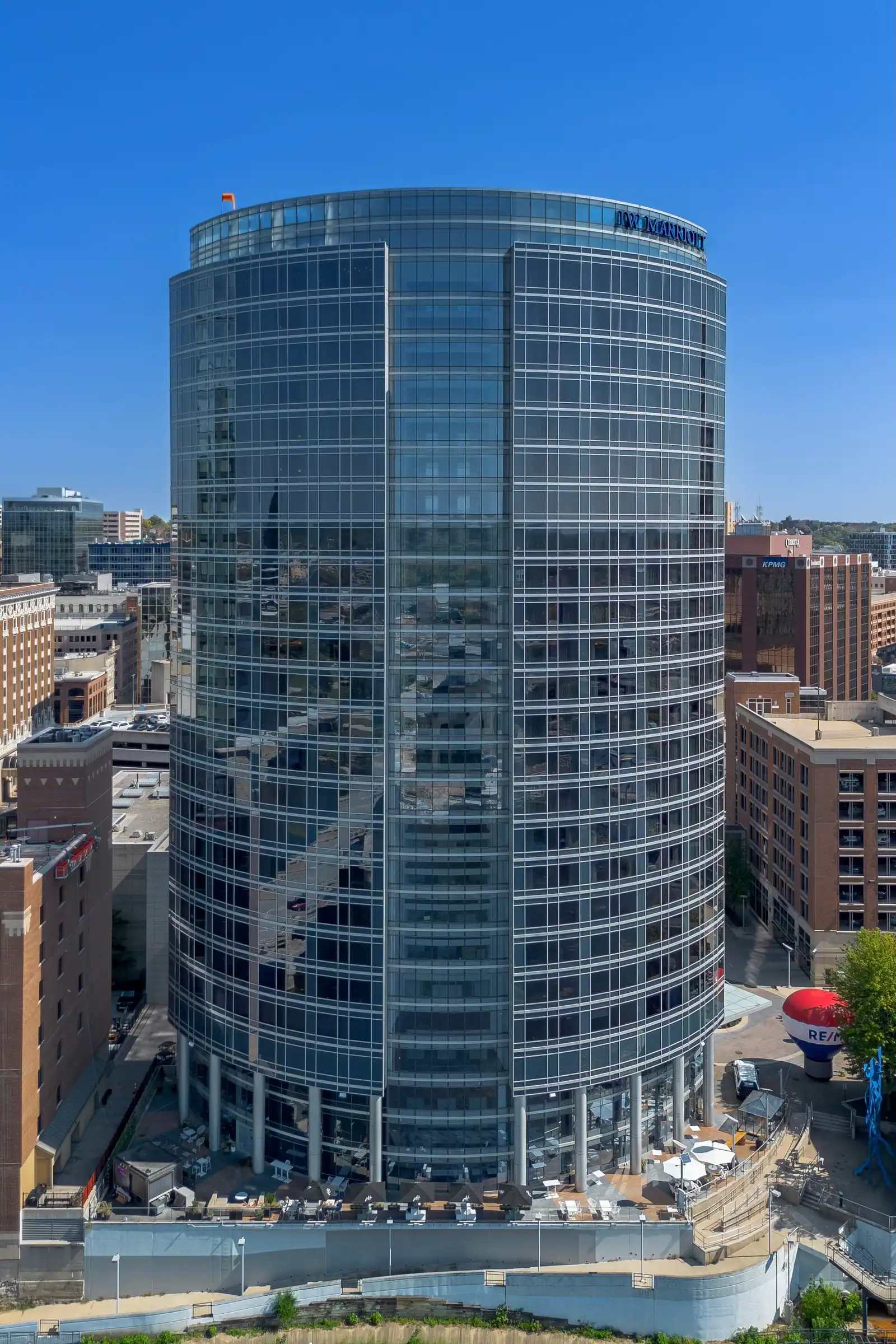
The Grand Rapids Art Museum has been collecting since 1910, but the building is the argument. It opened on Monroe Center in October 2007, designed by Kulapat Yantrasast of wHY Architecture, and in March 2008 it became the first newly built art museum in the world to earn LEED Gold certification. For a city that made its name and its money by manufacturing things carefully, that was not a green-credentials press release. It was a statement about what Grand Rapids thinks good building is.
It shows in how the place works. Daylight is the primary lighting strategy: three large skylights and a deep roof overhang bring controlled north light down into the upper galleries, so on a bright afternoon the paintings are lit by the weather. Rainwater is captured and reused. The 125,000-square-foot building carries about 20,000 square feet of gallery space, which is modest, and the layout makes a virtue of it — you are never lost, and there is no death march wing.
The permanent collection runs to roughly 5,000 works, with more than 3,500 of those prints, drawings and photographs. Renaissance through modern and contemporary, with real strengths in American painting, works on paper and design. Mathias Alten, the German-born Impressionist who spent most of his career in Grand Rapids, is represented in depth and is the local painter worth knowing before you arrive. The design holdings connect directly to the furniture companies that built the city.
The practical fact that changes people's plans: general admission is free on Thursday evenings, which the museum runs as Meijer Free Thursday Nights from around 5 to 8pm. Combine that with a walk down Monroe Center and it is the cheapest good evening downtown.
Ninety minutes is enough. Two hours if a major travelling exhibition is up.
GRAM sits at the top of Monroe Center, the pedestrianised spine of downtown, directly across from Rosa Parks Circle. Almost everything downtown is within a ten-minute walk, including Van Andel Arena, the riverwalk and the Monroe North brewery blocks.
There is no museum car park. Use one of the Monroe Center or Ottawa Avenue ramps, or the DASH shuttle from the free peripheral lots on the west side of the river. Evening ramp rates are lower, which suits the free Thursday window.
If you are driving in, exit US-131 at Pearl Street and turn east; you are three blocks away. The Silver Line and the Rapid's downtown routes stop within a couple of blocks on Division Avenue.
Most museums treat sustainability as plant-room engineering. GRAM put it in the galleries where visitors stand.
Yantrasast's design uses three skylights and a projecting roof plane to pull filtered north daylight into the upper-floor galleries, so the art is lit by Michigan weather for much of the day and the artificial lighting supplements rather than replaces it. A rainwater capture system feeds non-potable use. Concrete is left exposed. Nothing about it is showy, which in a city that prizes plain competence reads as a compliment.
Certification came from the US Green Building Council in March 2008, five months after the doors opened, and made GRAM the first newly constructed art museum anywhere to hold LEED Gold. That claim gets repeated a lot locally and it is accurate.
The one drawback is the one every daylit museum has: on a grey January afternoon in West Michigan, which is most January afternoons, the upper galleries are dimmer than you expect. Go in the morning if the forecast is flat. In 2025 the museum secured state funding toward replacing ageing building systems, so some spaces may be affected by work; check before a special trip.
Around 5,000 works, of which more than 3,500 are prints, drawings and photographs. That balance tells you what to expect: this is a museum with a serious works-on-paper department and a compact, well-chosen painting collection rather than an encyclopaedic one.
Mathias Alten is the name to learn. Born in Germany, raised in Grand Rapids, he painted here from the 1890s until his death in 1938 and produced several thousand canvases of Michigan landscape, European travel and local life. GRAM holds a deep collection and he is the single best entry point into the city's own visual history.
Design and the furniture connection. Grand Rapids was the furniture capital of America for decades, and Herman Miller and Steelcase are still headquartered in the region. The museum's design holdings — furniture, objects, graphics — make that lineage explicit rather than leaving it to the brochures.
American and European painting from the Renaissance forward, with a modern and contemporary presence that includes a Richard Diebenkorn from 1963 among the better-known pieces.
Rotating exhibitions occupy a good share of the space, and the museum also runs the ArtPrize awards in autumn, when the galleries participate in the citywide competition.
For roughly two and a half weeks from mid-September into early October, downtown Grand Rapids turns into an open exhibition and GRAM becomes one of its anchor venues. ArtPrize began in 2009 as an independently organised, open-entry competition where any artist could enter and any member of the public could vote, and it still works broadly that way, with a grand prize decided by public vote and category awards alongside.
Visiting GRAM during the festival is a different experience from visiting it in June. The galleries hold ArtPrize entries alongside or instead of the usual hang, the building is busy in the evenings, and the walk between venues along Monroe Center and Rosa Parks Circle becomes half the point.
The format and the organisation have changed more than once since 2009, including a pause and a relaunch, so confirm the current year's dates, venue list and voting rules rather than relying on what you remember. In 2026 it runs from mid-September into the first days of October, with a preview week ahead of the vote.
If you dislike crowds, come in July instead. If you want to see what this city is actually like, come now.
Straight-line distances, so allow more on the road — the island is long and has one main parkway.
Landmark
A Maya Lin artwork you are allowed to walk on, and from December a public ice rink with the night sky under the ice.
0.5–2 hoursThe plaza is free at all times. Winter skating sessions carry a small charge.140 ft away
Landmark
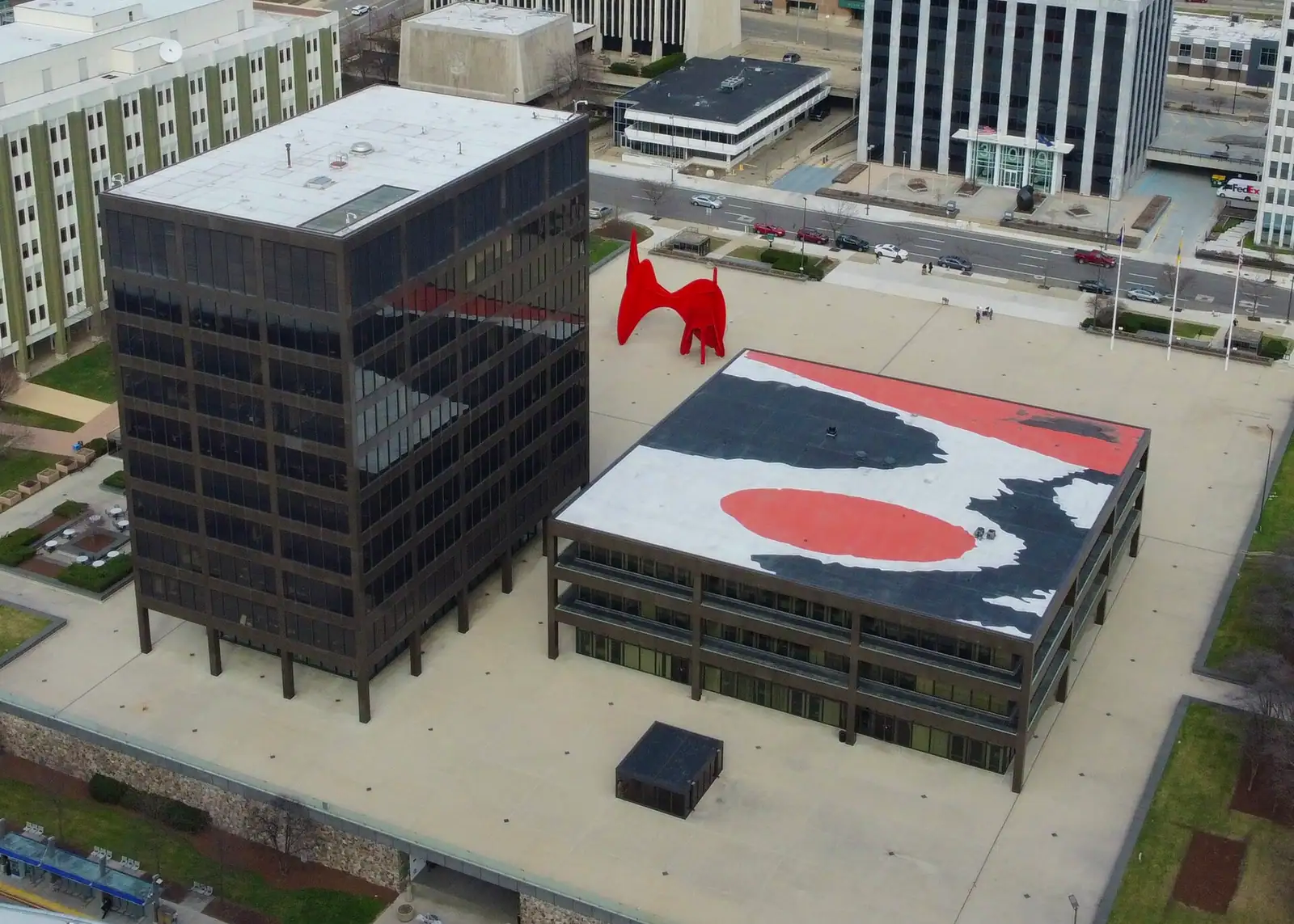
Forty-two tons of vermilion steel that changed how a furniture town saw itself, and the Calder painting on the roof behind it.
15–45 minutesFree. An open civic plaza with no ticketing at any time of year.0.3 mi away
Entertainment
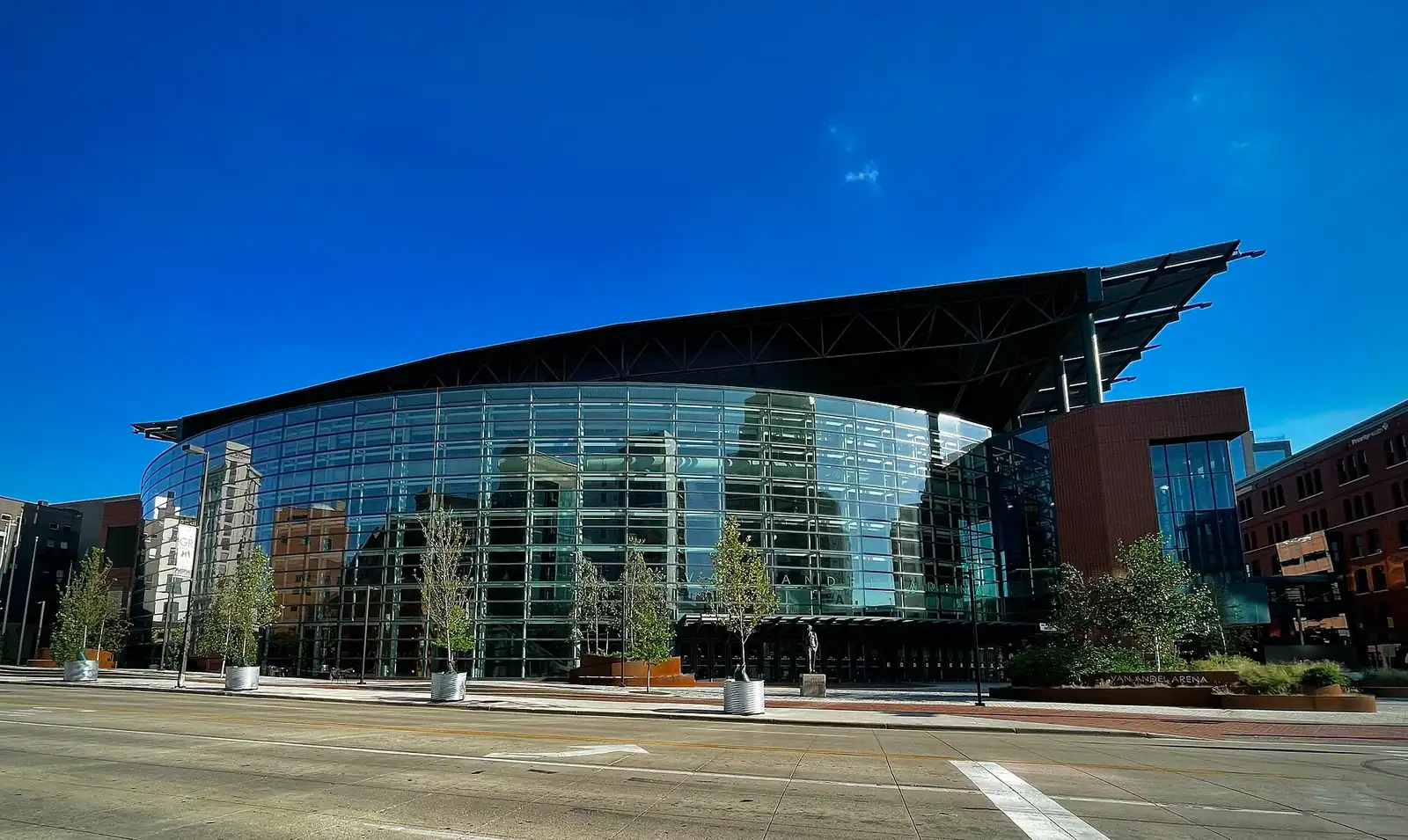
The 1996 arena that pulled downtown Grand Rapids back to life, and still empties four thousand people onto Fulton Street at once.
2.5–4 hoursTicketed by event; Griffins hockey is the cheapest way in0.2 mi away
Trail
A downtown loop on both banks of a river that is currently being torn up so it can have its rapids back.
1–1.5 hoursFree. Parking is the only cost and that is a downtown ramp0.2 mi away
Where this place fits into a day, and the pages that plan one.
Guide hub
Furniture paid for this city, and then it paid for everything worth coming to see in it. That is the single idea a visitor needs. Grand Rapids made…
Things to do
Grand Rapids is overcast about two hundred and five days a year, and through the winter the sky is grey or mostly grey roughly two thirds of the…
Things to do
Most cities put art in their museums and then decide whether anyone cares. Grand Rapids did it the other way round. In 1969 a committee of local…
Things to do
Every good thing in this city was paid for by chairs. That is barely an exaggeration. William Haldane opened a cabinet shop on the Grand River in…
Who it suits
Assume you will need this page. Grand Rapids takes something like thirty-eight inches of rain a year on top of around seventy-six inches of snow…
Guide
An open competition with no entry jury, hundreds of venues that are mostly not galleries, and a public vote worth a hundred thousand dollars. Here is how to see it without wasting a day.
5 min readIlse Hoekstra
Guide
A restored Frank Lloyd Wright house, an art museum one day a week, the first artwork the NEA ever helped pay for, and a Maya Lin park you can skate on. None of it costs anything.
5 min readIlse Hoekstra

Guide
A grocery fortune bought 158 acres, a five-storey glasshouse and a 24-foot bronze horse built from Leonardo's unfinished commission. The calendar decides whether you enjoy it.
5 min readIlse Hoekstra
Not generally, but Thursday evenings are. GRAM runs a free general admission window on Thursday nights, sponsored as Meijer Free Thursday Nights and typically around 5 to 8pm. The rest of the week costs in the region of $10 to $15 for an adult, with reduced rates for seniors, students and youth and free entry for young children. Confirm the current schedule before planning an evening around it.
Because it was. The building opened on Monroe Center in October 2007 and received LEED Gold certification from the US Green Building Council in March 2008, making it the first newly constructed art museum in the world to earn it. The design by Kulapat Yantrasast uses skylights and a deep roof overhang to light the upper galleries with controlled daylight, and captures rainwater for non-potable use.
About ninety minutes at a normal pace. The building is 125,000 square feet but only around 20,000 of that is gallery space, so it is a compact, legible museum rather than an all-day one. Allow two hours if a large travelling exhibition is up, and slightly longer during ArtPrize in autumn, when the galleries carry competition entries and the whole downtown is busier.
Three things. The building, which was the world's first LEED Gold certified art museum. The works on paper, which make up more than 3,500 of the roughly 5,000 pieces in the collection. And Mathias Alten, the German-born Impressionist who painted in Grand Rapids from the 1890s to 1938 and is held here in depth. The design holdings also tie directly to the region's furniture industry.